
Walk into any coffee shop on Earth and you'll see a row of identical-looking kettles with long, swan-necked spouts. They're called gooseneck kettles, and the pour-over crowd swears by them. So when you're standing in the cookware aisle wondering if you really need a $60 kettle to make a cup of coffee at home, here's the honest beginner answer.
No, you don't need a gooseneck kettle to make pour-over coffee. A regular kettle (or even a heat-safe measuring cup) works for your first few brews. But a gooseneck kettle makes pour-over noticeably easier and more consistent, and if you stick with pour-over for more than a couple of weeks, it's the single best upgrade you can make. Budget $50–$80 for a good one.
What a Gooseneck Kettle Actually Does
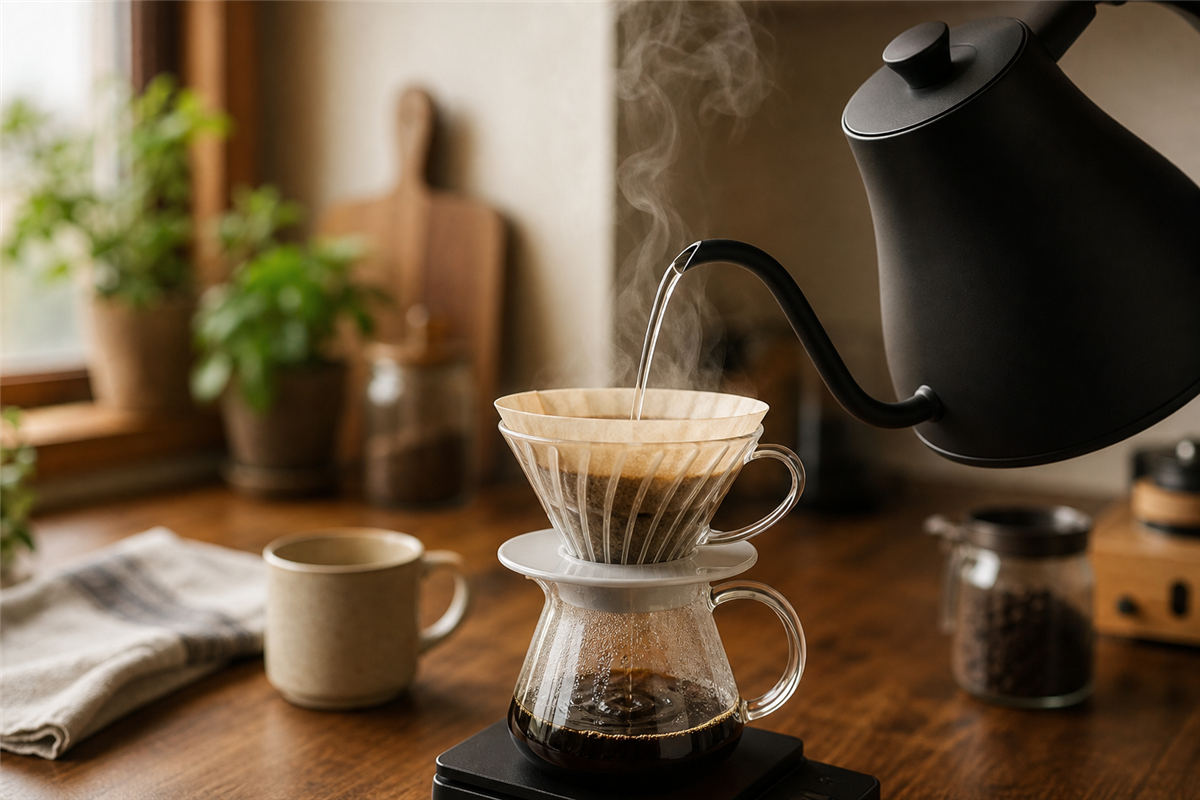
The “gooseneck” is the long, curved spout. That shape gives you two things a regular kettle can't:
- A slow, steady stream of water — even when you tilt the kettle far forward. Regular kettles glug. Gooseneck kettles pour.
- Precise targeting — you can aim the stream at exactly the spot you want, like the edge of the coffee bed or the center of the bloom. This matters more than it sounds.
That's it. There's no magic ingredient inside. The whole game is about controlling where the water lands and how fast it gets there. For pour-over coffee, that control is what separates a clean, balanced cup from a flooded mess.
Why It Matters for Pour-Over (And Not for Other Methods)
Here's the thing — for a French press, a Moka pot, or a drip machine, the kettle is just a way to get hot water from point A to point B. It doesn't matter how you pour. You dump the water in, you brew, you drink.
Pour-over is different. The pour is the brewing technique. How fast you pour, where you pour, and how steady your stream is — those decisions shape the cup you end up with. If you blast water in all at once, you'll over-extract some grounds and under-extract others. If your stream is wobbly, you'll create channels where water rushes through without picking up flavor.
A gooseneck makes all of that easier. Not magically — you still have to learn to pour slowly and in spirals — but the kettle removes one of the biggest variables a beginner has to fight.
Can You Make Pour-Over Without One?
Yes — and honestly, you should try, before spending money on a kettle you might not use. Here are the workarounds that actually work:
The Pyrex Measuring Cup
Heat water in your regular kettle, transfer it to a 2-cup or 4-cup glass measuring cup with a pouring spout, and pour from there. The spout is narrower than a regular kettle's, so you'll get more control. It's not gooseneck-level precision, but it's miles better than a wide-mouthed kettle.
The Squeeze Bottle
Yes, really — a clean squeeze bottle (the kind diners use for ketchup) lets you direct water exactly where you want. It looks ridiculous and the temperature drops quickly, but it works.
Your Regular Kettle, Tilted Slowly
If you tilt a regular kettle very slowly and aim for the center of your coffee bed, you can get a decent brew. Your stream will be too wide and a bit faster than ideal, but pour-over is forgiving enough that you'll still get coffee that's better than a drip machine for sure.
Try pour-over for two weeks with your current setup before you buy a gooseneck. If you find yourself making pour-over most mornings, the kettle is a no-brainer purchase. If you've drifted back to your French press or drip machine, you saved yourself $60.
Stovetop vs. Electric: Which Should You Buy?
If you decide you want a gooseneck, the next question is stovetop or electric.
Stovetop Gooseneck Kettles
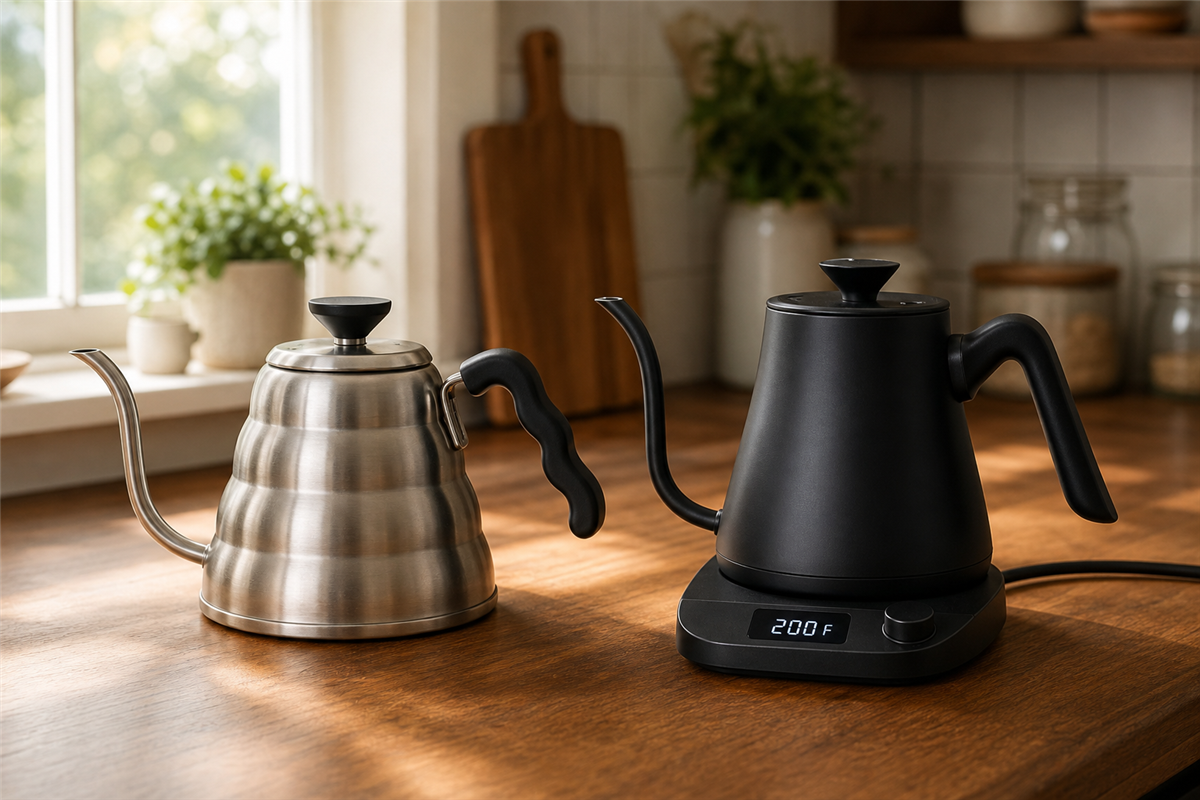
Cheaper (often $30–$50) and simpler. You boil water on your stove like always, then pour. The downside: no temperature control, so you have to guess when the water's at the right temp (around 200°F, just off boil). If you let it sit too long, the water gets too cool; pour too soon, and it's too hot.
Electric Gooseneck Kettles
The upgrade most beginners eventually make. They plug into the wall, heat to whatever exact temperature you set (usually 195–205°F for pour-over), and hold that temperature while you brew. Expect to spend $60–$100 for a good one. The temperature control alone makes pour-over way more consistent — you'll dial in your perfect cup faster, and you won't have to wonder whether the water was the right temp.
What to Look for in a Beginner Gooseneck Kettle
- Temperature control (electric only) — a “+1°/–1°” button setup is plenty. You don't need an app.
- 1L capacity or larger — gives you enough water for one big brew or two smaller ones without refilling.
- Stainless steel interior — avoid plastic on the inside. Some cheaper kettles have plastic in contact with hot water.
- A weighted base — heavier kettles are easier to pour from. They don't wobble.
- A real spout, not a fake one — some kettles are “shaped like” goosenecks but pour like regular kettles. The spout should narrow to about a half-inch opening.
Our Beginner Pick
If we had to pick one gooseneck kettle for someone making their first pour-over upgrade, it's an electric, temperature-controlled one in the $60–$80 range. Cosori, Fellow Stagg EKG, and Brewista all make solid options. The Cosori is the budget pick most beginners land on — it has the temperature control, a 1.7L capacity, and it costs about a third of the higher-end options.
Our Pick for Beginners
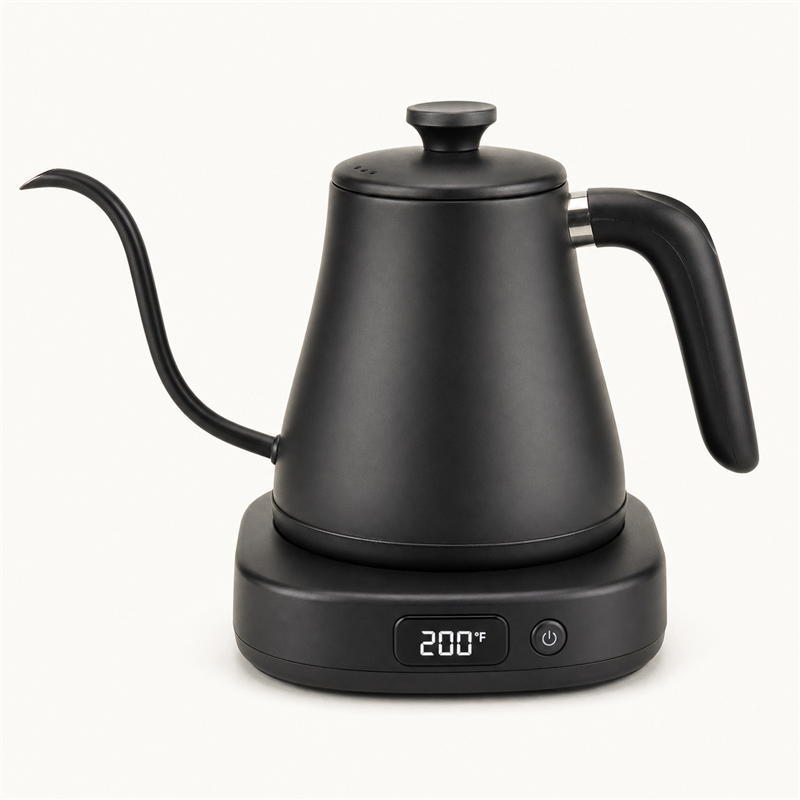
Cosori Electric Gooseneck Kettle
A 0.8L electric gooseneck with five preset temperatures, a real narrow spout, and a fast heat-up. Hands-down the best beginner gooseneck under $80 — and the one most home coffee fans recommend.
Check Price on Amazon →Skip the no-name “gooseneck kettle” on Amazon for $20. Most of them have wide-tip spouts that pour almost as fast as a regular kettle, defeating the whole point. If it costs less than $40 and has no brand reputation, the spout is probably for show.
What If You Already Have a Variable-Temperature Electric Kettle?
If you own a standard electric kettle with temperature control (like a Hamilton Beach or Cuisinart), you already have half the upgrade. You can dial in 200°F water, then transfer it to a glass measuring cup or even pour very carefully from the kettle's existing spout. Many beginners use this setup for months before buying a true gooseneck — and it works well enough.
- You don't need a gooseneck kettle to make pour-over. You can start with what you have.
- A gooseneck gives you a slow, steady, targetable stream of water — which makes pour-over more consistent.
- If you're making pour-over most mornings, a gooseneck is the single best upgrade you can buy.
- Electric gooseneck kettles ($60–$100) are the most beginner-friendly because of built-in temperature control.
- Avoid no-name $20 goosenecks with wide spouts — they pour almost like a regular kettle.
What to Read Next
Once your kettle situation is sorted, the next two pour-over upgrades to focus on are grind size and ratio. Start with our best grind size for pour-over guide, then the complete pour-over beginner's guide for the full brewing workflow.
Disclosure: This article contains affiliate links. If you purchase through our links, we may earn a small commission at no extra cost to you. We only recommend products we genuinely believe are right for beginners. Full disclosure here.
☕ About the Author
Greg Rathbone is the founder of HomeCoffeeBeginner.com. He started this site after realizing most coffee advice online assumes you're already an expert. Every guide here is written for total beginners and tested in his own kitchen — no jargon, no snobbery.