
You bought the dripper, you bought the kettle, you used the recipe — and your pour-over coffee still tastes like brown water. Weak pour-over is one of the most common beginner frustrations, and the good news is it's almost always one of five specific problems. Here's how to diagnose it and fix it before tomorrow's brew.
Weak pour-over coffee is almost always an extraction problem — water moves through the grounds too fast, too cool, or doesn't make enough contact. The five most common causes: grind too coarse, water too cool, ratio too light (too much water), pour too fast, or stale beans. Walk through each one in order — usually one of them is the culprit.
What “Weak” Actually Means
“Weak” coffee usually means one or more of these:
- Tastes watery, like you didn't add enough coffee
- Tastes sour or thin, like something's missing
- Lacks body — feels like tea, not coffee
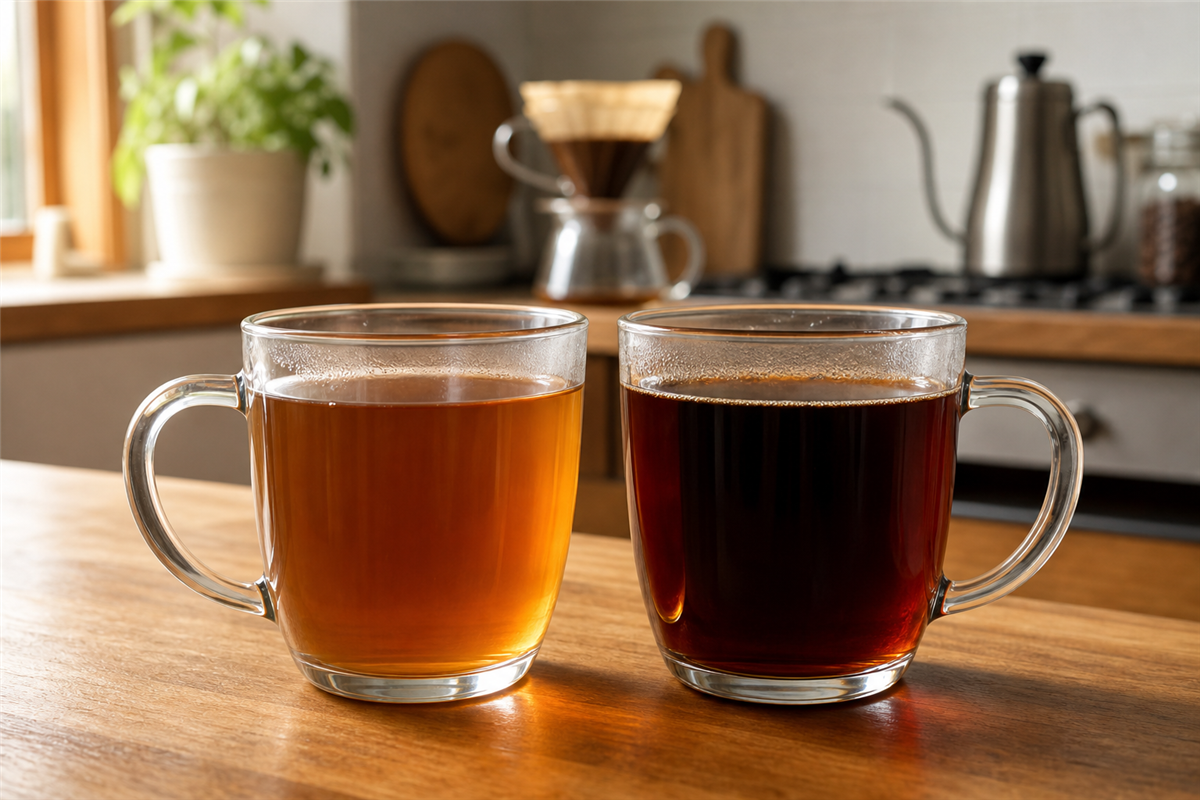
- Color looks pale brown instead of rich dark brown
- Goes cold quickly and doesn't taste like much when it cools
The common thread is under-extraction. Coffee grounds have flavor locked inside them, and hot water pulls that flavor out as it passes through. If the water moves too quickly, doesn't get hot enough, or doesn't touch enough grounds, you get a weak cup. Fix the extraction, and you fix the cup.
Fix #1: Your Grind Is Too Coarse
This is the most common cause of weak pour-over by a wide margin. If your grind looks like sea salt or chunky beach sand, water is rushing through it without picking up enough flavor.
Pour-over needs a medium-fine grind — about the texture of regular table salt. When you rub the grounds between your fingers, they should feel gritty but not powdery. If your grind looks more like couscous, you're way too coarse.
How to fix it: grind a notch finer. If you have a burr grinder, drop one or two clicks on the setting. If you have a blade grinder, run it for 5–10 extra seconds. Brew again. If the cup gets stronger but still tastes thin, go one more notch finer. If it goes bitter, you've gone too far — back off one click.
See our full best grind size for pour-over guide for visual references.
Fix #2: Your Water Isn't Hot Enough
Pour-over needs water between 195°F and 205°F. If your kettle has been sitting for a few minutes after boiling, the water has dropped well below that range — and cooler water extracts less flavor.
Common temperature mistakes:
- Boiling water and waiting 5+ minutes before pouring — too cool by then.
- Microwaving water — heats unevenly, hard to get to the right temp.
- Using a stove kettle and not boiling it all the way before transferring.
How to fix it: if you have a variable-temperature kettle, set it to 200°F. If you have a regular kettle, boil it all the way, then wait exactly 30 seconds before pouring (that drops you to about 200°F). Don't let it sit longer.
Pre-warm your dripper and mug with hot water before brewing. Cold ceramic and cold mugs steal heat from your brewing water faster than you'd think — especially in the first minute. A 10-second rinse with hot water before you start saves several degrees of extraction temperature.
Fix #3: Your Ratio Is Too Light
Pour-over's standard ratio is 1:16 — 20 grams of coffee to 320 grams of water. If you're using less coffee than that (say, 15g to 320g, which is 1:21), you'll get a thin, weak cup no matter how perfectly you brew.
This happens most often when beginners “eyeball” their coffee using scoops. A coffee scoop holds about 5–7g of coffee depending on how full you fill it. Two scoops looks like a lot, but at 12g of coffee into 320g of water, that's a 1:27 ratio — wildly too weak.
How to fix it: get a kitchen scale. Weigh your coffee. 20 grams for one mug. If you don't have a scale yet, use a heaping coffee scoop and fill it to a small mound on top — that's closer to 10g, so use two heaping scoops for a single 320g brew.
For the full ratio breakdown, see our pour-over coffee-to-water ratio chart.
Fix #4: You're Pouring Too Fast
If your entire 320g pour finishes in under 90 seconds, you're pouring too fast. The water is rushing past the grounds without enough contact time to pull out flavor.
The right total brew time for a one-cup pour-over is 3 to 4 minutes. Faster than that = under-extracted (weak). Slower than 4:30 = over-extracted (bitter or muddy). Most beginner pour-overs come in around 2 minutes — way too fast.
How to fix it:
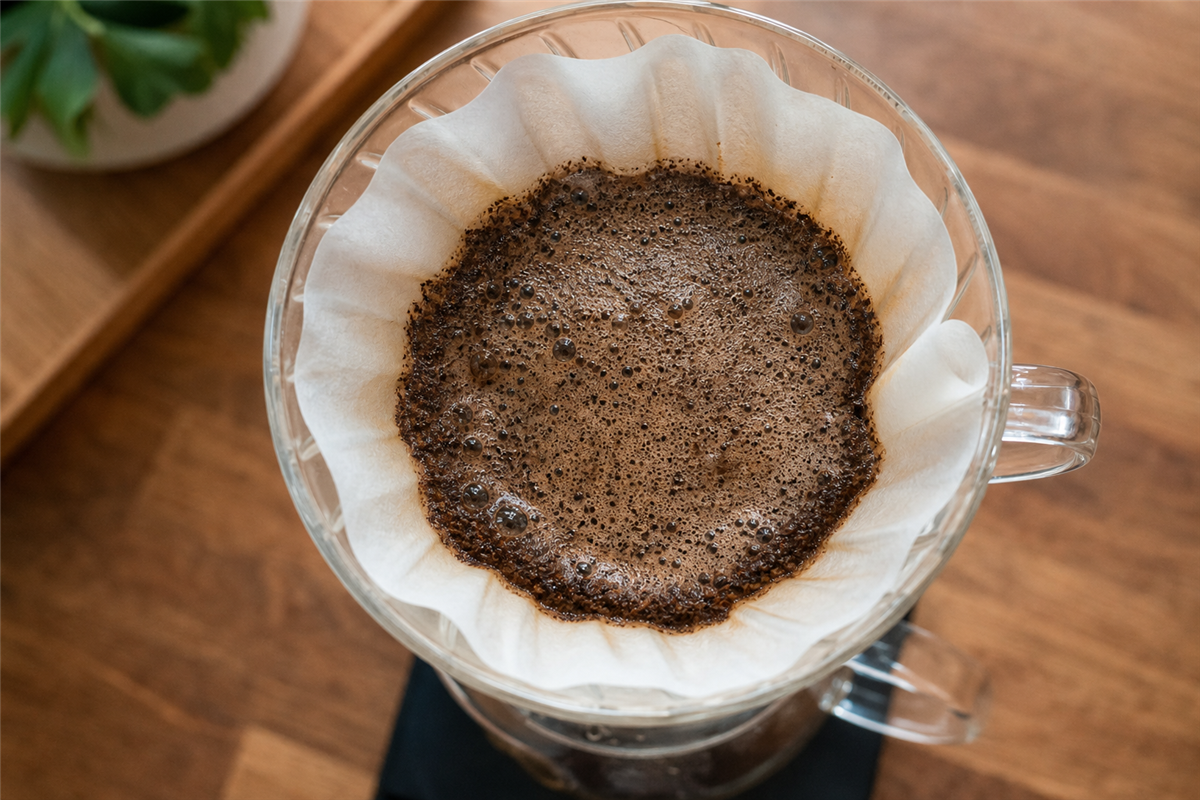
- Bloom properly. Pour about 40g of water on the grounds, wait a full 30 seconds, then continue. The bloom adds 30 seconds of contact time on its own.
- Pour in slow spirals. Start in the center, move outward in a slow circle, come back to center. The motion should feel deliberate, not rushed.
- Pour in two stages. First main pour to 160g (about 45 seconds of pouring). Pause 10 seconds. Second pour to 320g (another 45 seconds). Pause. Let it drain.
If your kettle has a wide spout that makes slow pouring impossible, that's likely your real bottleneck — see our guide on whether you need a gooseneck kettle.
Fix #5: Your Beans Are Stale
Coffee beans are at their peak between 1 and 4 weeks after roasting. Past that, they start losing the volatile compounds that make coffee taste like coffee. Beyond 8 weeks, even with perfect technique, you'll get a flat, weak cup.
The grocery store bag you bought without checking the roast date is almost certainly old. Most commercial bags don't even list a roast date — they list a “best by” date that's 12 to 18 months out. By the time you open the bag, the beans are months past their flavor peak.
How to fix it:
- Buy beans with a roast date printed on the bag, not a “best by” date.
- Aim for beans roasted within the past 2–4 weeks.
- Buy whole bean, not pre-ground. Ground coffee goes stale 4× faster.
- Store them in an airtight container away from light and heat. Don't refrigerate.
Local roasters, online specialty roasters (Trade, Atlas, Driftaway, etc.), or even Costco's Kirkland-branded specialty beans all print real roast dates. Most grocery store bags don't.
The Quick Diagnostic Walkthrough
Brew a cup with everything you can think of, then ask yourself in order:
- Did the brew finish in under 2 minutes? → Grind finer OR pour slower.
- Was your water boiling-hot and used right away? → If not, fix temperature first.
- Did you weigh the coffee? → If not, weigh it. 20g for a mug.
- Did you bloom for a full 30 seconds? → If not, add the bloom step.
- Are your beans more than 4 weeks old? → Buy fresher beans.
Fix the highest-impact one first (usually grind), brew again, taste. If it's still weak, move down the list. Don't change three things at once — you won't know what actually fixed it.
If you've gone through all five fixes and the coffee still tastes weak, the issue might be your dripper-to-grind mismatch. A coarse grind in a fast-flowing Hario V60 will always taste weak no matter how slowly you pour. Try a finer grind paired with a slower, two-stage pour before giving up.
What Strong Pour-Over Should Taste Like
For reference, a properly extracted pour-over should taste:
- Clean and clear — you can pick out distinct flavor notes (fruit, chocolate, nuts, depending on the bean).
- Bright but not sour — there's a pleasant acidity, not a thin, lemony bite.
- Full-bodied — the coffee coats your mouth a little, not like water.
- Sweet on the finish — even black coffee has natural sweetness if it's brewed right.
If you're getting any three of those four qualities, you're 90% there. The last 10% is months of tiny adjustments — which is the fun part.
- Weak pour-over is almost always under-extraction — water didn't pull enough flavor from the grounds.
- The five most common causes: coarse grind, cool water, light ratio, fast pour, stale beans.
- Fix in this order: grind first, then water temp, then ratio, then pour speed, then beans.
- Aim for a 3–4 minute total brew time on a 1-cup pour-over.
- Change one variable at a time so you can tell what actually fixed it.
What to Read Next
If the diagnostic above didn't catch your issue, the foundation guides are worth revisiting. Start with our best grind size for pour-over guide, then check the complete pour-over beginner's guide for the full brewing workflow.
Disclosure: This article does not contain affiliate links. If a future update adds product recommendations, full disclosure will follow. Affiliate policy here.
☕ About the Author
Greg Rathbone is the founder of HomeCoffeeBeginner.com. He started this site after realizing most coffee advice online assumes you're already an expert. Every guide here is written for total beginners and tested in his own kitchen — no jargon, no snobbery.