
Stand at any coffee counter in summer and you will see them side by side: iced coffee and cold brew. They both come cold, both over ice, and both look almost identical in the cup. So what is the actual difference — and does it matter for you? Short answer: yes, they are made completely differently, and that changes how they taste, how much caffeine they pack, and how gentle they are on your stomach.
This guide breaks down iced coffee vs cold brew in plain language, so you can pick the right one for your taste and your routine — and make either one at home.

Iced coffee is regular hot-brewed coffee poured over ice — fast to make, brighter and sharper in taste. Cold brew is coarse grounds steeped in cold water for 12–24 hours — slower to make, but smoother, sweeter, and up to about 66% less acidic. Cold brew is usually higher in caffeine before you dilute it.
The Core Difference: Heat vs Time
Everything comes down to one thing — temperature.
Iced coffee is brewed hot, just like your normal morning cup, and then cooled down over ice. The hot water extracts flavor quickly, in a matter of minutes. That heat pulls out bright, acidic, aromatic compounds, which is why iced coffee tastes sharp and “coffee-forward.”
Cold brew never touches heat. You steep coarse grounds in cold or room-temperature water for many hours (usually 12–24). The slow, cold extraction is gentle — it leaves a lot of the acid and bitterness behind, giving you a smoother, naturally sweeter cup.
So when someone tells you “cold brew is just cold coffee,” they are not quite right. Iced coffee is cold coffee. Cold brew is a different process entirely.
How They Taste
This is where most people land on a favorite:
- Iced coffee tastes brighter, sharper, and more like traditional coffee. If your beans have fruity, citrusy, or floral notes, iced coffee shows them off. It can also taste a little more acidic or watery as the ice melts.
- Cold brew tastes smooth, mellow, and slightly sweet, with very little bitterness or acidity. It is rounder and softer — easy to drink black, even for people who normally need cream and sugar.
Caffeine: Which Is Stronger?
Cold brew usually wins here — at least before dilution. A 16 oz cold brew often lands around 200 mg of caffeine, while a 16 oz iced coffee is closer to 165 mg. That is because cold brew is typically made with more coffee grounds relative to water.
But there is a catch: a lot of cold brew is sold (and made) as a concentrate that you dilute with water or milk. Once diluted, the caffeine per cup is often similar to regular coffee. So “cold brew has more caffeine” is true for undiluted brew, but not a hard rule once it is in your glass.
Acidity and Your Stomach
If coffee sometimes leaves your stomach unhappy, this is the big one. Because it is brewed without heat, cold brew can be up to about 66% less acidic than hot-brewed coffee. Many people who get heartburn or acid reflux from regular coffee find cold brew much easier to drink. Iced coffee, being hot-brewed, keeps more of that acidity.
Speed and Convenience
Here is where iced coffee shines. You can make iced coffee in minutes — brew a cup (or use leftover coffee), pour it over ice, done. Cold brew takes planning: you have to start it 12–24 hours ahead.
The flip side: once you make a batch of cold brew, it keeps in the fridge for 7–10 days. So cold brew is “slow to start, then grab-and-go,” while iced coffee is “make it fresh each time.”
Side-by-Side Comparison
| Cold Brew | Iced Coffee | |
|---|---|---|
| How it's made | Coarse grounds steeped in cold water 12–24 hrs | Hot-brewed coffee cooled over ice |
| Time to make | Hours (plan ahead) | Minutes (right now) |
| Taste | Smooth, sweet, mellow | Bright, sharp, classic coffee |
| Acidity | Low (up to ~66% less than hot) | Higher |
| Caffeine (16 oz) | ~200 mg (before dilution) | ~165 mg |
| Keeps in fridge | 7–10 days | Best within a day or two |
| Best for | Smooth, low-acid, batch-it-ahead drinkers | Quick, fresh, bright-tasting cups |
Which Should You Choose?
There is no wrong answer — it comes down to your taste and your schedule:
- Choose cold brew if you want a smooth, low-acid cup, you do not mind planning a day ahead, and you like the idea of a big batch waiting in the fridge.
- Choose iced coffee if you want it fast, you enjoy a brighter, more traditional coffee taste, or you only want one cup at a time.
If you are leaning toward cold brew, the easiest way to start is with a simple maker that has a built-in filter. Our beginner favorite is the Takeya Patented Deluxe.
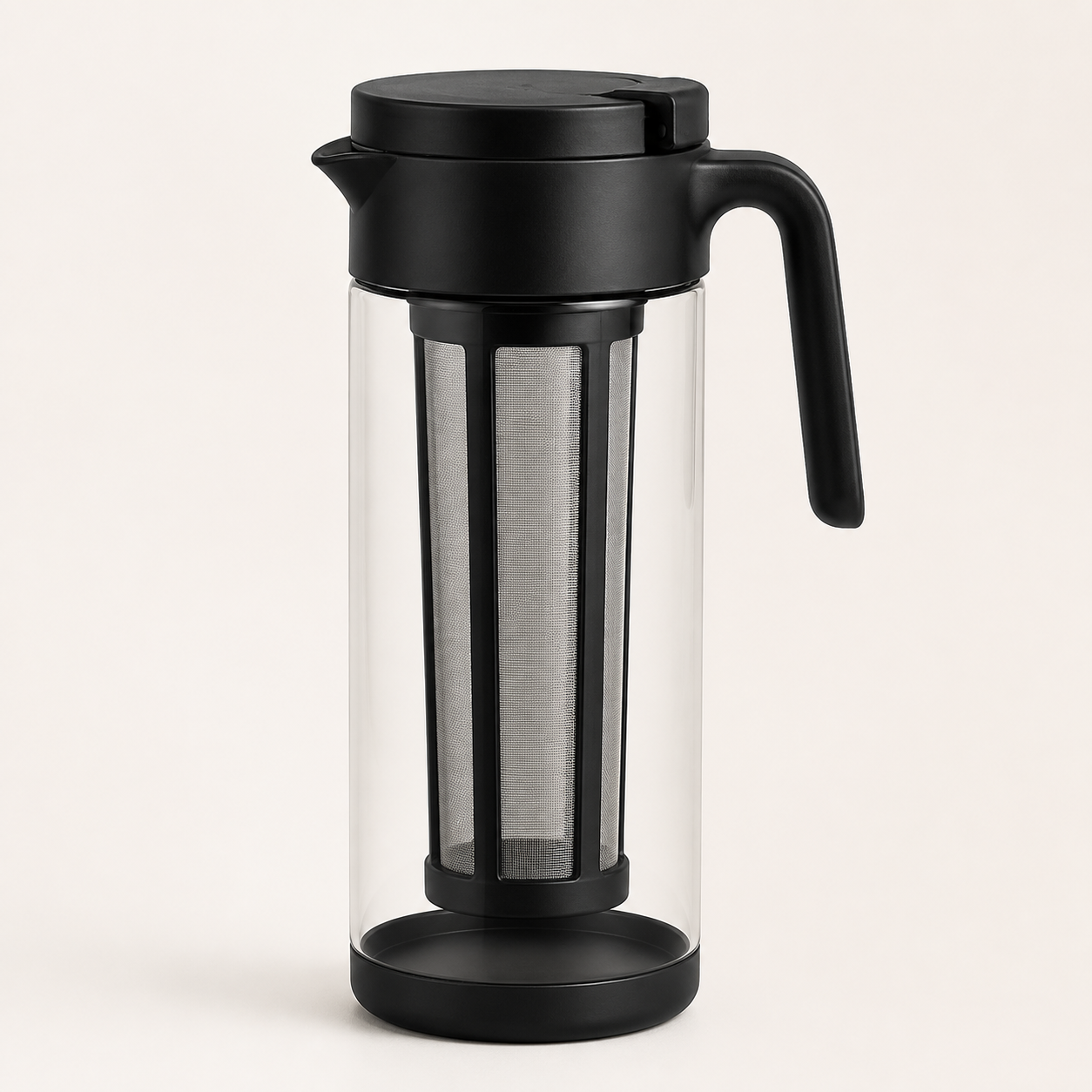
Our Pick for Beginners
Takeya Patented Deluxe Cold Brew Maker
Airtight, leakproof, and just three simple parts. For around $25 it makes smooth, ready-to-drink cold brew right in your fridge — the easiest way to start making cold brew at home.
Check Price on Amazon →You do not have to pick just one. Many home coffee drinkers keep a batch of cold brew in the fridge for everyday smooth sipping, then make a quick iced coffee when they want something brighter and faster. Try both and see which you reach for more.
Frequently Asked Questions
Is cold brew just cold iced coffee?
No. Iced coffee is hot-brewed coffee cooled over ice. Cold brew is never heated — it is steeped in cold water for 12–24 hours. The different process is why cold brew tastes smoother and less acidic.
Does cold brew have more caffeine than iced coffee?
Usually yes, before dilution — about 200 mg vs 165 mg for a 16 oz drink. But cold brew concentrate is often diluted, which brings the caffeine per cup back in line with regular coffee.
Which is better for a sensitive stomach?
Cold brew, generally. Its low-heat brewing makes it up to about 66% less acidic than hot-brewed coffee, which many people find easier on the stomach.
- Iced coffee is hot-brewed then chilled; cold brew is cold-steeped for 12–24 hours.
- Cold brew is smoother, sweeter, and up to ~66% less acidic; iced coffee is brighter and sharper.
- Cold brew is usually higher in caffeine before dilution.
- Iced coffee is faster; cold brew is make-ahead and keeps for 7–10 days.
- Pick by taste and schedule — or keep both on hand.
However you take your cold coffee, making it at home is cheaper and easier than you might think. Ready to try cold brew? Start with our step-by-step cold brew guide, or browse the best cold brew makers for beginners.
Next, read: Cold Brew Coffee: The Complete Beginner's Guide.
Disclosure: This article contains affiliate links. If you purchase through our links, we may earn a small commission at no extra cost to you. We only recommend products we genuinely believe are right for beginners. Full disclosure here.
☕ About the Author
Greg Rathbone is the founder of HomeCoffeeBeginner.com. He started this site after realizing most coffee advice online assumes you're already an expert. Every guide here is written for total beginners and tested in his own kitchen — no jargon, no snobbery.