
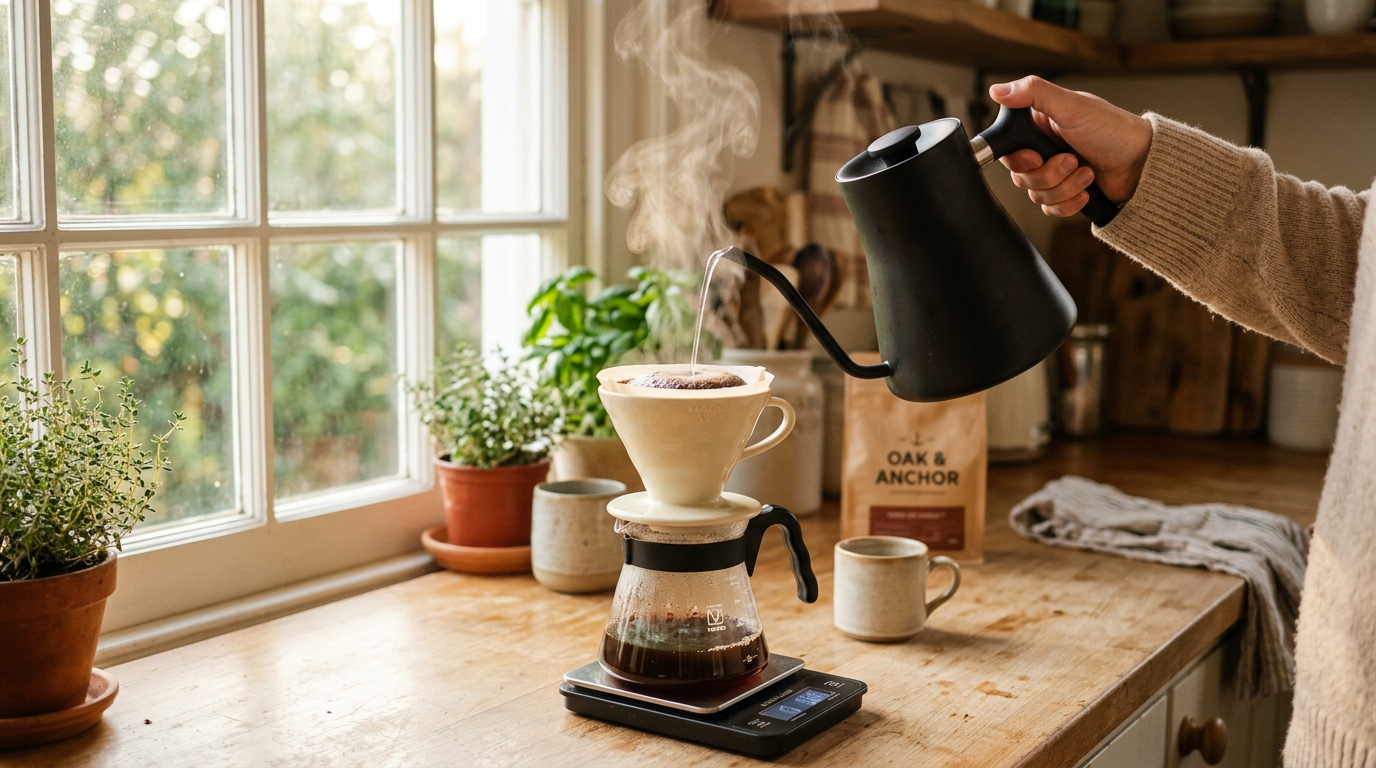
Coffee extraction is the process of water pulling flavor out of ground coffee. When water passes through or sits with coffee grounds, it dissolves the oils, sugars, acids, and other compounds that create everything you taste in your cup. Getting extraction right is the difference between coffee that's balanced and delicious — and coffee that's sour, bitter, or just flat.
You followed the recipe. You used the right amount of coffee. You even bought decent beans. But something is still off — your coffee tastes sour, or weirdly bitter, or just kind of hollow and bland.
If that sounds familiar, the problem probably isn't your coffee or your equipment. It's extraction — specifically, how much flavor the water actually pulled out of those grounds before it ended up in your cup.
Extraction might sound technical, but it's actually one of the simplest concepts in coffee once you understand it. And once you do, you'll know exactly what to adjust when your coffee doesn't taste right. Let's break it down.
What Does “Extraction” Actually Mean?
Extraction is just a fancy word for dissolving. When hot water touches ground coffee, it starts pulling out (extracting) the soluble compounds locked inside those grounds. These compounds include acids, sugars, oils, and bitter compounds — and they're what give coffee its flavor.
Here's the key thing to understand: these compounds don't all come out at the same time. They extract in a predictable order:
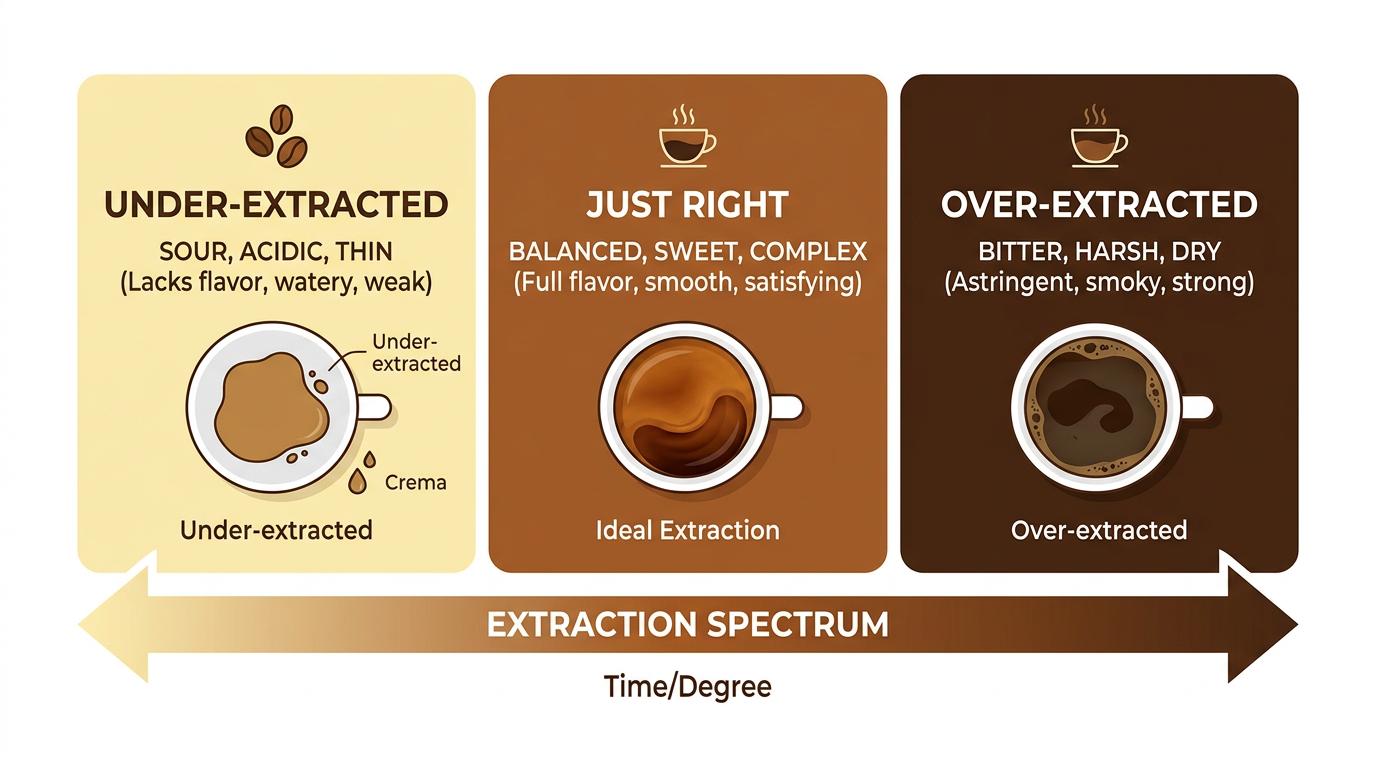
- First: acids and fruity flavors. These dissolve quickly, which is why under-extracted coffee tends to taste sour — it's mostly just this first wave of flavors.
- Next: sugars and sweetness. This is where balance starts to develop. The sweetness rounds out the sourness from the acids.
- Last: bitter compounds. A little bitterness adds depth and complexity. Too much, and your coffee starts tasting harsh and dry.
The goal is to stop somewhere in the sweet spot — enough extraction to get the sweetness and balance, but not so much that bitterness takes over.
Why Extraction Matters for Your Morning Cup
Every time you make coffee, you're controlling extraction — whether you realize it or not. The amount of water you use, how long the coffee brews, how fine your grounds are — all of these change how much flavor gets pulled out. When people say their coffee “tastes bad,” the answer is almost always that extraction was off in one direction or the other.
The Specialty Coffee Association (SCA) has studied this extensively and found that most people enjoy coffee best when roughly 18 to 22 percent of the coffee grounds' weight has been dissolved into the water. You don't need to measure this at home — but knowing it exists helps explain why small changes in your routine can make a big difference in your cup.
Under-Extracted Coffee
If your coffee tastes sour, sharp, or thin — almost like sipping on something that's missing its middle — it's probably under-extracted. The water didn't pull out enough of the sugars and deeper flavors to balance out those quick-dissolving acids.
Common causes of under-extraction:
- Grind too coarse — the water flows through too fast
- Brew time too short
- Water not hot enough
- Not enough water for the amount of coffee
Over-Extracted Coffee
If your coffee tastes bitter, harsh, or leaves a dry feeling in your mouth (like you just bit into an unripe banana peel), it's over-extracted. The water went past the sweet spot and started pulling out the unpleasant compounds that live at the tail end of extraction.
Common causes of over-extraction:
- Grind too fine — the water can't flow through, so it sits too long
- Brew time too long
- Water too hot
- Too much water for the amount of coffee
A quick taste test can tell you which direction you're off. Sour and thin? You need more extraction — try a finer grind or longer brew time. Bitter and dry? You need less extraction — try a coarser grind or shorter brew time. Adjust one thing at a time so you know what made the difference.
The Three Things That Control Extraction
You don't need fancy equipment or a chemistry degree to control extraction. It comes down to three main variables, and you're already adjusting them every time you brew — you just might not have known why they matter.
1. Grind Size
This is the single biggest lever you have. Finer grounds have more surface area exposed to the water, so extraction happens faster. Coarser grounds have less surface area, so extraction is slower.
Think of it like sugar in water. Drop a sugar cube into cold water and it takes a while to dissolve. Crush that sugar cube into powder and it dissolves almost instantly. Same idea with coffee grounds — grind size controls how quickly flavor gets pulled out.
2. Brew Time
The longer water stays in contact with coffee grounds, the more it extracts. A French press steeping for four minutes extracts more than one steeping for two minutes. An espresso shot takes only 25 to 30 seconds because the grind is so fine that extraction happens rapidly under pressure.
Most brewing methods have a recommended time range. If your coffee tastes off, checking whether you're within that range is a good first step.
3. Water Temperature
Hotter water extracts faster. The generally accepted range for brewing coffee is between 195°F and 205°F (90°C to 96°C). Below that, and you'll likely under-extract. Above that — especially with boiling water poured directly onto grounds — you risk pulling out harsh, bitter flavors.
If you don't have a thermometer, a simple trick is to let your kettle sit for about 30 seconds after it reaches a full boil. That usually drops the temperature into the right range.
Pouring boiling water straight onto coffee grounds is one of the most common beginner mistakes. It seems logical — hotter water should make better coffee, right? But boiling water over-extracts the grounds almost immediately, giving you a harsh, bitter cup. Let the kettle rest for 30 seconds first.

How to Use This Knowledge (Without Overcomplicating Things)
Here's the good news: you don't need to measure extraction percentages or buy a refractometer. Understanding extraction just gives you a framework for troubleshooting when your coffee doesn't taste right.
Here's the simple process:
- Make your coffee the way you normally do. Use a consistent coffee-to-water ratio so you have a reliable starting point.
- Taste it. Don't just drink it on autopilot. Pay attention. Is it sour? Bitter? Balanced?
- Adjust one variable. If it's sour (under-extracted), try a slightly finer grind. If it's bitter (over-extracted), try a slightly coarser grind. Grind size is the easiest thing to change and has the biggest impact.
- Repeat. Make the same recipe with your one adjustment and taste again. Most people find their sweet spot within two or three tries.
That's it. No science equipment needed. Just attention and one small change at a time.
Keep everything else the same when you adjust one variable. If you change your grind size and your brew time and your water temperature all at once, you won't know which change actually helped. Change one thing, taste, and decide from there.
Common Beginner Mistakes With Extraction
Now that you understand the basics, here are a few common traps that trip beginners up:
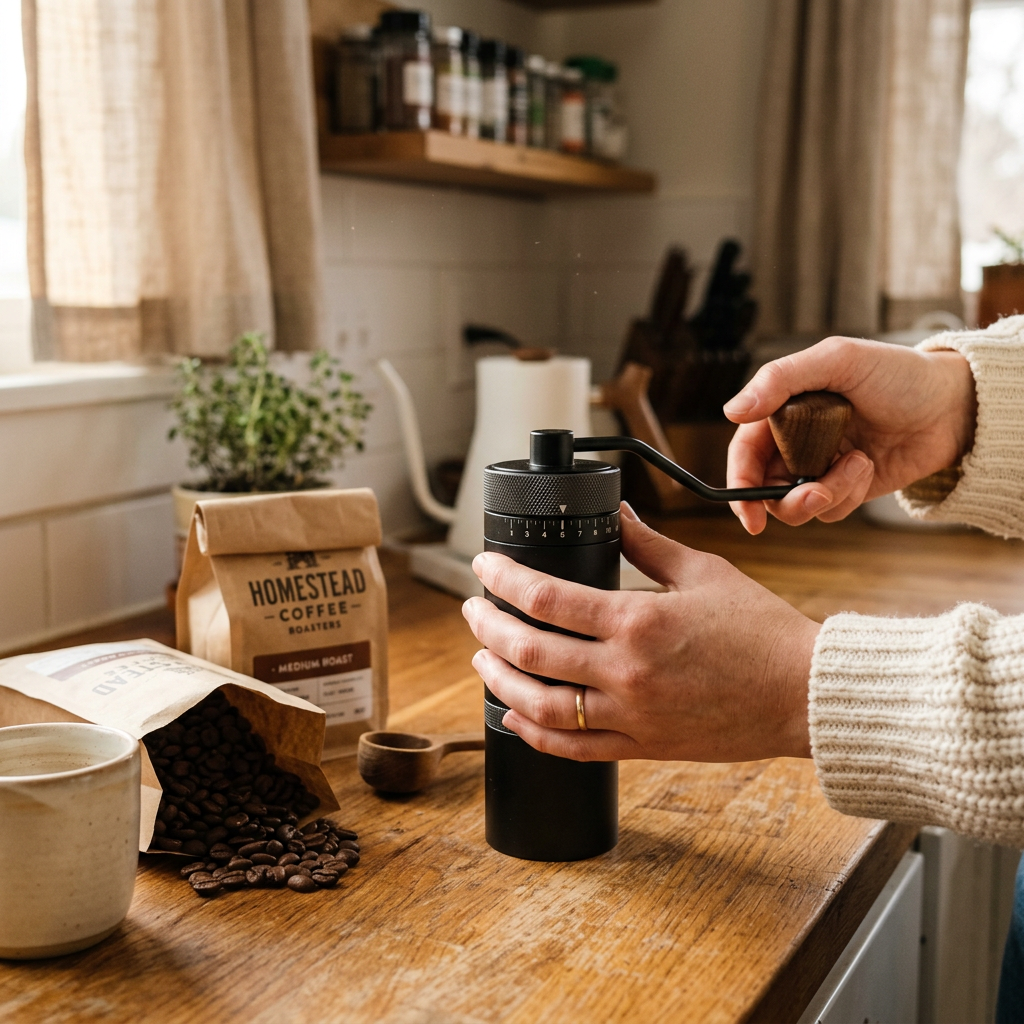
Blaming the beans when it's really extraction. Most of the time when someone says “I don't like this coffee,” the beans aren't actually the problem — the extraction is off. Before you give up on a bag of coffee, try adjusting your grind size. You might be surprised how much the flavor changes.
Using the same grind for every method. Different brewing methods need different grind sizes because they have different contact times. A drip coffee maker needs a medium grind. A French press needs coarse. An espresso machine needs very fine. Using the wrong grind for your brewer is one of the fastest ways to get bad extraction.
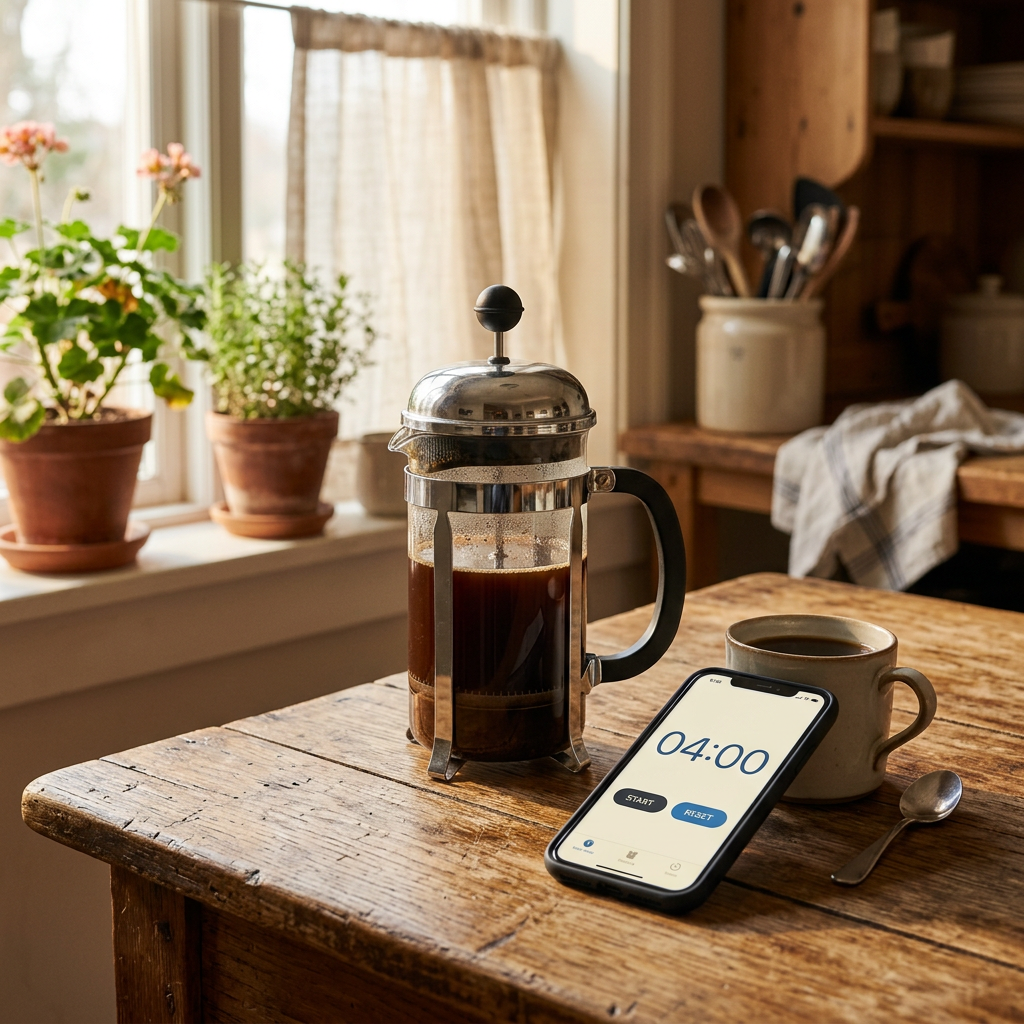
Ignoring brew time. It's easy to set up your French press and then get distracted. But leaving it for eight minutes instead of four can push your coffee from perfectly balanced into bitter territory. A kitchen timer (or your phone) is your friend.
Thinking “stronger” means “better extracted.” Strength and extraction are actually two different things. Strength is about how much coffee you use relative to water — it's concentration. Extraction is about how much flavor you pulled from the grounds. You can have a strong but under-extracted cup (lots of coffee, but poorly brewed), or a weaker but perfectly extracted one. They're separate dials.
- Coffee extraction is water pulling flavor compounds out of ground coffee — acids first, then sugars, then bitter compounds.
- Under-extracted coffee tastes sour and thin. Over-extracted coffee tastes bitter and dry. The sweet spot is in between.
- The three main things you control are grind size, brew time, and water temperature — with grind size being the most impactful.
- You don't need special equipment — just taste your coffee, identify whether it's sour or bitter, and adjust one variable at a time.
- Strength and extraction are different things. Strong coffee isn't the same as well-extracted coffee.
What to Read Next
Now that you understand extraction, you've got one of the most useful tools in your coffee-making toolkit. The next step is putting it into practice. If you haven't already dialed in your recipe basics, check out our coffee-to-water ratio guide — it's the other half of the equation for making consistently great coffee at home.
☕ About the Author
Greg Rathbone is the founder of HomeCoffeeBeginner.com. He started this site after realizing most coffee advice online assumes you're already an expert. Every guide here is written for total beginners and tested in his own kitchen — no jargon, no snobbery.