
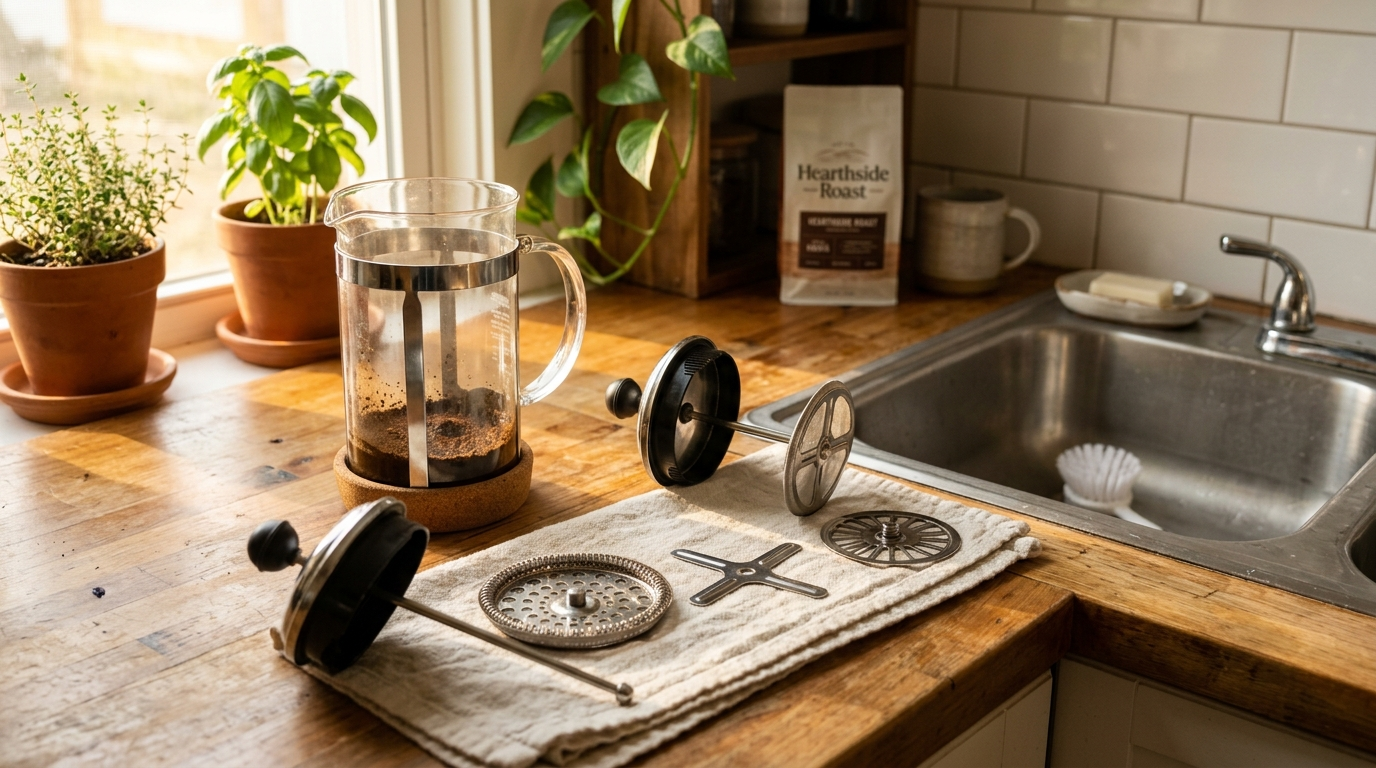
A French press is one of the easiest brewers to use — and one of the trickiest to clean if no one has ever shown you how. Coffee grounds are sticky. The mesh filter collects oils you can't see. And the glass carafe? One wrong move with a metal spoon and it's in three pieces.
Don't worry. Cleaning a French press takes about two minutes after each brew, and if you learn the right way now, you'll keep your press working (and your coffee tasting fresh) for years. Here's exactly how to clean a French press — the daily rinse, the monthly deep clean, and the mistakes that break glass carafes.
To clean a French press: scoop out the spent grounds (never down the sink), rinse the carafe with warm water, add a drop of dish soap, and plunge the soapy water a few times to flush the mesh filter. Rinse thoroughly, air dry with parts separated, and once a month disassemble the plunger and soak everything in equal parts white vinegar and hot water for 30 minutes.
What You'll Need
Good news — you probably have everything already:
- Warm water (not boiling)
- A drop or two of dish soap
- A soft sponge or bottle brush (no steel wool — it will scratch the glass)
- A wooden or silicone spoon for scooping grounds
- A trash can or compost bin
- White vinegar and baking soda (for the monthly deep clean only)
Avoid metal spoons when scooping grounds out of a glass carafe. A sharp edge plus a little pressure is all it takes to chip or crack the glass — one of the most common ways beginners accidentally destroy their press.
Step 1 — Let the Press Cool for a Minute
Before you wash anything, let the carafe sit for a minute or two after brewing. Glass doesn't like sudden temperature changes, and blasting a hot carafe with cold tap water is a fast way to crack it. You don't have to wait until it's stone cold — just warm, not scorching.
Step 2 — Get the Grounds Out (Not Down the Sink)
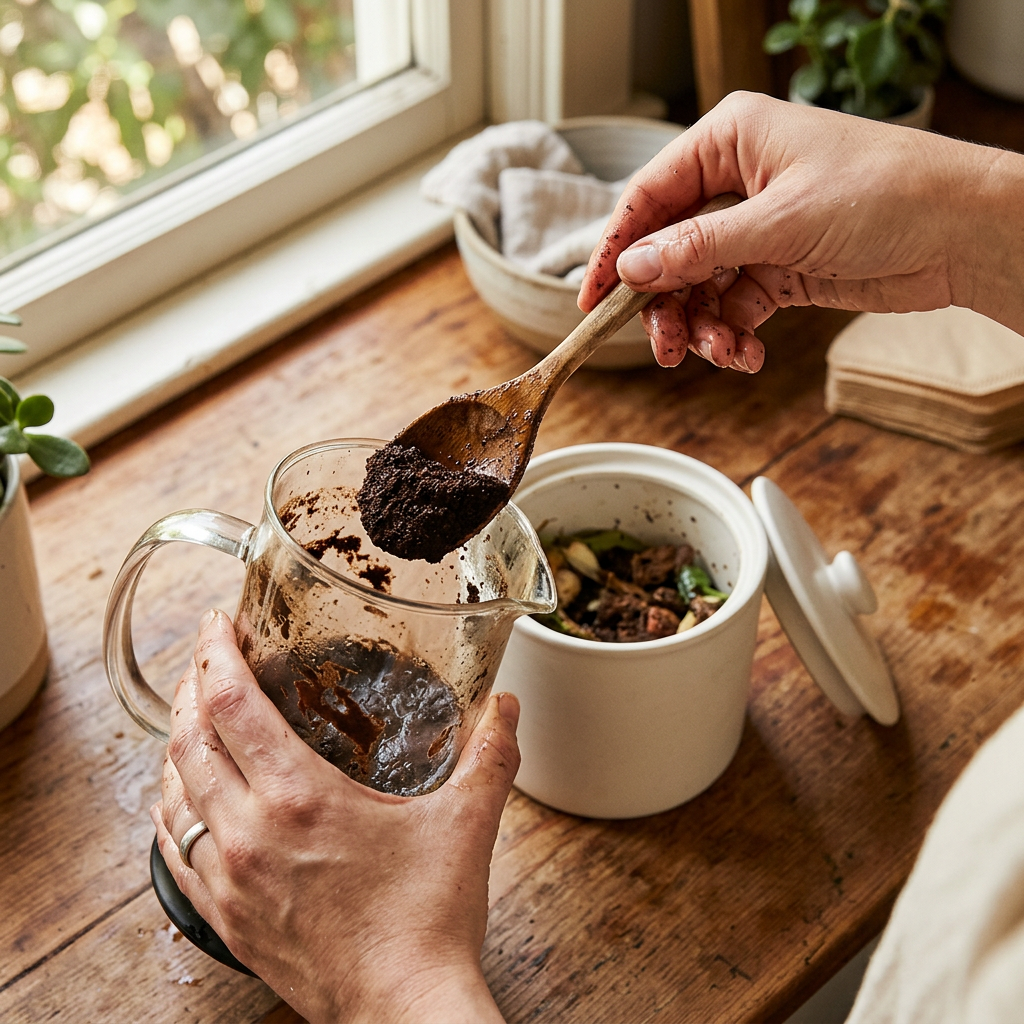
This is the step most beginners get wrong. Coffee grounds do not belong in your sink. They clump together, combine with oils, and turn into a slow-drain disaster over time.
Instead, pick one of these simple methods:
- Scoop them out with a wooden or silicone spoon and drop them straight into the trash or compost bin.
- Use a paper towel trick: line a sink strainer with a paper towel, pour the contents of the carafe in, and let the water drain through. Toss the paper towel and grounds in the trash.
- Compost them if you have a bin — coffee grounds are gold for garden soil.
Don't use the garbage disposal for coffee grounds either. They can build up inside the disposal and your pipes, causing clogs that are expensive to fix. Trash or compost — that's it.
Step 3 — Rinse and Plunge with Soapy Water
Once the grounds are out, fill the carafe about halfway with warm water and a single drop of dish soap. Put the plunger back on and plunge it up and down four or five times.
This does two things: it rinses any leftover grit off the inside of the carafe, and — more importantly — it pushes soapy water through the mesh filter, which is where invisible coffee oils love to hide. Those oils are the reason old French presses eventually make bitter, stale-tasting coffee.
Dump the soapy water, then rinse everything with clean warm water until you can't smell soap anymore.
Step 4 — Dry with Parts Separated
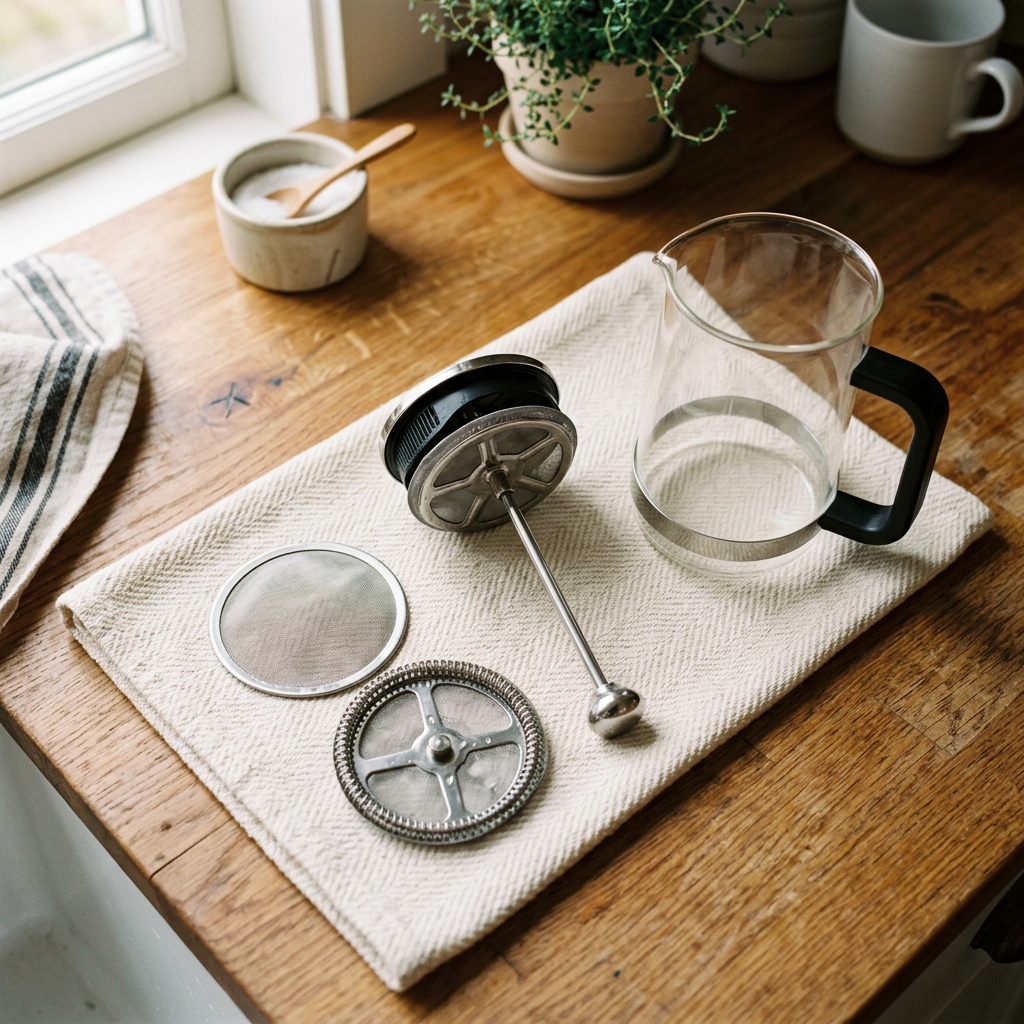
Here's a small habit that makes a huge difference: don't reassemble the press while it's wet.
Take the plunger out of the carafe and let both pieces air dry on a dish towel or drying rack. Trapped moisture on the mesh filter is what causes mildew smells, and separated parts dry in minutes instead of hours. Once everything is dry, you can put it back together and it's ready for the next brew.
Step 5 — Do a Deep Clean Once a Month
The daily rinse handles 90% of the work. But once a month (or sooner if your coffee starts tasting off), give your French press a full deep clean. This is the step that saves it from slow, clogged plunges and stale-oil flavor.
- Disassemble the plunger. Unscrew the filter assembly — most French presses have three stacked parts: a spring disk on top, the mesh screen, and a cross plate on the bottom. Lay them out in order so you remember how they go back together.
- Mix a cleaning bath. Fill a bowl or sink with equal parts hot water and white distilled vinegar.
- Soak for 30 minutes. Submerge the carafe (if it fits), the plunger rod, and all the filter pieces. Vinegar dissolves coffee oils, mineral buildup, and even mold spores.
- Scrub the mesh. Use a soft-bristled brush or sponge to gently work the mesh screen. You'll be surprised how much brown gunk comes off.
- Rinse thoroughly and dry. Rinse every piece under hot water until there's no vinegar smell left. Air dry with parts separated, then reassemble.
For really stubborn stains or hard-water marks inside the carafe, make a paste with a teaspoon of baking soda and a little water. Use a sponge (never steel wool) to gently scrub, then rinse. Baking soda is non-abrasive to glass but cuts through oils that even soap leaves behind.
Can You Put a French Press in the Dishwasher?
Short answer: you probably shouldn't, even if your manufacturer says some parts are dishwasher-safe.
Most glass French press carafes are made from borosilicate glass, which is heat-resistant but still fragile. Dishwasher heat, pressure, and the risk of knocking into other dishes all stack the odds against your press. Bodum — the most common beginner brand — recommends hand-washing to extend the carafe's life.
Stainless steel French presses are usually fine in the dishwasher, but for glass models, two minutes at the sink is safer than replacing a cracked carafe.
When to Replace the Mesh Filter
Even with perfect cleaning, the mesh filter on a French press doesn't last forever. If you notice:
- The plunger feels loose or wobbly as it goes down
- Lots of grounds sneak past the filter into your cup
- The mesh has a permanent brown stain that won't scrub out
…it's time for a replacement screen. Most brands sell them for a few dollars, and it's a five-second swap. A fresh screen can make an old French press feel brand new.
If you're noticing a lot of sediment in your cup, a worn or dirty filter is often the cause. For more fixes, see our guide on why your French press coffee is muddy and how to fix it.
- Scoop grounds into the trash or compost — never the sink or garbage disposal.
- Rinse and plunge with warm soapy water after every brew to flush the mesh filter.
- Always let parts air dry separated to prevent mildew smells.
- Deep clean with a 50/50 vinegar and water soak once a month.
- Hand-wash glass carafes — dishwashers are a coin flip with borosilicate glass.
Keep Brewing, Keep Cleaning
Cleaning a French press isn't complicated once you know the routine. A two-minute rinse after each brew plus a monthly vinegar soak is all it takes to keep your press working like new and your coffee tasting bright instead of bitter.
If you're still learning the brewing side, check out our step-by-step French press guide for beginners. And if you want the full picture — grind size, ratios, troubleshooting — our complete beginner's guide to French press coffee is the best place to start.
Take care of your press, and it'll take care of your coffee.
☕ About the Author
Greg Rathbone is the founder of HomeCoffeeBeginner.com. He started this site after finding that most coffee advice online assumed you were already an expert. Every guide here is written for total beginners — tested in his own kitchen in Oklahoma, with zero snobbery.