
If pour-over has felt inconsistent — great one morning, watery the next — the fix is almost never about technique. It's about your ratio. Pour-over coffee is one of the most ratio-sensitive brewing methods, and once you nail it down, your coffee gets noticeably better overnight. This is the simplest, most beginner-friendly explanation of pour-over ratio you'll find.
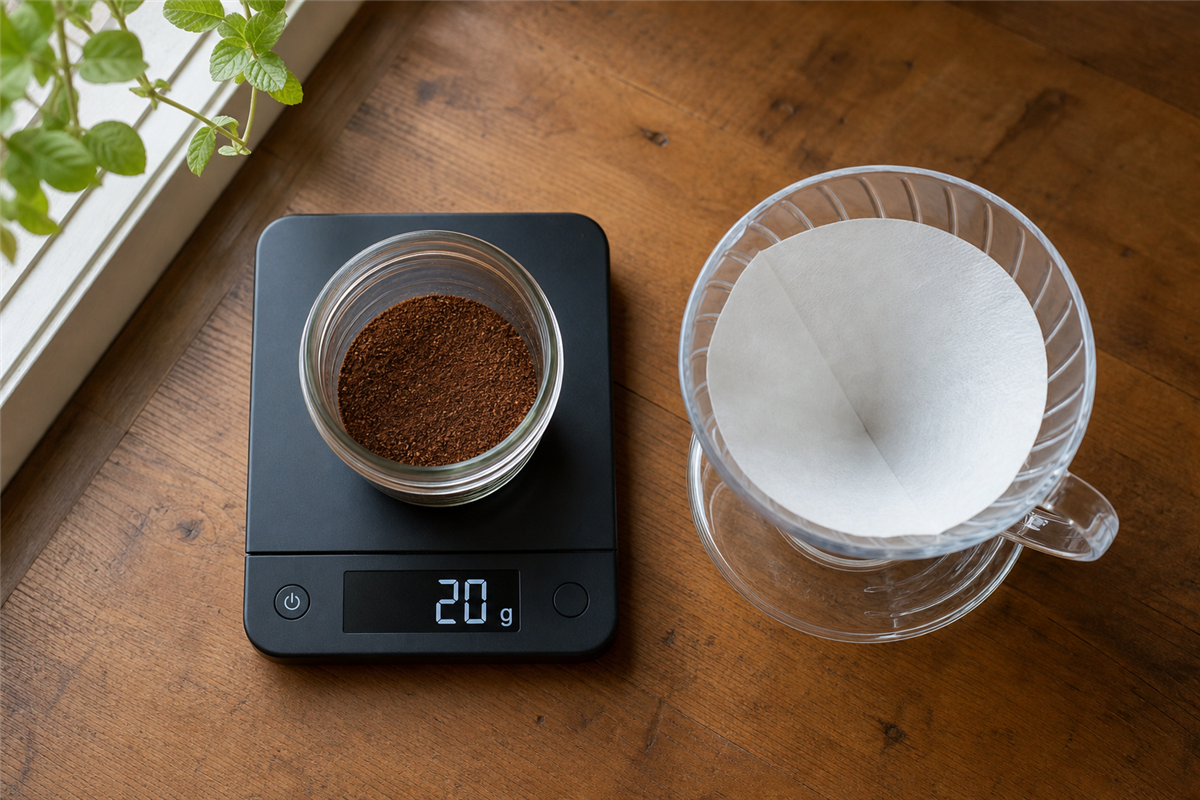
The standard pour-over coffee-to-water ratio is 1:16 — 1 gram of coffee for every 16 grams of water. For one cup, that's 20g of coffee to 320g of water. Want it stronger? Try 1:15. Lighter? Try 1:17. Measure both by weight on a kitchen scale, not by scoops.
What “Ratio” Actually Means
A coffee-to-water ratio is just a recipe for how much of each ingredient goes into your brew, measured by weight in grams. Pour-over is built around weight, not volume — no tablespoons, no fluid ounces, no eyeballing. A scale that reads in grams is the only piece of gear that makes ratios easy to follow.
When you see “1:16,” it means one part coffee to sixteen parts water. So if you put 20 grams of coffee in your dripper, you'll pour 20 × 16 = 320 grams of water over it. That's it. Same ratio scales up or down — 25g of coffee gets 400g of water, 15g of coffee gets 240g.
The Pour-Over Ratio Chart (Memorize This)
Here's the cheat sheet. Print it, screenshot it, or tape it to your kitchen wall. These are the ratios that work for almost every pour-over dripper — V60, Chemex, Kalita, you name it.
| Strength | Ratio | Coffee | Water | Best For |
|---|---|---|---|---|
| Lighter | 1:17 | 20g | 340g | Tea-like, delicate cups |
| Standard (recommended) | 1:16 | 20g | 320g | Most beginners, most beans |
| Stronger | 1:15 | 20g | 300g | Bold, fuller-bodied cups |
| Strongest | 1:14 | 20g | 280g | If you usually add milk |
Start at 1:16. Brew it three or four times the same way, taste it carefully, and only then start experimenting up or down. Changing the ratio before you've tasted your baseline is the fastest way to confuse yourself.
How Much Coffee for Different Cup Sizes
Most beginner questions about pour-over ratio come down to one practical question: “How much coffee do I need for the cup I'm actually making?” Here's the quick lookup, all at the standard 1:16 ratio.
| Cup Size | Coffee (g) | Water (g) |
|---|---|---|
| Small cup (about 8 oz) | 15g | 240g |
| Standard mug (about 11 oz) | 20g | 320g |
| Large mug (about 14 oz) | 25g | 400g |
| Chemex 6-cup, 2 mugs worth | 40g | 640g |
Your final cup will always weigh a little less than the water you poured. Coffee grounds and the filter soak up about 30–50 grams of water per brew. So if you poured 320g, expect about 270–290g of coffee in your mug. This is normal — don't pour extra to “make up for it.”
Why 1:16 Is the Sweet Spot
The 1:16 ratio became the pour-over standard because it sits right in the middle of the “Golden Cup” range that the Specialty Coffee Association recommends (1:15 to 1:18). It's strong enough to taste like real coffee, light enough that the flavors stay bright and clear, and forgiving enough that small mistakes don't ruin the cup.
1:15 and lower can taste muddy or overwhelming for lighter roasts. 1:17 and higher can taste thin or watery, especially if your grind isn't dialed in yet. 1:16 splits the difference and works with almost any bean a beginner is likely to buy.
Volume vs. Weight: Why Tablespoons Don't Work
You'll see a lot of older recipes that say “2 tablespoons of coffee per 6 ounces of water.” Skip those. A tablespoon of whole bean dark roast weighs very differently than a tablespoon of finely ground light roast — sometimes by 40% or more. The same recipe will give you wildly different cups depending on your beans.
Weight is consistent. A gram is a gram is a gram. This is why a $15 kitchen scale is hands-down the highest-leverage piece of pour-over gear you can buy. We covered this in detail in our guide to why you need a scale to make good coffee.
Adjusting Your Ratio: A Simple Rule
Once you've brewed a few cups at 1:16, you'll start having opinions. Here's how to act on them.
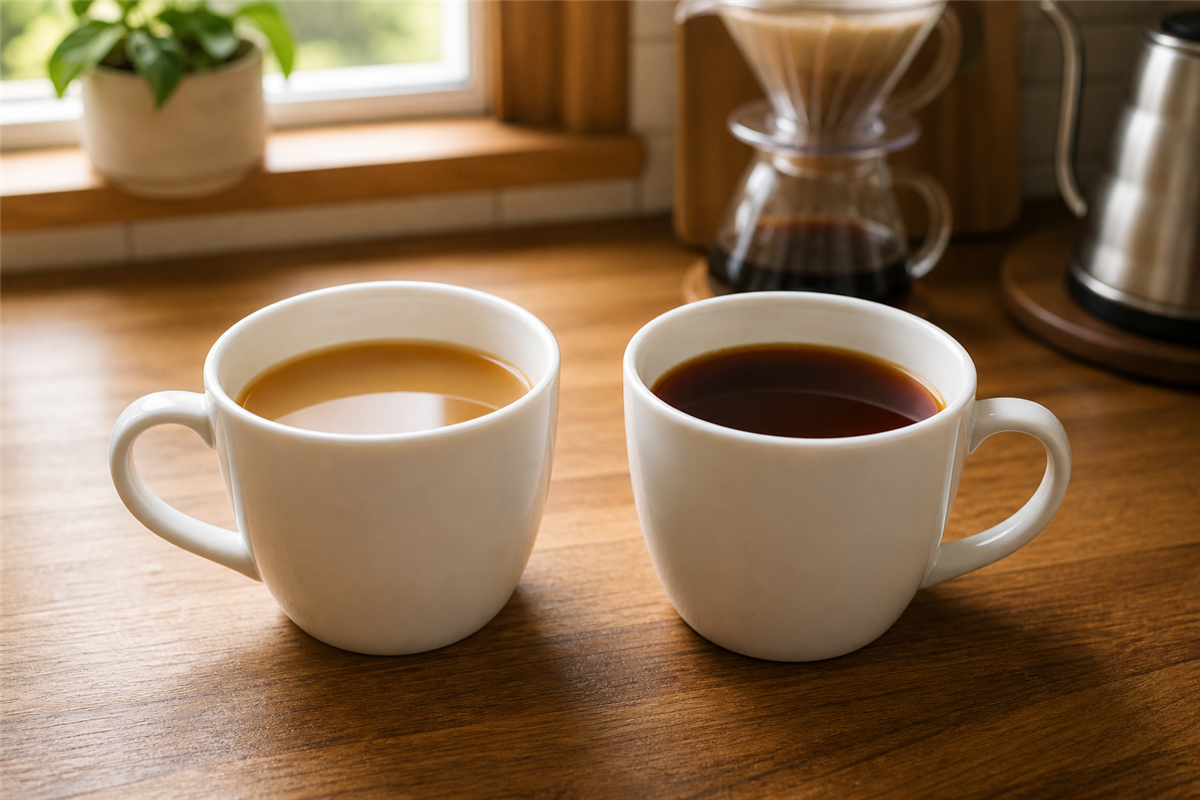
- Coffee tastes weak or watery? Try 1:15 (a touch less water, same coffee).
- Coffee tastes too strong or bitter? Try 1:17 first. Still bitter? It's likely a grind issue, not a ratio issue — see our best grind size for pour-over guide.
- Want a bigger cup with the same flavor? Keep the ratio, scale both numbers up. 25g coffee + 400g water gives you a noticeably larger 1:16 cup.
- Drinking with milk? Try 1:14 or 1:15. Milk cuts the intensity, so you need a stronger starting brew.
Change only one variable at a time. If you tweak ratio AND grind AND water temperature in the same brew, you won't know which change actually helped. Adjust ratio, brew it 2–3 mornings to taste it clearly, and only then move on to the next variable.
Common Beginner Ratio Mistakes
- Skipping the scale. Eyeballing 20 grams of coffee is the #1 reason pour-over tastes inconsistent from one morning to the next.
- Counting only the brew water, not the bloom. The 40g of water you use to bloom counts toward your total. Your 320g target is the whole brew, bloom included.
- Forgetting to tare. Tare your scale to zero with the dripper, filter, and coffee on top — that way you're measuring just the water you're adding.
- Adjusting too fast. One brew at 1:15 doesn't tell you 1:15 is the right ratio for you. Try it two or three times before moving on.
- The standard pour-over ratio is 1:16 — 20g of coffee to 320g of water for a single mug.
- Use a kitchen scale and measure both coffee and water by weight, not by volume.
- 1:15 is stronger, 1:17 is lighter. Adjust by one step at a time.
- Your finished cup will weigh a little less than the water you poured — that's normal.
- Don't change ratio and grind and temperature at once. One variable at a time.
What to Read Next
Ratio is one of five variables that shape your pour-over cup. The next two to nail down are grind size and water temperature. Start with our best grind size for pour-over guide, then check the complete pour-over beginner's guide for the full picture.
Disclosure: This article does not contain affiliate links. If a future update adds product recommendations, full disclosure will follow. Affiliate policy here.
☕ About the Author
Greg Rathbone is the founder of HomeCoffeeBeginner.com. He started this site after finding that most coffee advice online assumed you were already an expert. Every guide here is written for total beginners — tested in his own kitchen in Oklahoma, with zero snobbery.