
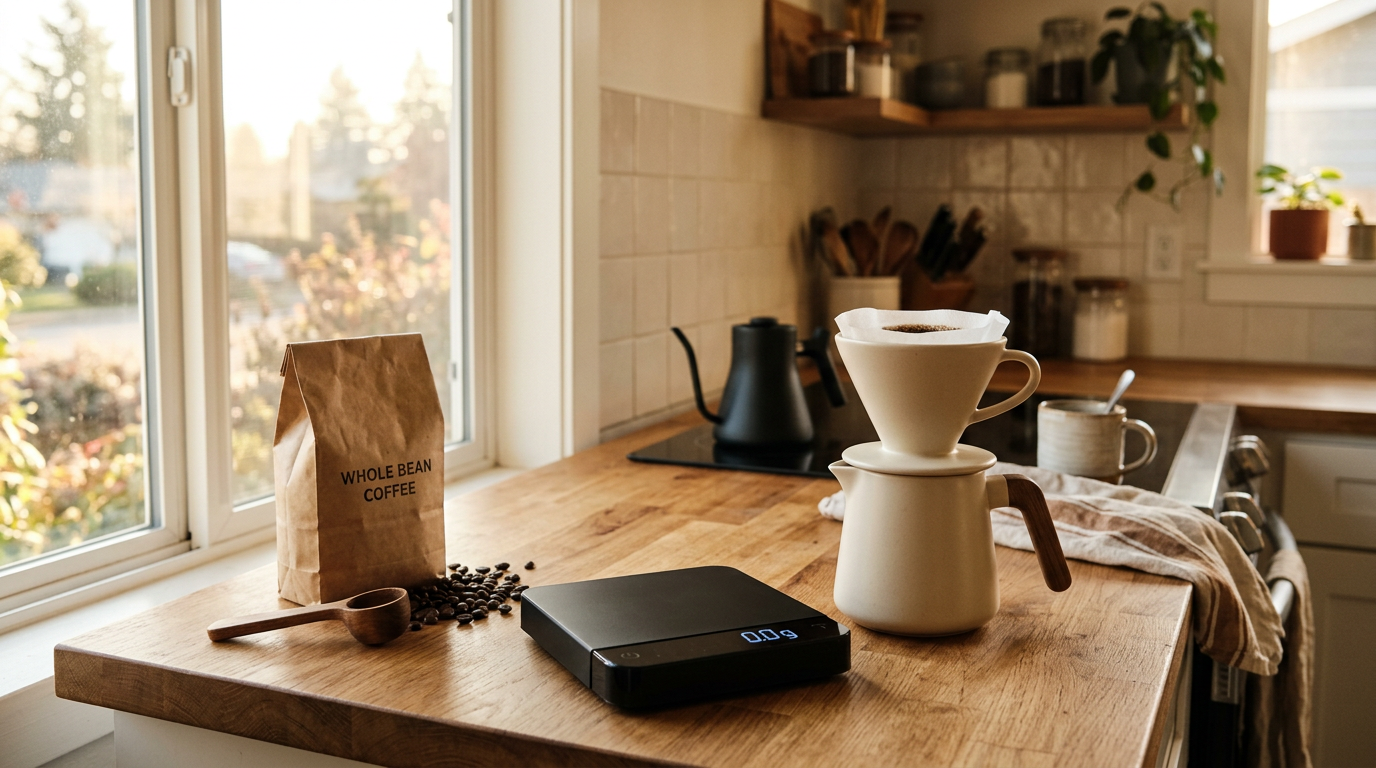
A kitchen scale takes the guesswork out of brewing coffee. By weighing your coffee and water in grams instead of using scoops, you get the same great-tasting cup every single time. It's one of the cheapest, simplest upgrades you can make — and it makes a bigger difference than most expensive gear.
You followed the directions on the bag. Two scoops of coffee, fill the water to the line, press start. But some mornings it tastes great, and other mornings it's weak, bitter, or just… off. You're doing the same thing every time — so why does it keep changing?
The answer is simpler than you'd think: you're not actually using the same amount of coffee every time. A “scoop” is a surprisingly unreliable way to measure coffee. And once you understand why, a small kitchen scale starts to look like the most useful tool in your coffee setup.
In this article, we'll explain why a scale matters so much, how it connects to the coffee-to-water ratio, the common mistakes it helps you avoid, and how to start using one — even if you've never weighed anything in your kitchen before.
Why Scoops Don't Work (Even When You Think They Do)
Here's the thing about coffee scoops: they measure volume, not weight. And volume is a terrible way to measure coffee.
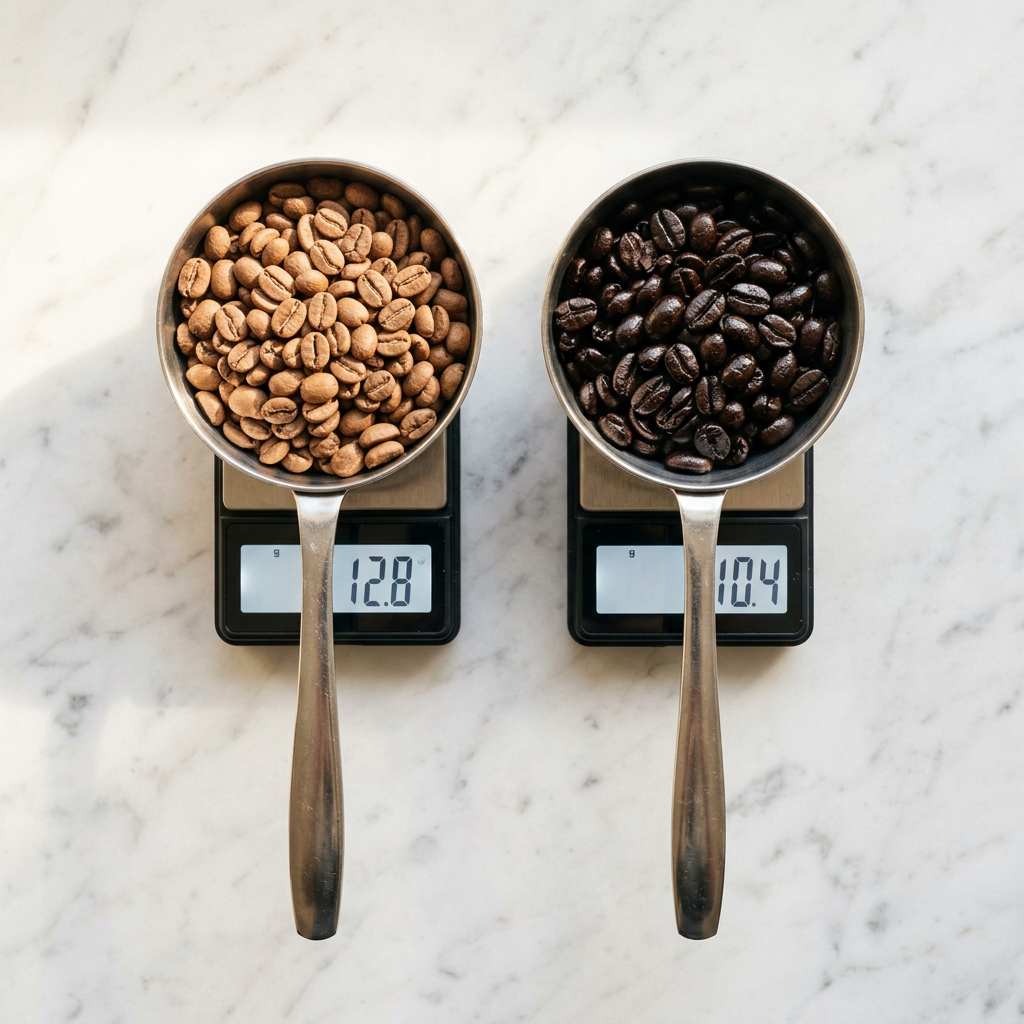
A scoop of light-roast beans weighs more than the same scoop of dark-roast beans — because dark roasts are less dense (they've lost more moisture during roasting). A scoop of finely ground coffee weighs more than a scoop of coarsely ground coffee, because the smaller particles pack together more tightly. Even the shape of the bean matters.
So when you use “two scoops” every morning, you might be putting in 28 grams one day and 34 grams the next. That six-gram difference doesn't sound like much, but it's enough to completely change how your coffee tastes — stronger one day, weaker the next, bitter on Tuesday, sour on Thursday.
A scale eliminates that problem entirely. Eighteen grams is eighteen grams, regardless of how the beans are roasted, how they're ground, or what shape they are. It's the only way to truly repeat what you did yesterday.
How a Scale Connects to Your Coffee-to-Water Ratio
If you've already read our guide on coffee-to-water ratios, you know that the balance between coffee and water is the single biggest factor in how your cup tastes. The standard starting point is about 1:16 — that's 1 gram of coffee for every 16 grams of water.
But here's the catch: that ratio only works if you're actually measuring both sides accurately. If you're guessing on the coffee and eyeballing the water, you could easily end up at 1:12 (too strong and bitter) or 1:20 (thin and watery) without realizing it.
A scale lets you dial in both numbers precisely. Weigh out 18 grams of coffee. Add 288 grams of water. That's a 1:16 ratio, and it'll taste the same every time you do it. If it's a little strong for you, try 17 grams next time. If it's a little weak, try 19. You're making small, controlled adjustments instead of random guesses.
This is what coffee professionals mean when they talk about “dialing in” a recipe. It sounds fancy, but it really just means: weigh your stuff, taste the result, and nudge the numbers until you love it.
Water is easy to measure by weight because 1 milliliter of water weighs almost exactly 1 gram. So if your recipe calls for 300 grams of water, that's the same as 300 milliliters. You can pour water directly onto the scale and watch the number climb — no measuring cup needed.
What Happens When You Don't Use a Scale
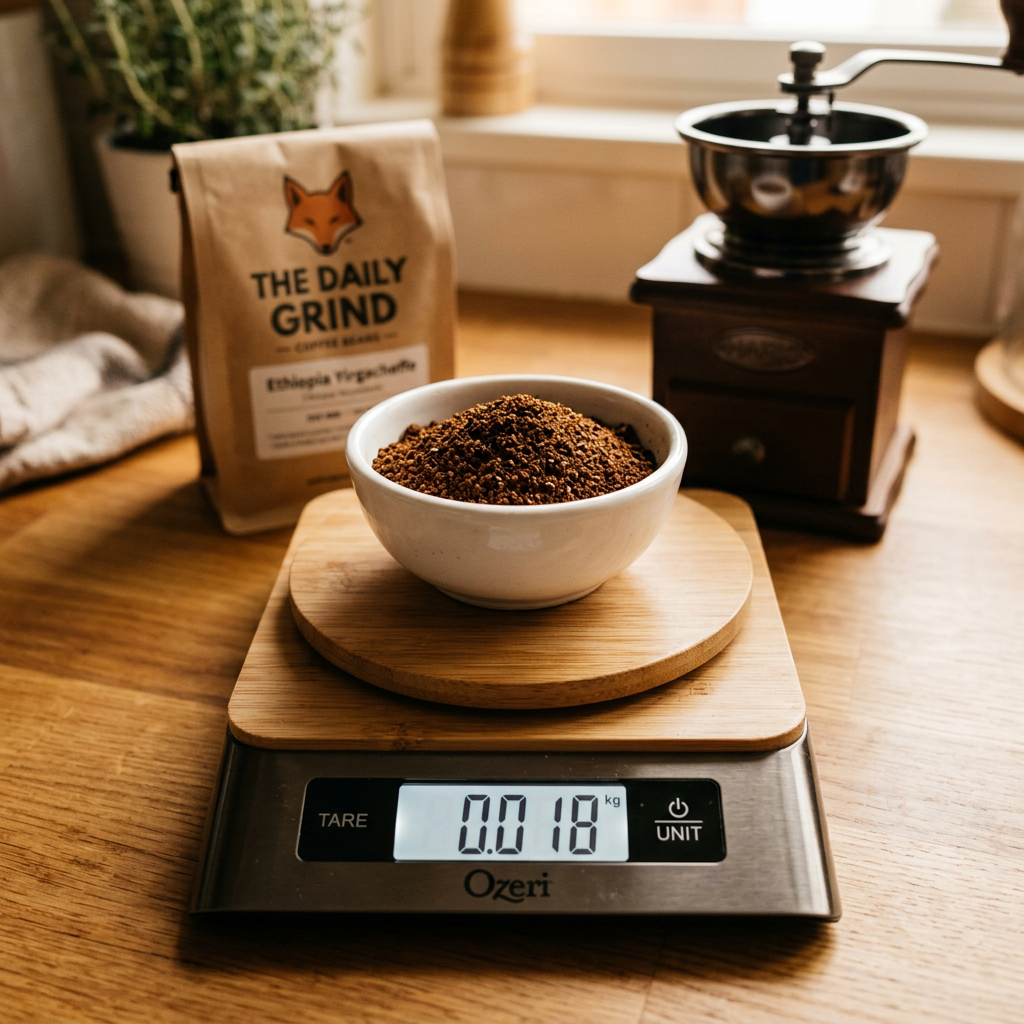
Without a scale, you're introducing randomness into your brewing every single day. Here are the most common problems that come from eyeballing your measurements:
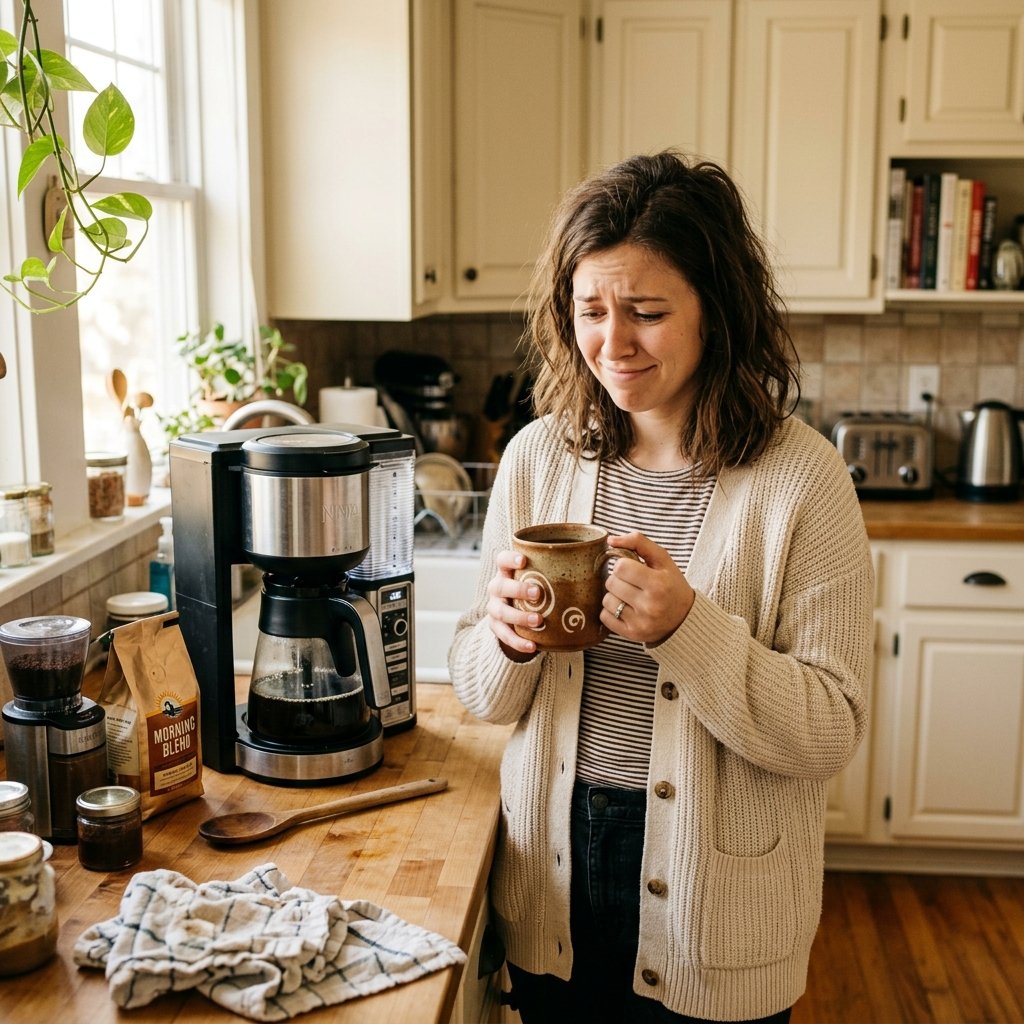
Bitter coffee: Too much coffee relative to your water means over-extraction. The water pulls out too many bitter compounds because there's so much coffee packed in there. This is the most common complaint from beginners, and it's almost always a ratio problem.
Weak or sour coffee: Too little coffee means under-extraction. The water doesn't have enough coffee to work with, so the cup tastes thin, flat, or oddly sour. If you've ever thought “this just tastes like hot water,” you probably used too little coffee.
Inconsistency: The most frustrating part isn't that your coffee is bad — it's that it changes every day. Monday's cup was perfect, but you can't recreate it because you don't know exactly what you did. A scale solves this by giving you a number you can repeat.
Understanding how coffee extraction works helps explain why these small measurement differences create such big flavor swings. When the ratio shifts, the entire extraction changes with it.
Don't trust the “cups” markings on your coffee maker's water tank. A “cup” on most coffee makers is only 5–6 ounces — not the 8-ounce cup you're used to. This mismatch is another reason scales are more reliable than volume markings.
You Don't Need an Expensive Scale
Here's the good news: you don't need a fancy barista scale with Bluetooth and flow-rate sensors. For brewing regular coffee at home, any digital kitchen scale that reads to 1-gram accuracy will work just fine.
You probably already have one in a kitchen drawer. If not, a basic digital scale costs around $10–$15. If you want one designed specifically for coffee — with a built-in timer and 0.1-gram precision — something like the Greater Goods Coffee Scale runs around $30 and does everything a beginner needs.
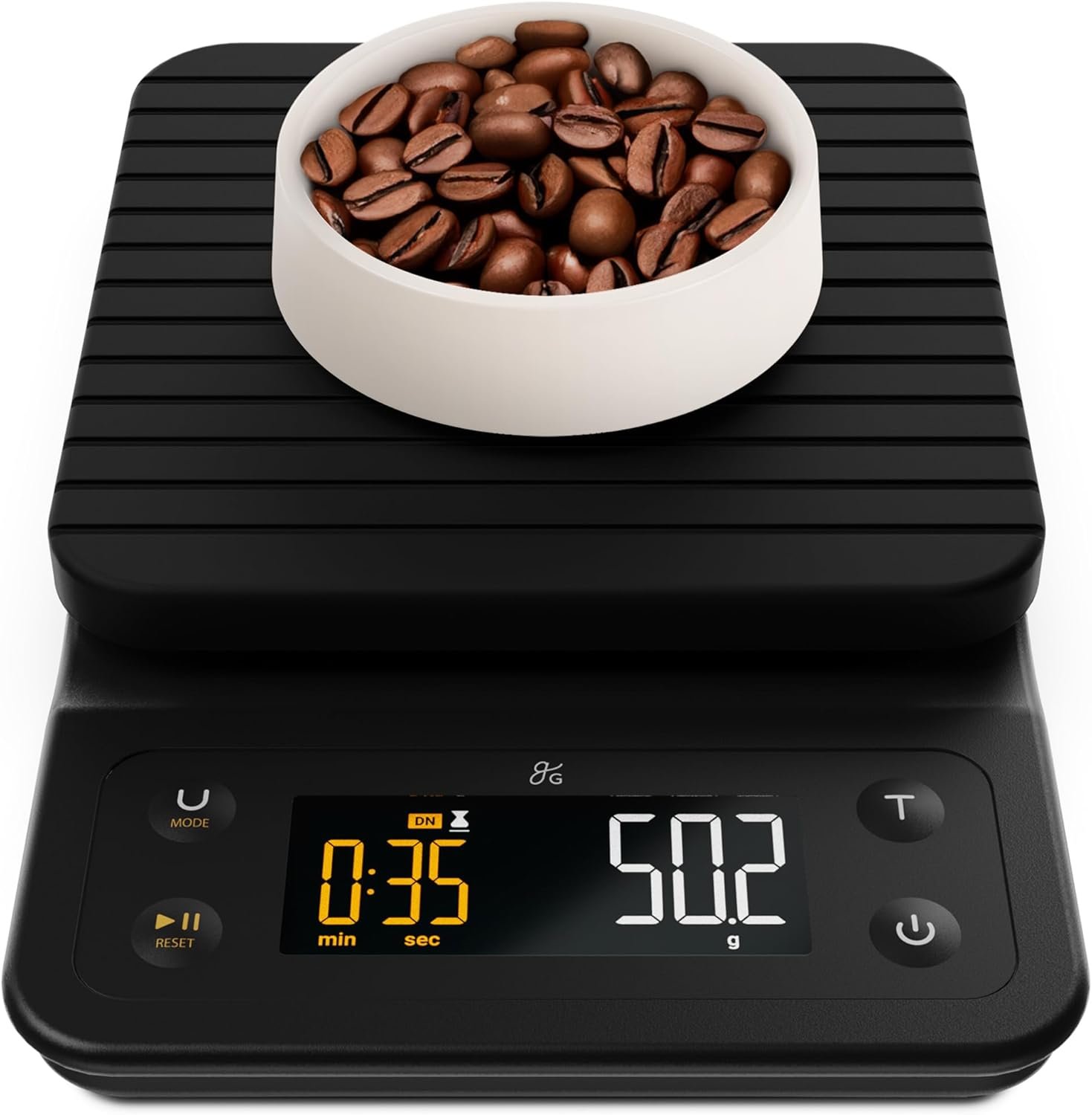
Our Pick for Beginners
Greater Goods Coffee Scale
0.1g precision, built-in brew timer, waterproof cover. Does everything you need for under $30 — no fancy apps or gimmicks.
Check Price on Amazon →Here's what to look for in a coffee scale:
- Reads in grams — this is essential. Ounces aren't precise enough for coffee.
- Has a tare button — this lets you zero out the weight of your mug or bowl so you're only measuring what you add.
- Responds quickly — you want the number to update in real time as you pour, not lag behind by a few seconds.
- Built-in timer (nice to have) — useful for pour-over and French press where brew time matters, but not essential for drip machines.
That's it. No apps, no Bluetooth, no fancy modes. Just a scale that reads grams and has a tare button. Anything beyond that is a bonus.
How to Start Using a Scale (It Takes 30 Seconds)
If you've never weighed your coffee before, here's the simple process:
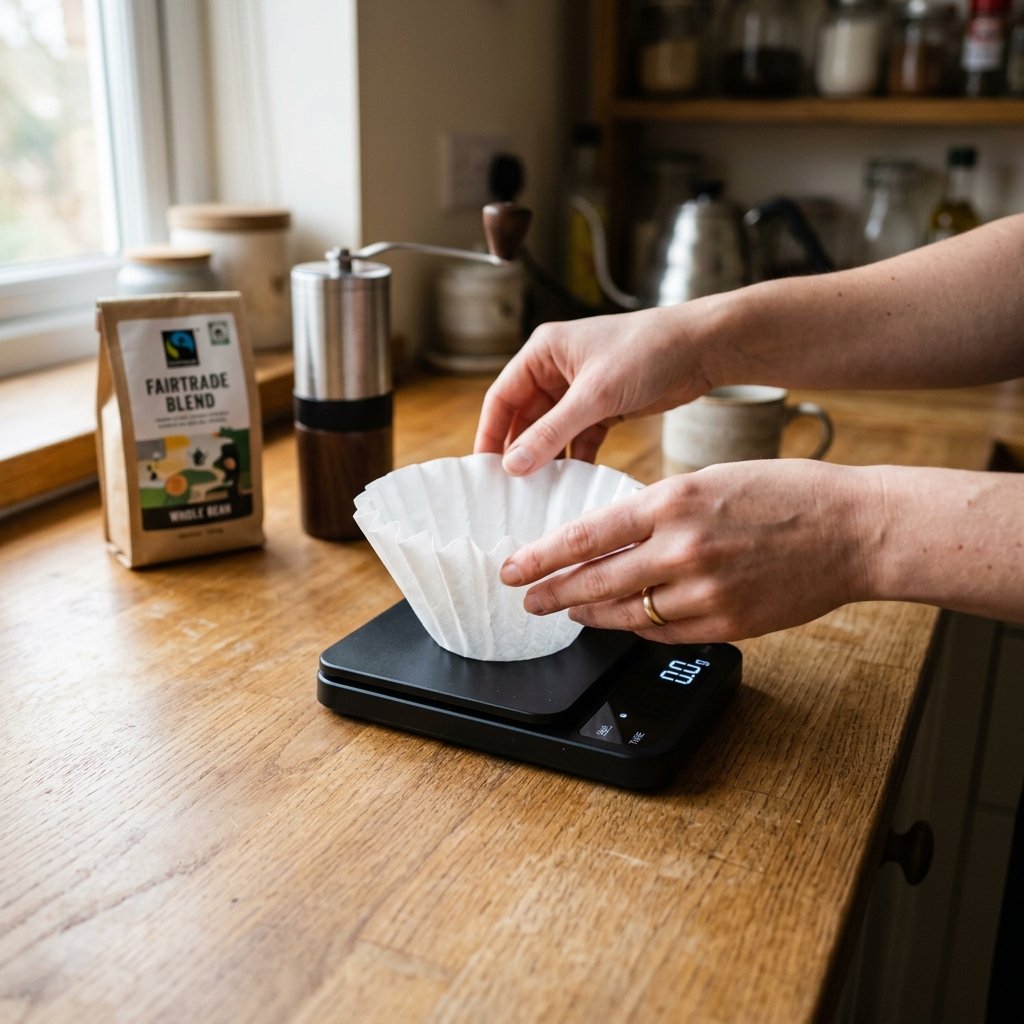
- Place your container on the scale — a mug, a bowl, or your coffee maker's filter basket.
- Press tare (or zero) — this resets the display to 0.0 so it ignores the weight of the container.
- Add coffee until you hit your target — start with 18 grams for a single strong cup, or 30 grams for a full 12-cup pot (adjust to taste).
- Weigh your water the same way — place your kettle or carafe on the scale, tare it, and fill to your target. Or just measure water by volume (grams and milliliters are nearly the same for water).
That's the whole process. It adds maybe 30 seconds to your morning routine, and it gives you repeatable results from day one. Once you find a recipe you love — say, 20 grams of coffee to 320 grams of water — you just hit those numbers every morning and your coffee tastes the same.
If you're just getting started on your coffee journey, our guide to making your first cup of coffee at home walks through the full process from start to finish.
Write down your recipe the first time you nail a cup you love. Something simple like “20g coffee, 320g water, medium grind” is all you need. That way you can repeat it perfectly tomorrow — and tweak one thing at a time if you want to experiment.
- Scoops measure volume, not weight — and volume is unreliable for coffee because bean density varies by roast, grind, and origin.
- A scale lets you nail the same coffee-to-water ratio every day, which is the biggest factor in how your cup tastes.
- Without a scale, small measurement differences cause big flavor swings — bitter one day, weak the next.
- You don't need an expensive scale. Any digital kitchen scale that reads grams and has a tare button will work.
- It adds about 30 seconds to your routine and gives you consistent, repeatable results from day one.
What to Read Next
Now that you know why weighing matters, the logical next step is understanding what numbers to use. Head over to our beginner's guide to coffee-to-water ratios — it walks you through finding the perfect strength for your taste.
And if you're ready to level up your brewing method, our guide to getting started with a French press is a great next step where a scale really shines.
Disclosure: This article contains affiliate links. If you purchase through our links, we may earn a small commission at no extra cost to you. We only recommend products we genuinely believe are right for beginners. Full disclosure here.
☕ About the Author
Greg Rathbone is the founder of HomeCoffeeBeginner.com. He started this site after finding that most coffee advice online assumed you were already an expert. Every guide here is written for total beginners — tested in his own kitchen in Oklahoma, with zero snobbery.