
Pour-over makes a cleaner, lighter, more nuanced cup — great if you enjoy tasting subtle flavors and don’t mind a little technique. French press makes a heavier, richer, fuller-bodied cup — great if you want minimal fuss and a forgiving routine. For most absolute beginners, French press is the easier place to start; pour-over rewards practice but takes a few weeks to dial in.
Both pour-over and French press are entry-level manual brewing methods, and both can make spectacular coffee for under $40 in gear. But they make very different cups and ask very different things from you in the morning. We’ll break down the real-world differences so you can pick the one that actually fits your kitchen, your patience, and your taste.
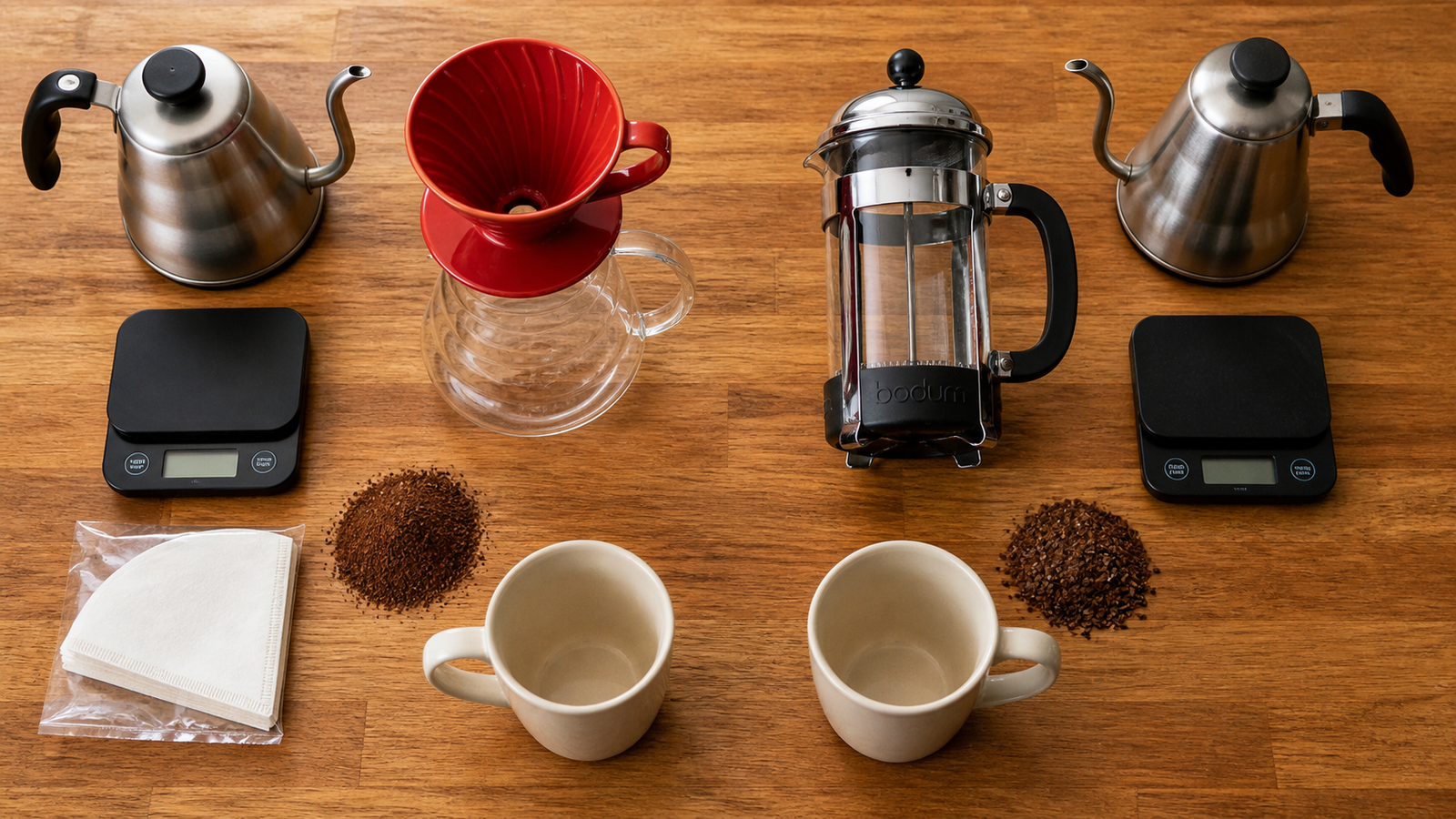
The 30-Second Comparison
| Pour-Over | French Press | |
|---|---|---|
| Cup body | Light, clean, tea-like | Heavy, full, rich |
| Best for | Light-medium roasts, single-origin | Medium-dark roasts, blends |
| Brew time | 3–4 minutes (hands on) | 4 minutes (mostly hands off) |
| Learning curve | Moderate — technique matters | Gentle — very forgiving |
| Cleanup | Easy (filter + grounds in trash) | Slightly messy (rinse + clean mesh) |
| Starter gear cost | ~$25–$50 | ~$25–$40 |
| Grind size | Medium-fine | Coarse |
What the Cups Actually Taste Like
This is the biggest decision, and it’s pure preference.
Pour-over uses a paper filter, which traps oils and tiny coffee fines. The result is a clean, bright, layered cup. You taste the origin notes — fruit, florals, sweetness — with more clarity. Pour-over fans tend to love light and medium roasts because pour-over highlights what makes those beans interesting.
French press uses a metal mesh, which lets the oils and a little bit of fine sediment through. That makes the cup heavier, richer, almost velvety. Some people describe it as more “coffee-shop strong.” French press tends to flatter medium and darker roasts, and forgiving blends.
If you’ve only ever had drip coffee, French press will feel closer to what you’re used to, just bolder. Pour-over will feel noticeably different the first time — lighter and more like a brewed tea than typical American drip.
How Hands-On Each Method Really Is
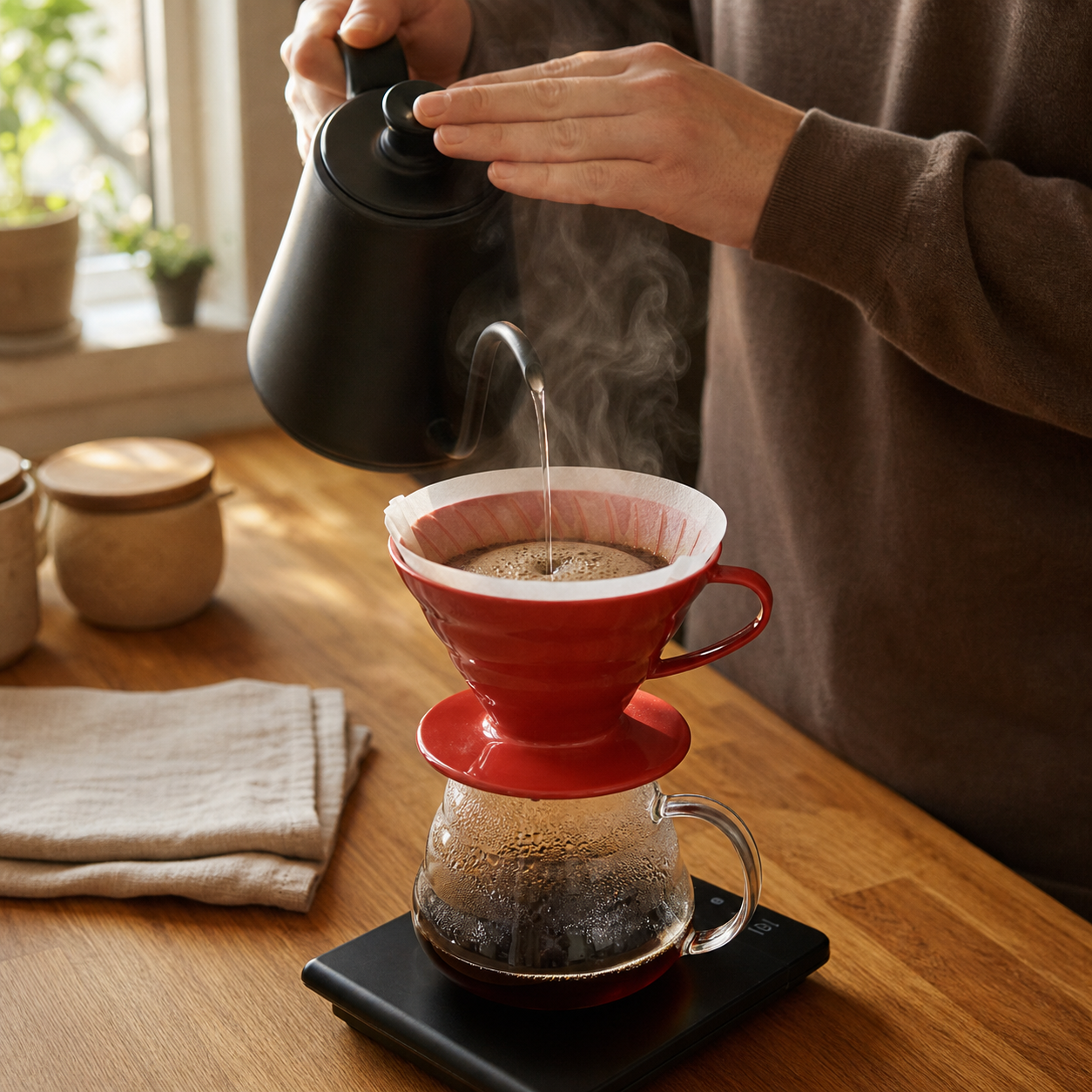
Pour-over asks for your attention for the full 3–4 minute brew. You’re pouring water in stages, watching the timer, controlling the flow. It’s a small ritual that some people love and others find annoying before they’ve had their first cup.
French press asks for about 30 seconds of attention at the start (add coffee, pour water, stir, put the lid on), then it sits and steeps while you do anything else. Come back at 4 minutes, push the plunger down, pour. That’s it.
If you’re a “set it and forget it” morning person, French press is built for you. If you enjoy the process and want a little quiet ritual, pour-over has more reward built in.
How Hard Is Each One to Get Right?
French press is more forgiving. Get the grind roughly right (coarse), the water roughly right (just off boil), the ratio roughly right (1g coffee to 15g water), and steep for 4 minutes. Mistakes show up as “a little muddy” or “a little weak,” not “undrinkable.”
Pour-over is more sensitive. The same coffee can taste dramatically different depending on grind size, pour speed, water temperature, and bloom timing. That’s a feature for some beginners (you can keep improving for months) and a bug for others (you might burn out before you nail it).
The most common pour-over beginner mistake is going too coarse on the grind — the water rushes through and the cup tastes weak and sour. The most common French press mistake is going too fine and getting a muddy, over-extracted cup. Both methods reward dialing in the right grind size.
Gear: What You Actually Need
Pour-over starter kit
- A dripper (Hario V60 is the classic beginner pick, around $10–$20 for the plastic version)
- Matching paper filters
- A kettle that can pour with control (gooseneck is ideal but not required)
- A digital scale
- A burr grinder (or pre-ground medium-fine)
The Hario V60 plastic dripper is our pick for beginners — it’s cheap, indestructible, and the standard most pour-over tutorials use.
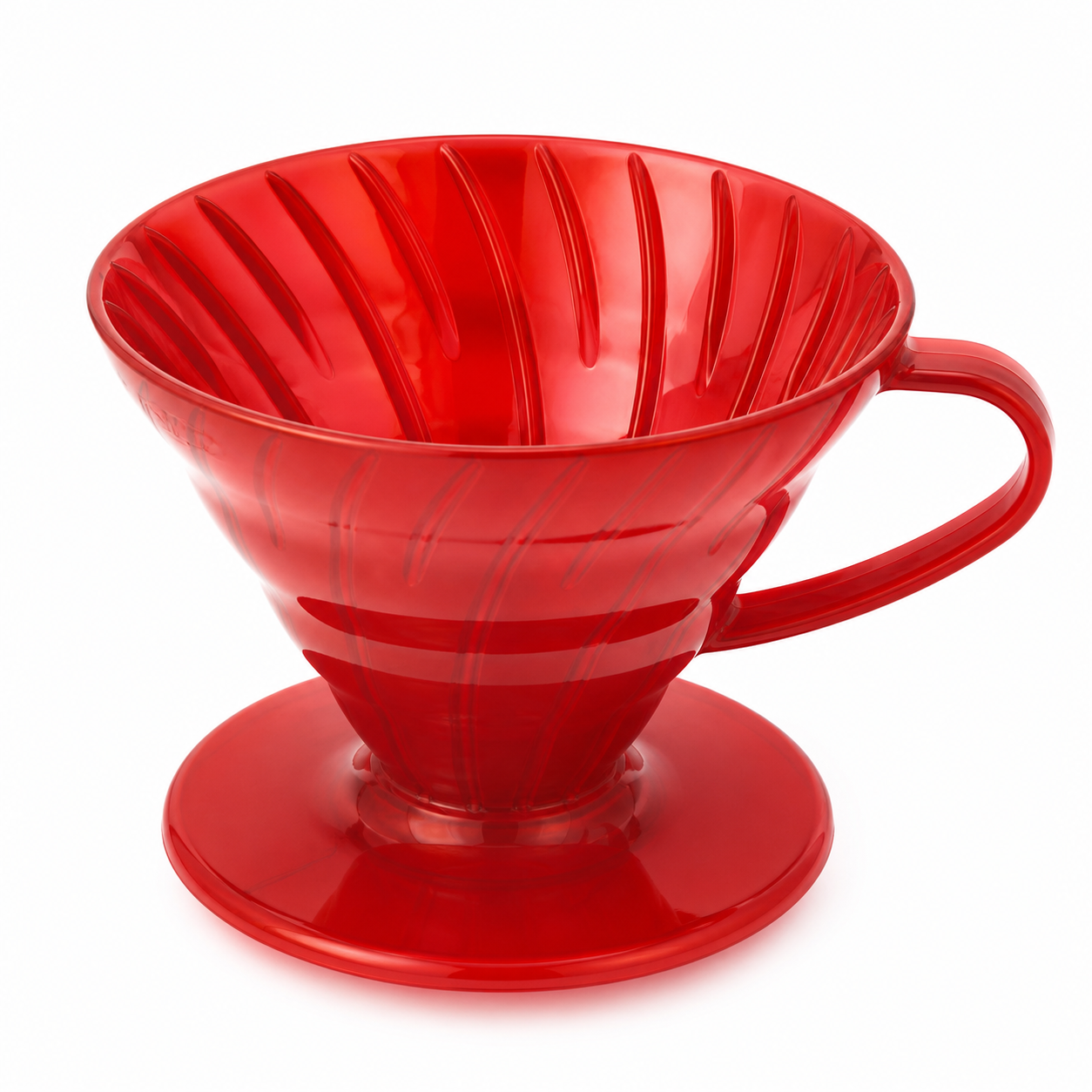
Our Pick for Beginners
Hario V60 02 Plastic Dripper
The most-used pour-over dripper in the world for a reason — cheap, durable, easy to clean, and every pour-over recipe on the internet was probably written for it.
Check Price on Amazon →French press starter kit
- A French press (Bodum Chambord 8-cup is the classic, around $30)
- A kettle (any kettle that gets to boiling works)
- A digital scale (helpful but optional at first)
- A burr grinder (or pre-ground coarse)
The Bodum Chambord is our beginner pick — it’s been the standard French press for decades and the build quality at $30 is hard to beat.
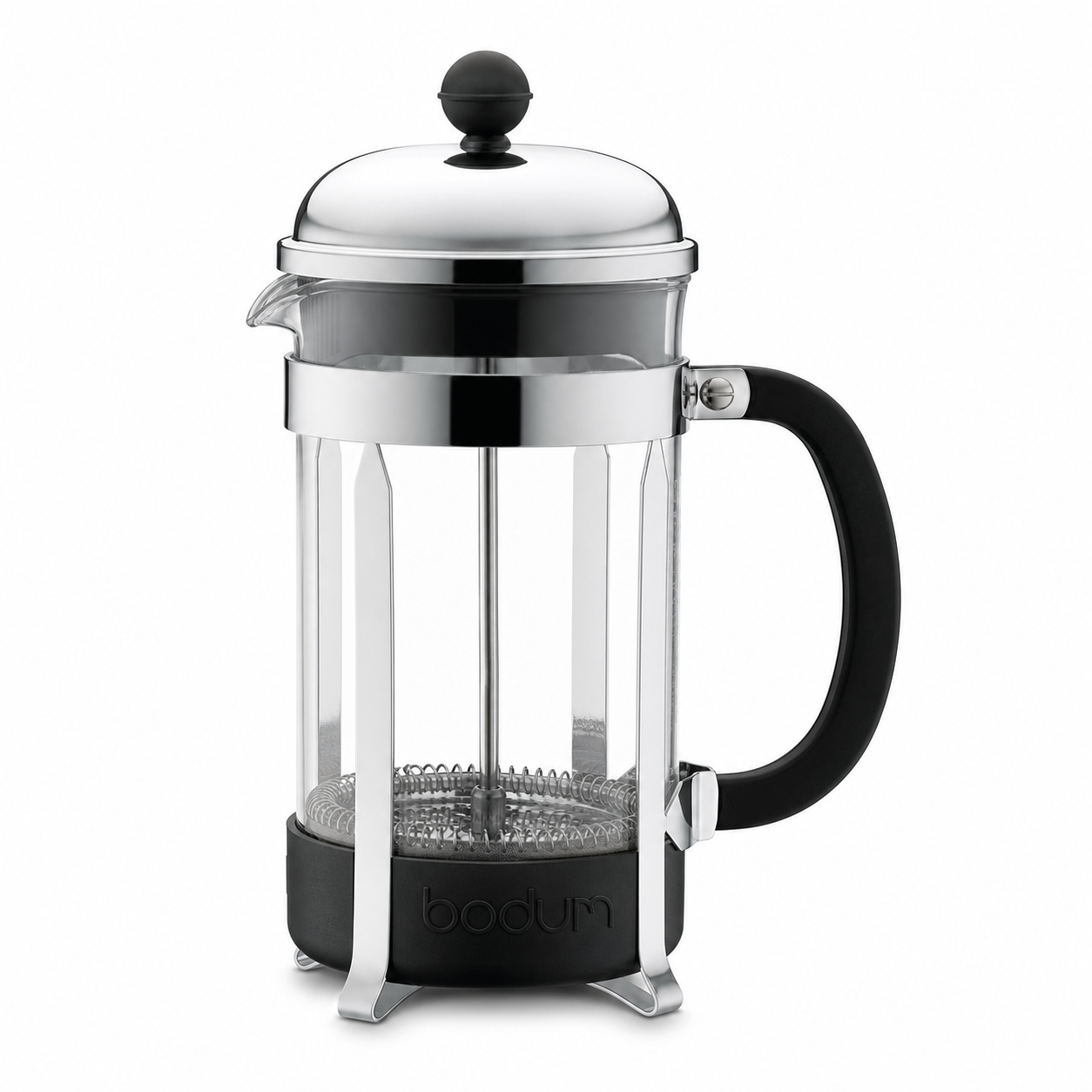
Our Pick for Beginners
Bodum Chambord 8-Cup French Press
A classic for decades. Sturdy stainless frame, clean glass beaker, and a price that makes upgrading to anything else feel hard to justify.
Check Price on Amazon →Cleanup: The Underrated Tiebreaker
This trips up a lot of beginners after their first week of brewing.
Pour-over cleanup is dead simple. The wet filter and grounds lift out as one packet and go straight in the trash (or compost). Rinse the dripper, done.
French press cleanup is messier. The grounds are heavy and wet and tend to clump in the bottom. You can’t just dump them in the sink (they’ll clog the drain over time), so you scoop them out or rinse into the trash. The mesh filter needs a good rinse too, and occasionally a deep clean. Not hard, but more steps. Our cleaning guide covers the easy way.
Cost Over Time
Both methods are nearly identical in starter cost. The ongoing cost difference is small:
- Pour-over needs paper filters — about $3–$5 per 100 filters, so a tiny per-cup cost.
- French press has no consumables. The mesh filter lasts indefinitely with occasional replacement screens.
Over a year of daily brewing, you’re looking at maybe $10–$15 in filter cost for pour-over. Not nothing, but not a deciding factor.
Our Recommendation for Beginners
If you’re brand new to manual coffee and want something forgiving you can do half-asleep, start with French press. The learning curve is gentle, the cup is satisfying, and a bad cup is rare once you’ve done it a week or two.
If you’re excited by the process, want to taste subtle origin flavors, and have a little patience for dialing in — go pour-over. The first month is bumpier but the ceiling is higher, and you’ll genuinely keep improving for months.
Plenty of home brewers end up owning both eventually. They’re cheap, they make different cups, and one for weekday rush + one for weekend ritual is a really pleasant rotation.
- Pour-over makes a lighter, cleaner, more nuanced cup; French press makes a heavier, richer one.
- French press is more forgiving and faster to get good with; pour-over rewards practice.
- Both cost about the same to start (~$25–$50) and can make excellent coffee.
- Cleanup is easier with pour-over; French press needs a few extra steps but no consumables.
- If you’re a total beginner who wants minimum friction, start with French press. If you want a craft you can grow into, start with pour-over.
Whichever you pick, the fundamentals matter more than the method — fresh beans, the right grind, and the right water temperature. Need a fuller walkthrough? Start with our complete pour-over guide or our complete French press guide.
Disclosure: This article contains affiliate links. If you purchase through our links, we may earn a small commission at no extra cost to you. We only recommend products we genuinely believe are right for beginners. Full disclosure here.
☕ About the Author
Greg Rathbone is the founder of HomeCoffeeBeginner.com. He started this site after realizing most coffee advice online assumes you're already an expert. Every guide here is written for total beginners and tested in his own kitchen — no jargon, no snobbery.