
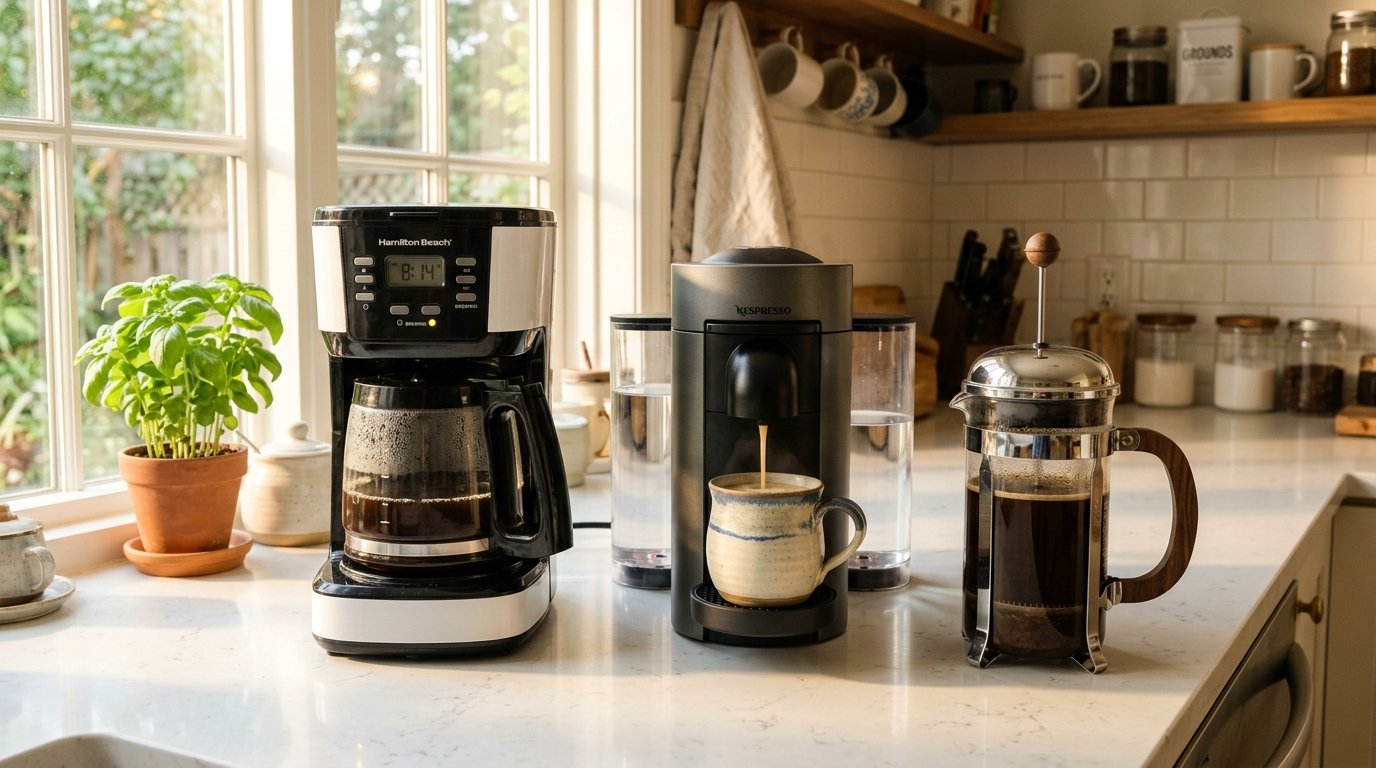
Walk into any appliance aisle — or scroll through Amazon for five minutes — and you'll find dozens of coffee makers staring back at you. Different sizes, different price points, different features you're not sure you need. It's a lot to take in when all you really want is a good cup of coffee in the morning without a lot of fuss.
We've been through them all so you don't have to. This guide cuts through the noise and gives you our honest picks for the best coffee makers for beginners — organized by budget, with no fluff. Whether you're spending $35 or $100, there's a solid machine on this list for you.
A quick note on how we chose these: we focused entirely on what actually matters for someone just starting out — ease of use, reliability, cleanup, and value for money. We don't rank anything based on how much commission it earns us. We rank based on what we'd genuinely recommend to a friend.
For most beginners, the Cuisinart DCC-3200P1 is the best coffee maker — it brews great coffee, has simple controls, and lasts for years. On a tight budget, the Black+Decker CM1160B is a reliable workhorse under $40. If you want the fastest, easiest morning routine possible, a Keurig K-Classic gets a hot cup ready in under a minute.
How We Chose These Products
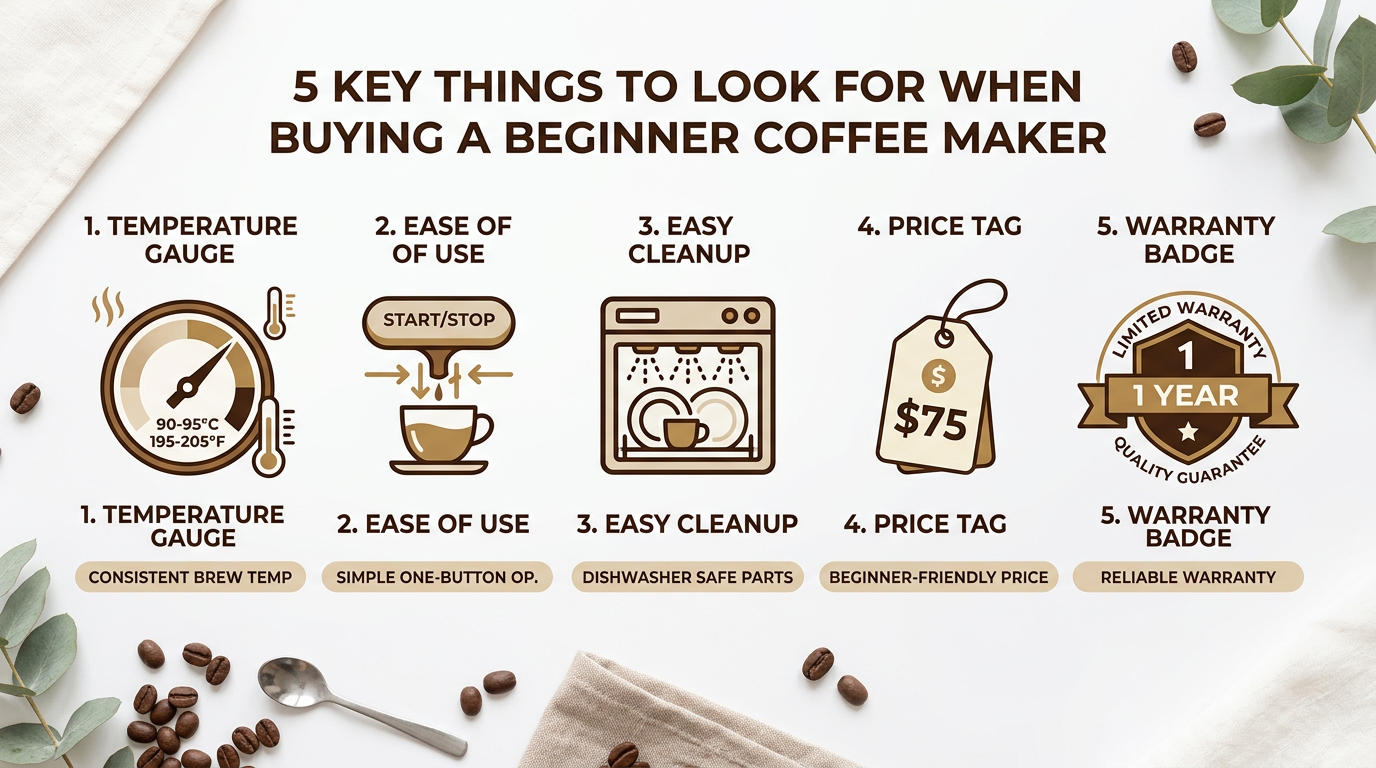
Picking a coffee maker sounds simple, but there are a few things that matter a lot more for beginners than they do for experienced coffee drinkers. Here's what we prioritized:
- Ease of use: Can you figure it out on a sleepy Monday morning without reading the manual? The machines on this list pass that test.
- Reliable brewing temperature: Coffee brews best between 195°F and 205°F. Cheap machines often undershoot this, producing weak or sour-tasting coffee. We only recommend machines that hit the right range.
- Easy cleanup: Removable brew baskets, dishwasher-safe carafes, and drip trays that don't require a ceremony to clean.
- Good value: We're not recommending anything that costs more than it's worth. Every pick here delivers solid performance for its price.
- Availability and support: All picks are widely available and backed by brand warranties — no obscure brands that disappear when something goes wrong.
Best Coffee Makers for Beginners — Our Top Picks
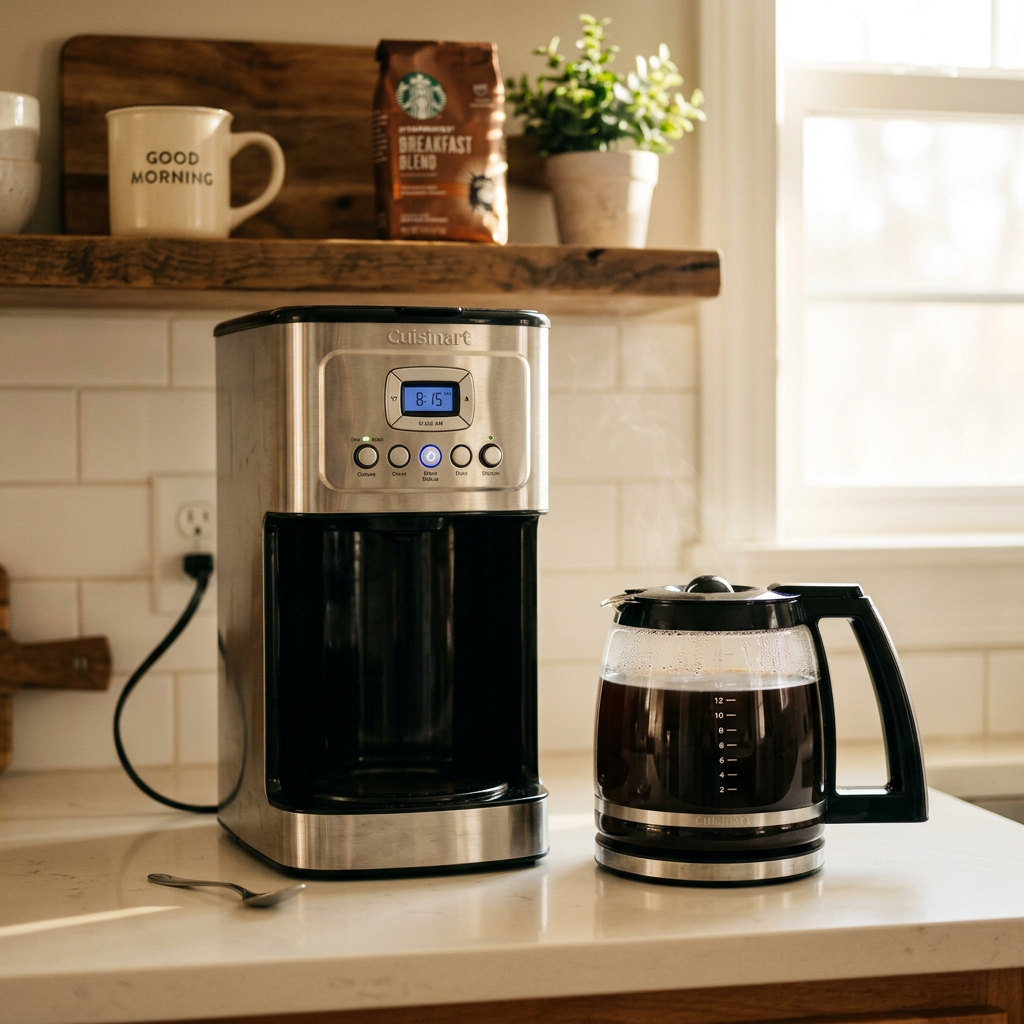
Best Overall: Cuisinart DCC-3200P1 14-Cup Programmable Coffee Maker
Price Range: Approx. $70–$100
Best For: Beginners who want a reliable, no-fuss drip machine that makes genuinely great coffee and will last for years.
Pros:
- Brews at the correct temperature for great extraction — consistently
- Brew strength selector (regular or bold) — rare at this price
- Variable-temperature hot plate keeps coffee warm without burning it
- Built-in water filter for better-tasting coffee right out of the box
- 24-hour programmable auto-brew — wake up to a fresh pot
Cons:
- More expensive than basic budget machines
- Carafe lid design can be tricky to clean thoroughly
- 14-cup capacity is larger than most beginners need (though it brews smaller batches fine)
The Cuisinart DCC-3200P1 is one of the most consistently recommended drip coffee makers you'll find — not just among beginners, but among serious home coffee drinkers too. What makes it stand out is that it actually brews at the right temperature. A lot of budget machines brew too cool, which leads to under-extracted, weak-tasting coffee. The Cuisinart doesn't have that problem.
For a beginner, the brew strength selector is a game-changer. You can start on regular, and if your coffee tastes a little weak or watery, just flip it to bold — no guesswork about ratios needed. The programmable timer means you can set it up the night before and wake up to coffee already made. Cleanup is straightforward: the brew basket is removable and dishwasher-safe, and the carafe is easy to hand wash.
If you're buying one coffee maker to start your home coffee journey and you want it to last, this is the one we'd choose.
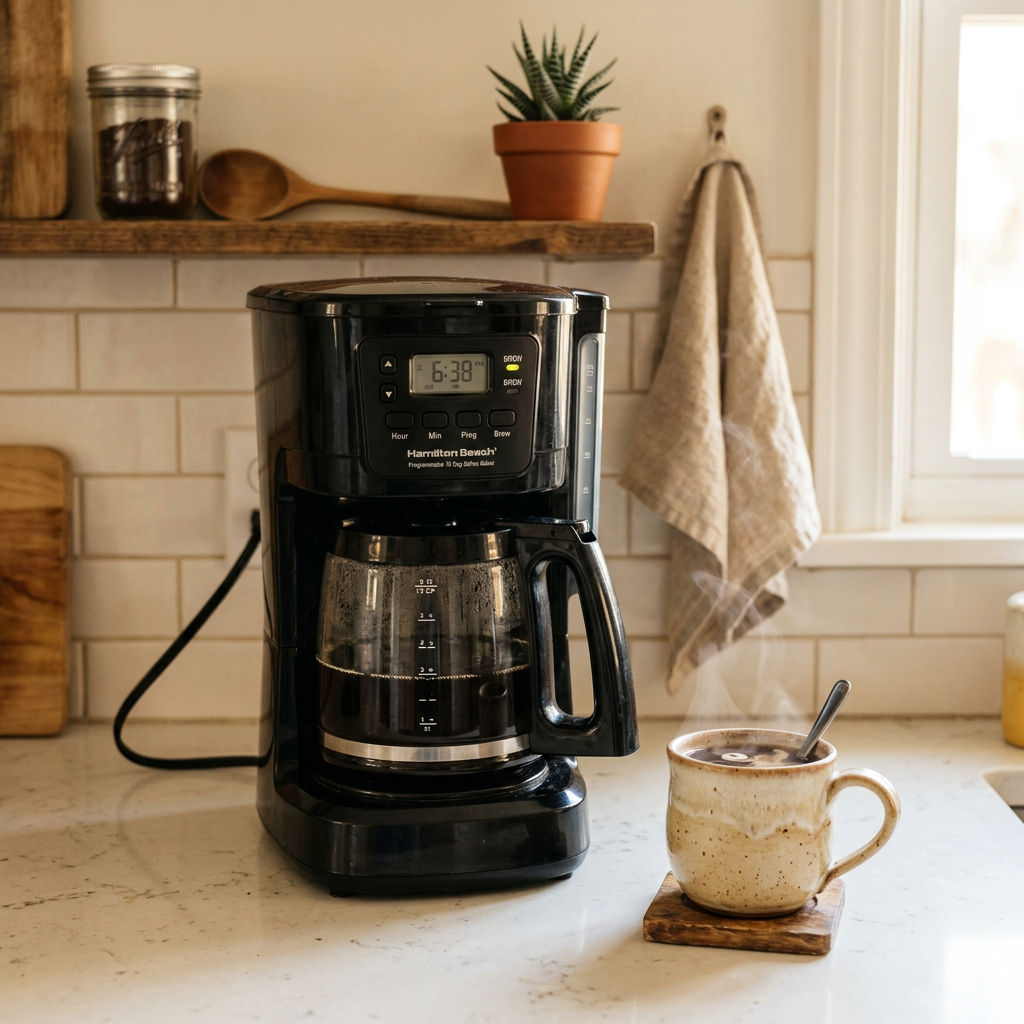
Best Budget: Black+Decker CM1160B 12-Cup Programmable Coffee Maker
Price Range: Approx. $35–$50
Best For: Beginners on a tight budget who want a dependable, no-frills machine that does exactly what it promises.
Pros:
- Very affordable — often the lowest price in its class
- Programmable 24-hour timer included
- Sneak-a-cup feature lets you pour mid-brew without a mess
- QuickTouch programming — simple button interface, nothing confusing
- Wide availability — sold everywhere, easy to find replacement parts
Cons:
- No brew strength selector
- Brewing temperature can run slightly lower than ideal
- Plastic-heavy construction feels less premium
The Black+Decker CM1160B is our pick for beginners who don't want to spend a lot before they know how much they'll actually use their coffee maker. It's simple, it works, and it won't leave you frustrated on day one.
Is the coffee as good as what you'd get from the Cuisinart? Not quite — but the difference is smaller than the price gap might suggest. For someone making a few cups of drip coffee each morning, it more than gets the job done. The programmable timer is a bonus at this price, and the sneak-a-cup feature (which pauses brewing so you can steal a cup mid-brew) is a genuinely useful touch.
If you're brand new to making coffee at home and aren't ready to commit to a bigger purchase, the Black+Decker is a perfectly honest starting point. You can always upgrade later once you know what you want.
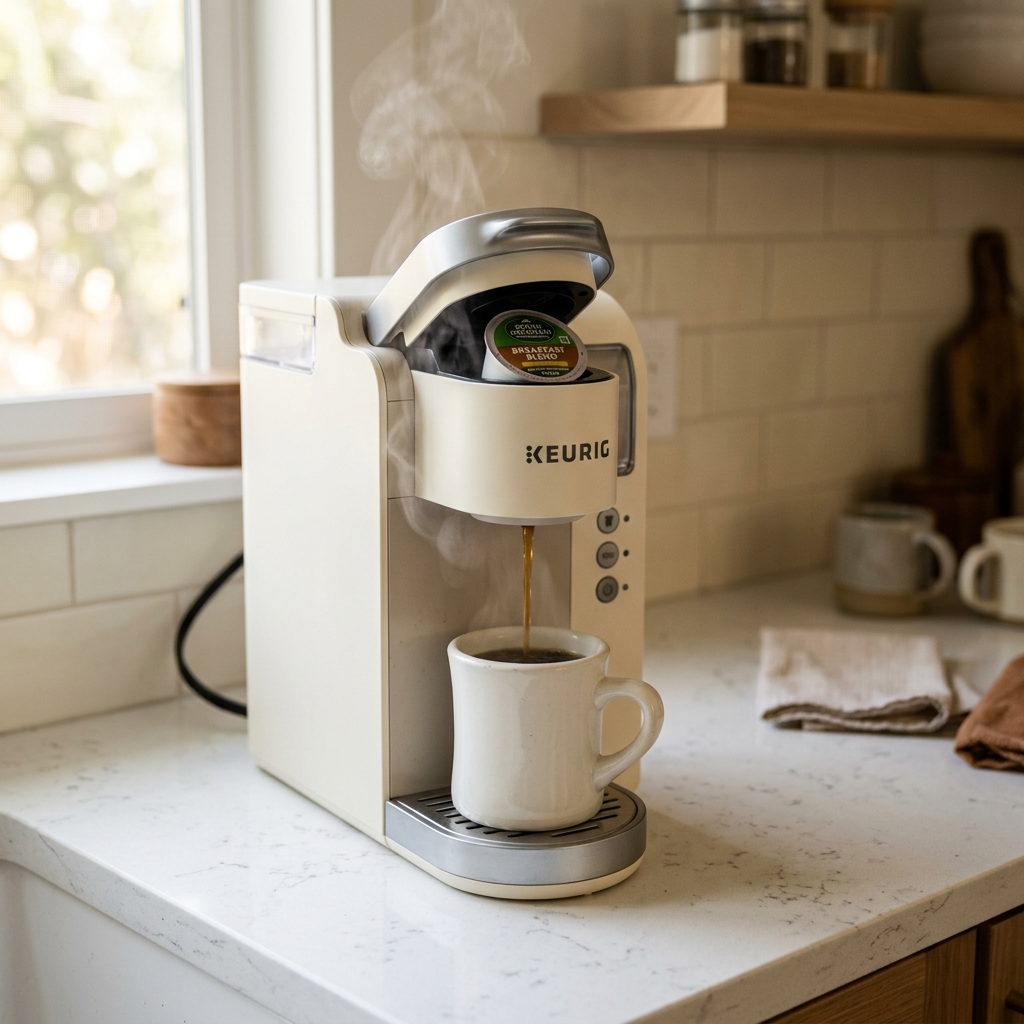
Best for Easy, Fast Coffee: Keurig K-Classic
Price Range: Approx. $90–$120
Best For: Beginners who want the absolute easiest morning routine — one cup, one button, done in under a minute.
Pros:
- Fastest and easiest way to make coffee — insert pod, press button
- No measuring, no grinding, no waiting for a full pot
- Brews 3 cup sizes (6, 8, or 10 oz) to suit your preference
- Large 48 oz removable reservoir — refill every few days, not every cup
- Huge variety of K-Cup pods — thousands of flavors, brands, and roasts to try
Cons:
- Pods cost more per cup than buying ground coffee (roughly $0.50–$0.90 per pod vs. $0.15–$0.25 for drip)
- Plastic pods create more waste — reusable pod filter helps, but adds a step
- Coffee quality doesn't match a good drip machine using quality beans
- No carafe option — one cup at a time only
The Keurig K-Classic exists for one reason: speed and simplicity. If you're someone who wants coffee in the morning without thinking about it — not measuring, not waiting, not cleaning a carafe — a Keurig delivers that better than anything else on this list.
The tradeoff is ongoing cost and coffee quality. Pods are convenient but add up over time, and the coffee they produce is solid but not exceptional. That said, for a complete beginner who just wants to get started with a warm cup in the morning, the K-Classic removes every barrier. You can always develop a taste for better coffee later. This machine keeps mornings stress-free while you figure that out.
We'd especially recommend it for people who only drink one or two cups a day — there's no wasted pot sitting on the warmer going stale.
Also Worth Considering
Hamilton Beach 46299 Programmable Coffee Maker (~$40–$50): If you want a programmable drip machine but the Cuisinart is more than you'd like to spend, the Hamilton Beach 46299 is an excellent middle-ground pick. You get a 24-hour programmable timer, a front-fill water reservoir, and a “Bold” brew setting — features you'd normally pay a lot more for — at a genuinely budget-friendly price. It isn't built quite as solidly as the Cuisinart, but for a beginner who wants set-it-and-forget-it mornings without spending $100, it's hard to beat. Check current price on Amazon →
French Press (~$20–$40): If you're open to a slightly more hands-on approach, a French press is one of the most beginner-friendly manual methods out there. You steep coarse-ground coffee in hot water for 4 minutes, press the plunger, and pour. No electricity, no pods, no programming — and the coffee is full-bodied and flavorful in a way that drip machines can't quite match. The downside is you need to boil water separately (an electric kettle helps) and grind your beans coarsely. If that sounds interesting rather than annoying, a French press is a great low-cost way to start. Curious how the two stack up directly? Our French press vs drip coffee comparison walks through the trade-offs side by side.
Moka Pot (~$30–$50): If you want bold, espresso-style coffee without buying an espresso machine, a moka pot is one of the best-kept secrets in home coffee. This stovetop brewer uses steam pressure to push hot water through finely ground coffee, producing a rich, concentrated cup in about five minutes. It's the classic Italian way to make coffee at home — simple, durable, and surprisingly affordable. A great choice if you like your coffee strong or plan to use it as a base for lattes.
Quick Comparison: All Picks at a Glance
| Coffee Maker | Approx. Price | Best For | Our Pick |
|---|---|---|---|
| Cuisinart DCC-3200P1 | $70–$100 | Best overall quality + ease of use | ★ Best Overall |
| Black+Decker CM1160B | $35–$50 | Best value on a tight budget | ★ Best Budget |
| Keurig K-Classic | $90–$120 | Fastest, easiest single-cup routine | ★ Best for Easy Mornings |
| Hamilton Beach 46299 | $40–$50 | Programmable drip under $50 | Runner-Up Value |
| French Press | $20–$40 | Manual brewing, rich flavor | Best Non-Electric |
What to Look for When Buying Your First Coffee Maker
If you're not sure which pick is right for you, here are the questions worth thinking through before you buy.
How many cups do you drink per day? If it's just one or two, a pod machine like the Keurig makes a lot of sense — no wasted pot. If you drink three or more cups (or share with someone else), a drip machine with a full carafe is more practical and much cheaper per cup.
How much effort do you want to put in? Be honest with yourself here. If the idea of measuring coffee grounds, programming a timer, or cleaning a carafe sounds tedious, get the Keurig. There's no wrong answer — the best coffee maker is the one you'll actually use every day.
What's your actual budget — for the machine and the ongoing cost? A Keurig costs more upfront and more per cup. A drip machine costs less upfront and significantly less per cup over time. If you drink coffee daily, the drip machine saves real money within a few months.
Is this your only machine? If so, a drip machine is usually the most versatile starting point. You can use any ground coffee you want, adjust how strong you brew it, and learn what you like. Once you have a preference, you can always add equipment from there. (If you're torn between an automatic drip and a manual French press, our French press vs drip coffee guide compares them point by point.)
Whatever machine you choose, the coffee you put in it matters just as much as the machine itself. A good drip maker with fresh, quality beans will always beat a fancy machine with stale pre-ground coffee from a can. Once you've got your machine sorted, the next upgrade worth making is your beans. We have a full guide on how to buy coffee beans as a beginner — it's a lot simpler than it sounds.
Want a deeper breakdown of everything that goes into a beginner coffee setup — not just the machine, but the grinder, beans, and accessories? We cover all of it in our guide: What Do You Need to Make Coffee at Home?
Avoid coffee makers priced under $20 with no recognizable brand name. They frequently brew at too-low temperatures, producing weak or sour coffee — and they tend to fail within months. The machines on our list all come from established brands with real warranties. A few extra dollars upfront saves a lot of frustration.
Frequently Asked Questions
What is the easiest coffee maker to use for beginners?
The easiest coffee maker for a beginner is a pod machine like the Keurig K-Classic — you add water, insert a pod, and press a button. If you prefer drip coffee, the Cuisinart DCC-3200P1 is nearly as simple: add water, add grounds, and press brew. Both are straightforward enough to figure out without looking at the manual.
Is a drip coffee maker or a pod machine better for beginners?
It depends on what you value. Pod machines (Keurig) are faster, simpler, and require zero measuring — but they cost more per cup and produce average-quality coffee. Drip machines require a little more setup but make better coffee for less money per cup. For most beginners who plan to drink coffee regularly, a drip machine is the smarter long-term choice. If convenience is your top priority above all else, go with a pod machine.
Do I need a coffee grinder to use these machines?
No — all the drip machines on this list work perfectly with pre-ground coffee from the grocery store. You don't need a grinder to get started. That said, grinding your own beans fresh does make a noticeable difference in flavor. If you're curious about whether a grinder is worth it, we break it all down in our guide to the best coffee grinders for beginners — including budget options under $30.
How much should I spend on my first coffee maker?
You don't need to spend a lot to get great results. The Black+Decker at $35–$50 is a perfectly capable machine for everyday use. If your budget allows $70–$100, the Cuisinart is a meaningful step up in coffee quality and build quality. We'd avoid going below $25 — budget machines under that threshold tend to struggle with brewing temperature and reliability.
- For the best overall beginner experience, the Cuisinart DCC-3200P1 is our top pick — reliable, beginner-friendly, and brews genuinely excellent coffee.
- On a budget, the Black+Decker CM1160B is an honest, capable machine that won't let you down under $50.
- For a programmable machine under $50, the Hamilton Beach 46299 is a great value runner-up.
- For maximum simplicity and speed, the Keurig K-Classic removes every barrier — at the cost of higher ongoing pod expense.
- The coffee you brew matters as much as the machine you use. Fresh, quality beans make a bigger difference than most people expect.
- You don't need a grinder to start — but it's a worthwhile upgrade once you've settled into a routine.
Our Final Recommendation
If you've read this far and you're still not sure which machine to pick, here's the short version: most beginners are happiest with the Cuisinart DCC-3200P1. It makes great coffee, it's simple to operate, and it's built to last. If the price feels like too much right now, the Black+Decker CM1160B is a genuinely solid machine at half the cost — and there's no shame in starting there and upgrading later.
Once you've got your machine sorted, the next piece of the puzzle is the coffee itself. Head over to our guide on what you need to make coffee at home for a full overview of beans, grinders, and everything else that goes into a beginner setup. You'll be brewing confidently in no time.
Disclosure: This article contains affiliate links. If you purchase through our links, we may earn a small commission at no extra cost to you. We only recommend products we genuinely believe are right for beginners. Full disclosure here.
☕ About the Author
Greg Rathbone is the founder of HomeCoffeeBeginner.com. He started this site after finding that most coffee advice online assumed you were already an expert. Every guide here is written for total beginners — tested in his own kitchen in Oklahoma, with zero snobbery.