
Once you start making pour-over coffee, one piece of gear keeps coming up: the gooseneck kettle. That long, curved spout is not just for looks — it gives you slow, precise control over where the water goes, which is most of the battle when you are learning to brew a clean, sweet cup.
An electric gooseneck kettle takes it a step further by letting you set an exact temperature and hold it there. That removes one more variable while you are still finding your footing. Below are the best gooseneck kettles for pour-over beginners in 2026, from a buy-it-for-life favorite to budget picks that punch well above their price.
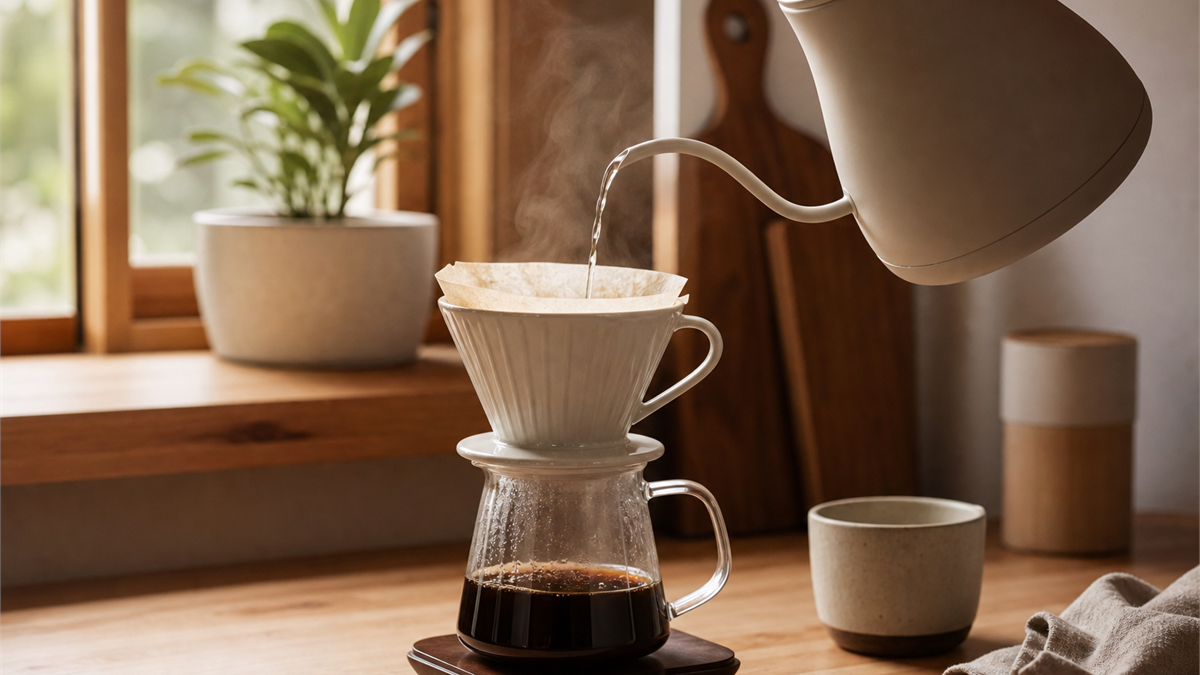
The best gooseneck kettle for pour-over is the Fellow Stagg EKG — precise temperature control, a beautiful pour, and excellent build quality (around $165). If that is more than you want to spend, the Cosori Electric Gooseneck Kettle gives you variable temperature and a great pour for roughly a third of the price.
Do you even need a gooseneck kettle?
Short version: if you brew pour-over (V60, Chemex, Kalita), a gooseneck makes a real, noticeable difference. The narrow spout lets you pour slowly and land the water exactly where you want it, which controls extraction and helps you avoid weak, uneven cups. For French press, drip machines, or cold brew, you do not need one at all.
We cover the full “should I buy one” question in Do You Need a Gooseneck Kettle for Pour-Over? and the head-to-head with an ordinary kettle in Gooseneck Kettle vs Regular Kettle. If you have already decided you want one, keep reading.
What to look for in a beginner gooseneck kettle
- Variable temperature control. Different roasts and methods like different temperatures (light roasts around 205°F, darker roasts closer to 195°F). An electric kettle that lets you dial in the exact number is the biggest upgrade over a stovetop model.
- A well-balanced spout. The whole point is a slow, steady stream. Cheaper kettles can pour too fast; the good ones give you fine control at a trickle.
- A comfortable handle and counterweight. You will hold this for 30–45 seconds while pouring. Balance matters more than you would think.
- Hold temperature (nice to have). Keeping the water at your target temp between pours is convenient, especially when you are learning.
- Capacity. Around 0.6–1.0 liters is plenty for one or two cups at a time.
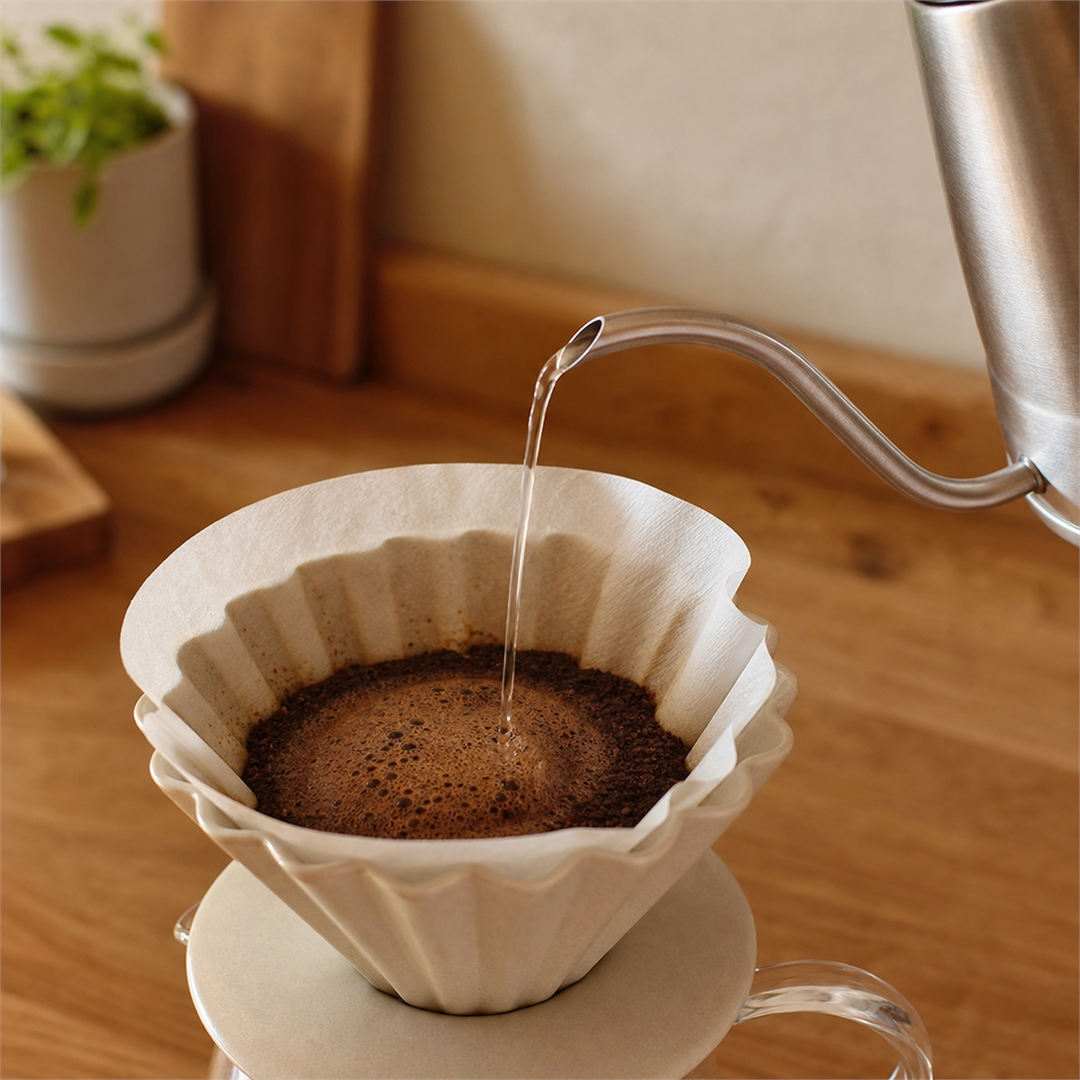
Our top pick: Fellow Stagg EKG
The Fellow Stagg EKG is the kettle most pour-over people eventually land on, and for good reason. It has to-the-degree temperature control, a hold function, and one of the best-balanced pours you can buy — that slow, precise stream that makes brewing feel effortless. It also happens to look great sitting on the counter. At around $165 [VERIFY] it is an investment, but it is the kind of gear you buy once and keep for years.
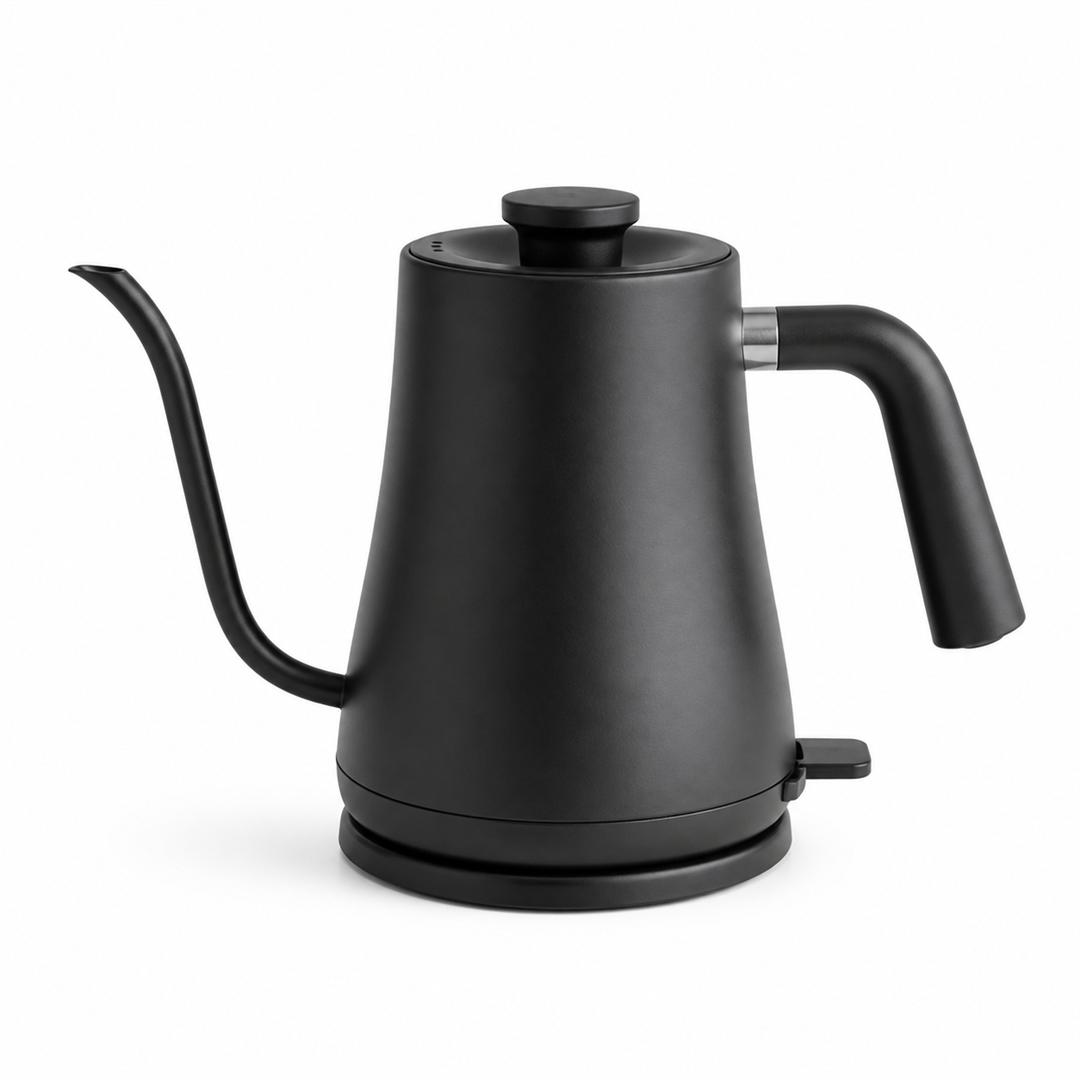
Our Pick for Beginners
Fellow Stagg EKG Electric Kettle
To-the-degree temperature control and the best-balanced pour we have used. A buy-it-once kettle that makes pour-over feel easy from day one.
The best gooseneck kettles for beginners, compared
1. Fellow Stagg EKG — Best Overall
Price Range: ~$165 [VERIFY]
Best For: Anyone who wants the best pour and plans to stick with pour-over.
Pros: To-the-degree temp control; hold function; superb balance and pour; premium build.
Cons: Pricey; 0.9 L capacity is on the smaller side for big batches.
2. Cosori Electric Gooseneck Kettle — Best Value
Price Range: ~$60–$70 [VERIFY]
Best For: Beginners who want variable temperature without the premium price.
Pros: Five preset temperatures plus hold; roomy 0.8 L; controlled pour; great price.
Cons: Spout pours a touch faster than the Stagg; less refined feel.
3. Bonavita Variable Temperature Kettle — Reliable Workhorse
Price Range: ~$80–$95 [VERIFY]
Best For: Beginners who want a proven, no-nonsense electric kettle.
Pros: Accurate variable temp; simple controls; trusted by home brewers for years.
Cons: Plainer looks; fewer extra features than newer models.
4. Brewista Artisan Gooseneck Kettle — Feature-Packed
Price Range: ~$90–$110 [VERIFY]
Best For: Beginners who like extra controls (built-in timer, temperature hold).
Pros: Variable temp; built-in brew timer; hold function; good pour control.
Cons: More buttons to learn; build feels a step below the Stagg.
5. Budget Stovetop Gooseneck (e.g., Coffee Gator / Bellemain) — Cheapest Way In
Price Range: ~$25–$35 [VERIFY]
Best For: Testing the waters before committing to an electric model.
Pros: Very cheap; great spout control; works on any stove.
Cons: No temperature control — you boil, then wait ~30 seconds off the heat; no hold.
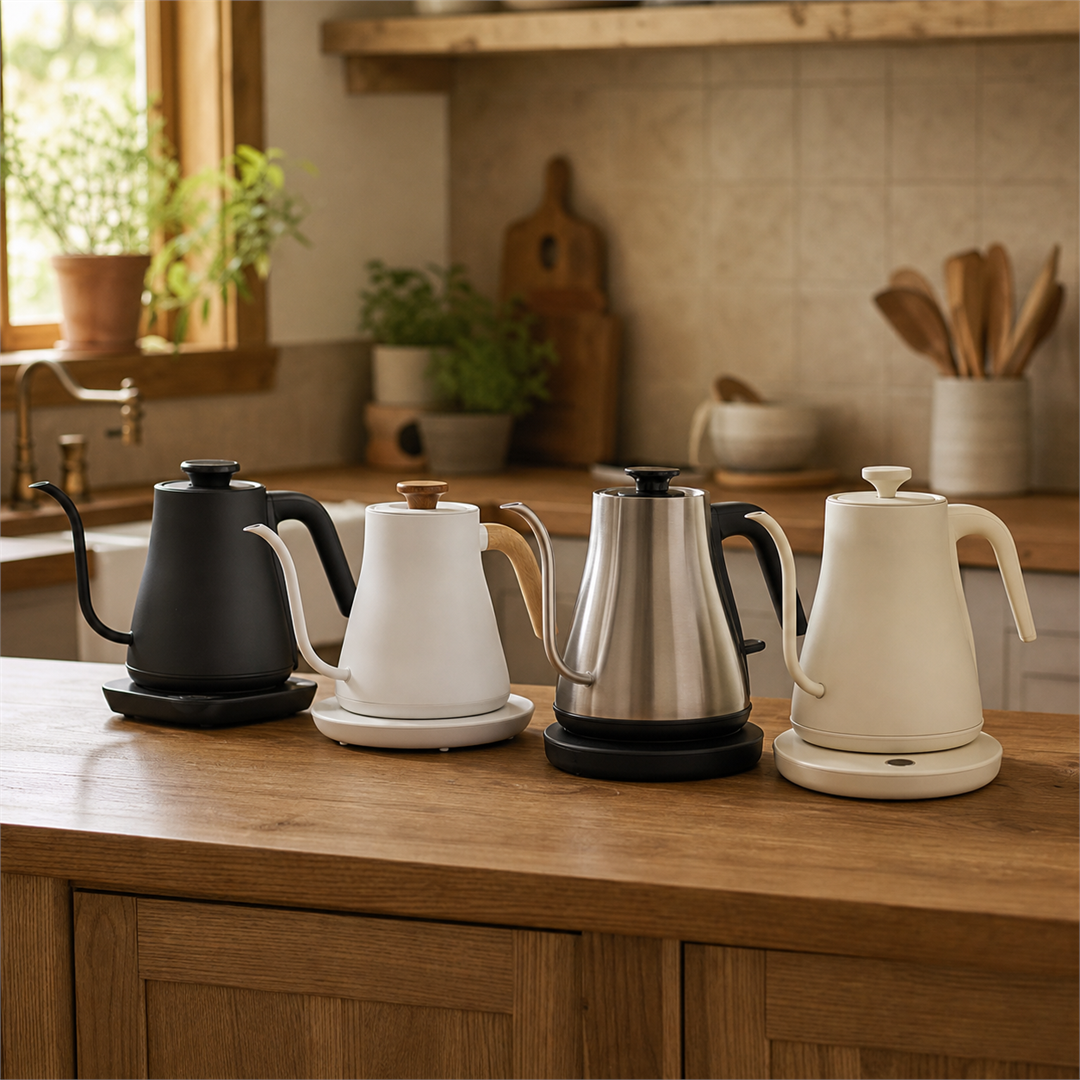
A stovetop gooseneck is a fine budget start, but without temperature control you are guessing at water temp. A simple trick: bring water to a boil, then let it sit off the heat for about 30 seconds before pouring — that lands you right around 205°F for most coffee.
Electric vs stovetop: which should a beginner get?
If pour-over is going to be your daily ritual, an electric variable-temperature kettle is worth it — dialing in an exact temperature removes a variable and makes your results more consistent. If you are just curious and want to try pour-over cheaply, a stovetop gooseneck gives you the all-important spout control for very little money, and you can upgrade later.
Temperature matters, but pour control matters more when you are starting out. Even a cheap gooseneck spout will improve your cups more than a fancy temperature readout on a wide-mouth kettle.
What temperature should you brew at?
For most beginners, 200–205°F is a safe, forgiving range. Go a little cooler (around 195°F) for dark roasts to keep them from tasting bitter, and a little hotter (205°F) for light roasts that need more heat to open up. Pair the right temperature with the right grind — see our pour-over grind size guide — and you are most of the way to a great cup.
- A gooseneck kettle gives you the slow, precise pour that makes pour-over work.
- Our top pick is the Fellow Stagg EKG for its temperature control and best-in-class pour.
- The Cosori is the best value; a stovetop gooseneck is the cheapest way to start.
- Look for variable temperature, a balanced spout, and a comfortable handle.
New to pour-over entirely? Start with our complete pour-over beginner's guide, then come back and pick the kettle that fits your budget.
Disclosure: This article contains affiliate links. If you purchase through our links, we may earn a small commission at no extra cost to you. We only recommend products we genuinely believe are right for beginners. Full disclosure here.