
If your cold brew has ever come out muddy, bitter, or weirdly bitter-and-watery at the same time, there's a good chance the grind is the culprit. Cold brew is forgiving in almost every way except this one: it really wants a coarse grind. Get that right and the rest of cold brew is nearly foolproof.
Here's why coarse matters, what “coarse” actually looks like, and how to get there whether you grind your own beans or buy them pre-ground.
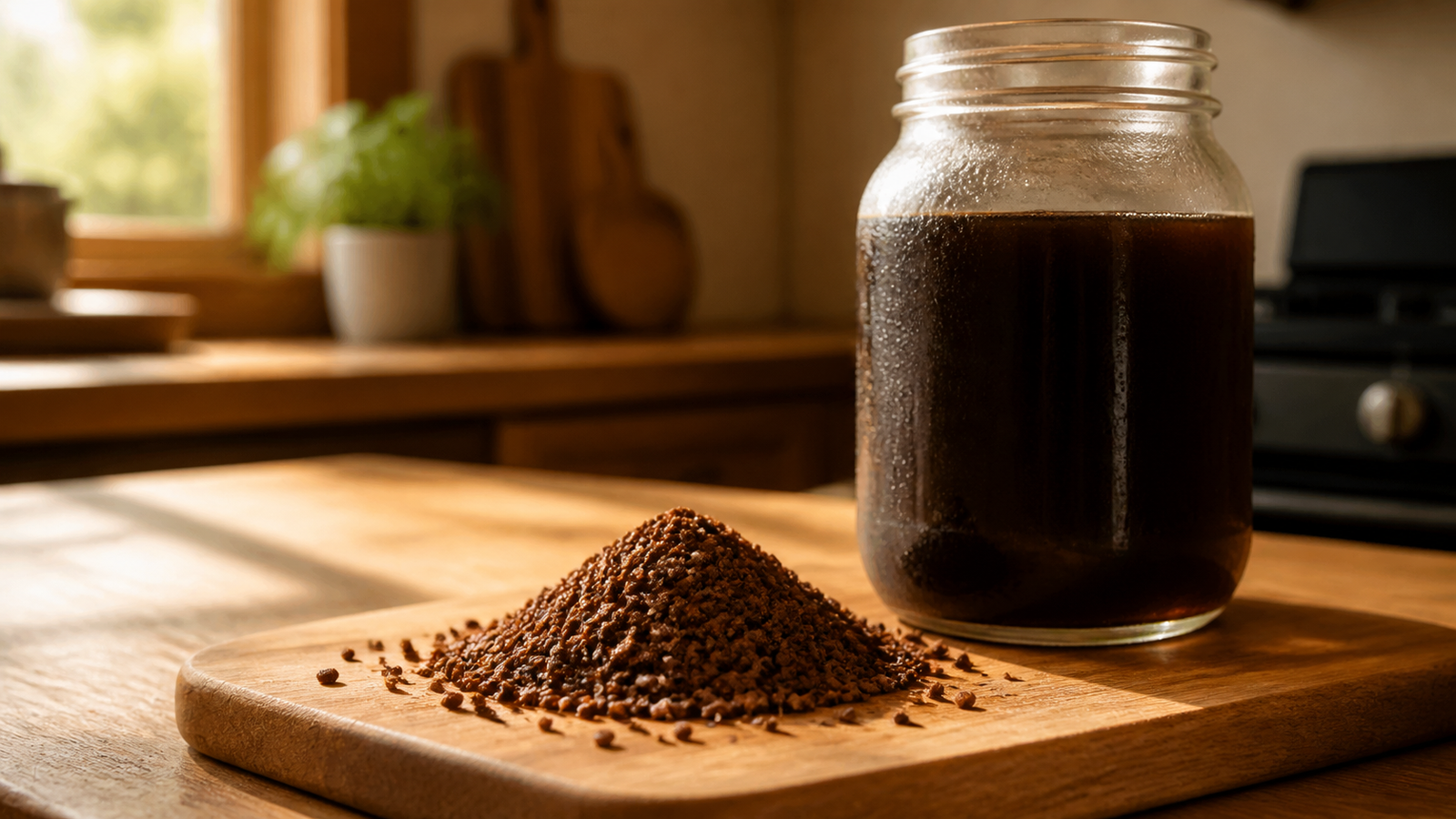
The best grind size for cold brew is coarse — about the texture of raw sugar or coarse sea salt. It's the same grind you'd use for a French press. Coarse grounds steep slowly and evenly over many hours, giving you smooth, low-acid coffee that's easy to strain.
Why cold brew needs a coarse grind
Cold brew works completely differently from hot coffee. Instead of hot water pulling flavor out in a few minutes, cold water does it slowly over 12 to 24 hours. That long soak is the key to understanding the grind.
The finer you grind coffee, the more surface area the water touches, and the faster it extracts. Over a 16-hour steep, fine grounds release too much — they over-extract, which tastes harsh and bitter, and they cloud the brew with fine silt that's miserable to strain out. Coarse grounds have less surface area, so they extract gently and steadily over those long hours. The result is the smooth, mellow, low-acid cup cold brew is famous for.
Coarse grounds also make your life easier at the strain step: bigger particles get caught by a mesh filter instead of slipping through and settling at the bottom of your glass.
What “coarse” actually looks and feels like
“Coarse” is vague until you can picture it. Aim for grounds that look like:
- Raw / turbinado sugar — the big sparkly crystals
- Coarse sea salt or kosher salt
- Coarse breadcrumbs
Rub a little between your fingers. You should feel distinct, chunky granules — not powder, and not gritty sand. If it feels like table salt or flour, it's too fine for cold brew.
Good news: this is the exact same grind used for a French press, so if you've ever dialed in French press coffee, you already know the target. (Our complete cold brew guide shows where this fits in the whole process.)
Using regular pre-ground coffee from the grocery store. That's ground for drip machines — medium-fine, much too small for cold brew. It'll work in a pinch, but expect a muddier, more bitter cup and a harder strain. If you can, get a coarse grind instead.
How to get a coarse grind
If you grind your own beans
Set your grinder to one of its coarsest settings — French press / cold brew territory. A burr grinder gives you even, uniform chunks, which is exactly what you want. A blade grinder chops unevenly (some powder, some boulders), so if that's all you have, pulse in short bursts and shake it between pulses to even things out. If you're thinking about upgrading, our beginner burr grinder guide walks through affordable options.
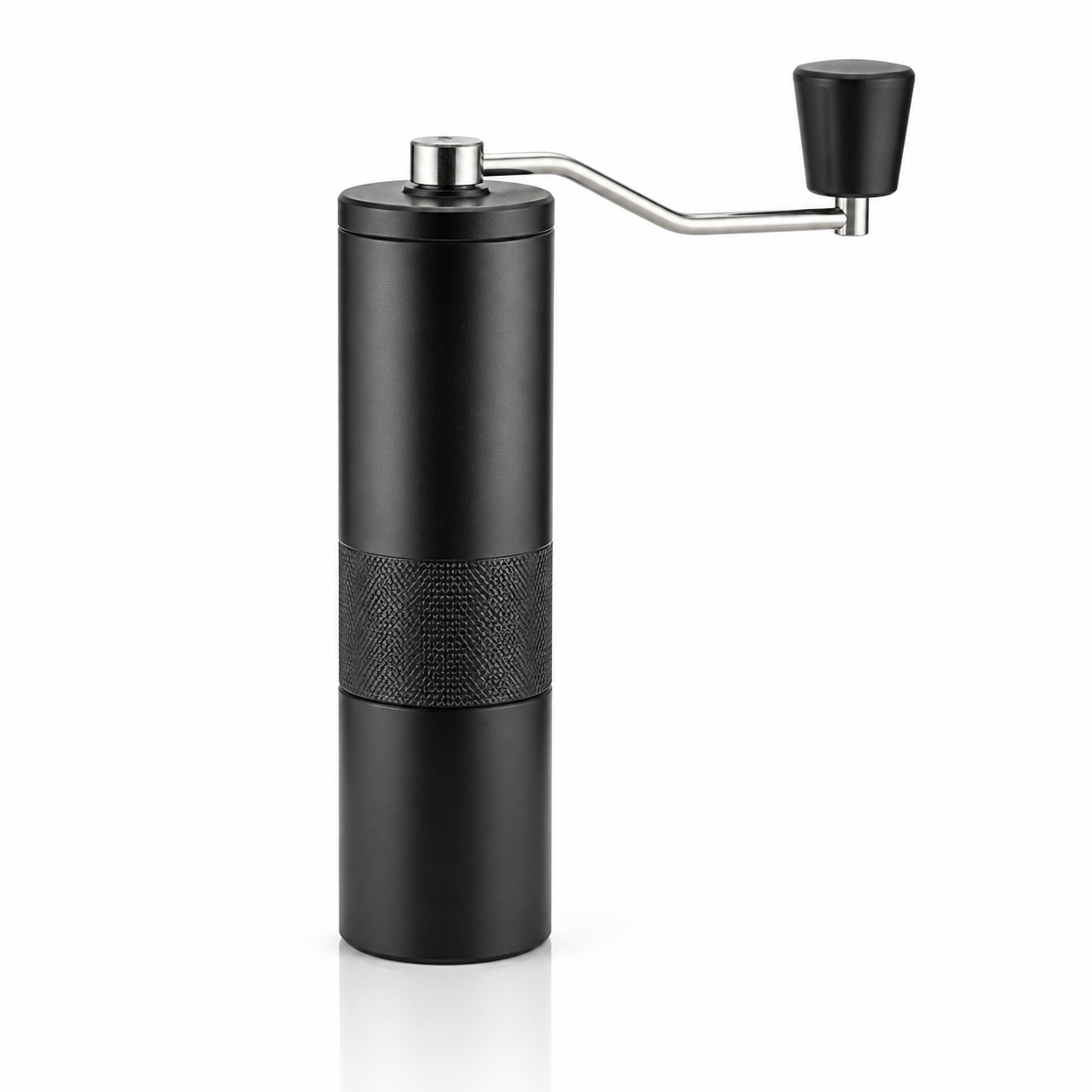
An affordable hand grinder with stainless/ceramic burrs and clickable settings, so you can lock in a consistent coarse grind for cold brew every time. A great, low-cost first grinder.
If you buy pre-ground
Ask for a coarse or cold brew / French press grind. Many local roasters and grocery grinders have a setting labeled exactly that. If you're buying bagged coffee, look for “coarse ground” on the label — standard bags are ground for drip and will be too fine.
What happens if your grind is off
| Grind | What you'll taste |
|---|---|
| Too fine | Bitter, harsh, muddy; gritty silt in the glass; slow, messy straining |
| Just right (coarse) | Smooth, sweet, low-acid; clean to strain |
| Too coarse | Weak, watery, under-extracted (rare — just steep a little longer) |
Notice that erring slightly coarse is much safer than erring fine. If you're not sure, go a touch coarser and let it steep an hour or two longer.
Grind matters more than steep time for fixing bitterness. If your cold brew tastes harsh, coarsen the grind before you shorten the steep — that's usually the real fix.
Grind is one of three dials
Grind size, coffee-to-water ratio, and steep time work together. Once your grind is coarse, the other two are easy to dial in — see our cold brew ratio guide for how much coffee to use and our step-by-step cold brew tutorial for the full routine.
- Cold brew wants a coarse grind — like raw sugar or coarse sea salt (same as French press).
- Coarse extracts slowly and evenly over the long steep, giving smooth, low-acid coffee.
- Too-fine grounds taste bitter and muddy and are a pain to strain.
- A burr grinder gives the most even coarse grind; if buying pre-ground, ask for “coarse / cold brew.”
Frequently asked questions
Can I use regular ground coffee for cold brew?
You can, but standard pre-ground coffee is too fine and will taste more bitter and muddy. Coarse-ground coffee tastes smoother and strains far cleaner.
Is cold brew grind the same as French press grind?
Yes — both use a coarse grind that looks like raw sugar or coarse sea salt. If you can grind for one, you can grind for the other.
Why is my cold brew bitter if I used cold water?
Usually the grind is too fine (over-extraction) or it steeped too long. Coarsen the grind first; that fixes most bitterness.
Do I need a burr grinder for cold brew?
No, but it helps. Burr grinders produce even chunks, which extract more evenly. A blade grinder can work if you pulse and shake it to reduce the powdery bits.
Disclosure: Home Coffee Beginner is a participant in the Amazon Services LLC Associates Program. If you buy through links on this page, we may earn a small commission at no extra cost to you. We only recommend gear we'd be happy to hand a friend who's just getting started.
☕ About the Author
Greg Rathbone is the founder of HomeCoffeeBeginner.com. He started this site after realizing most coffee advice online assumes you're already an expert. Every guide here is written for total beginners and tested in his own kitchen — no jargon, no snobbery.