
If you only upgrade one thing in your home coffee setup, make it the grinder. We mean that. A good grinder will do more to improve your coffee than a fancier brewer, pricier beans, or any gadget you can name. Grinding your beans fresh, and grinding them evenly, is the single biggest jump in quality most beginners ever make.
Here's the catch: shopping for a grinder is genuinely overwhelming. There are hundreds of them, the listings are full of jargon, and the prices run from $20 to $2,000. It's easy to freeze up and just keep buying pre-ground coffee. We get it.
So we did the wading-through for you. This guide focuses on beginner-friendly burr grinders, mostly under $100, judged on the things that actually matter when you're starting out: consistent grind, ease of use, build quality, and honest value for the money. We're not ranking by what pays us the most — we're ranking by what we'd hand a friend making their first real cup tomorrow.
- Best Overall: Timemore C2 (manual, approx. $50–60)
- Best Budget: JavaPresse Manual Grinder (manual, approx. $35)
- Best Electric Under $100: SHARDOR Conical Burr Grinder (electric, approx. $40–50)
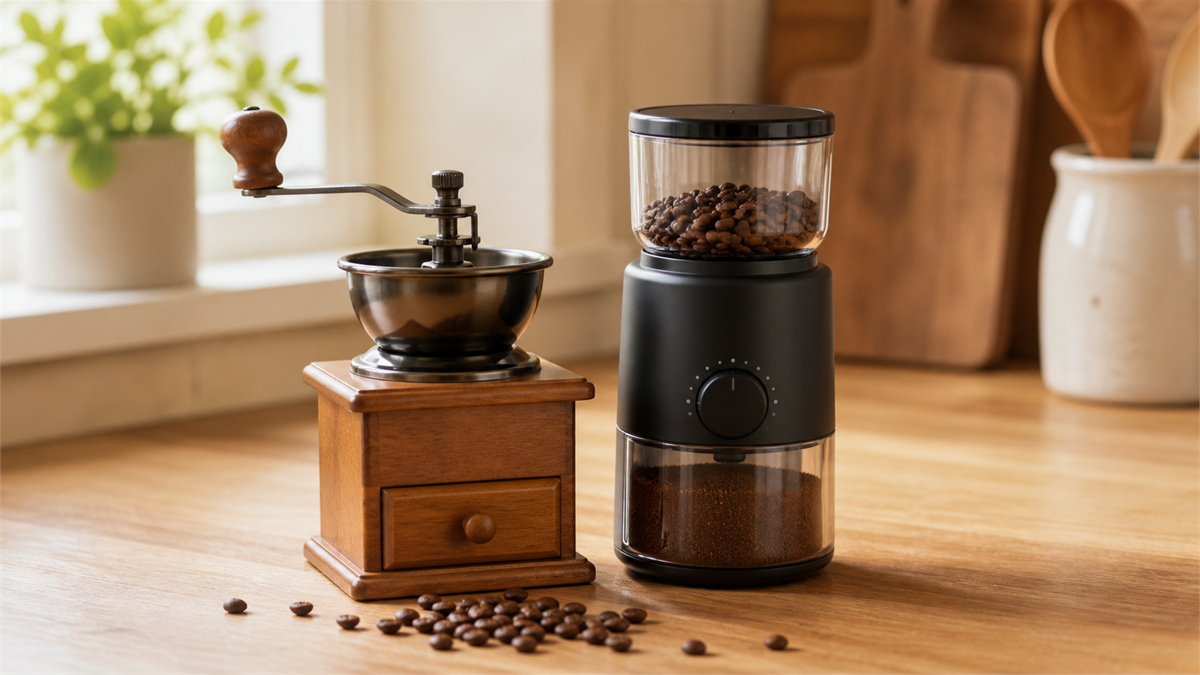
Our top pick is the Timemore C2, because it gives you a consistent, even grind from a real burr set for around $50 — better coffee than electric grinders that cost twice as much. It's a manual (hand-cranked) grinder, so if you'd rather press a button, go with the SHARDOR electric burr grinder for about $40–50.
Burr vs Blade: Why It Matters
This is the one piece of jargon worth understanding before you spend a dollar, because it's the difference between great coffee and disappointing coffee.
A blade grinder is the cheap kind you've probably seen — it has a little spinning blade, like a tiny propeller, that chops the beans. The problem? It chops randomly. You end up with some powder, some big chunks, and everything in between. That uneven mix brews unevenly: the powder over-extracts and turns bitter while the chunks under-extract and taste sour and weak — all in the same cup. Blade grinders are also basically the same machines sold as “spice grinders.”
A burr grinder works completely differently. It crushes the beans between two ridged surfaces (the burrs) set a precise distance apart. Because that gap is fixed, every particle comes out roughly the same size. Even grounds means even extraction, which means a cleaner, sweeter, more balanced cup. You can also dial the grind coarser or finer to match your brew method — something a blade grinder simply can't do well.
Bottom line: for good coffee, you want a burr grinder. Every pick in this guide is a burr grinder. If a grinder doesn't clearly say “burr,” assume it's a blade grinder and skip it. (Want the deeper why? We unpack it in do you need a coffee grinder.)
How We Picked
There are a lot of grinders out there, and plenty of them look identical in the listings. We focused on the things that genuinely change a beginner's day-to-day experience:
- Grind consistency. The whole point of a burr grinder. We favored grinders that produce even grounds without a ton of “fines” (coffee dust) muddying the cup.
- Ease of use. Simple settings, easy to adjust, easy to clean. Nothing that requires a manual and a degree to operate.
- Build quality. Will it last? We leaned toward grinders with steel burrs and solid construction over flimsy plastic.
- Value for the money. Almost everything here is under $100. We included one “worth the stretch” pick just above that line, and we labeled it clearly.
- Right-sized for beginners. No commercial monsters, no $300 enthusiast grinders. Just honest first grinders you won't outgrow for a long time.
We did not rank these by which one pays us the highest commission. The order is what we'd actually recommend to a friend, based on the experience of someone grinding their own beans for the first time.
The Best Coffee Grinders for Beginners
Timemore C2 — Best Overall
Price Range: approx. $50–60
Best For: The beginner who wants the best cup-for-your-dollar and doesn't mind a little hand-cranking.
Pros: Excellent, consistent grind from quality stainless steel burrs — genuinely outperforms electric grinders costing twice as much. Lightweight, well-built aluminum body. Great for pour-over, French press, AeroPress, and drip. Quiet, no electricity needed, and easy to travel with.
Cons: It's manual, so you crank it by hand (about 20–30 seconds for a couple of cups). Not ideal if you grind for a big household every morning. Struggles to grind fine enough for true espresso.
The Timemore C2 is our top pick because it nails the thing that matters most — grind quality — at a price almost anyone can justify. For around $50, you get a burr grinder that punches well above its weight. If you want one grinder that just works and makes noticeably better coffee from day one, this is it.
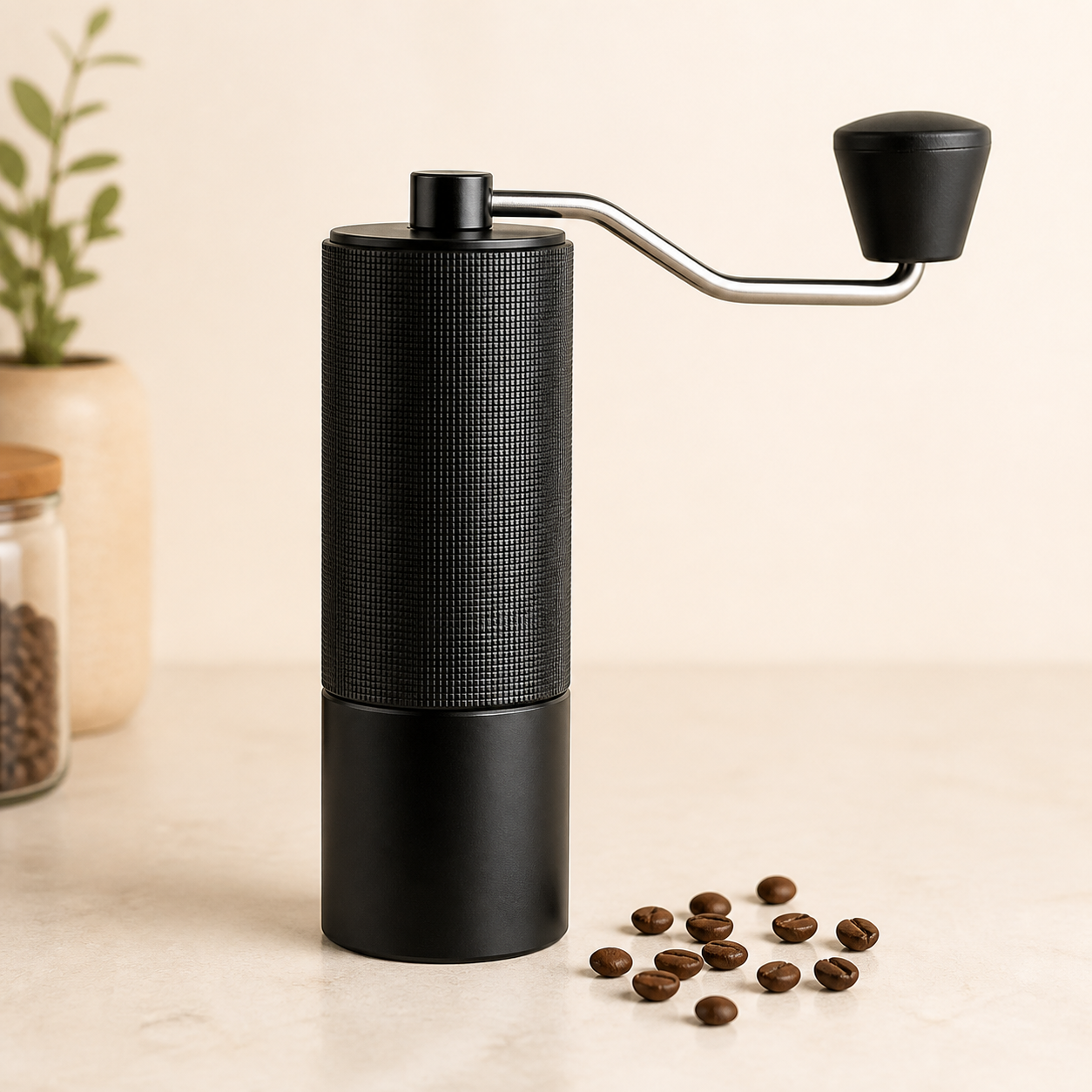
Our Pick for Beginners
Timemore C2
A real burr grinder for around $50 that grinds more evenly than electric models twice the price. Simple, durable, and the easiest way to make your coffee taste dramatically better starting tomorrow morning.
Check Price on Amazon →
JavaPresse Manual Coffee Grinder — Best Budget
Price Range: approx. $35
Best For: The absolute beginner who wants to try fresh-ground coffee without spending much, or anyone on a tight budget.
Pros: A real ceramic burr grinder for around $35 — by far the cheapest honest entry into burr grinding. Easy to use with 15+ click-adjustable settings. Compact, quiet, and travel-friendly. Friendly customer support and beginner guides.
Cons: Manual, so you crank by hand. Grind takes a bit longer than pricier hand grinders, and it's not as consistent or as fast as the Timemore C2. Smaller bean capacity.
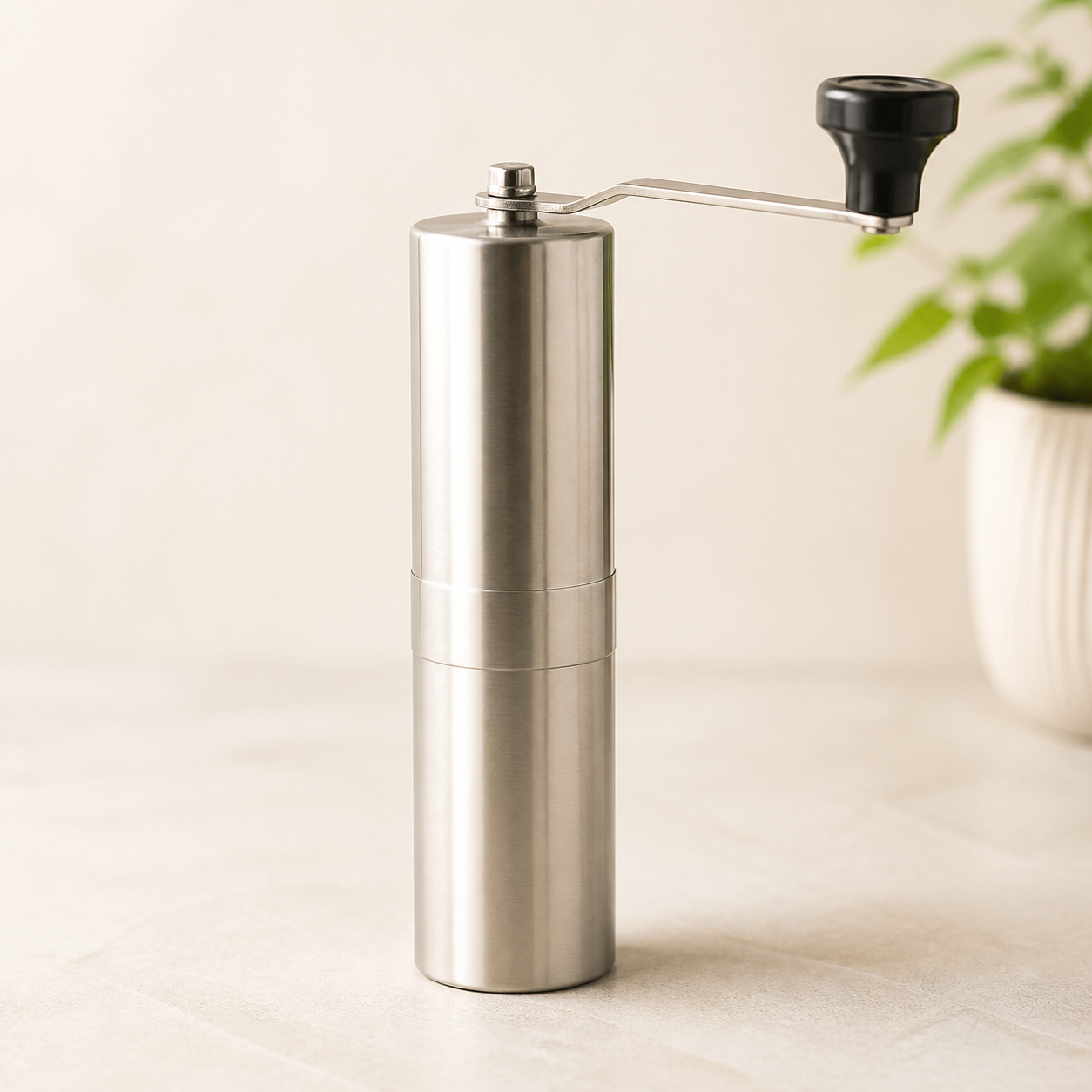
If the Timemore is a small stretch, the JavaPresse is the easiest “yes” on this list. It proves a simple point: even the most affordable real burr grinder will beat any blade grinder, and it'll beat pre-ground coffee handily. It's a fantastic, low-risk way to find out how much fresh grinding improves your coffee.
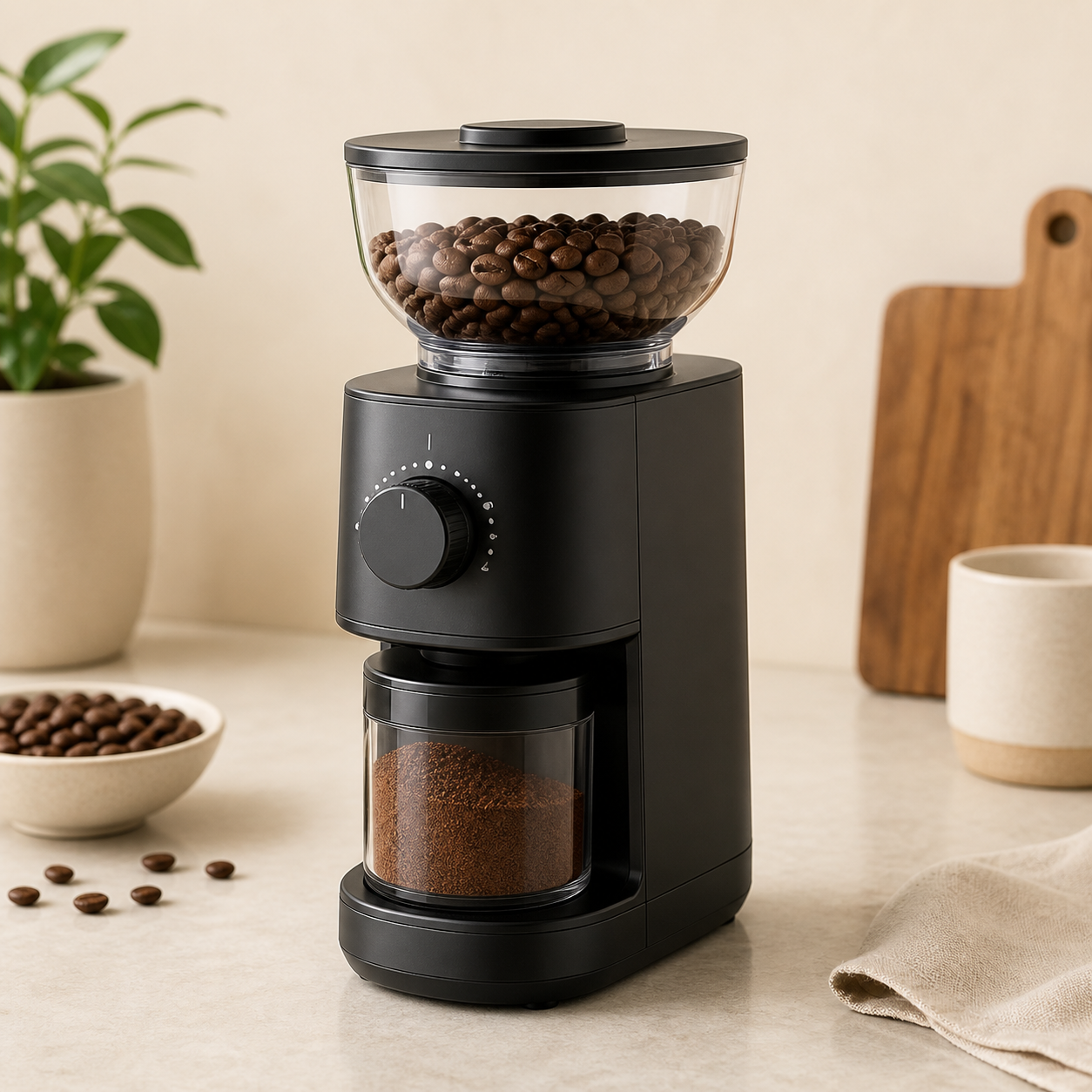
SHARDOR Conical Burr Grinder — Best Electric Under $100
Price Range: approx. $40–50
Best For: The beginner who wants to press a button and walk away — no hand-cranking.
Pros: A genuine electric conical burr grinder for around $40–50, which is remarkable value. Lots of grind settings for everything from French press to drip. Grinds a full batch in seconds. Removable parts make cleaning easy.
Cons: Louder than a manual grinder (it's a motor). Can get a little static-y and messy with very fine grinds. Build is good-for-the-price, not premium.
If the idea of cranking a grinder by hand every morning doesn't appeal to you, the SHARDOR is the pick. It's the most affordable electric burr grinder we'd actually recommend, and for most beginners brewing drip, pour-over, or French press, it does the job beautifully. Press the button, your coffee's ground, you're done.
Bodum Bistro — A Stylish Electric Option
The Bodum Bistro (approx. $50–80) is one of the most popular entry-level electric grinders around, and it looks great on a counter in its bright colors. It produces nicely uniform grounds at finer settings, which makes it a good match for moka pot and drip. The main knock is that its coarse grind (the setting for French press) can be a little inconsistent and clumpy. A solid, good-looking choice if drip and pour-over are your main brews.
OXO Brew Conical Burr Grinder — Best of the ~$100 Electrics
The OXO Brew (approx. $100) is the step-up electric grinder for beginners who want a little more polish. It's widely considered the best value in the entry-level-electric, around-$100 price range, with excellent results at medium grind sizes for drip, V60, and Chemex. Like most affordable electrics, very fine grinds can clump from static. If you've got a flexible budget and want a “buy once” electric, this is the one to look at.
Baratza Encore — Worth the Stretch (Over $100)
Note: this pick is over $100 — we're including it because it's the grinder so many beginners end up wishing they'd bought first. The Baratza Encore (approx. $150) is the legendary “first real grinder” of the coffee world. It's an electric conical burr grinder with 40 grind settings, rock-solid consistency, repairable parts, and a reputation for lasting many years. If your budget can stretch and you want a grinder you'll likely never need to replace, the Encore is worth every dollar. For a true beginner watching the budget, though, the Timemore C2 or SHARDOR will make you very happy for a fraction of the price.
Quick Comparison
| Grinder | Approx. Price | Type | Best For |
|---|---|---|---|
| Timemore C2 | $50–60 | Manual | Best overall value |
| JavaPresse Manual Grinder | $35 | Manual | Best budget / first grinder |
| SHARDOR Conical Burr | $40–50 | Electric | Best electric under $100 |
| Bodum Bistro | $50–80 | Electric | Stylish drip & pour-over pick |
| OXO Brew Conical Burr | $100 | Electric | Best of the ~$100 electrics |
| Baratza Encore | $150 | Electric | Worth the stretch (over $100) |
What to Look For in a Beginner Grinder
If you ever shop beyond this list, here's a short checklist to keep you out of trouble:
- It must say “burr.” This is non-negotiable for good coffee. If it doesn't clearly say burr, it's a blade grinder. Walk away.
- Conical or flat burrs are both fine. For a beginner, don't overthink this — both make even grounds. Most affordable grinders use conical burrs, and they're great.
- Steel or ceramic burrs. Both work well. Steel is common and durable; ceramic stays sharp a long time. Either is a good sign.
- Adjustable grind settings. You want to be able to go coarse (French press) to fine (espresso-ish). More settings give you more room to dial in your grind size.
- Manual vs electric. Manual = cheaper, quieter, better grind-per-dollar, but you crank it. Electric = press a button, but you pay more for the same grind quality. Pick based on your patience and budget.
A grinder only matters if you're grinding whole beans. If you've been buying pre-ground coffee, getting a grinder is the upgrade that unlocks freshness — beans start losing flavor within minutes of grinding. New to whole beans? Here's the simple case for making the switch: whole bean vs ground coffee.
Frequently Asked Questions
Manual or electric — which should a beginner get?
Both make great coffee. The honest trade-off is money versus effort. A manual grinder like the Timemore C2 gives you a better grind for less money, but you crank it by hand (20–30 seconds). An electric grinder like the SHARDOR costs a bit more for the same brew quality, but you just press a button. If you're patient and budget-conscious, go manual. If you want hands-off mornings, go electric.
Do I really need a burr grinder, or is a cheap blade grinder fine?
You really do want a burr grinder. A blade grinder chops beans into an uneven mix of dust and chunks, which makes coffee that's bitter and sour at the same time. A burr grinder makes even grounds, which is the foundation of good coffee. The good news: a real burr grinder starts around $35, so it's an affordable upgrade.
Can I grind for espresso with these?
Mostly no — and that's okay. Espresso needs an extremely fine, precise grind that beginner grinders under $100 generally can't hit well. Every pick here is excellent for drip, pour-over, French press, AeroPress, and cold brew. If espresso is your goal, that's a more specialized (and pricier) grinder conversation. For everything else, these are perfect.
- A grinder is the single best upgrade most beginners can make — fresh, even grounds beat better beans or a fancier brewer.
- Always buy a burr grinder, never a blade grinder. Burrs make even grounds; blades make an uneven, bitter-and-sour mix.
- Best overall: Timemore C2 (manual, approx. $50–60) — best grind-per-dollar on the list.
- Best budget: JavaPresse (manual, approx. $35) — cheapest honest burr grinder.
- Best electric under $100: SHARDOR (approx. $40–50) — press a button, walk away.
- Want a “buy once” grinder and have the budget? The Baratza Encore (approx. $150) is worth the stretch.
The truth is, you can't really go wrong with any grinder on this list — they're all real burr grinders, and any of them will transform your coffee compared to pre-ground or a blade grinder. If you want our one-line recommendation: get the Timemore C2 if you don't mind cranking, or the SHARDOR if you want to press a button. Then go enjoy the best coffee you've made at home yet.
Next, read: Coffee-to-Water Ratio: The Simple Guide for Beginners — now that you're grinding fresh, getting your ratio right is the next easy win for better coffee.
Disclosure: This article contains affiliate links. If you purchase through our links, we may earn a small commission at no extra cost to you. We only recommend products we genuinely believe are right for beginners. Full disclosure here.
☕ About the Author
Greg Rathbone is the founder of HomeCoffeeBeginner.com. He started this site after finding that most coffee advice online assumed you were already an expert. Every guide here is written for total beginners — tested in his own kitchen in Oklahoma, with zero snobbery.
⚙️ Related Coffee Grinder Guides