
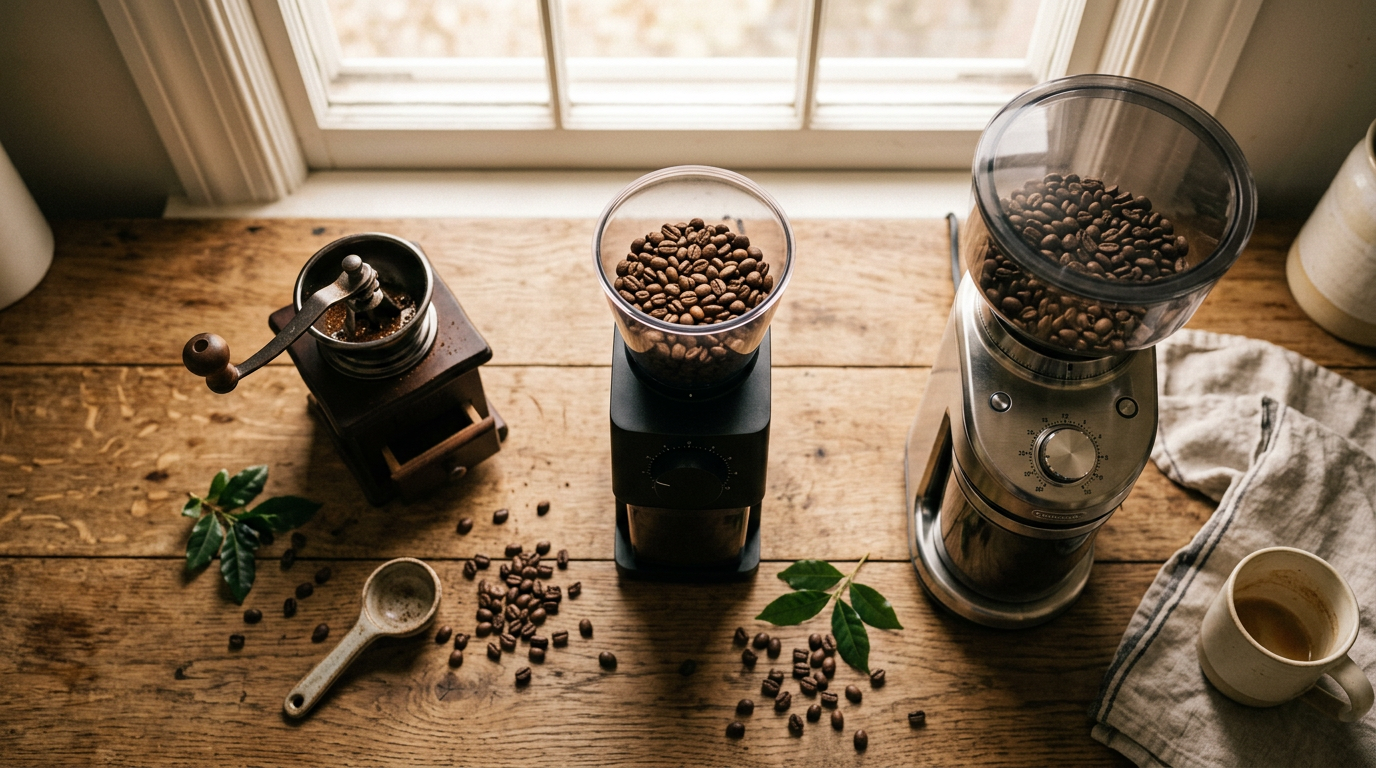
You've decided to grind your own coffee. Good call — it's one of the single best upgrades you can make to your morning cup. But now you're staring at a wall of grinders with confusing names, mysterious specs, and prices that range from $20 to $2,000. Where on earth do you start?
We've done the homework for you. This guide covers the only three grinders we'd recommend to a complete beginner right now: one budget manual option, one solid electric pick, and one step-up grinder for those who want a little more room to grow. All three use burr grinding technology — and if you don't know what that means yet, we'll explain that too.
No jargon. No gatekeeping. Just honest picks from people who want your first cup of freshly ground coffee to be genuinely good.
For most beginners, the Capresso Infinity Plus (~$99) is the best place to start. It's an electric burr grinder with 16 grind settings, consistent results, and a quiet motor — all without breaking the bank. If you want to spend less, the Hario Mini-Slim Plus (~$38) is an excellent manual option.
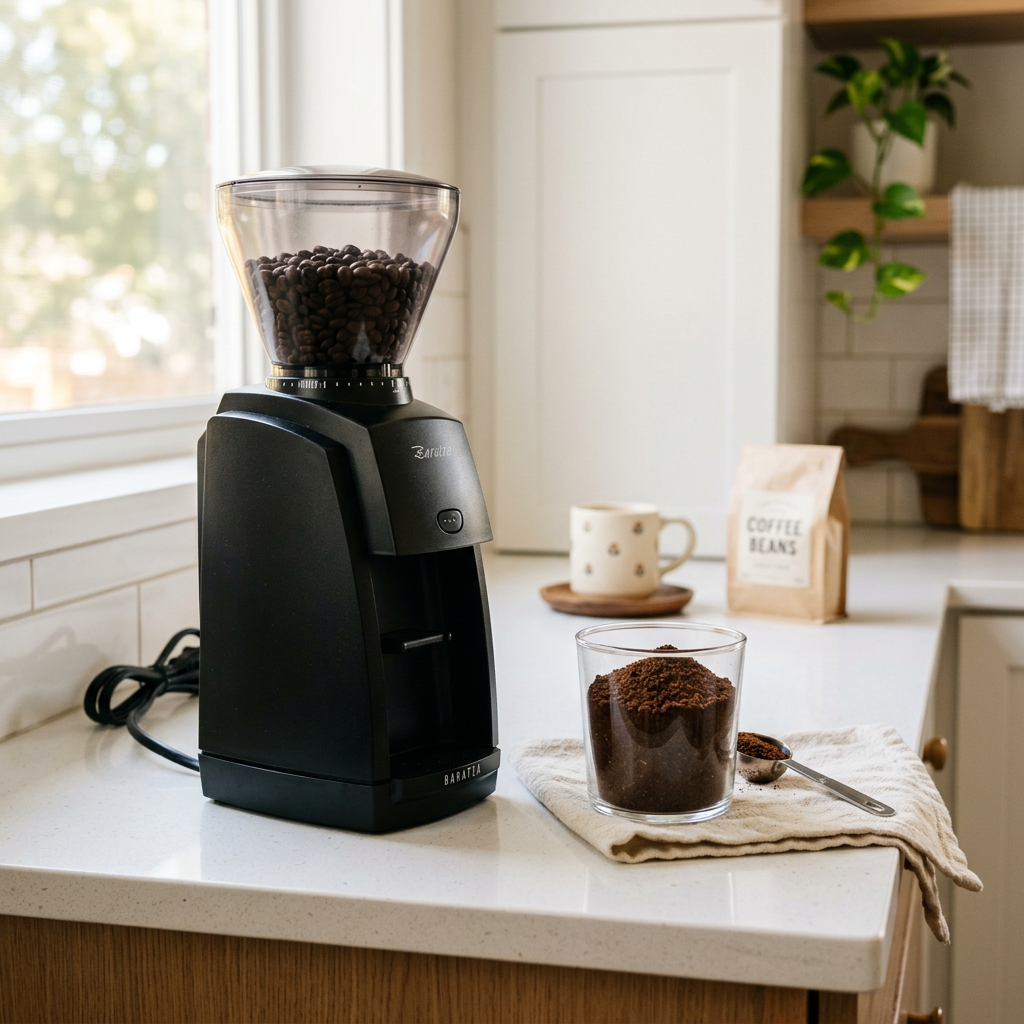
First: Why You Need a Burr Grinder (Not a Blade Grinder)
Before we get to the picks, there's one rule you need to know: don't buy a blade grinder.
A blade grinder is the cheap spinning-blade device that looks like a mini blender. It chops your coffee beans unevenly, produces wildly inconsistent particle sizes, and generates heat that dulls the flavor. It might cost $15, but it will make your coffee taste flat and bitter every single time.
A burr grinder works differently. Instead of chopping, it crushes beans between two surfaces — called burrs — to produce particles that are all roughly the same size. That consistency is everything when it comes to flavor. Uniform grounds extract evenly, which means a cleaner, more balanced, better-tasting cup.
A lot of “coffee grinders” sold at big box stores are actually blade grinders in disguise. If the product description doesn't say “burr grinder” explicitly, assume it's a blade grinder and keep looking. The word “burr” is your green light.
If you want to go deeper on why grinders matter so much, we cover it fully in our guide: Do You Really Need a Coffee Grinder?
How We Chose These Grinders
We didn't just pick the most popular options on Amazon. We looked for grinders that meet a specific set of criteria for someone who is just starting out:
- Burr grinder only — No blade grinders, period.
- Consistent grind quality — Grounds should come out roughly the same size, every time.
- Enough grind settings — You need to be able to adjust from coarse (French press) to medium (drip) at minimum.
- Beginner-friendly operation — No complicated setup, no steep learning curve.
- Reasonable price — We're not asking you to spend $300 on your first grinder.
- Proven reliability — We cross-referenced multiple reviews and community feedback from coffee forums and Reddit's r/Coffee community.
Best Coffee Grinders for Beginners — Our Top 3 Picks
Best Overall: Capresso Infinity Plus Conical Burr Grinder
Price Range: approx. $99
Best For: Beginners who want an easy, no-fuss electric grinder that delivers consistent results without a big investment.
Pros:
- 16 grind settings covering extra fine through coarse — plenty of range for drip, pour-over, and French press
- Commercial-grade solid steel conical burrs with surprisingly good consistency at this price point
- Slower grinding speed reduces heat and static, which protects flavor
- Quiet operation for an electric grinder
Cons:
- Not ideal for espresso — can't dial in fine enough for a true espresso shot
- Hopper capacity is on the smaller side (about 8 oz)
- Settings between steps can be slightly tricky to land precisely at first
The Capresso Infinity Plus is the grinder we'd hand to a friend on day one. It's electric, so there's no arm work involved — you set the grind size, push a button, and walk away. The 16 settings give you more than enough range for every beginner brewing method: drip coffee, pour-over, French press, and even AeroPress.
What makes this grinder stand out at its price is the build quality. The conical burrs are solid steel, not ceramic, and they're cut to a commercial standard. That's unusual under $100. The result is a grind that's noticeably more consistent than cheaper options, which directly translates to better-tasting coffee.
It's also quieter than most electric grinders. That might not seem important until you're grinding coffee at 6am and everyone else is asleep.
The one real limitation: espresso. If you ever want to pull shots at home, the Capresso Infinity Plus won't grind fine enough. But for everything else beginners are likely to brew — and honestly, for most home coffee drinkers forever — it does the job very well.
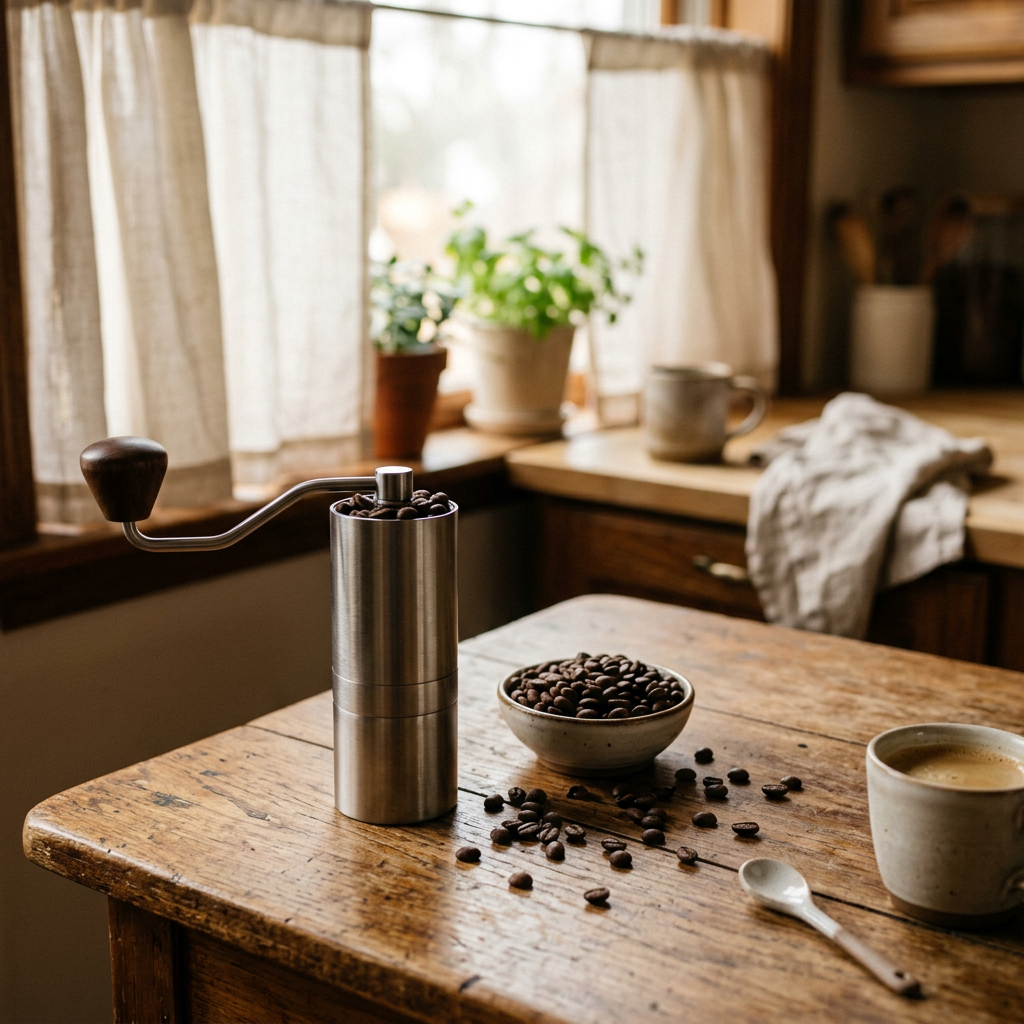
Best Budget Pick: Hario Mini-Slim Plus Ceramic Coffee Mill
Price Range: approx. $38
Best For: Budget-conscious beginners, travelers, and anyone who wants to start simple and upgrade later.
Pros:
- Excellent grind consistency for the price — ceramic conical burrs perform well above what you'd expect at $38
- No electricity needed — lightweight and portable, great for travel or camping
- Compact and easy to clean
- Quiet — essentially silent compared to any electric grinder
Cons:
- Takes 2–3 minutes of hand-cranking to grind enough for one cup
- Small capacity — holds about 24g of beans, enough for 1–2 cups
- Grind adjustment can be finicky to dial in at first
If you want to spend as little as possible while still getting real, proper burr grinding, the Hario Mini-Slim Plus is the answer. At around $38, it punches well above its weight class.
Yes, it's manual — you turn a little crank to grind your beans. It takes about two to three minutes to grind enough for a single cup. That's not a lot of effort, and many people find it becomes a peaceful little morning ritual. But if you're someone who wants coffee the moment you wake up and doesn't want to think, a manual grinder might test your patience. Be honest with yourself.
The ceramic conical burrs inside are the real story here. They produce a genuinely consistent grind that's significantly better than any blade grinder and competitive with electric options that cost twice as much. This is a grinder that coffee enthusiasts recommend all the time — it just requires a little manual effort.
It's also an excellent travel companion. It's small enough to throw in a bag, runs on zero electricity, and won't make a sound — ideal for hotel rooms, camping trips, or staying with people who don't share your enthusiasm for fresh-ground coffee at dawn.
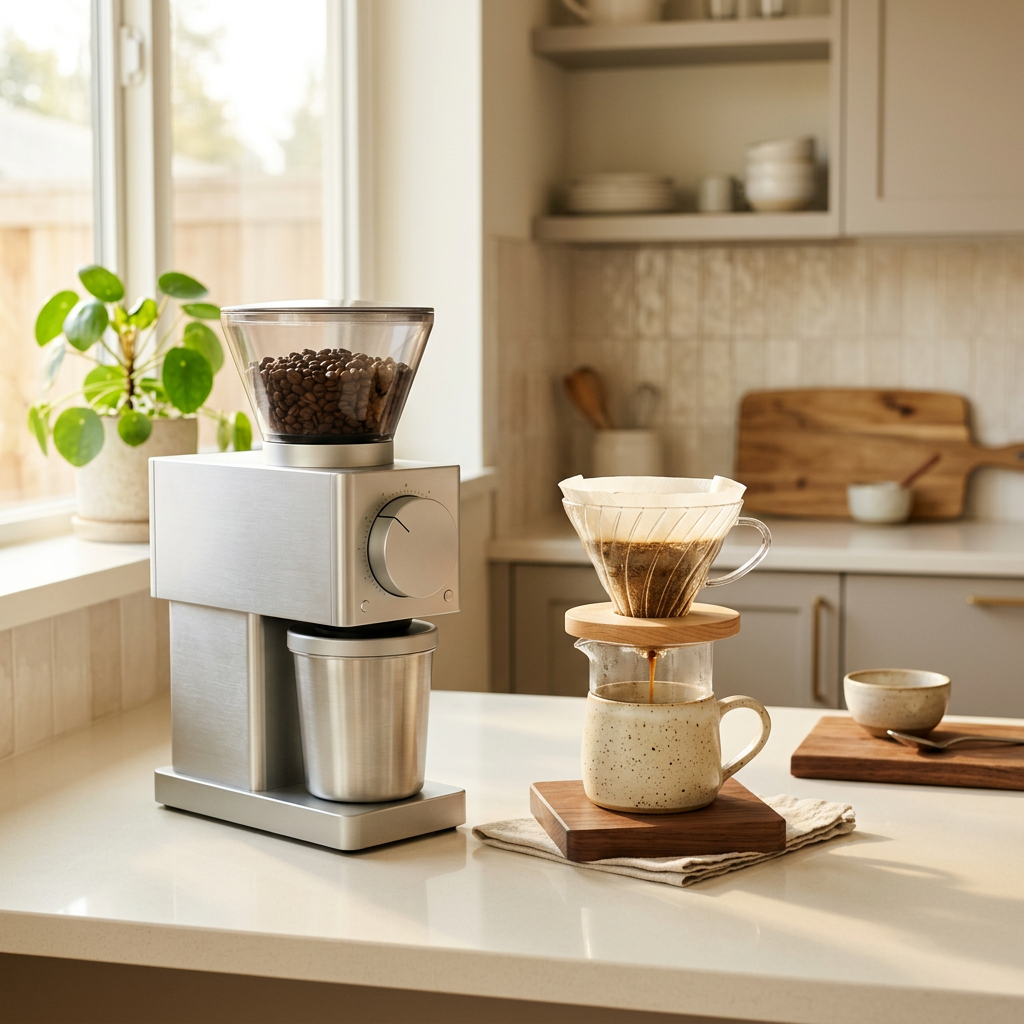
Best Step-Up: OXO Brew Conical Burr Coffee Grinder
Price Range: approx. $110
Best For: Beginners who want a premium experience from day one, or those who already know they'll be brewing pour-over and want precise control.
Pros:
- One-touch automatic grinding with a built-in timer — set it and forget it
- 15 grind settings plus micro-adjustments for fine-tuning
- Stainless steel conical burrs with very consistent output
- Named Wirecutter's top pick for non-espresso home brewing [VERIFY — check current Wirecutter status]
- Sleek, well-built design that looks great on a counter
Cons:
- Slightly over $100 — costs a little more than the other picks on this list
- Louder than the Capresso at full speed
- Like all entry-level electric grinders, not suitable for espresso
- Large hopper means more residual beans left over if you switch coffees often
The OXO Brew is the grinder for someone who wants to buy once and not think about upgrading for a long time. It's a step above the Capresso — not dramatically, but noticeably. The built-in timer means you can program it to grind exactly the amount of coffee you need, every time, without standing there watching it. Push the button, walk away, come back to a container of freshly ground coffee.
The grind consistency is excellent for drip, pour-over, and French press brewing. If you're planning to get into pour-over coffee specifically — where grind precision has the biggest impact on flavor — the OXO's extra adjustment range is genuinely useful.
At around $110, it's slightly over the $100 mark. Whether that $10–$15 difference matters to you is a personal call. But if your budget can stretch to it, you're getting a noticeably better experience.
Side-by-Side Comparison
| Grinder | Price | Type | Grind Settings | Best For | Our Pick |
|---|---|---|---|---|---|
| Capresso Infinity Plus | ~$99 | Electric burr | 16 | Most beginners | ⭐ Best Overall |
| Hario Mini-Slim Plus | ~$38 | Manual burr | Stepless (adjustable) | Budget buyers, travelers | 💰 Best Budget |
| OXO Brew Conical Burr | ~$110 | Electric burr | 15 + micro-adjust | Pour-over enthusiasts, step-up buyers | 🏆 Best Step-Up |
What to Look for When Buying a Burr Grinder
Not ready to buy yet, or just want to understand what you're looking at? Here's what actually matters when shopping for a beginner burr grinder — and what you can safely ignore.
Burr material (steel vs. ceramic): Both work well for beginners. Steel burrs are generally more durable and common in electric grinders. Ceramic burrs run cooler (less heat = more flavor) and are typical in manual grinders. Either is fine at this price level — don't get hung up on it.
Grind settings: Look for at least 10–15 settings so you can adjust from coarse (French press) to medium (drip). More settings give you more control, but anything in the 10–20 range is plenty for a beginner.
Consistency: This is the one that actually matters most. Uniform particle size = even extraction = good coffee. All three grinders on this list pass this test. Below the ~$30 price point, consistency starts to suffer noticeably.
Capacity: For most beginners making 1–2 cups at a time, a grinder that holds 20–30g of beans is plenty. Bigger hoppers mean more convenience if you're brewing for multiple people.
Ease of cleaning: Coffee grounds get everywhere. Look for a grinder with removable parts that are easy to brush out. All three picks here are reasonably easy to clean.
Grind only what you need, right before you brew. Pre-ground coffee starts going stale within 15–20 minutes of grinding. A fresh grind makes a bigger flavor difference than almost any other variable in your morning cup. This is the whole reason a grinder is worth buying.
Once you've got your grinder sorted, the next question is what beans to put in it. Our beginner's guide to buying coffee beans walks you through everything — roast levels, whole bean vs. ground, and what to look for on the bag.
Frequently Asked Questions
Do I really need a grinder, or can I just buy pre-ground coffee?
You can absolutely start with pre-ground coffee — and many people do. But whole beans stay fresh much longer than pre-ground, and the flavor difference is noticeable. A burr grinder is the single biggest quality upgrade you can make to your home coffee setup. If you're even slightly curious about better coffee, it's worth it. Check out our full breakdown: What Do You Need to Make Coffee at Home?
Can I use these grinders for espresso?
Not really — not for true espresso. All three grinders on this list are designed for drip, pour-over, and French press brewing. Espresso requires an extremely fine, precise grind that entry-level grinders under ~$150 can't reliably produce. If espresso is your goal from day one, you'll want to look at a grinder specifically designed for it, like the Baratza Encore ESP (~$170).
How often should I clean my grinder?
For casual home use, a quick brush-out once a week is fine. Coffee oils build up over time and can go rancid, affecting flavor. Most grinders come with a small brush for this purpose. A deeper clean (removing the burrs and wiping everything down) once a month keeps things tasting fresh.
What's the difference between conical and flat burrs?
Conical burrs have a cone-shaped inner burr that fits inside a ring-shaped outer burr. Flat burrs use two parallel discs. For beginners, the difference is minimal — both produce great coffee. Conical burrs are slightly quieter and have less retention (fewer grounds left inside after grinding). All three grinders on this list use conical burrs.
- Always choose a burr grinder over a blade grinder — the consistency difference is massive.
- Best Overall: Capresso Infinity Plus (~$99) — electric, 16 settings, quiet, reliable.
- Best Budget: Hario Mini-Slim Plus (~$38) — manual, excellent quality for the price, great for travel.
- Best Step-Up: OXO Brew Conical Burr (~$110) — automatic timer, precise, excellent for pour-over.
- Grind only what you need, right before you brew — freshness is everything.
Which Grinder Should You Buy?
Here's the honest answer: start with the Capresso Infinity Plus. It's the sweet spot of price, quality, and ease of use. You push a button, you get consistent grounds, your coffee tastes noticeably better. That's the whole game at this stage. Most people who buy it don't feel the need to upgrade for years.
If money is tight, the Hario Mini-Slim Plus is a genuinely great grinder for $38 — just be prepared for a couple of minutes of hand-cranking each morning. It's not a compromise, it's a different kind of ritual. Many coffee people prefer it.
And if you want to buy once and never think about upgrading, the OXO Brew is worth the extra $10–$15 over the Capresso. The automatic timer alone saves a surprising amount of morning brain power.
Whatever you pick, you're already making a better choice than most home coffee drinkers. Fresh-ground coffee, even on a budget grinder, is a different drink entirely. Once you taste the difference, you won't go back.
Ready for the next step? Learn how to pick the right beans to go in your new grinder: How to Buy Coffee Beans (A Beginner's Guide).
Disclosure: This article contains affiliate links. If you purchase through our links, we may earn a small commission at no extra cost to you. We only recommend products we genuinely believe are right for beginners. Full disclosure here.
☕ About the Author
Greg Rathbone is the founder of HomeCoffeeBeginner.com. He started this site after finding that most coffee advice online assumed you were already an expert. Every guide here is written for total beginners — tested in his own kitchen in Oklahoma, with zero snobbery.
⚙️ Related Coffee Grinder Guides