
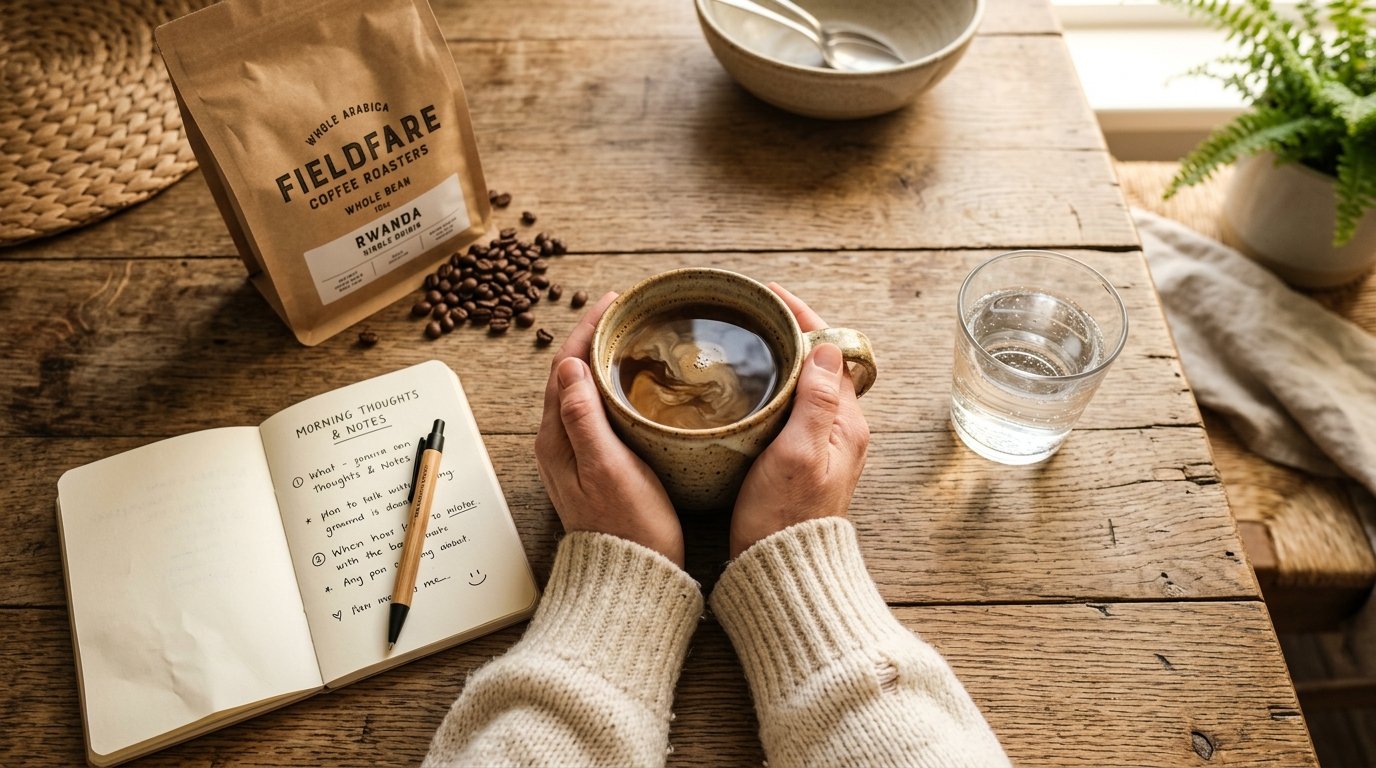
You take a sip of coffee every morning, but have you ever actually tasted it? Not just noticed whether it's hot or strong — but paid attention to whether it's fruity or nutty, smooth or bright, heavy or light?
Learning how to taste coffee isn't about becoming a snob. It's about getting more enjoyment out of something you're already drinking every day — and knowing what to look for when you're picking out your next bag of beans. Professional coffee tasters (called cuppers) have a specific method they use to evaluate coffee, but the good news is that the basics are simple enough to do at your kitchen table with whatever coffee you already have.
By the end of this guide, you'll be able to taste a cup of coffee and describe what you're experiencing — and use that knowledge to find coffees you love.
- Smell the coffee before you taste it — your nose does most of the work
- Take a slurp (not a sip) to spread coffee across your whole palate
- Pay attention to four things: acidity, sweetness, body, and flavor
- Start with broad categories (fruity? nutty? chocolaty?) and get more specific over time
- Compare two different coffees side by side for the fastest learning
What You'll Need
The beauty of coffee tasting is that you don't need any special equipment. Here's what to grab:
- Two different coffees — ideally different roast levels or origins. Tasting one coffee teaches you a little; tasting two side by side teaches you a lot.
- Your usual brewing setup — drip maker, French press, pour over — whatever you normally use is fine
- Two clean mugs
- A spoon
- A glass of water — to cleanse your palate between tastes
- A notebook or your phone — optional, but writing down what you taste helps you remember and improve
That's it. No special cupping spoons, no precision scales, no lab equipment. We're keeping this beginner-friendly.
Before You Start — Quick Tips for Success
Taste at the right temperature. Coffee reveals different flavors at different temperatures. Very hot coffee is hard to taste because heat numbs your palate. Let your coffee cool for a couple of minutes until it's warm but comfortable to sip — that's when flavors open up the most.
Skip the cream and sugar for this exercise. You can go right back to your usual additions after, but for tasting, you want to experience the coffee on its own. Cream masks body, and sugar overrides the coffee's natural sweetness.
Don't overthink it. There are no wrong answers. If a coffee tastes like “grandma's kitchen” to you, that's a perfectly valid tasting note. The goal is to build awareness, not pass a test.
Your sense of smell is responsible for most of what you “taste.” Before your first sip, spend 10 seconds just smelling the coffee. You'll pick up flavors with your nose that you might miss with your tongue alone.

Step-by-Step: How to Taste Coffee
Step 1 — Smell the Aroma
Before you drink anything, bring the mug up to your nose and take a slow, deep breath. What do you notice? Is it fruity? Earthy? Chocolaty? Nutty? Smoky?
Don't worry about getting specific yet. Just try to land on one or two broad impressions. “This smells kind of like chocolate” is a great start. Professional cuppers actually evaluate aroma twice — once with dry grounds and once after adding water — but for your first time, just smelling your brewed cup is plenty.
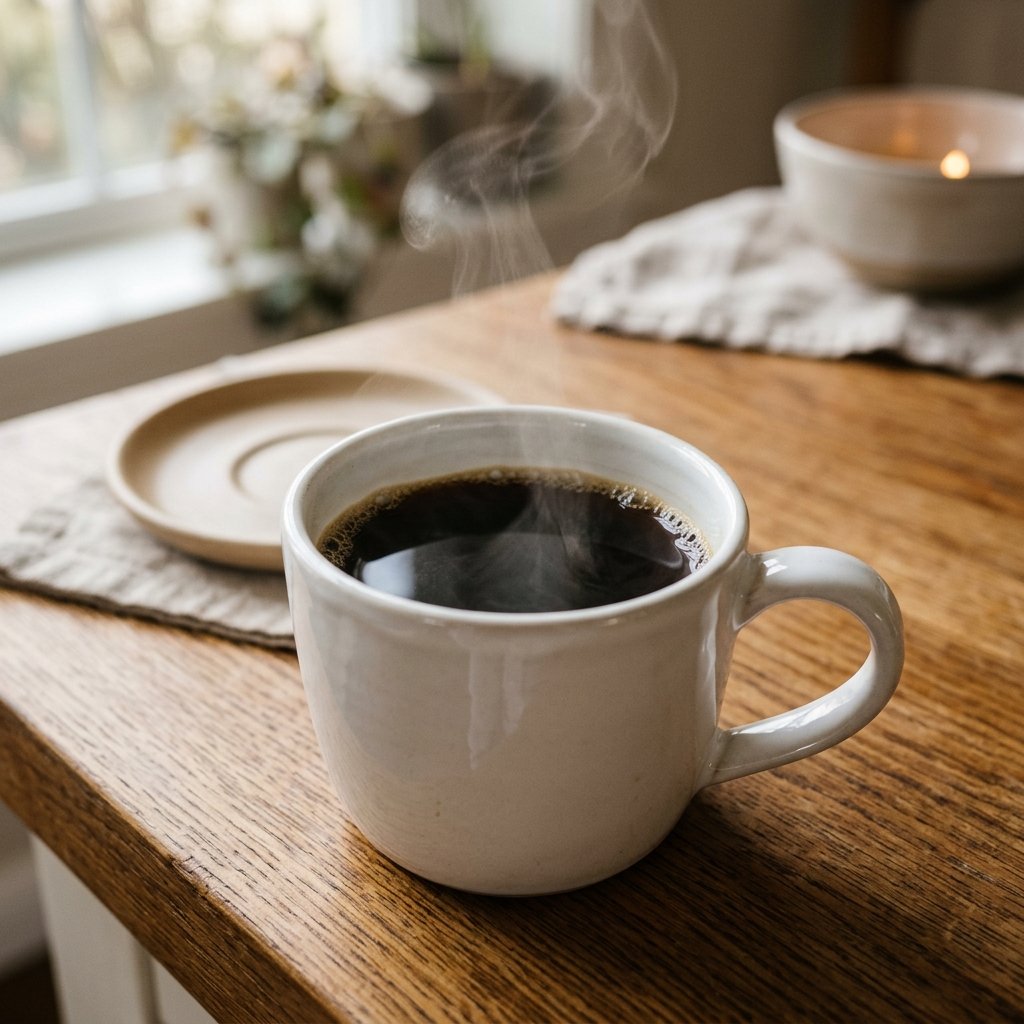
Step 2 — Take a Slurp (Yes, Really)
This is the part that feels silly, but it works. Instead of taking a normal sip, slurp the coffee off your spoon — loudly. This isn't bad manners; it's technique. Slurping sprays the coffee across your entire tongue and the roof of your mouth, which activates more taste buds and sends aroma up through the back of your throat to your nose.
Professional cuppers slurp so aggressively it sounds like they're vacuuming soup. You don't have to go that far, but a good confident slurp will give you noticeably more flavor than a quiet sip.
Step 3 — Notice the Acidity
Acidity in coffee isn't a bad thing — it doesn't mean your coffee is acidic like a lemon. In coffee tasting, acidity refers to a bright, lively quality. It's the zing or crispness you feel, usually on the sides of your tongue.
Think of it this way: a light roast typically has high, bright acidity — like biting into a green apple. A dark roast has very low acidity — smooth and flat. Neither is better; they're just different. Ask yourself: does this coffee have a brightness to it, or is it more mellow and smooth?
Step 4 — Find the Sweetness
Even without sugar, good coffee has natural sweetness. It might remind you of caramel, honey, brown sugar, dried fruit, or chocolate. The sweetness is often subtle, so pay attention — it usually shows up in the middle of your sip, after the initial acidity fades.
If you can't find any sweetness at all, the coffee may be over-extracted (brewed too long or too hot), which pushes past the sweet compounds into bitterness. That's useful information — it tells you something about the brew, not just the beans.
If every coffee you taste seems bitter and flat, the problem might not be the beans — it might be your brewing. Over-extraction strips out the sweetness and leaves only bitterness behind. Try a coarser grind or shorter brew time before giving up on a coffee.
Step 5 — Feel the Body
Body is about how the coffee feels in your mouth — not what it tastes like, but its physical weight and texture. Think of it like the difference between skim milk and whole milk. Both are milk, but they feel completely different in your mouth.
Coffee body ranges from light and tea-like (thin, clean, almost watery) to heavy and syrupy (thick, rich, coating your mouth). Most beginners find medium-bodied coffees the most approachable. Dark roasts and French press brewing tend to produce heavier body, while light roasts and pour-overs tend to be lighter.
Step 6 — Identify Flavor Notes
This is the fun part — and the part that intimidates most beginners. When a coffee bag says “notes of blueberry and dark chocolate,” it doesn't mean someone added blueberry flavoring. It means the natural compounds in that coffee happen to taste similar to those things.
Start broad. Ask yourself: is this coffee more fruity, more nutty, or more chocolaty? That single question puts you into the right neighborhood. From there, you can get more specific over time. Fruity could mean citrus, berry, or stone fruit. Nutty could mean almond, walnut, or peanut. Chocolaty could mean milk chocolate, dark chocolate, or cocoa.
The Specialty Coffee Association (SCA) created a Coffee Taster's Flavor Wheel with dozens of specific flavor categories. You don't need to memorize it — but if you're curious, searching for “SCA Coffee Flavor Wheel” will show you the full map. It's a fun reference to have nearby while you're tasting.
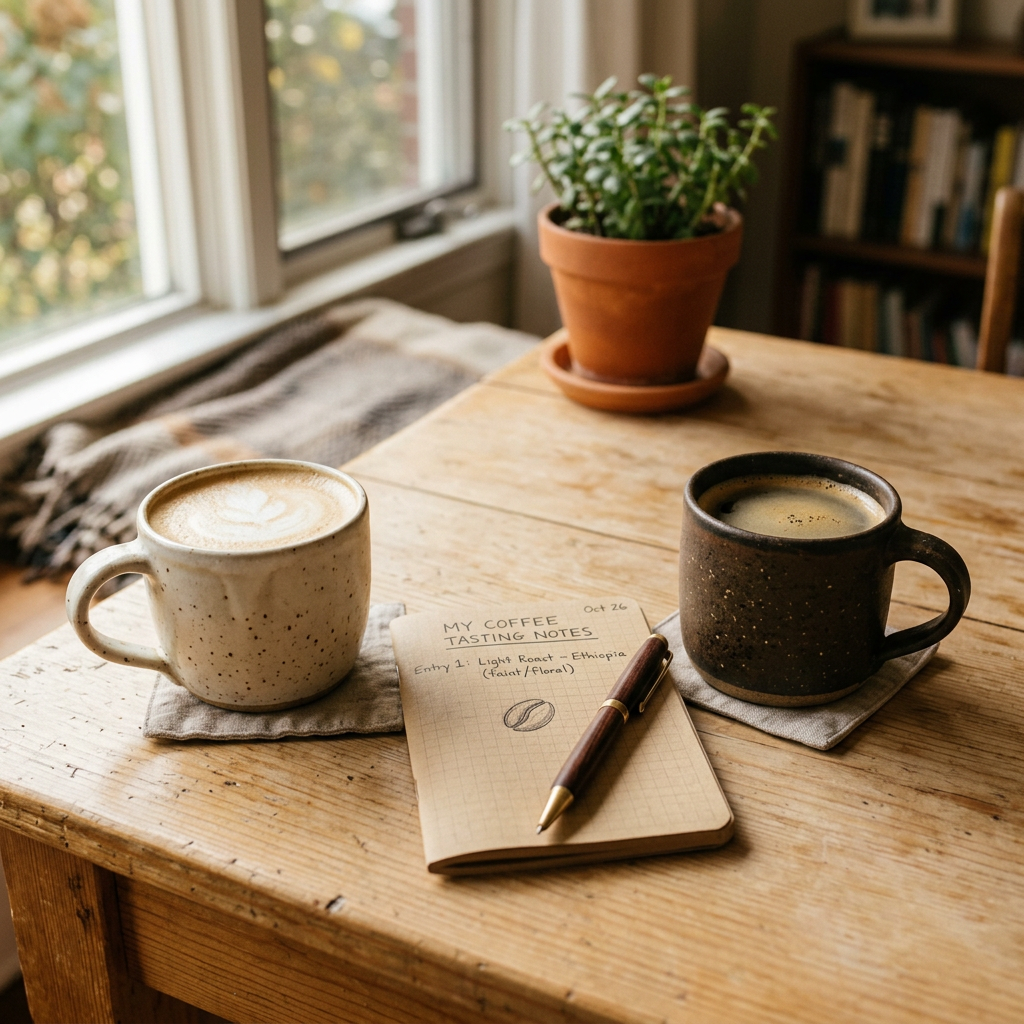
The fastest way to develop your palate is to taste two coffees side by side. Try a light roast next to a dark roast, or a single origin next to a blend. The contrast makes differences obvious that you'd never notice tasting just one coffee on its own.
Step 7 — Notice the Finish
After you swallow (or spit, if you're doing a proper cupping), pay attention to what lingers. Does the flavor disappear immediately, or does it hang around? Is the aftertaste pleasant — maybe sweet or chocolaty — or does it turn bitter or dry?
A clean, pleasant finish that sticks around for a few seconds is generally a sign of a well-made coffee. A harsh, bitter, or astringent finish often points to over-extraction or lower quality beans.
How to Know If You're Doing It Right
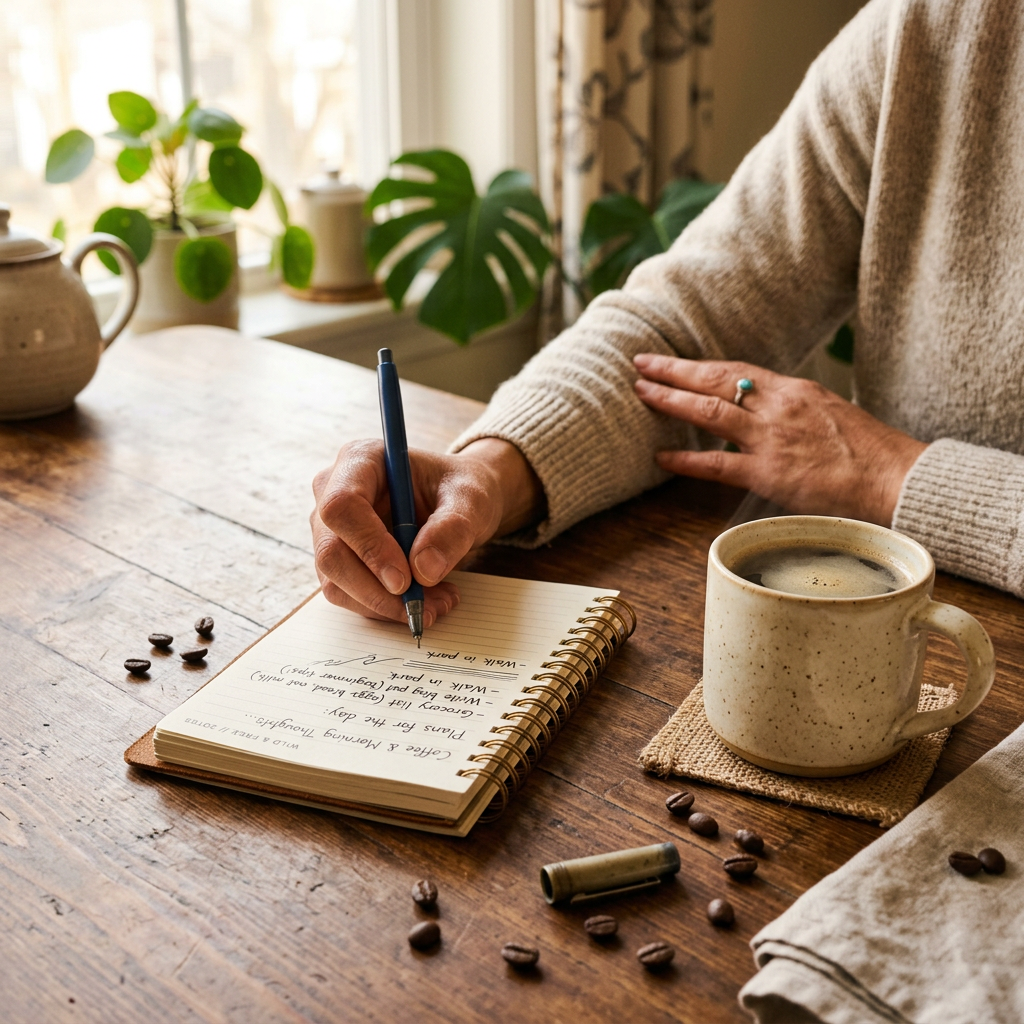
If you noticed anything about your coffee that you didn't notice before — a brightness, a heaviness, a hint of something fruity or nutty — you're doing it right. That's literally all tasting is: paying attention.
You won't identify 15 specific flavor notes on your first try. Most professionals didn't either when they started. What matters is that you're building a vocabulary and a frame of reference. After a few sessions comparing different coffees, you'll be amazed at how much more you pick up.
Troubleshooting — If Something Went Wrong
“Everything tastes the same to me.” Try coffees that are more different from each other — a light roast African coffee vs. a dark roast Brazilian, for example. The wider the gap, the easier it is to notice differences. Also make sure you're not tasting while the coffee is scalding hot — heat masks flavor.
“All I taste is bitterness.” This is probably a brewing issue, not a tasting issue. Check your extraction — is the grind too fine? Is the coffee sitting too long? Try adjusting your brew before your next tasting session.
“I can taste a difference but I can't describe it.” That's completely normal and perfectly fine. The vocabulary comes with practice. For now, use whatever words come to mind — “this one is brighter” or “this one feels thicker” or even “this one tastes like fall.” Over time, those impressions will get more specific.
- Smell first — your nose detects more flavor than your tongue.
- Slurp, don't sip — it spreads coffee across your whole palate for maximum flavor.
- Focus on four things: acidity (brightness), sweetness, body (mouthfeel), and flavor notes.
- Start broad — fruity, nutty, or chocolaty? — and get more specific over time.
- Compare two coffees side by side — contrast is the fastest way to train your palate.
- There are no wrong answers. If you noticed something new, you're doing it right.
What to Read Next
Now that you know how to taste coffee, you'll start noticing how different variables change your cup. If you want to understand why your coffee tastes the way it does — and how to adjust it — check out our guide to coffee extraction. It's the science behind everything you just tasted.
☕ About the Author
Greg Rathbone is the founder of HomeCoffeeBeginner.com. He started this site after realizing most coffee advice online assumes you're already an expert. Every guide here is written for total beginners and tested in his own kitchen — no jargon, no snobbery.