So you've decided to start making coffee at home. Maybe you're tired of spending five dollars every morning at the drive-through. Maybe you tasted a really good cup somewhere and thought, “I want that — but in my kitchen.” Or maybe you just want to know what all the fuss is about.
Whatever brought you here, we're glad you're here. Because setting up to brew coffee at home is one of those things that sounds way more complicated than it actually is. The internet makes it seem like you need a barista certification and a thousand dollars worth of gear. You don't.
This guide walks you through the entire process — from choosing your first brewer to buying the right beans to making your first cup — in plain language. No jargon, no snobbery, no pressure to spend more than you're comfortable with. Think of it as your one-stop reference for getting your home coffee setup right from the start.
You don't need to read this all at once. Bookmark it, come back to it, and use it as a reference as you go. We've linked to deeper guides throughout so you can explore each topic at your own pace.
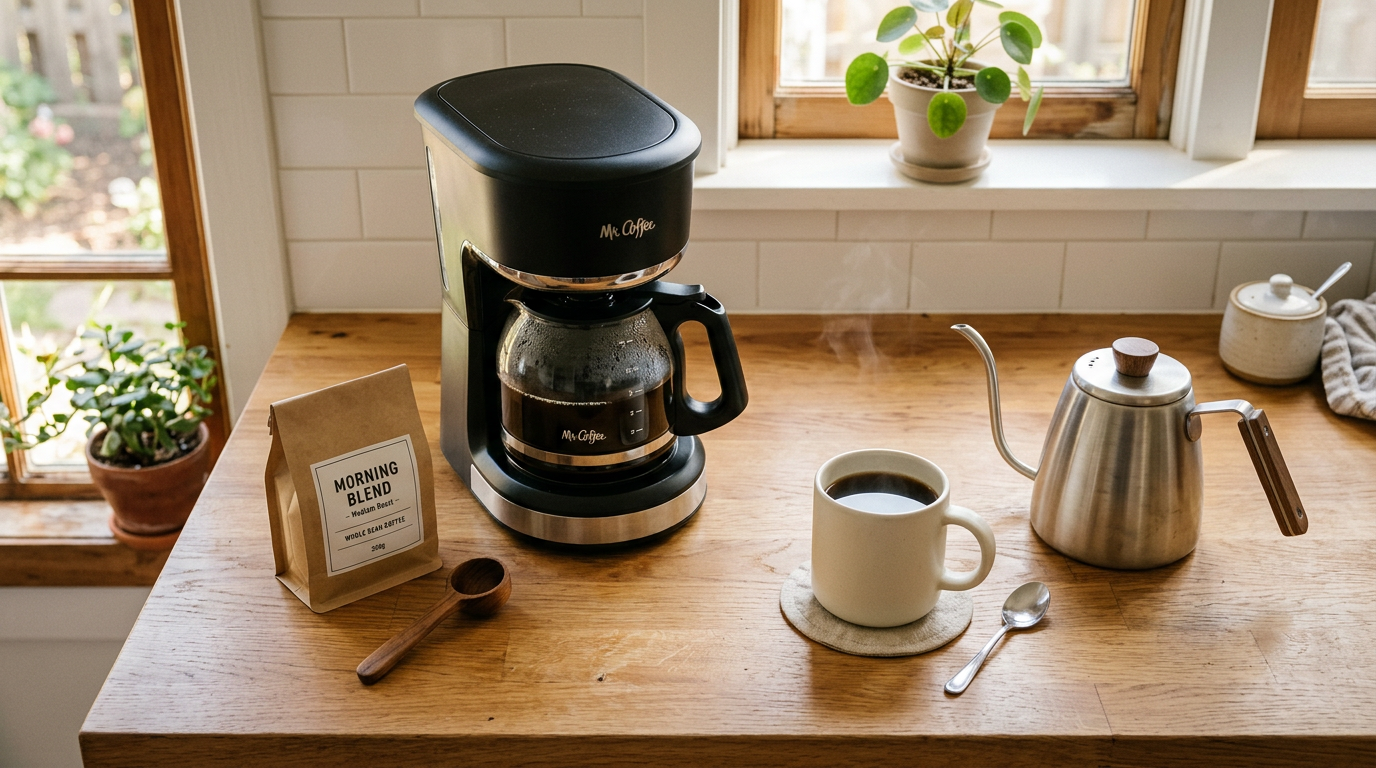
- You can start brewing great coffee at home for under $80
- All you truly need is a brewer, coffee, filters (if applicable), and fresh water
- A basic drip coffee maker is the easiest starting point for most beginners
- Upgrading your beans and water matters more than upgrading your equipment
- Start simple, learn the basics, then upgrade as your taste develops
Why Your Coffee Setup Matters (But Not as Much as You Think)
Here's something the coffee world doesn't always tell beginners: your equipment matters, but it's not the most important thing. The beans you use, the water you brew with, and your basic technique have a bigger impact on how your coffee tastes than whether you spent $30 or $300 on a brewer.
That said, having the right setup makes everything easier. The right brewer for your lifestyle means you'll actually use it every morning. The right grinder (when you're ready for one) means consistent results without guessing. And a few inexpensive accessories — like a simple kitchen scale — can turn a good cup into a great one.
The goal isn't to build the perfect setup on day one. The goal is to start with something simple that works, learn what you like, and upgrade intentionally as your taste develops. We've watched too many beginners buy expensive gear they don't need yet and get overwhelmed before they even brew their first cup.
The single best investment a beginner can make isn't a fancy brewer — it's fresh, quality coffee beans. A $25 drip maker with great beans will produce a better cup than a $200 machine with stale, bargain-bin coffee every single time.
Go deeper: What Do You Need to Make Coffee at Home? breaks down the absolute basics if you want a quick checklist before reading on.
What Equipment Do You Actually Need?
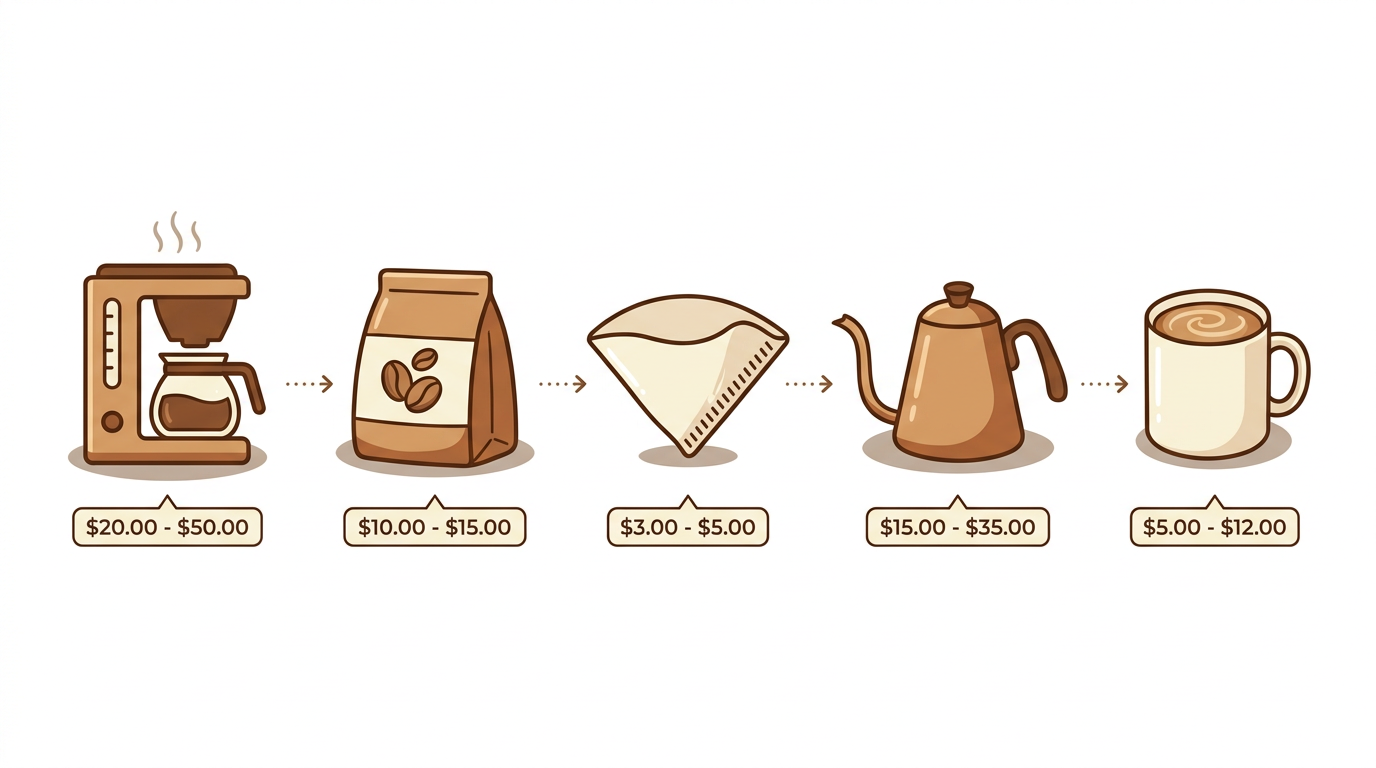
Let's cut through the noise. Here's what you actually need to start, what's a smart early upgrade, and what can wait until later. We've organized everything by priority so you can build your setup at whatever pace fits your budget.
| Item | What It Does | Approx. Price | Priority |
|---|---|---|---|
| Coffee brewer | Makes the coffee — drip maker, French press, or pour-over | $15–$60 | Essential |
| Coffee (ground or whole bean) | The actual coffee you'll brew | $10–$18 per bag | Essential |
| Filters | Removes grounds from your cup (paper or metal, depending on brewer) | $3–$8 | Essential (if your method needs them) |
| Kettle | Heats water — standard or gooseneck for pour-over | $15–$40 | Essential for manual methods |
| Kitchen scale | Measures coffee and water for consistent results | $10–$20 | Nice to Have (big impact though) |
| Burr grinder | Grinds whole beans fresh before brewing | $25–$70 (manual) / $50–$150 (electric) | Nice to Have (upgrade when ready) |
| Airtight storage container | Keeps beans or grounds fresh longer | $10–$25 | Nice to Have |
| Water filter pitcher | Improves water quality for better-tasting coffee | $20–$35 | Nice to Have |
Total for a basic starter setup: Under $80. That's a drip coffee maker, a bag of good coffee, filters, and a mug you already own. That's genuinely all you need to start making coffee that's better than what you've been buying at the drive-through.
Go deeper: For specific product picks at every budget, check out Best Coffee Maker for Beginners.
Choosing Your First Brewing Method
This is the big decision — and the good news is, there's no wrong answer. Every brewing method can make great coffee. The best one for you depends on how much effort you want to put in each morning and what kind of coffee you enjoy drinking.
Here are the three most beginner-friendly options:
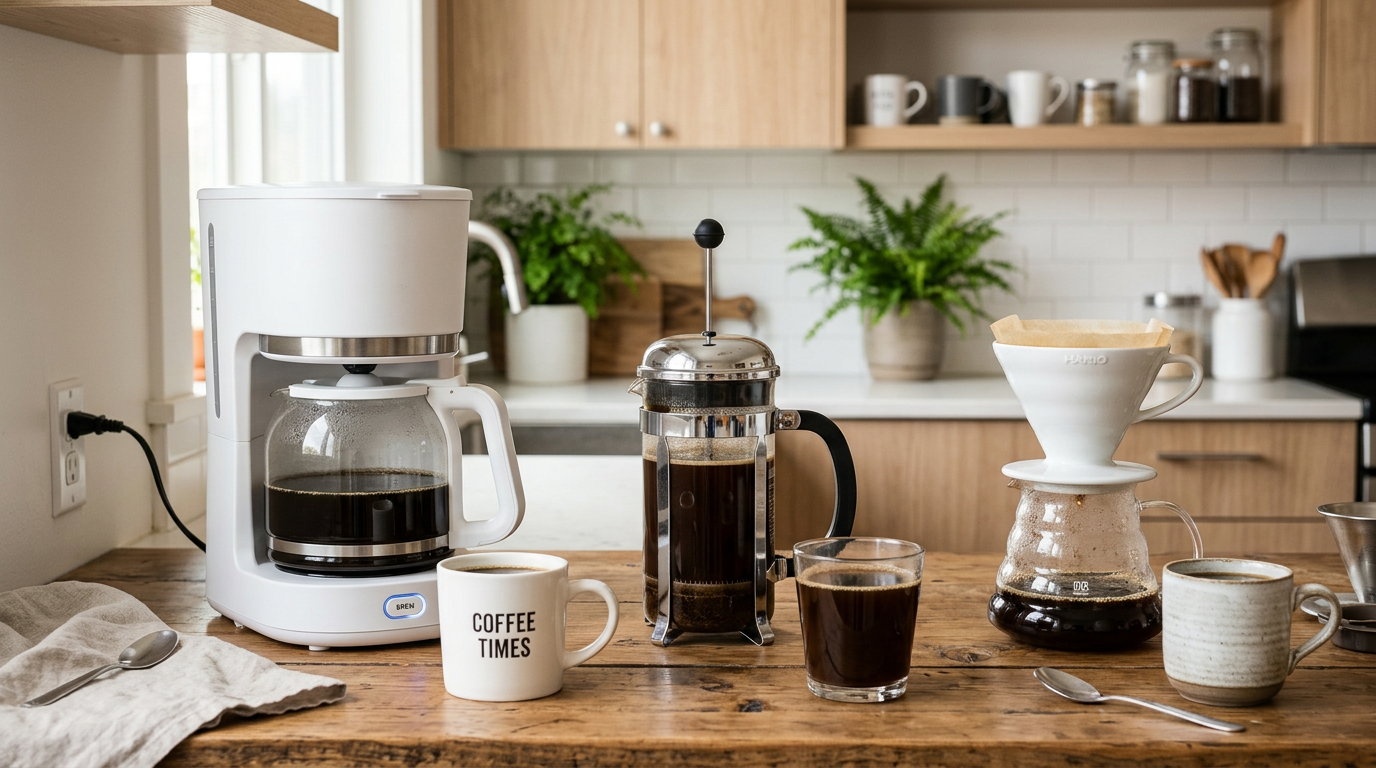
Automatic Drip Coffee Maker
This is the most hands-off way to start. Add water, add ground coffee, press a button, and walk away. Most models make 4–12 cups at a time, which is great if you're brewing for a household or want to fill a thermos for the day. A solid beginner drip maker costs $25–$60.
Best for: People who want simplicity and consistency. If you're the kind of person who wants coffee ready when you walk into the kitchen, this is your method.
French Press
A French press is a glass or stainless steel container where you steep coffee grounds in hot water for about four minutes, then press a metal filter down to separate the grounds. It produces a rich, full-bodied cup with more oils and texture than drip coffee. A good French press costs $15–$30. See our step-by-step French press guide to get started.
Best for: People who like bold, rich coffee and don't mind a slightly more hands-on process. It's also a great way to learn what different coffees taste like because nothing gets filtered out.
Pour-Over
Pour-over involves manually pouring hot water over coffee grounds in a cone-shaped filter. It gives you the most control over the brewing process and produces a clean, bright cup. A basic pour-over dripper costs as little as $8–$15, but you'll also need a kettle (ideally a gooseneck for better control).
Best for: People who enjoy the ritual of making coffee and want to experiment with technique. It takes a bit more practice, but many coffee lovers end up here because the results are worth it.
Don't buy an espresso machine as your first brewer. Espresso requires finer technique, more expensive equipment, and a steep learning curve. Start with one of the three methods above, learn what good coffee tastes like, and move to espresso when you're ready. Your wallet and your taste buds will both thank you.
Not sure which to pick? Start with a drip maker. It's the most forgiving method and lets you focus on learning about beans and ratios without worrying about pouring technique. You can always add a French press or pour-over later — they're inexpensive enough to experiment with.
Do You Need a Grinder Right Away?
Short answer: no. Pre-ground coffee works perfectly well for beginners, especially with a drip machine. You can make excellent coffee at home without ever grinding your own beans.
That said, grinding your own beans is one of the biggest single upgrades you can make to your coffee quality. Coffee starts losing freshness within minutes of being ground because grinding exposes all those flavor compounds to air. Whole beans stay fresh for two to four weeks after roasting; ground coffee starts going stale in days.
Our recommendation: start with pre-ground coffee while you learn the basics. Once you've been brewing for a few weeks and you're enjoying the process, consider adding a burr grinder to your setup. A manual burr grinder starts around $25 and makes a noticeable difference.
Go deeper: Do You Need a Coffee Grinder? gives you the full honest breakdown. And when you're ready to buy one, Best Budget Coffee Grinders for Beginners has our tested picks.
If you do get a grinder, you'll want to understand grind sizes — different brewing methods need different grind sizes to taste right. Coffee Grind Sizes Explained walks you through exactly which grind matches your brewer.
The Beans Side of the Equation
Your brewing equipment is only half the story. The coffee you put into it matters just as much — arguably more. Here's what beginners need to know about choosing coffee.
Whole Bean or Pre-Ground?
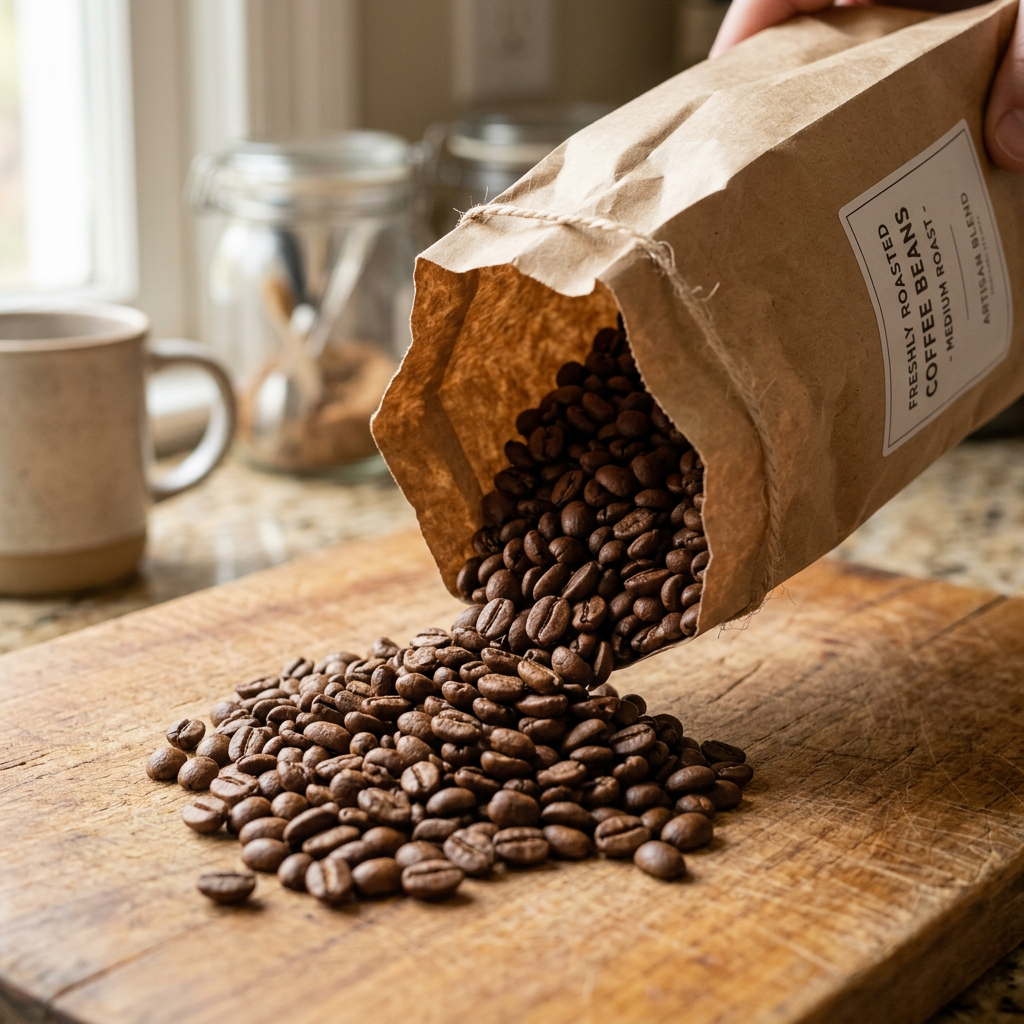
If you don't have a grinder yet, buy pre-ground coffee that matches your brewing method (most bags labeled “auto drip” or “medium grind” work for drip makers). If you do have a grinder, buy whole bean — you'll taste the difference immediately.
Go deeper: Whole Bean vs Ground Coffee covers this decision in detail.
Which Roast Level?
For most beginners, medium roast is the sweet spot. It's smooth, balanced, and not too intense in any direction. Light roasts are brighter and more acidic (which can surprise beginners). Dark roasts are bold and smoky — great if that's your thing, but they can taste bitter if your technique isn't dialed in yet.
Go deeper: Light, Medium, Dark Roast — What's the Difference? explains exactly what happens during roasting and how it changes the flavor in your cup.
Where to Buy
Grocery store coffee is fine for getting started. Look for bags with a “roasted on” date (not just a “best by” date) — the fresher, the better. As you level up, local roasters and online specialty roasters offer beans that are roasted to order and shipped within days. The difference in freshness is dramatic.
Go deeper: How to Buy Coffee Beans: A Beginner's Guide walks you through everything from reading bag labels to finding great beans on a budget.
Once you open a bag of coffee, store it in an airtight container in a cool, dark place — not the fridge or freezer. Proper storage can double how long your coffee stays fresh. We've got a full guide on this: How to Store Coffee Beans So They Stay Fresh.
Your First Brew — Putting It All Together
You've got your brewer. You've got your coffee. Now what? Here's the simplified version of making your first cup — regardless of which method you chose.
The Basic Formula
Great coffee comes down to a simple ratio: the right amount of coffee to the right amount of water. The standard starting point is about 2 tablespoons of ground coffee per 6 ounces of water. If you have a kitchen scale, that's roughly 1 gram of coffee per 16 grams of water.
Start there, taste the result, and adjust. Too weak? Add more coffee next time. Too strong or bitter? Use a little less. Coffee is personal — the “right” ratio is whatever tastes good to you.
Go deeper: Coffee-to-Water Ratio: The Simple Guide for Beginners gives you ratios for every brewing method plus tips for dialing in your perfect cup.
Water Matters
Coffee is about 98% water, so the water you use genuinely affects the taste. If your tap water tastes good on its own, it'll probably make good coffee. If it has a strong chlorine taste or mineral flavor, consider using filtered water from a simple pitcher filter. You don't need anything fancy — a basic Brita-style filter is plenty.
For temperature, aim for water between 195°F and 205°F (90–96°C). If you don't have a thermometer, just let boiling water sit for 30 seconds to a minute after it comes off the boil. That gets you in the right range.
The Step-by-Step
We won't repeat the full brew guide here — we've already written a detailed one. If you're ready to make your very first cup, head to How to Make Your First Cup of Coffee at Home. It walks you through every step with a drip maker, plus tips that apply to any method.
Common Beginner Setup Mistakes — and How to Avoid Them
After helping hundreds of beginners get started with home coffee, we see the same mistakes come up again and again. Here are the big ones — and how to avoid them from the start.
Buying too much equipment at once. You don't need a grinder, a scale, a gooseneck kettle, a pour-over dripper, AND a French press on day one. Start with one brewing method and the minimum gear to make it work. Add pieces as you learn what you like.
Using stale coffee. That pre-ground coffee that's been sitting in your pantry for six months? It's not going to taste good no matter what you brew it with. Coffee is a fresh product. Buy smaller bags more frequently rather than a giant can that sits for weeks.
Ignoring the water. Bad water makes bad coffee. Period. If your tap water doesn't taste good to drink, it won't taste good in your coffee. A $20 water filter pitcher is one of the cheapest upgrades with the biggest impact.
Jumping straight to espresso. We love espresso. But a decent espresso setup starts at $300+ and requires technique that takes weeks to learn. Master drip or manual brewing first. The skills you build — understanding grind size, ratios, and extraction — transfer directly to espresso when you're ready.
Not measuring anything. Eyeballing your coffee and water is fine for a casual cup, but if you're getting inconsistent results, a $10 kitchen scale is the fix. Measuring removes the guesswork and means you can repeat a great cup every single time.
The biggest beginner trap is thinking expensive equipment will automatically make great coffee. We've tasted incredible cups from a $15 French press and terrible cups from a $500 machine. Technique and fresh beans beat expensive gear every time. Start simple and save your money for better coffee, not fancier machines.
What to Learn Next
You've got the setup and you've brewed your first cup. Now the fun really starts. Here's where we'd recommend going next, based on where you are in your journey:
If you're still getting inconsistent results: Focus on your ratio and technique. The Coffee-to-Water Ratio Guide and What Is Coffee Extraction? will help you understand why some cups taste better than others.
If you're happy with your cup but want to explore flavors: Start learning about beans. How to Taste Coffee Like a Pro teaches you to notice the flavors that have been in your cup all along — you just didn't know what to look for.
If you're ready to upgrade your setup: A burr grinder is the single best upgrade you can make. Check our Best Budget Coffee Grinders for Beginners for tested picks that won't break the bank.
If you're curious about espresso: That's the final frontier for home coffee, and we're building out espresso guides right now. For now, make sure you're comfortable with the fundamentals above — they're the foundation espresso builds on. A great stepping stone is a moka pot, which gives you bold, espresso-style coffee on your stovetop without the learning curve of a real espresso machine.
- You can start making great coffee at home for under $80 with a brewer, good coffee, and fresh water
- A drip coffee maker is the easiest, most forgiving starting point for complete beginners
- Fresh beans and good water matter more than expensive equipment
- Start with pre-ground coffee — upgrade to a grinder when you're ready, not before
- Measure your coffee and water for consistent results (2 tablespoons per 6 oz is a good starting ratio)
- Don't jump to espresso first — build your foundation with simpler methods
- This is a journey, not a test — start simple and upgrade as your taste develops
Start Brewing
Home coffee doesn't have to be complicated. You don't need to become a coffee expert to make a cup you love — you just need a few basic tools, decent beans, and a willingness to experiment. Every great home barista started exactly where you are right now: with a first cup that was probably just okay, and the curiosity to make the next one better.
Bookmark this page and come back to it whenever you're ready for the next step. We've linked to deeper guides throughout, and we're adding new ones all the time. Your beginner coffee setup is just the starting point — the journey from here is the best part.
Ready to start? Head to How to Make Your First Cup of Coffee at Home and brew your first cup today.
☕ About the Author
Greg Rathbone is the founder of HomeCoffeeBeginner.com. He started this site after realizing most coffee advice online assumes you're already an expert. Every guide here is written for total beginners and tested in his own kitchen — no jargon, no snobbery.