
Light roast coffee is bright, acidic, and lets you taste where the beans came from. Medium roast is smoother and more balanced — the sweet spot for most beginners. Dark roast is bold, smoky, and full-bodied with very little acidity. The difference comes down to how long and how hot the beans are roasted, which changes their color, flavor, and body.
You're shopping for coffee and every bag has a label — light roast, medium roast, dark roast. Maybe there's even a “medium-dark” thrown in for good measure. What does any of it actually mean? And more importantly, which one are you going to enjoy the most?
Good news: this isn't complicated. Roast level is just a measure of how long coffee beans spend in the roaster — and that one variable changes almost everything about how your coffee looks, smells, and tastes. Once you understand the basics, picking the right bag becomes a lot less stressful.
Let's walk through what actually happens during roasting, how each level tastes, and which one we recommend if you're just getting started.
What Happens When Coffee Beans Are Roasted?
Raw coffee beans are actually green — small, dense, and they smell a bit like grass. They don't taste like coffee at all. Roasting is the process that transforms them into the brown, aromatic beans you recognize.
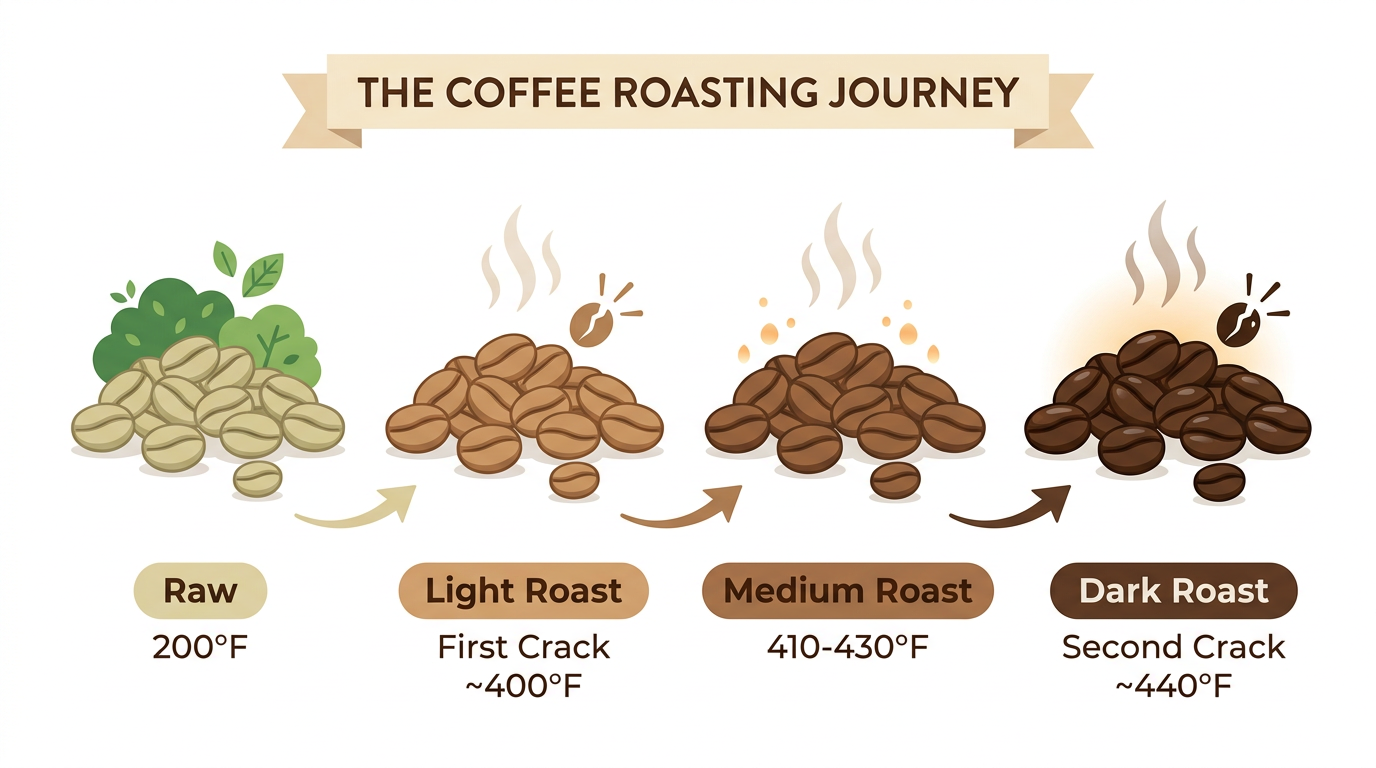
Inside the roaster, beans are heated to temperatures between roughly 350°F and 450°F. As the temperature rises, the beans go through a series of chemical changes. Moisture evaporates. Sugars caramelize. Acids develop and then break down. The beans physically expand, change color from green to yellow to brown, and eventually start to crack — kind of like popcorn.
That first audible crack (roasters literally call it “first crack”) happens around 385°F to 405°F. This is a turning point. Coffee pulled from the roaster right around first crack is a light roast. Let it keep going and you get medium. Push it further — past a second crack around 435°F to 450°F — and you're into dark roast territory.
The longer beans roast, the more the roasting process itself shapes the flavor — and the less you taste the bean's original character. That's the fundamental trade-off between roast levels.
How Each Roast Level Tastes
Light Roast
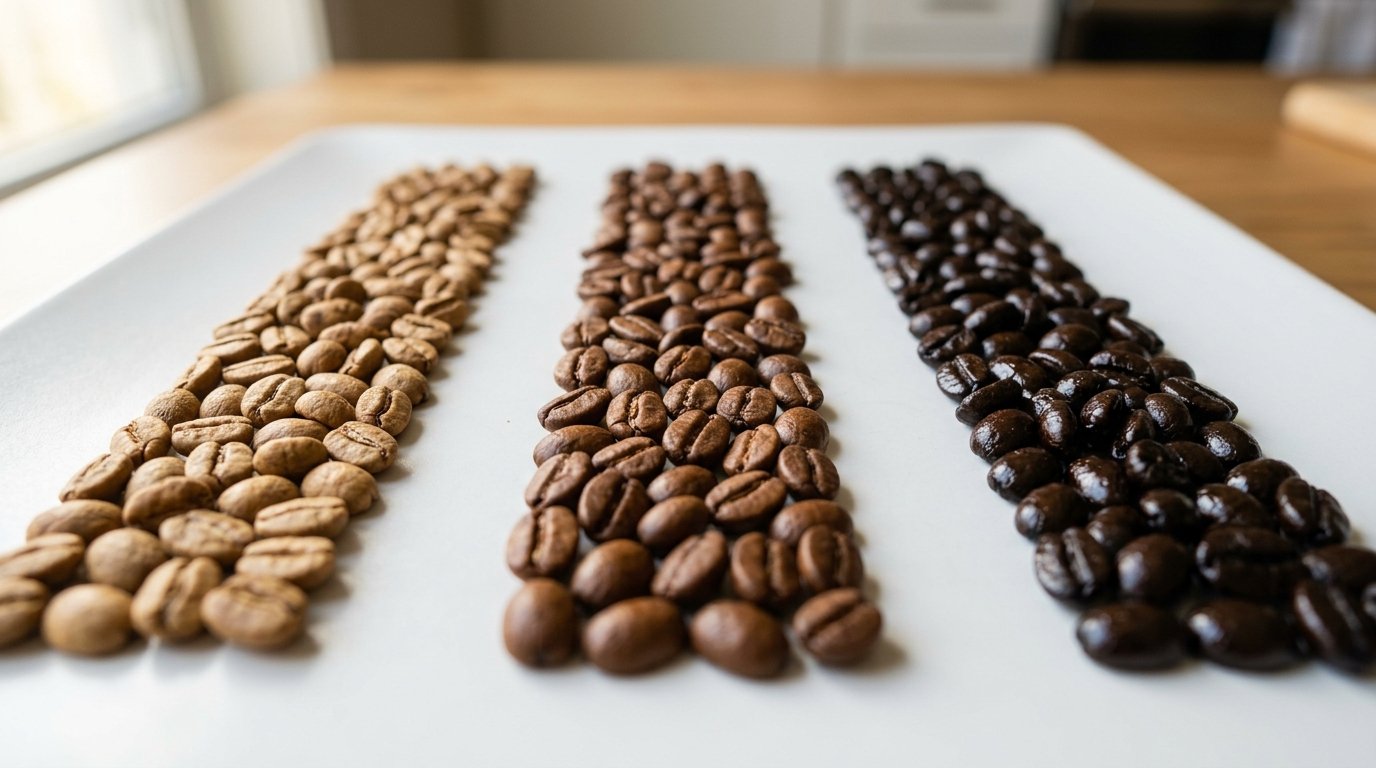
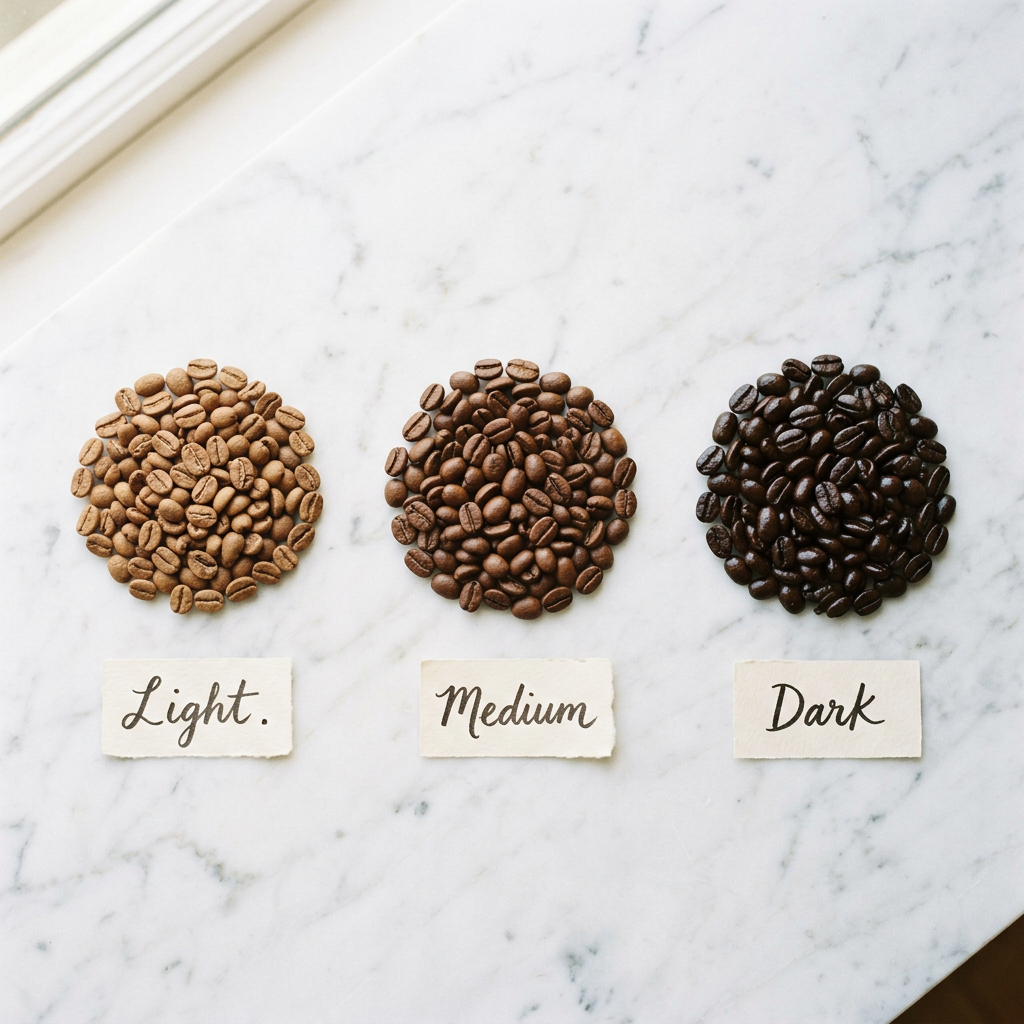
Light roast beans are light brown with a dry surface — no oily sheen. They're roasted to an internal temperature of about 350°F to 405°F, pulled right around first crack.
Flavor-wise, light roast is the brightest of the three. You'll notice more acidity (not sour — think crisp and lively, like a green apple), more fruity or floral notes, and a lighter body that feels more tea-like in the cup. Light roasting lets you taste the bean's origin — where it was grown, the soil, the altitude. That's why specialty coffee roasters love it.
The trade-off? Light roast can taste a bit sharp or “thin” if you're used to bold, traditional coffee. It's also a little less forgiving to brew — the flavors are more delicate, so small changes in your water ratio or brew time are more noticeable.
Medium Roast
Medium roast beans are a rich, chestnut brown — still mostly dry on the surface, maybe with the faintest hint of oil. They're roasted to about 410°F to 430°F, past first crack but before second crack.
This is the sweet spot for a lot of people. Medium roast balances the bean's natural flavor with the toasty, caramelized character that the roasting process adds. You get moderate acidity (much less sharp than light), a fuller body, and flavors like chocolate, caramel, nuts, and brown sugar. It's smooth, approachable, and hard to mess up when brewing.
If you've ever had diner coffee, office coffee, or most grocery store coffee — there's a good chance it was a medium roast. It's the most popular roast level in the U.S. for a reason.
Dark Roast
Dark roast beans are dark brown to nearly black, with a visible oily sheen on the surface. They're roasted to 430°F to 450°F or higher, often to or past second crack.
Flavor-wise, dark roast is bold and full-bodied. You'll taste smokiness, bitterness (the pleasant kind, like dark chocolate), and sometimes toasty or charred notes. Acidity is very low — almost nonexistent. The bean's original flavor is mostly replaced by the flavor of the roast itself, which is why dark roasts from different origins tend to taste more similar to each other than light roasts do.
Dark roast is what many people picture when they think “strong coffee.” It pairs especially well with milk, cream, and sugar because those bold flavors hold up instead of getting washed out.
Does Dark Roast Have More Caffeine?
This is one of the biggest myths in coffee, and it's understandable — dark roast tastes bolder and stronger, so it seems like it should pack more caffeine. But it doesn't.
Here's the reality: caffeine is extremely heat-stable. The roasting process doesn't burn it off in any meaningful way. A single coffee bean has roughly the same amount of caffeine whether it's roasted light, medium, or dark.
The only nuance is how you measure your coffee. Dark roast beans are slightly larger and lighter (they've puffed up and lost moisture in the roaster), so if you scoop your coffee by volume, a scoop of light roast will have slightly more caffeine — because you're fitting more dense beans into that scoop. But if you weigh your coffee, the difference essentially disappears.
The bottom line? The caffeine difference between roast levels is somewhere around 5 to 10 milligrams per cup — less than a sip of soda. For any practical purpose, roast level doesn't change your caffeine intake. Pick based on flavor, not buzz.
If you want more caffeine in your cup, use more coffee — don't switch roast levels. Adjusting your coffee-to-water ratio is a much more reliable way to control strength than changing your roast.
Common Beginner Mistakes with Roast Levels
A few misconceptions trip beginners up more than anything else. Here are the big ones.
“Dark roast is stronger.” Bolder flavor, yes. More caffeine, no. “Strength” in coffee actually refers to concentration — how much coffee you use relative to water — not roast level. A light roast brewed with extra grounds is “stronger” than a dark roast brewed weak.
“Light roast is weak.” Light roast tastes lighter-bodied, but it's not under-extracted or lacking flavor. It's a different kind of flavor — brighter and more complex rather than bold and heavy. Give it a fair shot before writing it off.
“I need to buy the ‘right' one.” There is no right answer here. Roast level is personal preference, not a quality indicator. A well-roasted light coffee and a well-roasted dark coffee are equally “good” — they're just different experiences.
Don't judge a roast level by one bad bag. A poorly roasted dark coffee tastes burnt and ashy, and a poorly roasted light coffee tastes sour and grassy — but neither of those represents what the roast level actually tastes like when done well. If your first bag of light roast was awful, try a different brand before deciding you don't like it.
Which Roast Should a Beginner Pick?
If you're brand new to making coffee at home, we recommend starting with a medium roast. Here's why:
Medium roast is the most forgiving. It's balanced enough that small brewing mistakes (slightly too much water, steep time a little off) don't ruin the cup the way they might with a delicate light roast. It tastes familiar and approachable — smooth and a little sweet, with no harsh edges. And it works well in pretty much every brewing method, from a basic drip coffee maker to a French press.
Once you've been brewing for a while and your palate develops, branch out. Try a bag of light roast to explore those brighter, fruitier flavors. Grab a dark roast when you want something bold for a lazy weekend morning. Over time, you'll figure out what you reach for most — and that's your roast.
Quick Comparison: Light vs Medium vs Dark Roast
| Light Roast | Medium Roast | Dark Roast | |
|---|---|---|---|
| Color | Light brown, dry surface | Chestnut brown, mostly dry | Dark brown to black, oily |
| Flavor | Bright, fruity, floral, crisp | Balanced, caramel, chocolate, nutty | Bold, smoky, bittersweet, roasty |
| Acidity | High — lively and crisp | Moderate — smooth | Low — almost none |
| Body | Light, tea-like | Medium, well-rounded | Full, heavy |
| Bean Surface | Dry — no oil | Mostly dry | Shiny, oily |
| Origin Flavor | Very prominent | Present but blended with roast | Mostly roast character |
| Best For | Exploring single-origin beans | Everyday brewing, beginners | Milk drinks, bold flavor lovers |
- Roast level is determined by how long beans stay in the roaster — light roast is pulled earliest, dark roast goes the longest.
- Light roast is bright and acidic, medium is balanced and smooth, dark is bold and smoky.
- Caffeine content is virtually the same across all three roast levels — pick based on flavor, not energy.
- Medium roast is the best starting point for beginners — it's forgiving, familiar, and works with any brewing method.
- There's no “correct” roast — only personal preference. Try all three and see what you enjoy most.
Understanding roast levels is one of the first steps toward buying coffee with confidence. You don't need to memorize temperatures or flavor wheels — just know that light is bright, medium is balanced, and dark is bold. Start with a medium roast, pay attention to what you like, and explore from there. Next, take a look at Whole Bean vs Ground Coffee: Which Should a Beginner Buy? — it's the natural next question once you've picked your roast.
☕ About the Author
Greg Rathbone is the founder of HomeCoffeeBeginner.com. He started this site after realizing most coffee advice online assumes you're already an expert. Every guide here is written for total beginners and tested in his own kitchen — no jargon, no snobbery.