
Yes, but not as much as you might think. Arabica coffee is smoother, sweeter, and more complex in flavor. Robusta is bolder, more bitter, and has nearly twice the caffeine. Most of the coffee you'll find at a good grocery store is Arabica — and for beginners, that's the one we recommend starting with. But the roast level and freshness of your beans matter more than the species on the label.
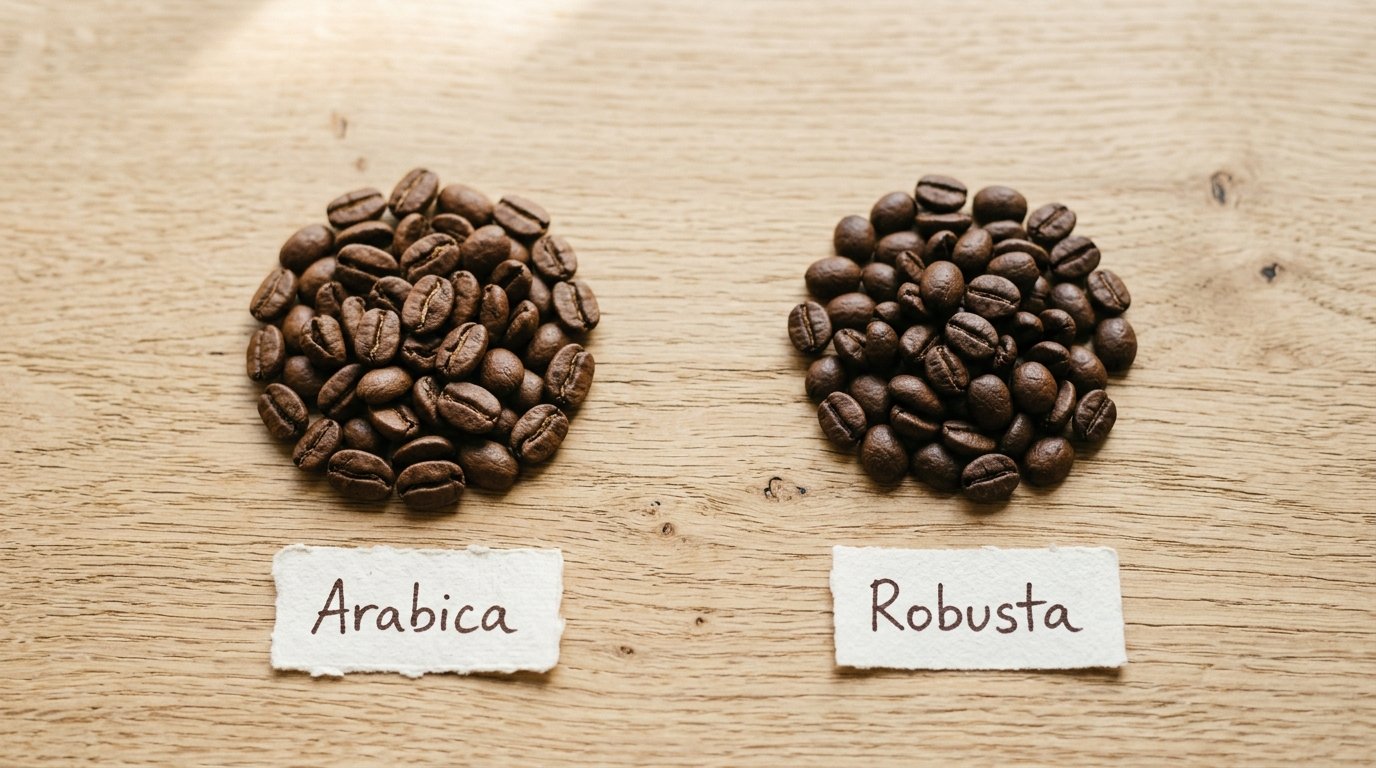
You're reading the back of a coffee bag and it says “100% Arabica” like that's supposed to mean something. The bag next to it doesn't say anything about Arabica at all. Should you care? Is one actually better than the other?
Here's the short version: Arabica and Robusta are the two main species of coffee plant, and they produce beans that taste noticeably different. Understanding the basics helps you make smarter choices at the store — but it's not the most important factor in how your coffee tastes. Let's break it down so you know exactly what matters and what doesn't.
What Are Arabica and Robusta?
Almost all the coffee in the world comes from just two species of coffee plant. Arabica (Coffea arabica) accounts for roughly 60–70% of global production. Robusta (Coffea canephora) makes up most of the rest.
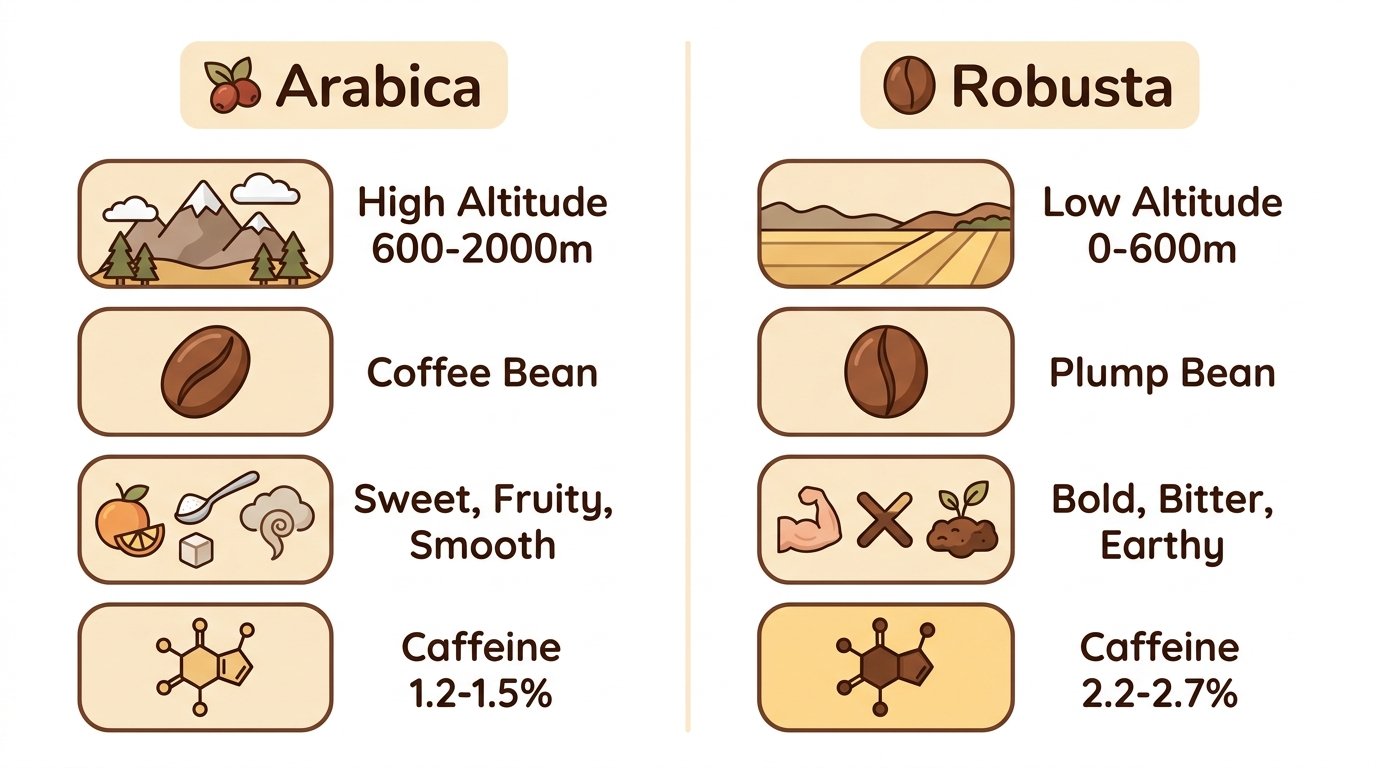
They're genuinely different plants. Arabica grows at higher altitudes (typically 600–2,000 meters above sea level), needs cooler temperatures, and is more vulnerable to pests and disease. It's fussy, harder to farm, and more expensive to produce. Robusta grows at lower altitudes, tolerates heat and humidity better, resists pests naturally (thanks in part to its higher caffeine content), and produces higher yields. It's tougher, cheaper, and easier to grow.
Those growing differences translate directly into what ends up in your cup.
How Do They Taste Different?
This is where it actually matters for your morning cup.
Arabica tends to be smoother, sweeter, and more complex. Depending on where it was grown and how it was roasted, you might taste notes of fruit, chocolate, caramel, nuts, or even floral tones. It has more natural acidity — the pleasant, lively brightness that makes coffee interesting (not the sour, stomach-acid kind). Arabica is what specialty coffee roasters almost exclusively use, and it's what most people mean when they talk about “good” coffee.
Robusta is bolder, heavier, and more bitter. It has an earthy, woody, sometimes rubbery flavor profile. The body is thicker and the finish is harsher. That bitterness comes partly from higher chlorogenic acid content (7–10% vs. Arabica's 5.5–8%), which also gives Robusta a more astringent mouthfeel.
That said, Robusta isn't automatically bad. High-quality Robusta does exist — it can taste clean, nutty, and full-bodied. The problem is that most Robusta on the market is commodity-grade, used as cheap filler in blends or in instant coffee. It's the low-quality Robusta that gives the species its bad reputation.
If a bag of coffee at the store proudly says “100% Arabica,” that's generally a good sign — it means the roaster isn't mixing in cheap Robusta to cut costs. But “100% Arabica” alone doesn't guarantee great coffee. A stale bag of Arabica that's been sitting on a shelf for months will taste worse than a fresh bag of anything. Freshness and roast level still matter more.
Does Robusta Have More Caffeine?
Yes — and it's not even close. Robusta beans contain roughly 2.2–2.7% caffeine by weight, while Arabica beans contain about 1.2–1.5%. That means Robusta has nearly twice the caffeine of Arabica, bean for bean.
In practical terms, an 8-ounce cup of Robusta coffee contains roughly 140–200 mg of caffeine, compared to about 80–100 mg for the same cup of Arabica. That's a real difference you'll feel.
This extra caffeine is actually one of the reasons Robusta tastes more bitter — caffeine itself is a bitter compound. It's also why Robusta plants are hardier: the caffeine acts as a natural pesticide, protecting the plant from insects.
So if your main goal is maximum caffeine per cup, Robusta technically wins. But for most beginners, the flavor trade-off isn't worth it. There are easier ways to get more caffeine — like using a bit more coffee or brewing it stronger — without sacrificing taste.
Where Does Each One Show Up?
Knowing where Arabica and Robusta typically appear helps you make sense of what you're buying.
Arabica is in: most specialty coffee, single-origin bags, pour-over and drip coffee, and anything labeled “100% Arabica.” If you're buying from a reputable roaster or a decent grocery store brand, you're almost certainly getting Arabica.
Robusta is in: most instant coffee, many espresso blends (especially Italian-style ones), some supermarket ground coffee (often mixed with Arabica but not labeled), and Vietnamese coffee (which traditionally uses Robusta and is delicious in its own right).
Espresso is an interesting case. Some espresso blends deliberately include a percentage of Robusta (usually 10–20%) because it adds body, creates a thicker crema (that golden foam on top of a shot), and contributes a punch that holds up well with milk. If you've had espresso at an Italian café, there was probably some Robusta in it.
If a bag of coffee doesn't mention the species at all, it may contain Robusta blended in to reduce cost. This isn't necessarily bad, but it's worth knowing. Bags labeled “100% Arabica” are being transparent. Bags that say nothing could be anything.
So — Does It Actually Matter for Beginners?
Here's our honest take: a little, but less than you'd think.
If you're just starting your home coffee journey, the species of bean is maybe the fourth or fifth most important factor in how your coffee tastes. Here's what matters more, in rough order:
1. Freshness. A fresh bag of decent coffee beats a stale bag of premium coffee every time. Check roast dates and store your beans properly.
2. Roast level. Whether you grab a light, medium, or dark roast will change the flavor of your cup far more than whether the beans are Arabica or Robusta.
3. Grind and brew method. Using the right grind size for your brewer and getting your coffee-to-water ratio in the ballpark makes a huge difference.
4. Bean species. This is where Arabica vs. Robusta fits in — real, but secondary to the factors above.
For a beginner buying coffee at the grocery store, our recommendation is simple: look for a bag that says “100% Arabica,” pick a medium roast, and check that the roast date is recent. That combination will get you a reliably good cup without overthinking it.
What About Blends?
You'll also see bags labeled as “blends” — and some of those mix Arabica and Robusta together on purpose. This isn't always a bad thing. Italian-style espresso blends, for example, often include 10–20% Robusta to add body, boost caffeine, and produce a thicker crema (that golden layer on top of an espresso shot). If you've ever had a rich, punchy espresso at a café, Robusta was probably part of the recipe.
Vietnamese coffee is another great example. It traditionally uses Robusta beans, brewed strong and served with sweetened condensed milk. The boldness and bitterness of Robusta actually work perfectly in that context — it's designed for it.
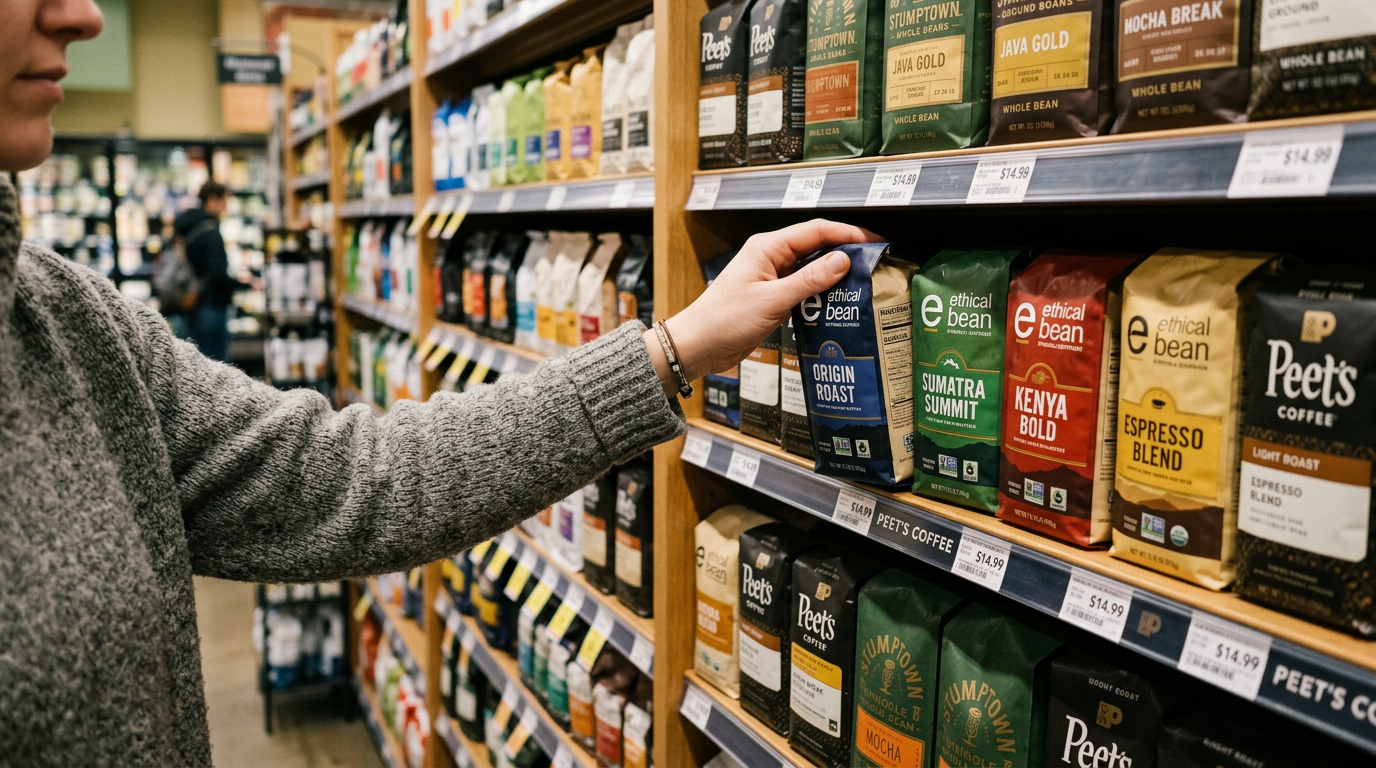
The blends to be cautious about are the ones that don't tell you what's inside. If a bag just says “coffee” with no mention of species, origin, or roast date, it may contain low-grade Robusta blended in to keep costs down. That's the scenario where Arabica vs. Robusta matters most — not because Robusta is inherently bad, but because cheap, unlabeled Robusta is usually the bottom of the barrel.
Quick Comparison: Arabica vs Robusta
| Arabica | Robusta | |
|---|---|---|
| Flavor | Smooth, sweet, fruity, complex | Bold, bitter, earthy, heavy |
| Caffeine | ~1.2–1.5% (80–100 mg/cup) | ~2.2–2.7% (140–200 mg/cup) |
| Acidity | Higher — bright and lively | Lower — flat and heavy |
| Bean Shape | Oval, slightly larger | Rounder, slightly smaller |
| Growing Altitude | High (600–2,000m) | Low (0–600m) |
| Price | More expensive | Cheaper |
| Market Share | ~60–70% | ~30–40% |
| Common In | Specialty coffee, drip, pour-over | Instant coffee, espresso blends |
- Arabica and Robusta are the two main coffee species — Arabica is smoother and sweeter, Robusta is bolder and more bitter.
- Robusta has nearly twice the caffeine of Arabica, but the flavor trade-off usually isn't worth it for everyday drinking.
- Most good coffee at the store is Arabica. If the bag says “100% Arabica,” that's a positive sign.
- For beginners, freshness and roast level matter more than bean species — focus on those first.
- The best beginner approach: buy 100% Arabica, medium roast, with a recent roast date.
Now you know the difference between Arabica and Robusta coffee — and more importantly, you know where it fits in the bigger picture. It's useful knowledge for reading coffee labels and understanding what you're buying, but it's not the make-or-break factor for a great cup at home. Focus on freshness, pick a roast level you enjoy, and the species will take care of itself. Next up, learn how to pick the right format for your beans: Whole Bean vs Ground Coffee: Which Should a Beginner Buy?
☕ About the Author
Greg Rathbone is the founder of HomeCoffeeBeginner.com. He started this site after realizing most coffee advice online assumes you're already an expert. Every guide here is written for total beginners and tested in his own kitchen — no jargon, no snobbery.