
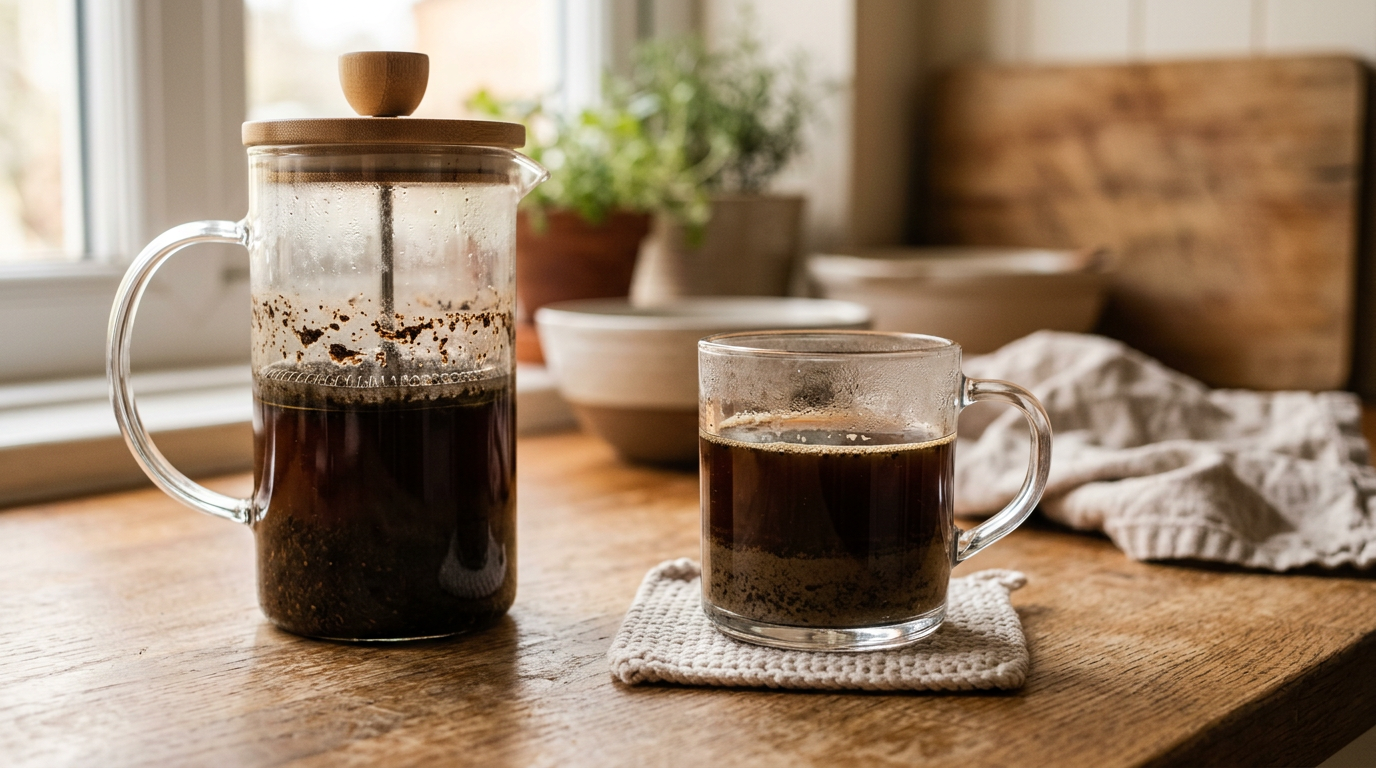
Muddy French press coffee is almost always caused by a grind that's too fine. Use a coarse grind about the texture of sea salt, plunge slowly and gently, let the brew settle for 30 seconds before pouring, check your filter for tears, and pour the last inch into the sink. Those five fixes solve 99% of muddy cups.
If the last sip of your French press coffee is gritty — or you've got a half-inch of sludge at the bottom of your mug — you're not alone. Muddy French press coffee is the single most common complaint beginners have, and the good news is it's almost always fixable with a few small tweaks.
In this guide we'll walk through the five fixes that actually work, in the order you should try them. We'll also cover what's realistic (a little sediment is normal) versus what's a real problem (a gritty, thick slurry at the bottom of every cup).
If you're brand new to the method, our complete beginner's guide to French press coffee walks through the whole setup from gear to first pour — start there if you haven't already.
First, Is Your French Press Coffee Actually Muddy — Or Just Normal?
Before you start fixing anything, it helps to know what “normal” looks like. French press is an immersion brew with a metal mesh filter, which means some amount of fine coffee particles (called “fines”) will always make it into your cup. That's part of what gives French press its rich, full body — and it's one of the reasons coffee lovers choose it over drip or pour-over.
A thin layer of sediment at the very bottom of your cup is completely normal. What's not normal:
- A thick, muddy sludge that coats your tongue
- Gritty coffee from the first sip
- A half-inch of grounds in the bottom of the mug
- Coffee that feels like sand when you swirl it
If that's what you're getting, one of the five fixes below will almost certainly solve it.
Fix #1 — Use a Coarser Grind (This Is the Big One)
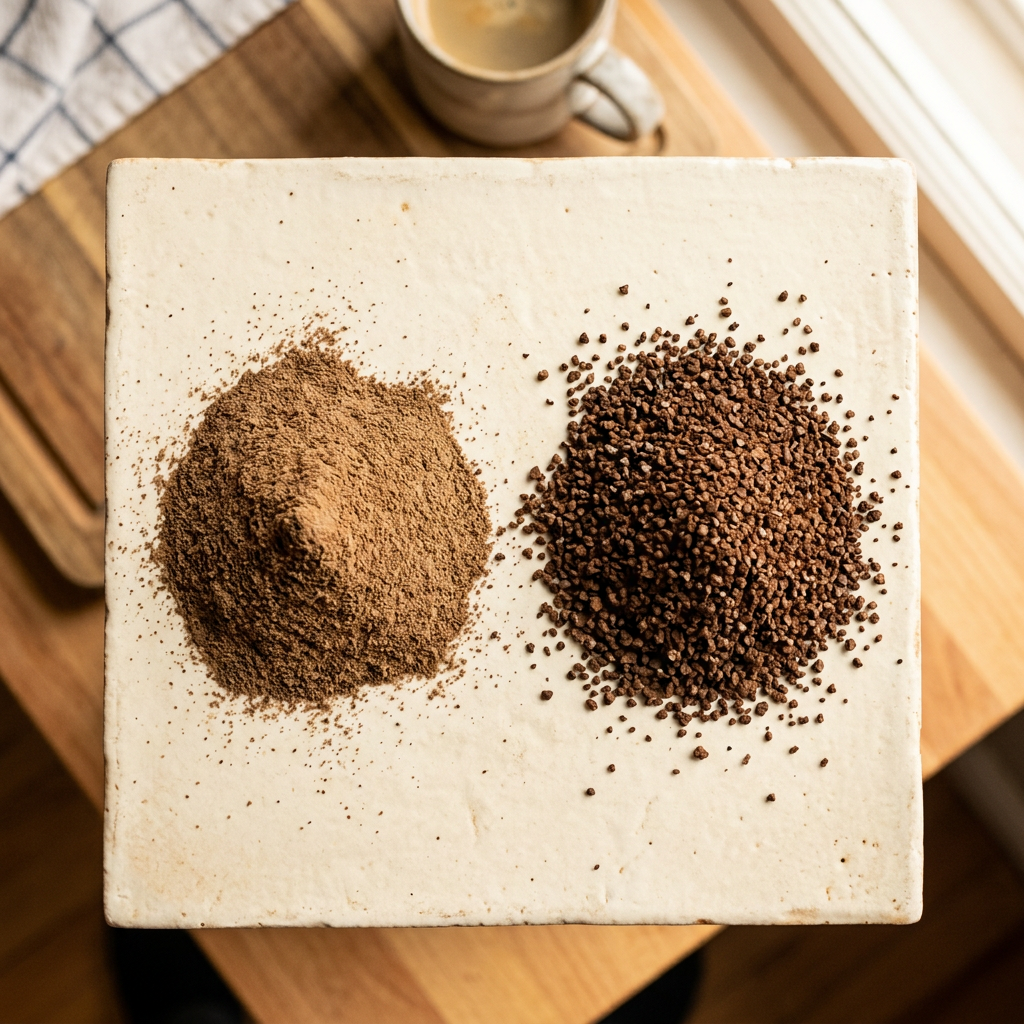
Nine times out of ten, muddy French press coffee comes down to one thing: the grind is too fine. Small particles slip right through the mesh filter, settle at the bottom of your press, and get stirred into the cup when you pour.
The target grind for French press is coarse — about the size and feel of sea salt or raw sugar. If your grounds look like table salt or powder, they're way too fine.
There are two common reasons your grind is too fine:
You're using pre-ground coffee from the grocery store. Most pre-ground bags are set for drip machines, which use a medium grind. That's fine for a drip maker but way too fine for French press. If you're using pre-ground, look for a bag specifically labeled “coarse” or “French press” — or better yet, grind your own.
You have a blade grinder. Blade grinders don't really grind — they smash the beans with a spinning blade like a blender. The result is a wildly inconsistent mix of big chunks and fine powder. Even if you set a “coarse” timer, half the grounds will still be fine dust. That dust is exactly what ends up in the bottom of your cup.
The fix is a burr grinder. Burr grinders crush beans between two abrasive discs, producing a much more uniform grind. A decent manual burr grinder in the $25–$40 range will outperform a $100 electric blade grinder for French press every single time. For a deeper look at exactly what coarse looks like, check our best grind size for French press guide.
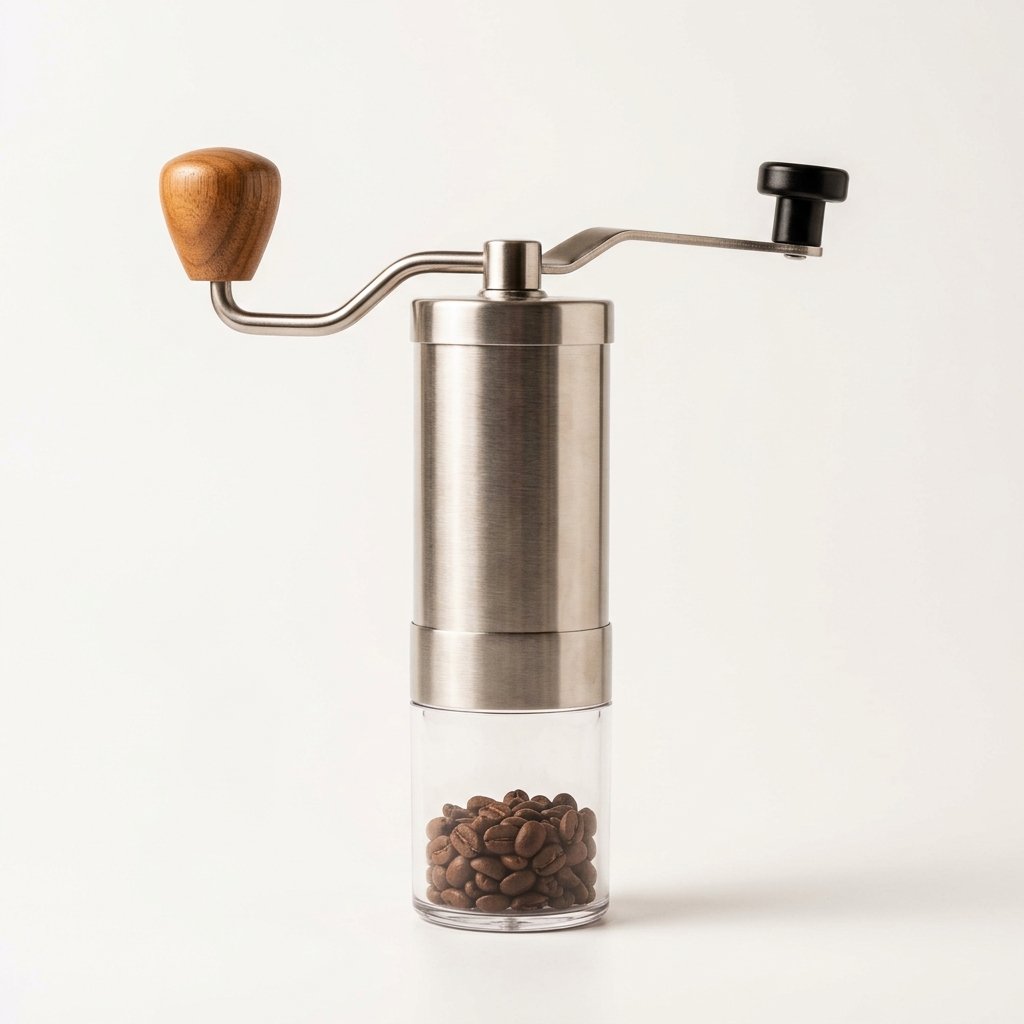
Our Pick for Beginners
JavaPresse Manual Burr Grinder
If muddy coffee has been driving you crazy, a real burr grinder is the single biggest fix. This one is quiet, affordable, and has 18 grind settings so you can dial in a true coarse grind. Under $25 and it lasts for years.
Check Price on Amazon →Fix #2 — Plunge Slowly (Don't Push Hard)
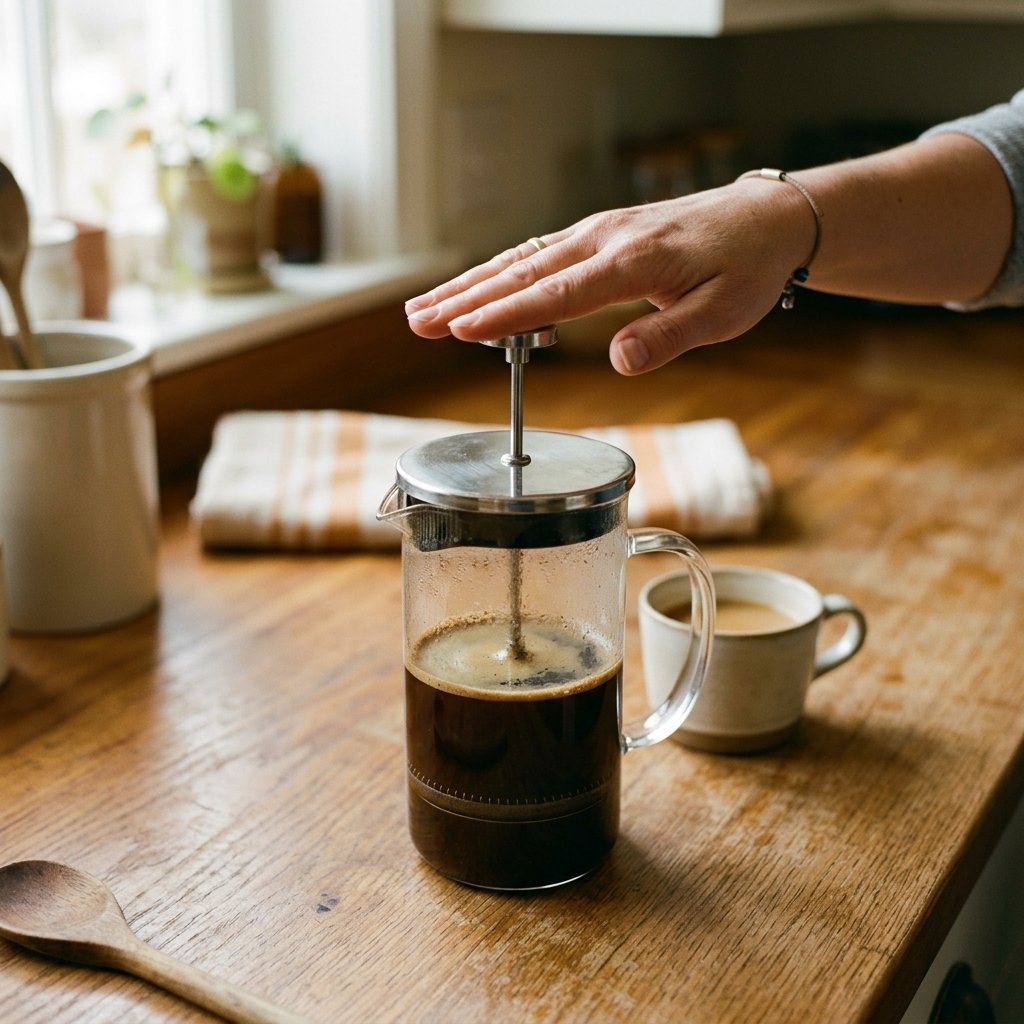
The way you plunge matters more than most beginners realize. If you push the plunger down fast or with a lot of pressure, you're basically stirring up every fine particle in the bottom of the press and sending it straight into your cup.
Here's the right way: once your timer hits 4 minutes, place your hand gently on top of the plunger and press down slowly and steadily, with almost no force. It should take about 20 to 30 seconds to get the plunger all the way to the bottom. If you feel real resistance, stop — your grind is still too fine, and forcing it will just make things worse.
If the plunger feels like it's fighting you, don't muscle through. Pull it back up an inch, wait 10 seconds for the grounds to settle, and press again slowly. Forcing the plunger is the fastest way to a muddy cup.
Fix #3 — Let It Settle Before Pouring
This one is dead simple and most beginners never hear about it. Once you've plunged, don't pour right away. Wait about 30 seconds.
That small pause gives any remaining fines a chance to sink to the bottom instead of swirling around in the coffee you're about to pour. It's the difference between a clean first sip and a gritty one.
For an even cleaner cup, try what's known as the Hoffmann method: skip pressing the plunger down at all. After the 4-minute steep, use a spoon to gently break and scoop off the top crust of grounds, then let the press sit undisturbed for another 5 to 8 minutes. The fines will slowly sink to the bottom on their own. When you pour, just lower the plunger to the surface of the coffee to act as a strainer. You'll get a noticeably cleaner cup with almost no sediment.
Fix #4 — Check Your Filter
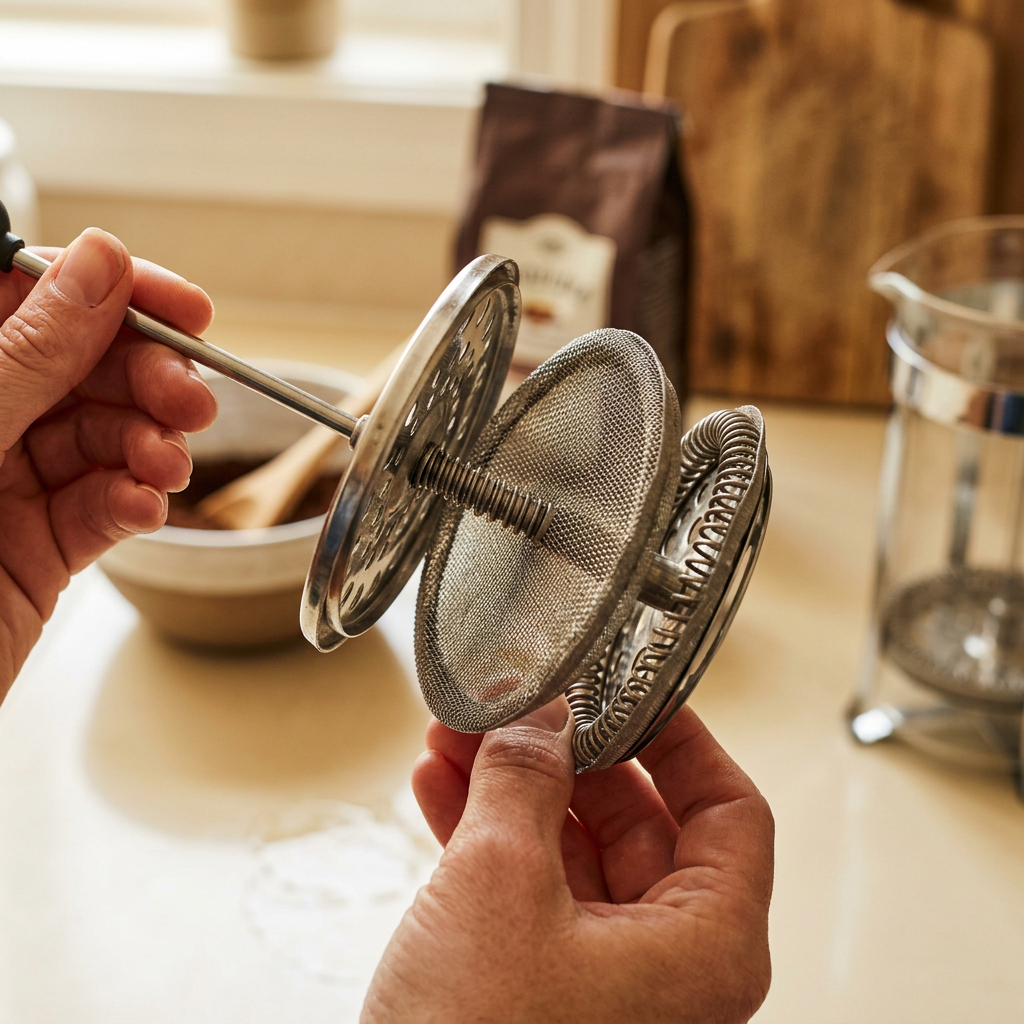
Your French press filter is a stack of three thin metal pieces: a mesh screen sandwiched between two spring plates. Over time — especially if it's been dropped or roughly cleaned — that mesh can bend, tear, or separate from the edges of the plates. When that happens, grounds slip around the sides of the filter and straight into your cup.
Pull your filter assembly out and inspect it:
- Is the mesh torn or warped?
- Is the edge of the mesh pulling away from the plates?
- Is there a visible gap between the filter and the side of the carafe when the plunger is down?
If any of those are true, it's time for a replacement. Most French press brands sell replacement filter packs for $8 to $15, and they're usually one of the easiest fixes for suddenly muddy coffee after months of clean cups. While you're at it, our (coming soon) guide to cleaning a French press without breaking it will help you keep your filter in good shape for longer.
Don't run your filter through the dishwasher. The high heat and strong detergent will warp the mesh over time — which is how a lot of “suddenly muddy” coffee problems start. Hand-wash with warm soapy water and you'll get years out of a filter.
Fix #5 — Don't Pour the Last Inch
Even with a perfect grind and a clean filter, the bottom inch or so of your French press is always going to be cloudy — that's where the last few fines settle out while you're pouring. The fix is painless: just don't pour it into your mug.
Pour your cup (or cups), then stop. Leave that last half-inch to inch of coffee in the press and dump it in the sink. You won't miss it, and you'll never get a gritty last sip again.
If you find yourself wanting every drop, it's a sign your ratio is off — you're probably making too little coffee for what you actually want to drink. Bump up to a bigger press or adjust your French press coffee-to-water ratio so you brew enough to leave the sludge behind.
What If You've Tried All Five and It's Still Muddy?
If you've switched to a coarse grind, plunged slowly, waited before pouring, checked your filter, and left the last inch — and your coffee is still muddy — here's the likely culprit:
Your grinder isn't actually grinding as coarsely as you think. This happens a lot with budget burr grinders or older grinders whose burrs are dull. Try setting the grind one or two clicks coarser than what you're doing now, brew a test cup, and see if it helps. If you're on a blade grinder, the honest answer is: you'll always have some muddiness. A burr grinder is the only real long-term fix.
The other possibility is a very dark, oily roast. Oily beans coat the burrs and pack into the mesh filter, letting more fines through. If you're using a very dark espresso roast, try a medium or medium-dark roast made for drip/French press brewing instead.
- Muddy French press coffee is almost always caused by grind size — too fine, too inconsistent, or both.
- Use a coarse grind about the texture of sea salt. A burr grinder will make the single biggest difference.
- Plunge slowly. Never muscle the plunger down — it stirs up fines.
- Wait 30 seconds after plunging before you pour, and leave the last inch of coffee in the press.
- Check your filter for tears or bent mesh — replacement filters cost $8–$15 and are a common overlooked fix.
Muddy coffee is a solvable problem, and you don't need expensive gear to fix it. Work through the five fixes above in order — most beginners find the grind is the real culprit, and everything gets noticeably better from the very next cup.
Disclosure: This article contains affiliate links. If you purchase through our links, we may earn a small commission at no extra cost to you. We only recommend products we genuinely believe are right for beginners. Full disclosure here.
☕ About the Author
Greg Rathbone is the founder of HomeCoffeeBeginner.com. He started this site after finding that most coffee advice online assumed you were already an expert. Every guide here is written for total beginners — tested in his own kitchen in Oklahoma, with zero snobbery.