
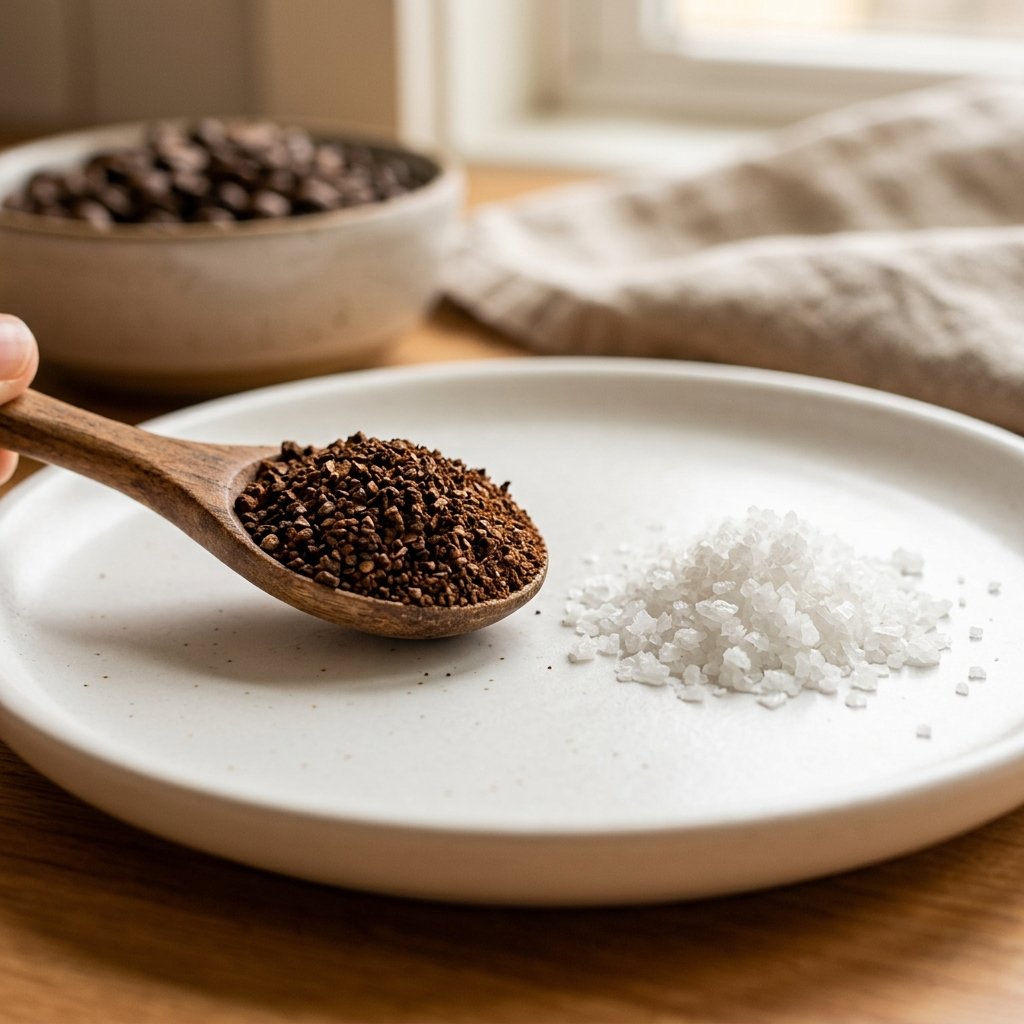
French press coffee works best with a coarse grind — about the texture of raw sugar or coarse sea salt. On most burr grinders, that's a setting of 7 or 8 out of 10. Too fine and your coffee turns bitter and muddy. Too coarse and it tastes weak and watery.
If you just got a French press and you're not sure how to grind your coffee, you're in the right place. Grind size is actually the single biggest factor in how your French press coffee tastes — even more than the beans you buy or the water temperature you use.
The good news? Once you understand what you're aiming for and why, it's really easy to get it right every time. We'll walk you through exactly what a French press grind should look like, what happens when it's off, and how to adjust until your cup tastes perfect.
If you're brand new to French press brewing, you might want to start with our complete French press beginner's guide first — then come back here to fine-tune your grind.
Free Interactive Tool
Need exact measurements? Use our Brew Ratio Calculator
Once your grind is dialed in, pair it with the right coffee-to-water ratio. Pick French press and your number of cups — the calculator gives you exact grams of coffee and water in seconds.
Open the Calculator →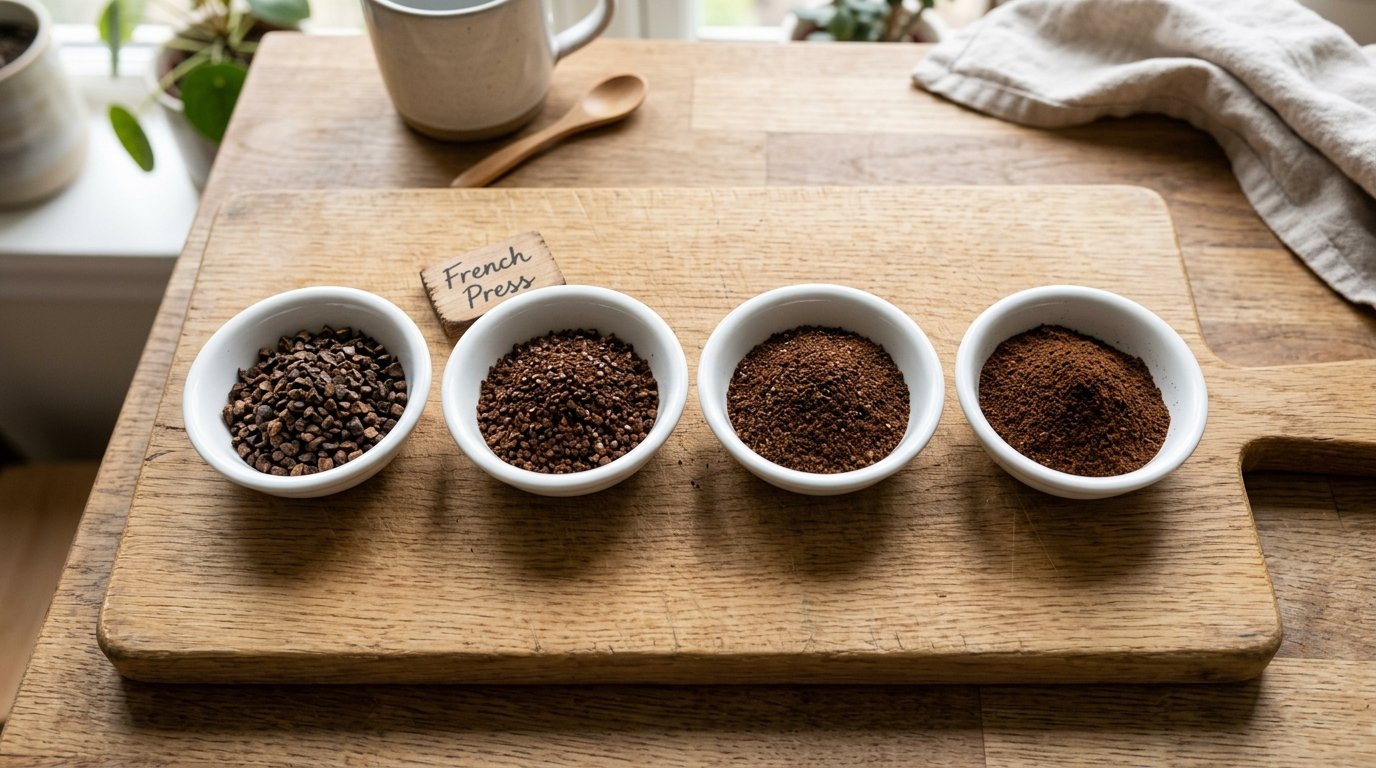
What Does a French Press Grind Look Like?
A proper French press grind is coarse — noticeably chunkier than what you'd use in a drip coffee maker. The easiest way to picture it is to think about coarse sea salt or raw sugar. The individual pieces should be clearly visible and feel a bit gritty when you rub them between your fingers.
If you're using a burr grinder, most models use a numbered scale. Set yours to about 7 or 8 out of 10 (where 1 is the finest espresso grind and 10 is the coarsest). If your grinder uses a different scale, just aim for a few clicks below the very coarsest setting.
In technical terms, you're targeting coffee particles between about 700 and 1,300 microns. But don't worry about that number — if it looks like sea salt, you're in the right zone.
If you're buying pre-ground coffee, look for bags labeled “coarse grind” or “French press grind.” Standard pre-ground coffee (the kind most grocery stores sell) is usually ground for drip machines and is too fine for a French press.
Why Does Grind Size Matter So Much for French Press?
Your French press uses a metal mesh filter to separate the grounds from the coffee. That mesh has tiny holes — much larger than a paper filter. If your coffee grounds are too small, they slip right through the mesh and end up as sludge in your cup.
But grind size does more than just affect the texture of your coffee. It controls how fast water extracts flavor from the grounds. Smaller grounds have more surface area, so they release flavor faster. Larger grounds release flavor more slowly.
French press coffee steeps for about four minutes. That's a long time compared to espresso (which takes about 25 seconds). A coarse grind is designed to match that long steep time — it releases flavor slowly and evenly over those four minutes. If you used a fine grind with the same steep time, the water would pull out too much from the grounds, including the harsh, bitter compounds you don't want in your cup.
This concept is called coffee extraction — and understanding it even a little bit makes dialing in any brewing method much easier. For a deeper look at how different grind sizes match different brewing methods, check out our complete grind size guide.
What Happens If Your Grind Is Wrong?
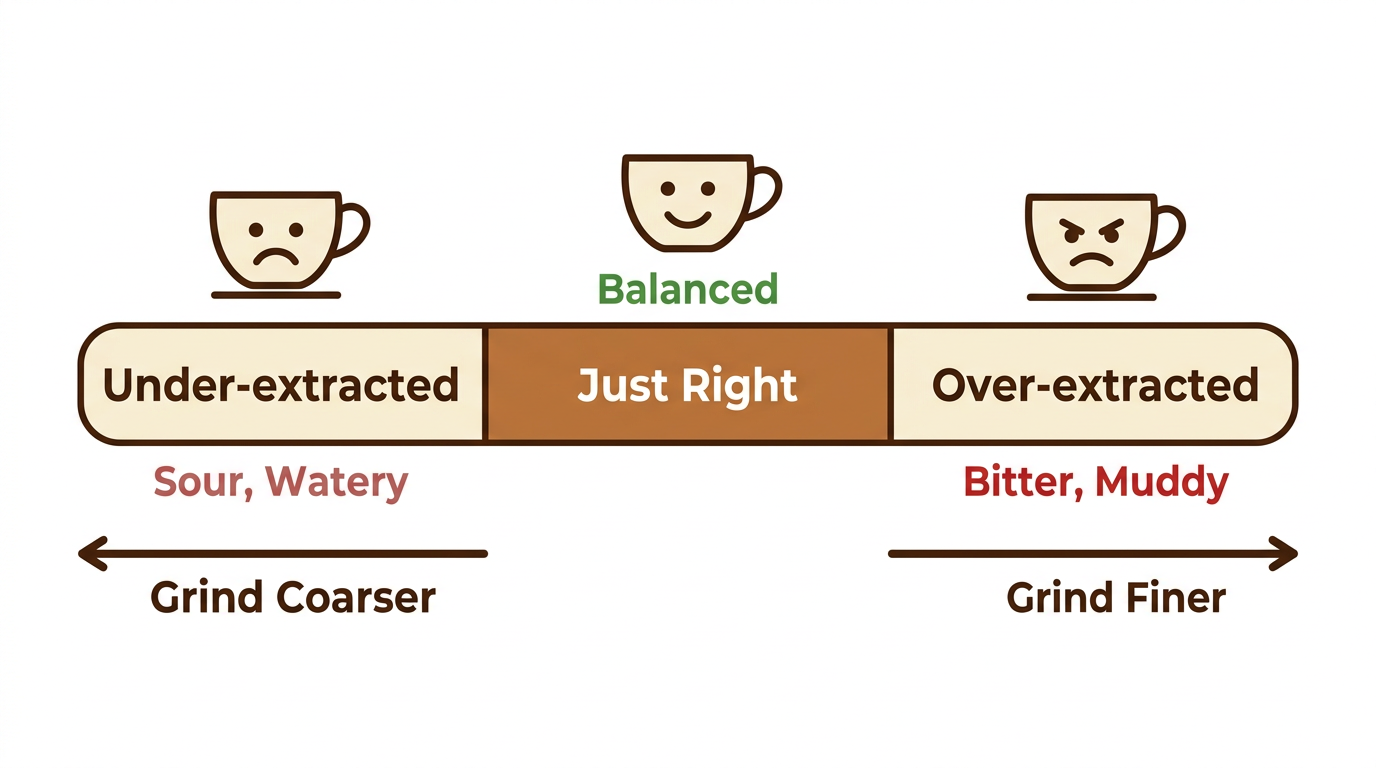
Too Fine (Common Beginner Mistake)
If your grind looks like table salt, sand, or powder, it's too fine for a French press. Here's what you'll notice:
- Bitter, harsh taste — the water over-extracts the grounds during that four-minute steep
- Muddy, gritty cup — fine particles slip through the mesh filter and end up in your coffee
- Hard to press the plunger — the fine grounds pack together and create resistance, making the plunger difficult (or even impossible) to push down
If you're using a blade grinder, it chops beans unevenly — you'll get a mix of powder and chunks in every batch. That powder will slip through the French press filter every time. If your coffee is always muddy no matter what you do, the grinder is likely the problem, not your technique.
Too Coarse
If your grounds look more like small pebbles or cracked peppercorns, they're too coarse. You'll notice:
- Weak, watery flavor — the water can't extract enough from the oversized grounds in four minutes
- Sour or flat taste — under-extracted coffee often tastes sour because the sweet and balanced flavors haven't had time to develop
- Plunger drops too easily — there's almost no resistance when you press, which usually means the grounds are too big
How to Dial In Your French Press Grind
Getting the perfect grind isn't something you nail on the first try — and that's completely fine. Here's a simple process to dial it in:
- Start at the sea salt setting. Set your grinder to about 7 or 8 out of 10 and brew a cup using your normal coffee-to-water ratio.
- Taste it. Is it bitter or muddy? Grind a bit coarser next time. Is it weak or sour? Grind a bit finer.
- Adjust one click at a time. Don't jump three settings — small changes make a big difference with French press.
- Keep your steep time at four minutes. Change only one variable at a time so you know what's actually making the difference.
After two or three brews, you'll land on the setting that tastes best to you. Once you find it, you can repeat it perfectly every morning.
Do You Need a Burr Grinder?
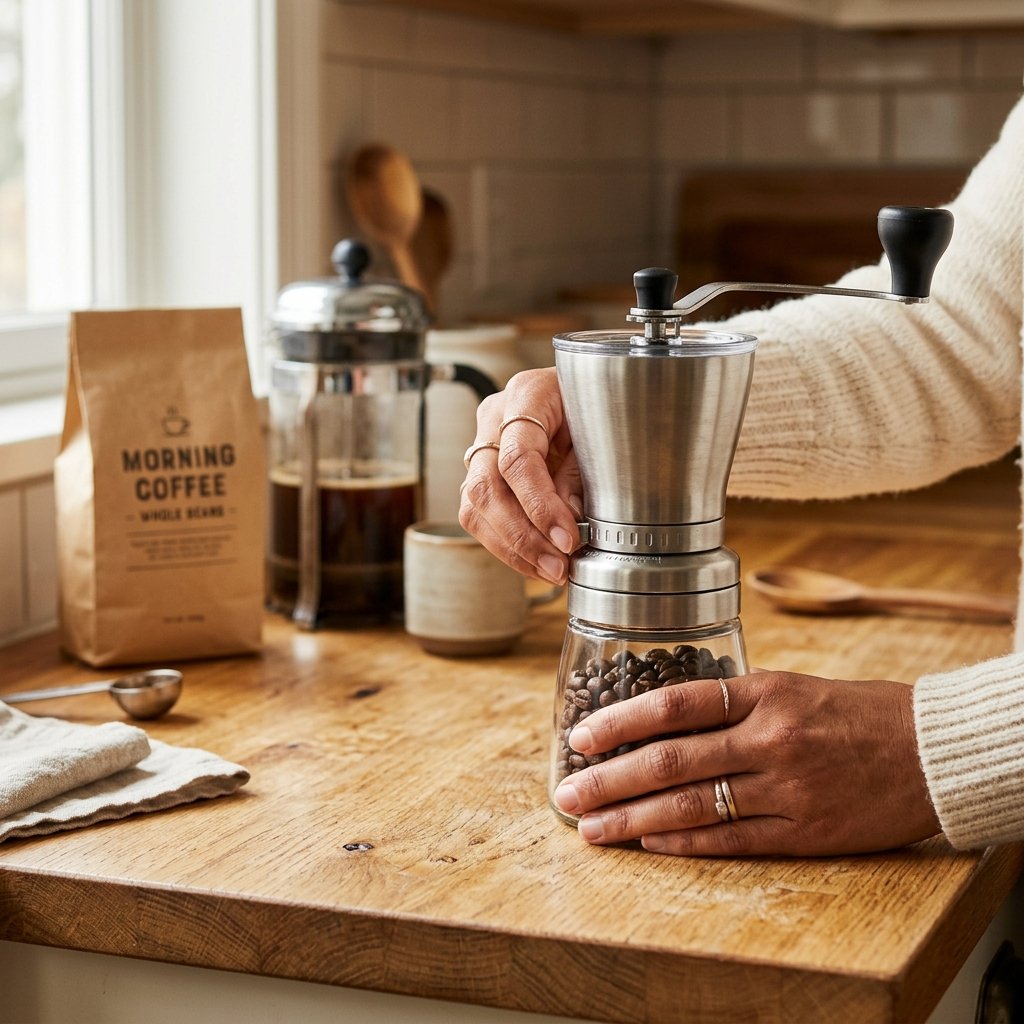
Technically, no. You can use pre-ground coffee labeled for French press and skip the grinder entirely — especially when you're just starting out.
But if you want to grind your own beans (which does make a noticeable difference in freshness and flavor), a burr grinder is the way to go. Unlike blade grinders that chop randomly, a burr grinder crushes beans between two surfaces set at a specific distance apart. That gives you an even, consistent grind — which is exactly what a French press needs to brew a clean, balanced cup.
You don't need to spend a lot. A good manual burr grinder starts around $20–$30 and works perfectly for French press.
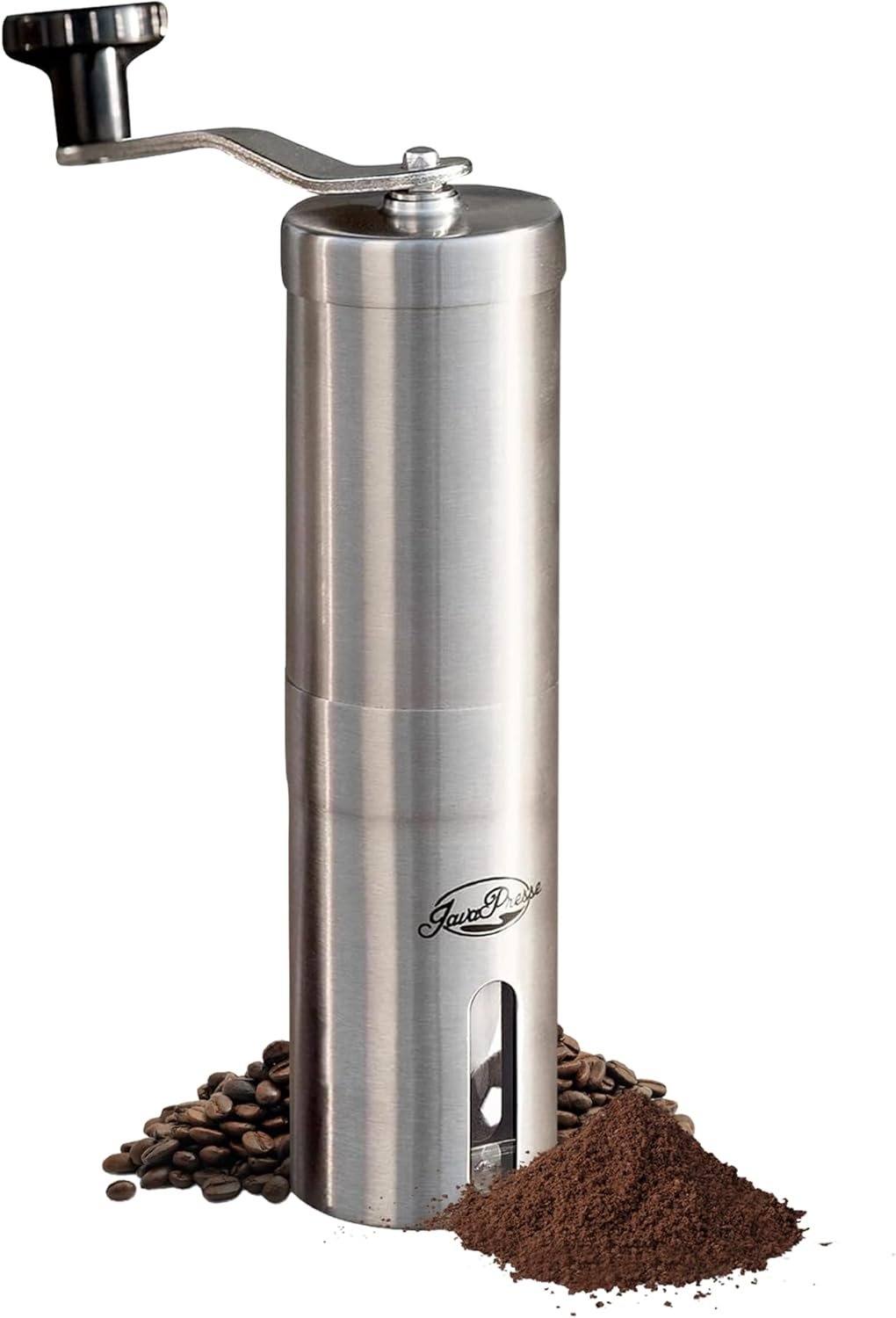
Our Pick for Beginners
JavaPresse Manual Burr Grinder
Affordable, quiet, and gives you 18 grind settings to dial in the perfect coarse grind for French press. A great first grinder for under $25.
Check Price on Amazon →Quick Reference: French Press Grind at a Glance
| Setting | Detail |
|---|---|
| Ideal grind size | Coarse — like sea salt or raw sugar |
| Grinder setting | 7–8 out of 10 on most burr grinders |
| Particle size | ~700–1,300 microns |
| Steep time | 4 minutes |
| If it tastes bitter | Grind coarser |
| If it tastes weak/sour | Grind finer |
| Best grinder type | Burr grinder (manual or electric) |
- French press needs a coarse grind — think sea salt or raw sugar.
- Too fine = bitter, muddy coffee that's hard to press. Too coarse = weak, watery coffee.
- Start at setting 7–8 on your burr grinder and adjust one click at a time based on taste.
- A burr grinder (even a $25 manual one) makes a big difference in grind consistency.
Getting your grind size right is one of those small changes that makes a huge difference in your cup. Once you dial it in, your French press coffee will taste noticeably smoother, cleaner, and more flavorful — and you'll wonder why you didn't do it sooner.
Ready to put this into practice? Head over to our French press brewing guide and brew your next cup with the perfect grind.
Disclosure: This article contains affiliate links. If you purchase through our links, we may earn a small commission at no extra cost to you. We only recommend products we genuinely believe are right for beginners. Full disclosure here.
☕ About the Author
Greg Rathbone is the founder of HomeCoffeeBeginner.com. He started this site after realizing most coffee advice online assumes you're already an expert. Every guide here is written for total beginners and tested in his own kitchen — no jargon, no snobbery.