
Disclosure: This article contains no affiliate links. We may earn from other articles on this site — full disclosure here.
To bloom coffee for pour-over, pour about twice the weight of your grounds in hot water (e.g., 40g of water for 20g of coffee), then wait 30–45 seconds. This pre-wets the grounds, lets trapped CO2 escape, and sets you up for a smoother, more even extraction. Skipping the bloom is the most common reason beginner pour-over tastes flat or sour.
If you're new to pour-over, you've probably seen recipes that start with a strange first step: pour a tiny bit of water, then stop and wait. That pause is called the bloom, and it's one of the highest-leverage things you can do for better-tasting coffee. We'll walk through what it does, exactly how to do it, and why it matters more than most beginners realize.
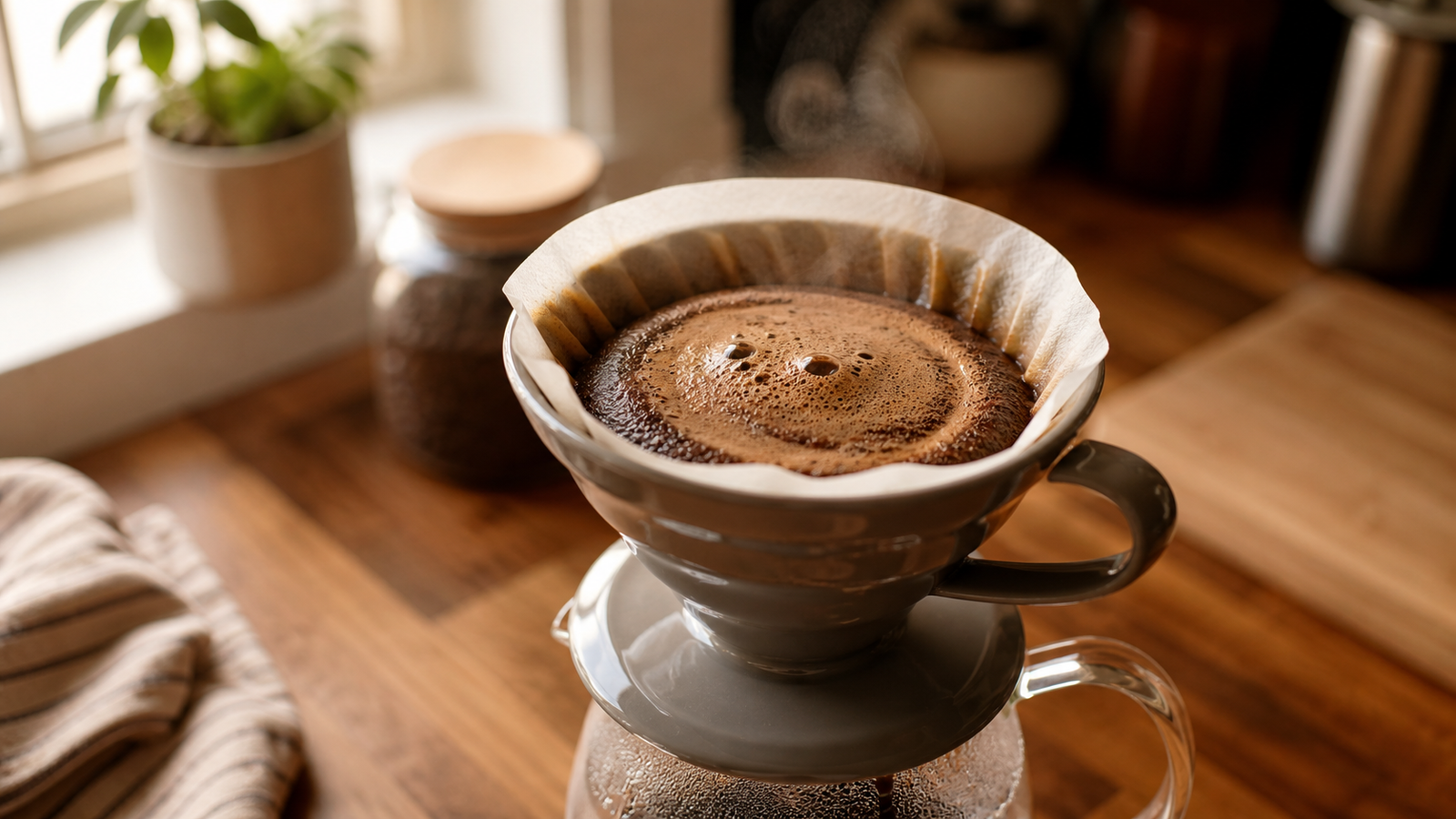
What Is the Bloom?
The bloom is the first short pour of water you make over your coffee grounds before starting the main brew. The water wets the grounds evenly and triggers a release of carbon dioxide (CO2) that's trapped in the beans from roasting. You'll see the coffee bed swell, foam, and bubble — that's the “bloom” you're looking for.
Freshly roasted beans hold a lot of CO2. If you pour your full brew water on dry grounds right away, that gas pushes back against the water, channels form, and some grounds get over-extracted while others barely brew at all. The bloom gets the gas out of the way first.
Why the Bloom Matters for Beginners
Three reasons the bloom is worth the 30–45 seconds it costs:
- More even extraction. Wetting the entire coffee bed first means water flows through evenly during the main brew, not just down the easiest channels.
- Better flavor balance. Cups that skip the bloom often taste flat, sour, or weak. Cups that bloom well taste sweeter, fuller, and more balanced.
- A built-in freshness check. The size of the bloom tells you how fresh your beans are. Big, vigorous bloom = fresh. Almost no bloom = stale beans.
How to Bloom Coffee: Step-by-Step
Here's the simple beginner version. We'll use a 20g dose of coffee as the example, but the ratio works at any size.
Step 1: Get your gear set up
Have your pour-over dripper, filter (rinsed with hot water first), kettle, scale, and ground coffee ready. Set the scale to zero with the empty cup or carafe on it.
Step 2: Add your ground coffee
Place the grounds in the rinsed filter and give the dripper a gentle shake to level the bed. A flat bed pours more evenly.
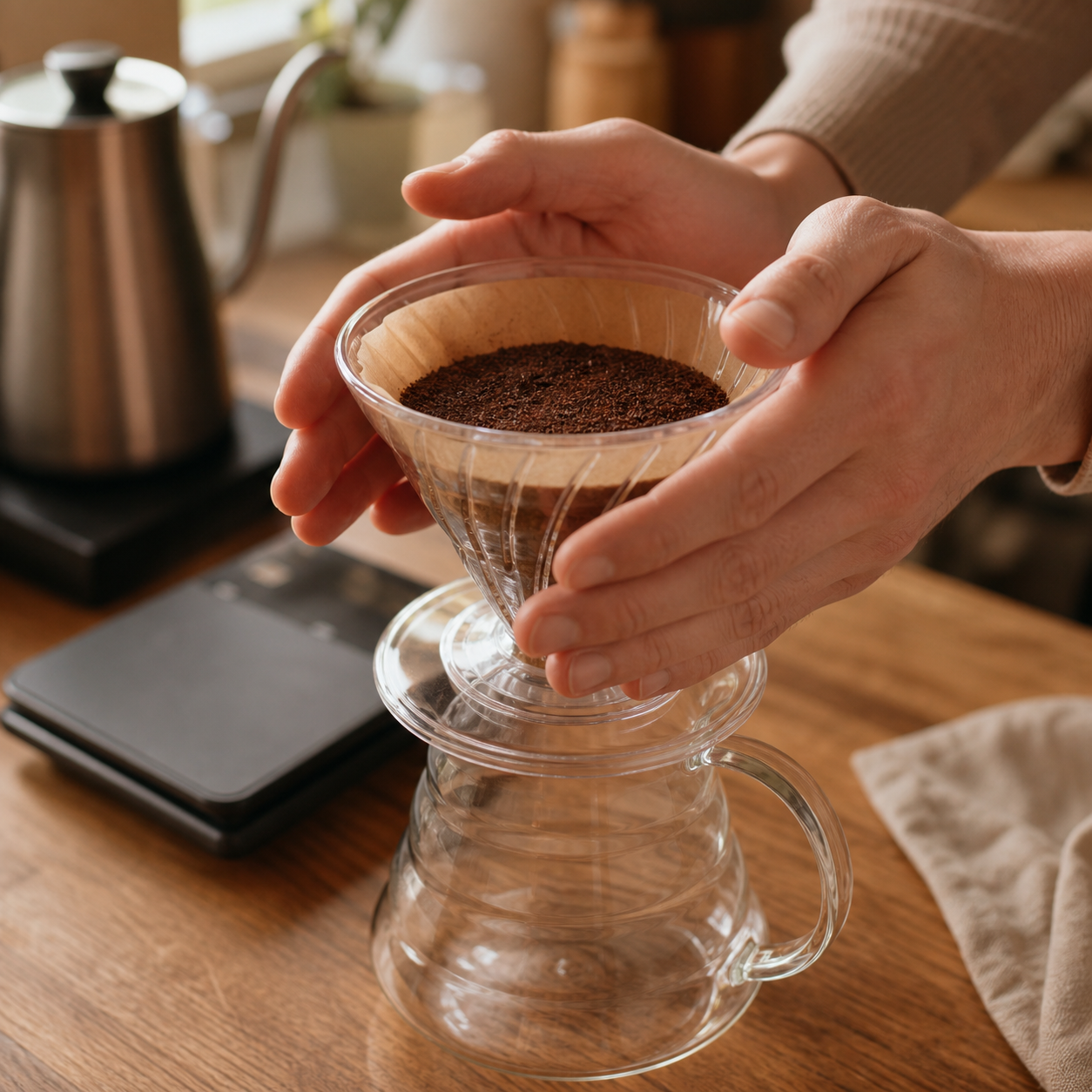
Step 3: Start the timer and pour the bloom water
Tare the scale, start a timer, and pour about twice the weight of your coffee in hot water (around 200°F / 93°C). For 20g of coffee, that's 40g of water. Pour in a slow spiral from the center outward, just enough to fully wet every ground.
Give the dripper a gentle swirl after the bloom pour. This helps any dry pockets of grounds get fully wet without overdoing the agitation.
Step 4: Wait 30–45 seconds
Watch the coffee bed swell and bubble. When the bubbling slows down and the surface starts to look flat or settled, the bloom is finished. Most beginner recipes call for 30–45 seconds. Lighter roasts may need closer to 45; darker roasts often finish faster.
Step 5: Begin the main pour
Now you're ready for the rest of your brew. Continue pouring water in stages to reach your total target weight — usually around 1g of coffee to 16g of water total (so 320g for our 20g dose). Need help nailing the ratio? See our pour-over ratio chart for beginners.
How Much Water Should You Use to Bloom?
The standard rule is 2–3 times the weight of your coffee. For most beginners, sticking with 2x is the easiest to remember:
| Coffee dose | Bloom water (2x) |
|---|---|
| 15g | 30g |
| 20g | 40g |
| 25g | 50g |
| 30g | 60g |
If you go too light on bloom water, some grounds stay dry and never extract. If you go too heavy, you start the main brew before the gas has fully escaped. 2x is the sweet spot for most beans.
How Long Should the Bloom Last?
Aim for 30 to 45 seconds. The exact time depends on three things:
- Bean freshness. Beans roasted in the last week or two bloom hardest and longest. Older beans need less time.
- Roast level. Lighter roasts hold onto more CO2 and bloom longer than darker roasts.
- Grind size. Finer grinds release CO2 faster. Coarser grinds need a hair more time.
If you're not sure, 35 seconds is a safe starting point. Adjust from there based on taste.
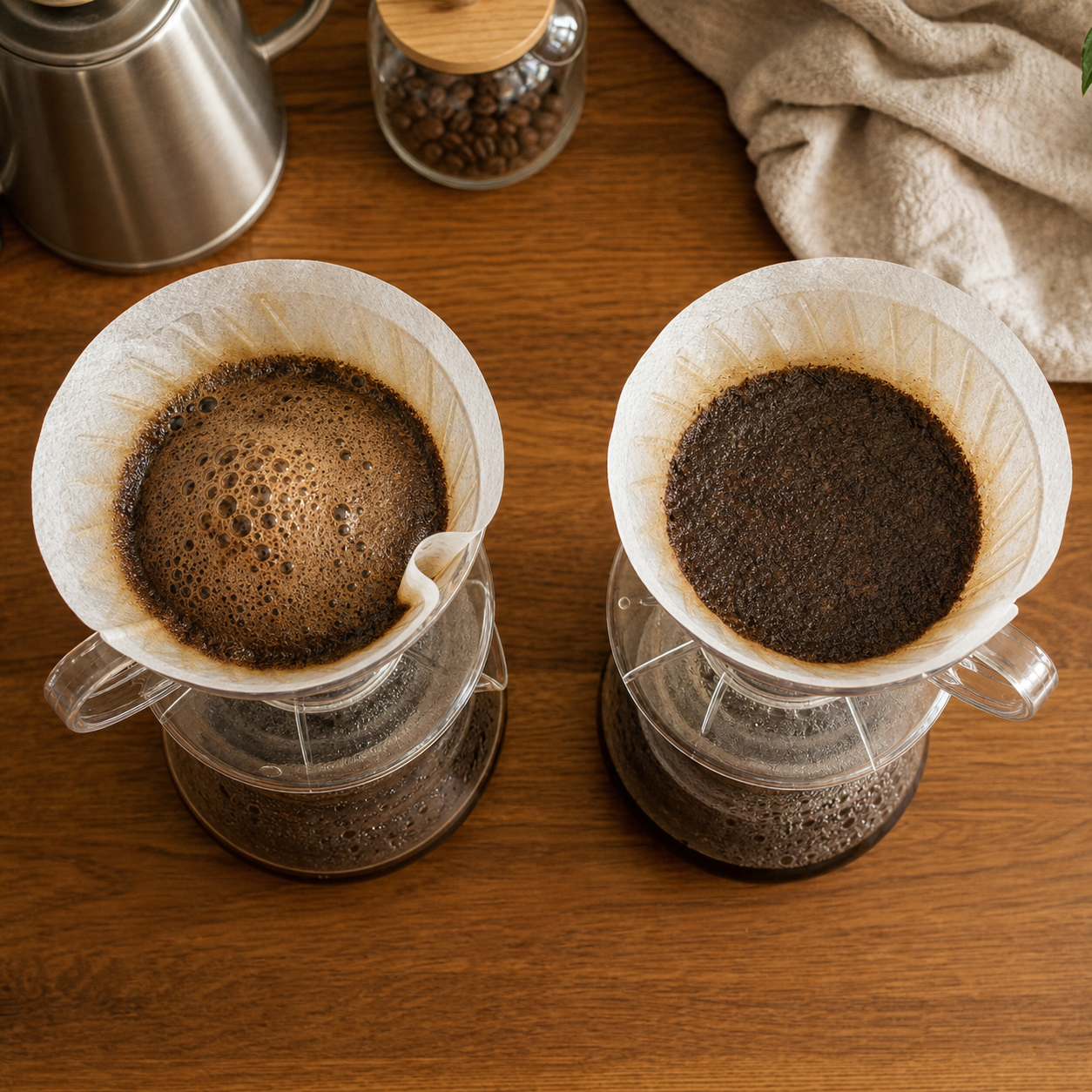
What If My Coffee Doesn't Bloom?
If you pour bloom water and nothing happens — no swelling, no bubbles, just flat wet grounds — your beans are almost certainly stale. Coffee loses most of its CO2 within 2–3 weeks of roasting. Beans that have been on a grocery shelf for months will barely react.
If you bought your beans from a grocery store with no roast date on the bag, they could be months old. Look for a bag stamped with a recent “roasted on” date (within the last 2–3 weeks) for a real bloom. Learn more in our guide to roast levels and how to spot fresh beans.
Common Bloom Mistakes
A few easy fixes that make a big difference:
- Pouring too fast or too much water. The bloom isn't the main pour — keep it gentle and just enough to wet the grounds.
- Skipping the bloom entirely. Going straight to the full brew is the single biggest reason beginner pour-over tastes “off.”
- Waiting too long. Anything past about 60 seconds and the water starts to cool too much, hurting extraction.
- Not wetting all the grounds. Dry pockets stay dry through the whole brew. Spiral your pour from the center out, or swirl after pouring.
Does the Bloom Matter for Other Brewing Methods?
Yes — though it's most visible in pour-over. The bloom step also helps with AeroPress and even French press brewing. Many AeroPress recipes include a 30-second bloom right after the first pour. French press benefits from a brief pre-wet too, even if you're not actively timing it. The fresher your beans, the more the bloom matters everywhere.
- The bloom is a short first pour (2x the coffee weight) that wets grounds and releases trapped CO2.
- Wait 30–45 seconds before starting your main pour for the best results.
- A big, lively bloom means your beans are fresh; almost no bloom means they're stale.
- Skipping the bloom is the most common cause of flat or sour pour-over for beginners.
Once you make the bloom a habit, pour-over starts to feel a lot less mysterious. It's 30 seconds that quietly does a huge amount of work for your cup. Pair it with the right grind, the right ratio, and decent fresh beans, and you'll be making coffee that holds its own against any café.
Ready to keep dialing in? Start with our complete pour-over guide for beginners — it walks through every step from gear to first cup.
Disclosure: This article does not contain affiliate links. We only recommend products we genuinely believe are right for beginners. Full disclosure here.
☕ About the Author
Greg Rathbone is the founder of HomeCoffeeBeginner.com. He started this site after realizing most coffee advice online assumes you're already an expert. Every guide here is written for total beginners and tested in his own kitchen — no jargon, no snobbery.