
For most beginners, a drip coffee maker is the easiest place to start — push a button, get a full pot, no fuss. A French press takes a couple of minutes more but makes a richer, fuller cup for less money. If your mornings are rushed, go drip. If you want better-tasting coffee and don't mind a 5-minute routine, go French press.
If you're new to home coffee, the choice between a French press and a drip coffee maker can feel weirdly important. They're the two most common brewing methods in America, they cost about the same to start with, and the people who love each one swear it's the right way. So which one should you actually buy?
Honestly, there's no single right answer — it depends on what you want out of your morning. The good news is the differences are simple to understand, and once you know them, the choice gets a lot easier. We'll walk you through how each one works, how they taste, what they cost, and which one fits which kind of coffee drinker.
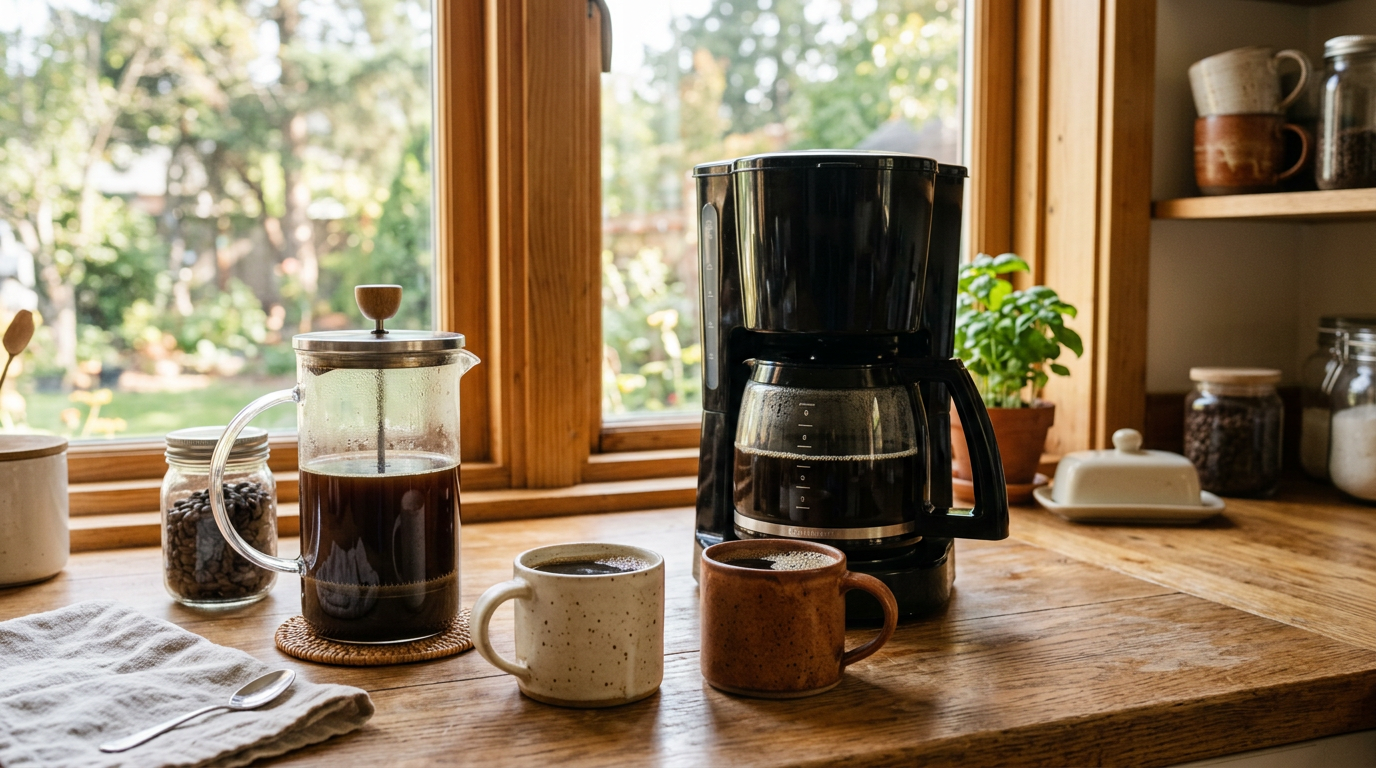
How Each Method Actually Works
The biggest difference between a French press and a drip coffee maker is how the water meets the coffee.
A drip coffee maker heats water in a reservoir, then drips it slowly through a basket of ground coffee held in a paper filter. Gravity does the work. The brewed coffee falls into a glass carafe sitting on a hot plate. You add water and grounds, press a button, and walk away. Five to ten minutes later, you have a full pot.
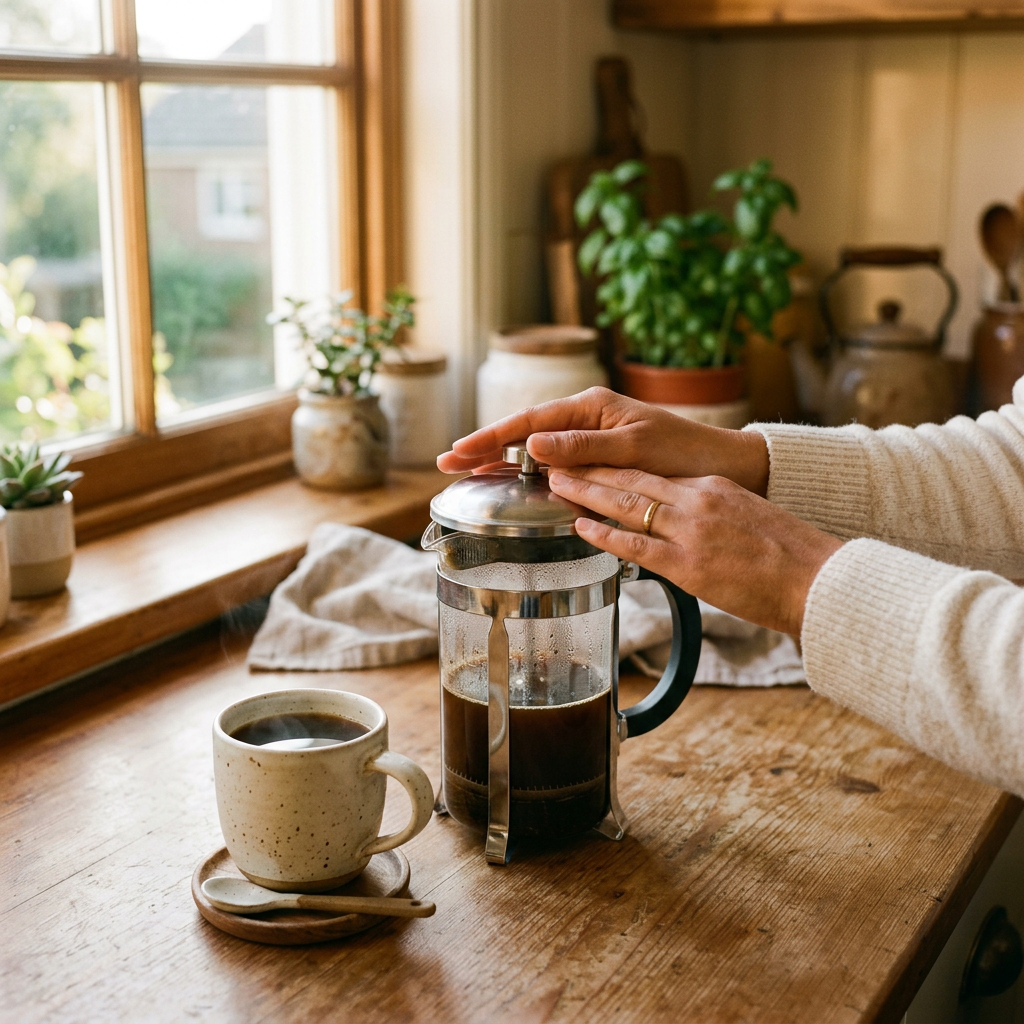
A French press works completely differently. You add coarse-ground coffee and hot water directly into a glass or stainless steel pitcher, stir gently, and let everything steep together for four minutes. Then you press a metal mesh plunger down to push the grounds to the bottom, and pour the coffee out. There's no electricity, no paper filter, and no walking away — you're more involved in the process. (For the full step-by-step, see our how to use a French press guide.)
That single difference — gravity drip versus immersion steeping — is what shapes everything else: how the coffee tastes, how long it takes, and how much it costs to start.
How They Taste — The Real Difference
This is the part most people care about, and it's the part where the two methods are genuinely different. Not better or worse — different.
French press coffee tastes rich, heavy, and full-bodied. Because the metal mesh filter doesn't trap the coffee's natural oils or the very fine particles (called “fines”), all of that flavor ends up in your cup. The result is a heavier, almost silky texture and a bolder taste — chocolate notes, nuttiness, and a thicker mouthfeel. Some people describe it as the way coffee tastes at a nice cafe.
Drip coffee tastes cleaner, milder, and more familiar. The paper filter catches almost all of the oils and fines, leaving a smooth, sediment-free cup that's lighter on the tongue. It's the flavor most Americans grew up with — diner coffee, hotel breakfast coffee, the coffee at your parents' house. Easy to drink, easy to add cream and sugar to, and never overwhelming.
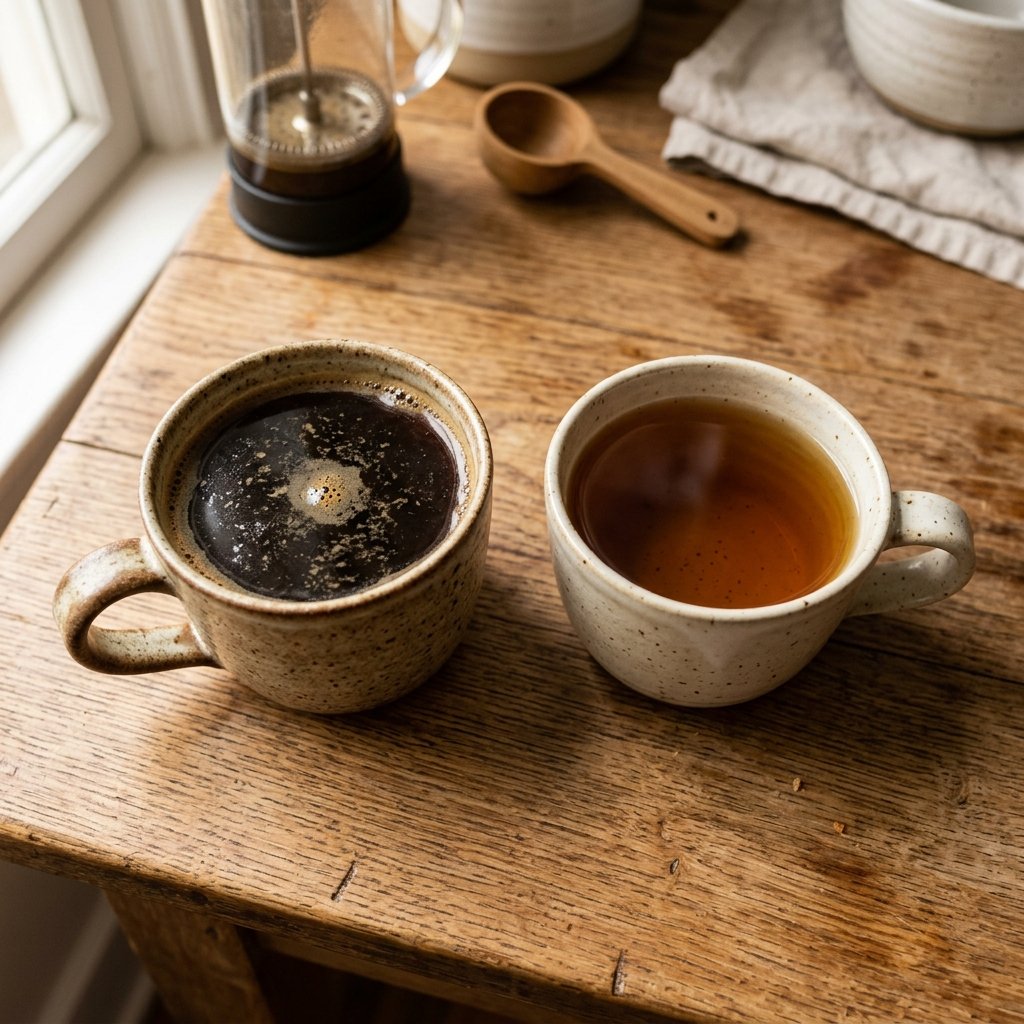
Neither is “better.” If you like full-flavored, restaurant-style coffee, the French press is going to feel like an upgrade from day one. If you like a clean, smooth cup that goes down easy, drip is exactly what you want.
If you've only ever had drip coffee, your first French press cup will taste noticeably stronger and heavier — that's the oils and body coming through. Give it a few brews before deciding if you like it. Many beginners say they couldn't go back after a week.
Time, Effort, and Cleanup
Drip wins on convenience. Once you've added water and grounds and pressed the button, you can walk away — make breakfast, get dressed, scroll your phone. The machine handles the rest. When the brew is done, you toss the paper filter (with all the wet grounds inside) straight into the trash and rinse the basket. That's it.
French press takes more attention but less time overall. You're never away from the brew for long: heat water, add grounds, pour, stir, wait four minutes, press, pour. Total active time is about five minutes — not bad — but you do have to be in the kitchen the whole time. Cleanup is also a little messier. You scoop the wet grounds into the trash (don't put them down the drain — they clog), then rinse the carafe and mesh filter.
| What You're Comparing | French Press | Drip Coffee Maker |
|---|---|---|
| Total brew time | ~5 minutes | 5–10 minutes |
| Hands-on time | ~5 minutes (entire brew) | ~1 minute (set and forget) |
| Cleanup | Rinse carafe + scrub mesh filter | Toss paper filter, rinse basket |
| Electricity needed? | No (just hot water) | Yes |
| Best for big batches? | Up to ~4 cups | Yes — 8–14 cups easy |
If you're brewing for two or three people every morning, drip is faster overall — you load it once and everyone gets a cup. If you're brewing one or two cups for yourself, the French press is just as quick and gives you better-tasting coffee in the same time window.
Cost to Get Started
Both are affordable starter setups. A solid beginner French press costs $20 to $40. A reliable drip machine costs $35 to $80. Neither is going to break your budget on day one.
Where it gets interesting is the ongoing cost. With a drip machine, you'll need paper filters — about $3 to $5 for a box of 100, which usually lasts a few months. With a French press, there are no consumables. Just buy coffee. The mesh filter is built in and lasts for years.
Here's our pick at each side, both vetted for beginners:
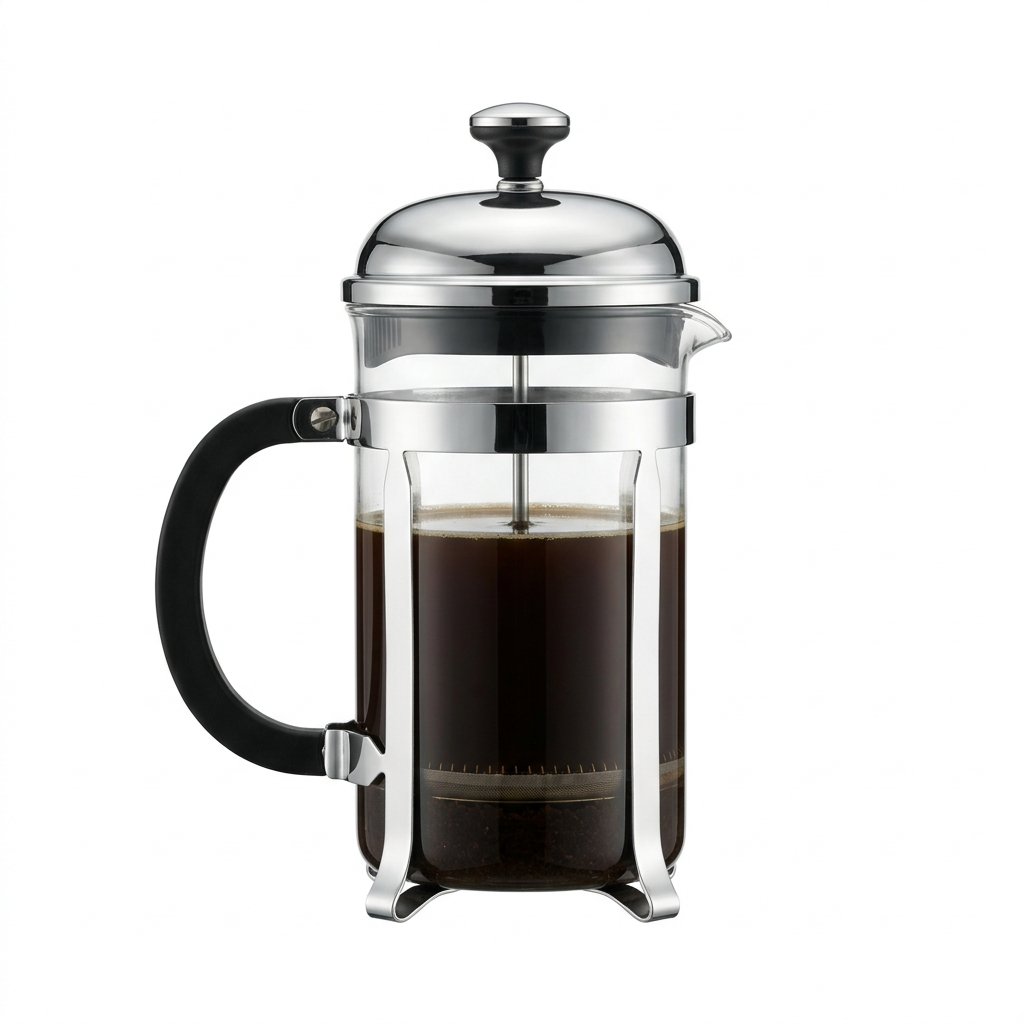
Our Pick — French Press
Bodum Chambord French Press (34 oz)
A beginner-friendly classic. The 34 oz size makes enough for two people, the glass carafe is replaceable, and it costs about the same as two coffee shop visits.
Check Price on Amazon →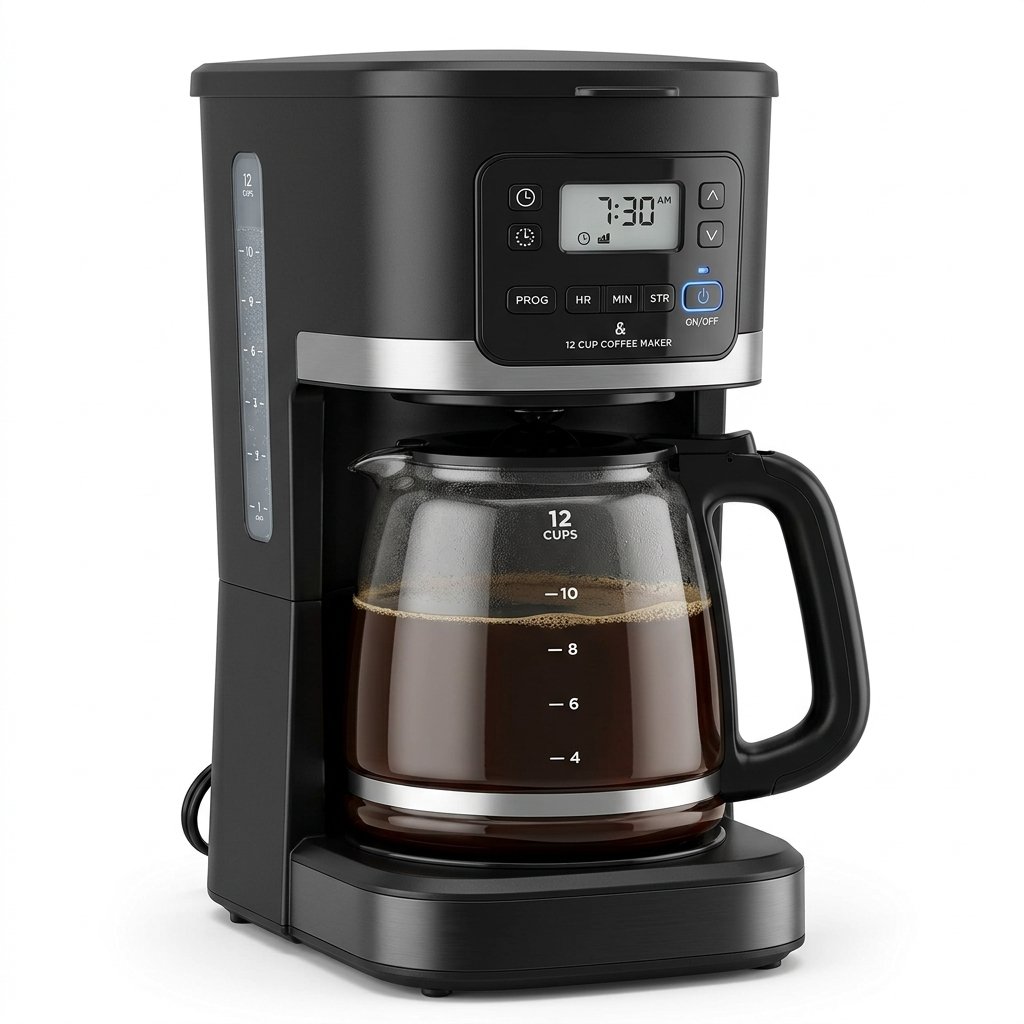
Our Pick — Drip Maker
Black+Decker 12-Cup Programmable Coffee Maker
A reliable, no-frills drip maker that brews a full pot, has a 24-hour timer, and works straight out of the box. A solid first machine that won't let you down.
Check Price on Amazon →Which One Is Better for a Beginner?
Here's the part that actually matters. The right answer depends on three honest questions.
How rushed are your mornings? If you're out the door 15 minutes after you wake up, the drip machine is your friend. You can prep it the night before, set the auto-brew timer, and have hot coffee ready before your feet hit the floor. The French press needs you in the kitchen for those five minutes.
How many people are you brewing for? A drip maker brews 8 to 12 cups in one go. A standard French press tops out around four cups (and even that's a stretch — most beginners brew two). If you're making coffee for a household every morning, drip is the practical pick.
Do you actually like the taste of cleaner drip coffee, or are you hoping for something richer? If your current cup feels a little flat or boring and you want something with more body, the French press is going to feel like a real upgrade. If you genuinely enjoy the smooth, mild flavor of drip coffee, there's no reason to chase a different taste.
Don't pick the French press just because it sounds fancier or more “real.” Plenty of serious coffee drinkers stick with drip because it's reliable, fast, and consistent. The right brewer is the one you'll actually use every morning — not the one that earns you points online.
The Honest Recommendation
For most beginners, here's how we'd think about it:
- Get a drip maker if your mornings are busy, you brew for more than one person, you want to set it and forget it, or you genuinely like clean, mild coffee.
- Get a French press if you have five minutes to yourself in the morning, you mostly brew one or two cups, you want to taste richer, more flavorful coffee, or you don't want to deal with paper filters.
- Get both if you can swing it. A drip machine for weekday mornings and a French press for weekends is a really common setup — and together they cost less than most single-serve espresso machines.
If you're still on the fence, we'd lean French press for one reason: it teaches you what good coffee actually tastes like. Once you've had a well-brewed French press cup, you'll understand the difference between “fine coffee” and “great coffee” — and that knowledge follows you to every other brewing method you ever try. (For a full walkthrough of why we recommend it as a beginner method, see why a French press is a great start for beginners.)
What About Other Methods?
Drip and French press aren't the only options, but they're the two most common starting points for a reason — they're both forgiving, both affordable, and both make good coffee with minimal fuss. Once you've spent a few weeks with one, you'll have a much clearer sense of what you want from your next setup.
If you want to compare more options before you buy, our best coffee maker for beginners roundup walks through drip machines, pod brewers, and a few manual options at every budget. And if you're leaning French press, our complete French press beginner's guide is the natural next stop — it covers grind, ratio, steep time, and troubleshooting in one place.
- Drip coffee is faster, more hands-off, and brews bigger batches — best for busy mornings or households.
- French press makes richer, fuller-bodied coffee in about five minutes of active brewing — best for one or two cups at a time.
- French press uses no paper filters (lower ongoing cost). Drip needs filters but cleanup is faster.
- Neither tastes “better” — they taste different. Drip is clean and mild, French press is heavy and rich.
- If you can't decide, start with the one that fits your morning routine. You can always add the other later.
Pick the One That Fits Your Morning
The honest truth about French press vs drip coffee is that neither one is wrong — they're just different tools for different people. A drip machine fits a busy household and rewards convenience. A French press fits a slower morning and rewards a little patience with a much richer cup.
Either one will make better coffee than the drive-through, save you money over time, and last for years. Pick the one that matches the morning you actually have, brew a few cups, and pay attention to what you like. That's how every home coffee journey starts.
Disclosure: This article contains affiliate links. If you purchase through our links, we may earn a small commission at no extra cost to you. We only recommend products we genuinely believe are right for beginners. Full disclosure here.
☕ About the Author
Greg Rathbone is the founder of HomeCoffeeBeginner.com. He started this site after finding that most coffee advice online assumed you were already an expert. Every guide here is written for total beginners — tested in his own kitchen in Oklahoma, with zero snobbery.