
You've probably heard the buzz. A French press is cheap, simple, and somehow makes coffee that tastes better than what your drip machine puts out. But before you grab one off the shelf, it helps to know what you're actually signing up for.
The honest answer: a French press is right for most beginners, but not all. It's the easiest way we know to take a noticeable jump up from basic drip coffee — no electricity, no learning curve, no bag of paper filters to keep buying. The trade-off is that you'll spend an extra few minutes on each cup, and you'll get a small amount of sediment that some people love and some people don't.
This guide walks through who a French press is great for, who should probably pick something else, and what brewing actually looks like once you get one home. If you decide it's a fit, our complete French press beginner's guide takes you the rest of the way.
A French press is right for you if you want richer, fuller-bodied coffee than drip without spending more than $40 or learning anything complicated. Skip it if you need coffee waiting for you when you wake up, hate any sediment in your cup, or only drink one cup at a time and want zero cleanup.
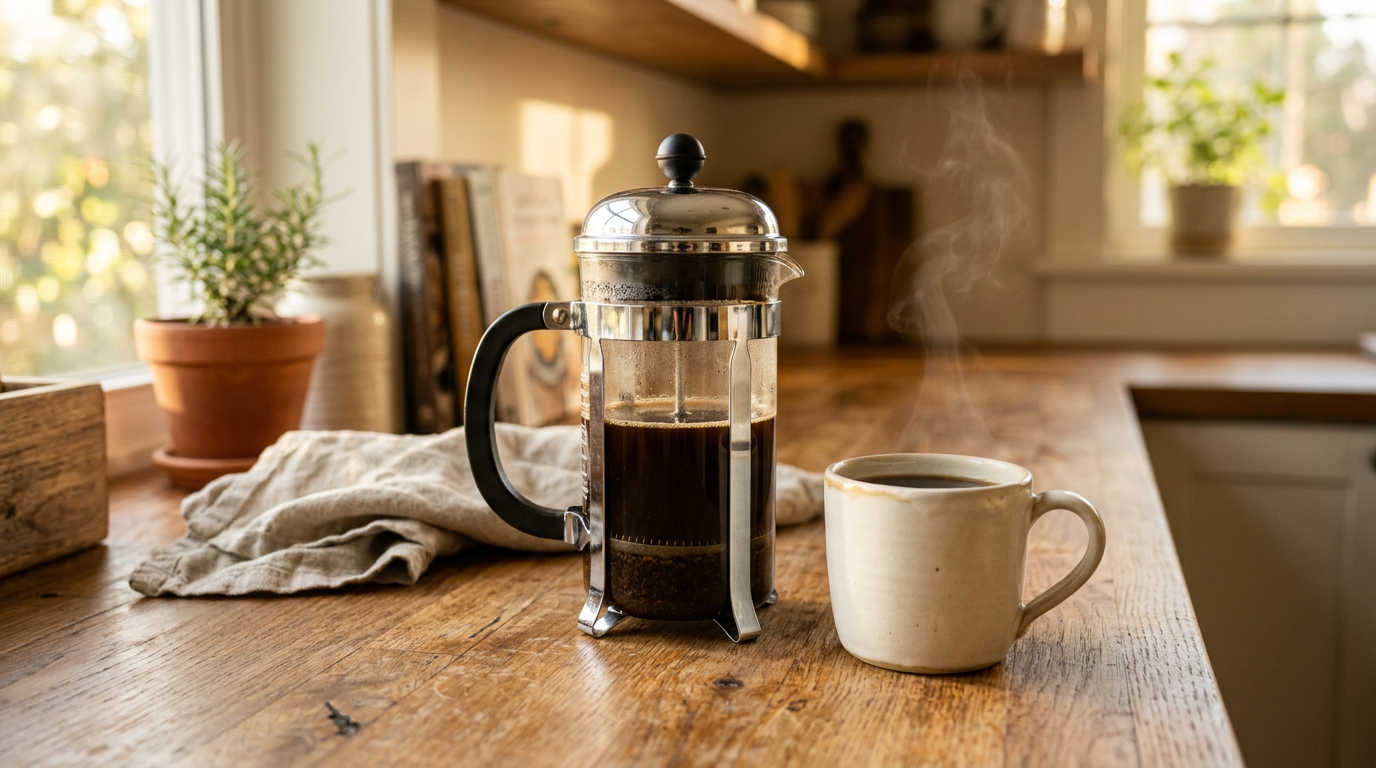
What Makes a French Press Different
A French press works by steeping coarsely ground coffee in hot water for about four minutes, then pressing a metal mesh filter down to separate the grounds from the brew. That's it. No paper filters, no electricity, no settings to dial in. Most beginners are surprised by how much better their coffee tastes the very first time they try it.
The reason it tastes different from drip comes down to that metal filter. Paper filters absorb most of the natural oils in coffee. A French press lets those oils through into your cup, which is why the body feels heavier and the flavors come across as fuller. Some people describe it as the difference between skim milk and whole milk — both are coffee, but one feels more substantial.
Who Should Start With a French Press
You're probably a great fit for a French press if you can say yes to most of these:
- You want better coffee without spending much. A solid beginner French press costs around $30–$40. That's less than most drip machines.
- You like a fuller, richer cup. If your current coffee tastes thin or watery, a French press is one of the cheapest fixes.
- You're willing to spend 5 extra minutes brewing. Total time from kettle to cup is about five minutes. If that sounds fine, you're set.
- You're brewing for one to four people. A standard 34 oz press makes about four cups. It's perfect for a couple or a small family.
- You don't mind a tiny bit of sediment. Some grit at the bottom of the mug is part of the charm. If that bothers you, keep reading.
Who Might Be Happier With Something Else
A French press isn't the right fit for everyone. Here are the cases where we'd nudge a beginner toward a different method:
- You want coffee waiting for you when you wake up. A French press needs you to be present. There's no auto-brew timer, no scheduled start. If your morning depends on hitting a button last night, stick with drip.
- You really hate any texture in your coffee. Even a perfectly brewed French press leaves a small amount of fine sediment. It's not gritty, but it is there. Pour-over or drip will give you a cleaner cup.
- You only drink one cup at a time. The smallest French presses make about two cups. If you brew one mug and walk away, an AeroPress is built for exactly that.
- You hate cleanup. French press cleanup is easy but it's not zero — you have to scoop or rinse the grounds out after each brew. A pod machine wins here.
If any of those describe you, take a look at our French press vs drip coffee comparison for a side-by-side breakdown.
What You'll Need to Get Started
One of the best things about French press brewing is how little equipment it takes. Here's the short list:
- A French press. We recommend the Bodum Chambord (~$40) as a great beginner-friendly pick. It's a classic design that's easy to use, easy to clean, and built to last. The 34 oz size makes about four cups, which is the sweet spot for one or two people.
- Coarsely ground coffee. You want grounds that look like coarse sea salt or breadcrumbs. If you're buying pre-ground, look for bags labeled “French press grind” or “coarse grind.” (For more on this, see our grind sizes guide and our deeper dive on the best grind size for French press.)
- Hot water. You want water between 195–205°F. The easiest way to get there: bring your kettle to a full boil, then let it sit for about 30 seconds before pouring.
- A kitchen scale or tablespoon. A scale is more accurate, but a tablespoon works fine when you're starting out.
Our Pick for Beginners
Bodum Chambord French Press
A 34 oz classic that's been the go-to beginner French press for decades. Easy to use, easy to clean, and the build quality holds up for years.
Check Price on Amazon →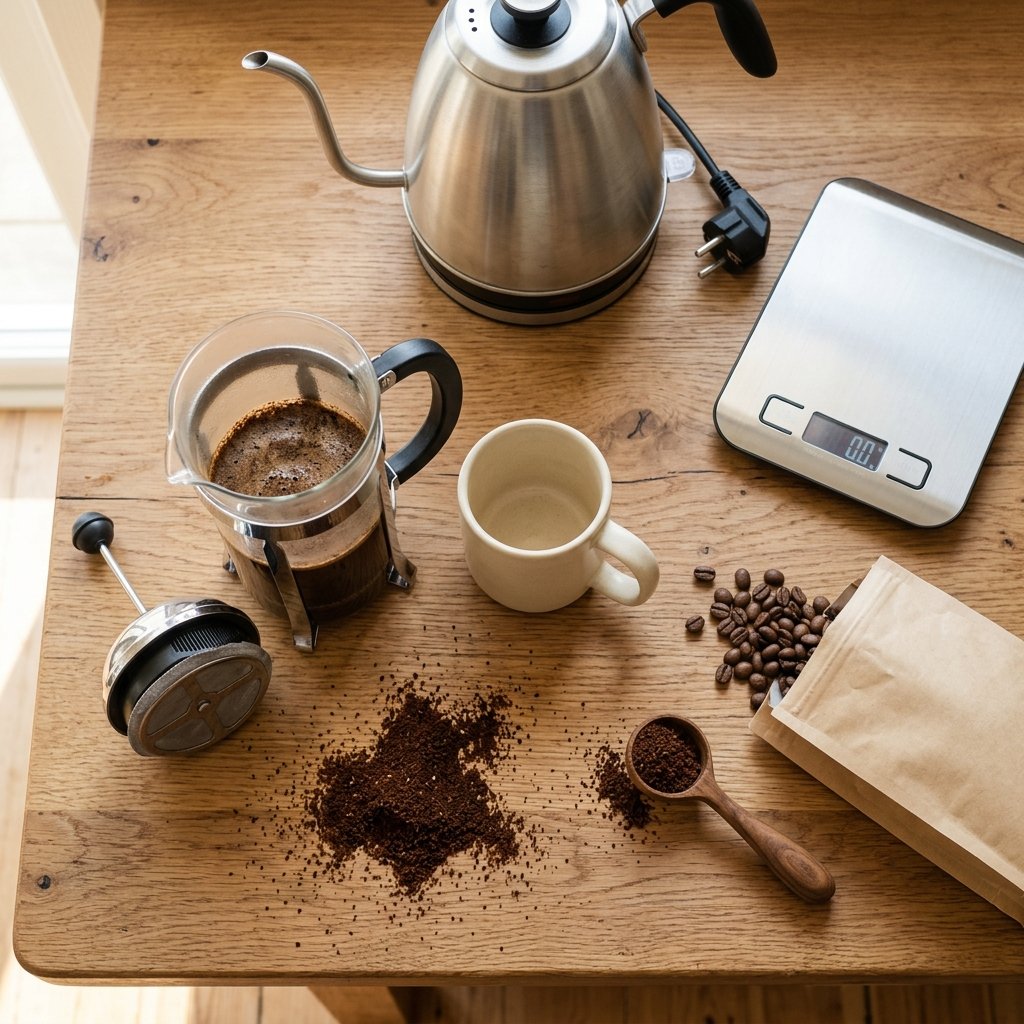
What Brewing Actually Looks Like (The 5-Minute Version)
If you've never used one, here's the entire process in plain English:
- Boil water — and let it rest for 30 seconds off the boil.
- Add coffee to the press — 2 tablespoons per 6 oz of water. (For a deeper take, see our French press coffee-to-water ratio guide.)
- Pour the water — slowly, until everything is wet. Start your timer.
- Stir gently after one minute — two or three slow passes to break the crust on top.
- At four minutes, press the plunger down slowly — about 15–20 seconds.
- Pour all the coffee out right away — even if you're not drinking it yet.
That's the whole thing. For a more detailed walkthrough with photos, our step-by-step French press guide covers every step in depth.
Before you add your coffee, pour some hot water into the empty French press and swirl it around for a few seconds. This preheats the glass so your brewing temperature stays consistent. Dump that water out before you start brewing.
Common Concerns We Hear From Beginners
“Won't there be coffee grounds in my cup?” A small amount of fine sediment will settle at the bottom of your mug — that's normal and is part of why a French press tastes the way it does. If you're getting a lot of sludge, your grind is too fine.
“Is cleanup really that bad?” Honestly, no. After you pour the coffee out, scoop the wet grounds into the trash (or compost), give the press a quick rinse, and you're done. About 30 seconds.
“What if I mess it up?” Bitter coffee usually means you steeped too long or your water was too hot. Weak coffee usually means too little coffee or too coarse a grind. Both are easy fixes once you know what to look for. Our guide to coffee extraction explains the why in plain English.
“Do I really need a separate kettle?” Not necessarily. Any pot or kettle that boils water will work for a French press. You don't need anything fancy.
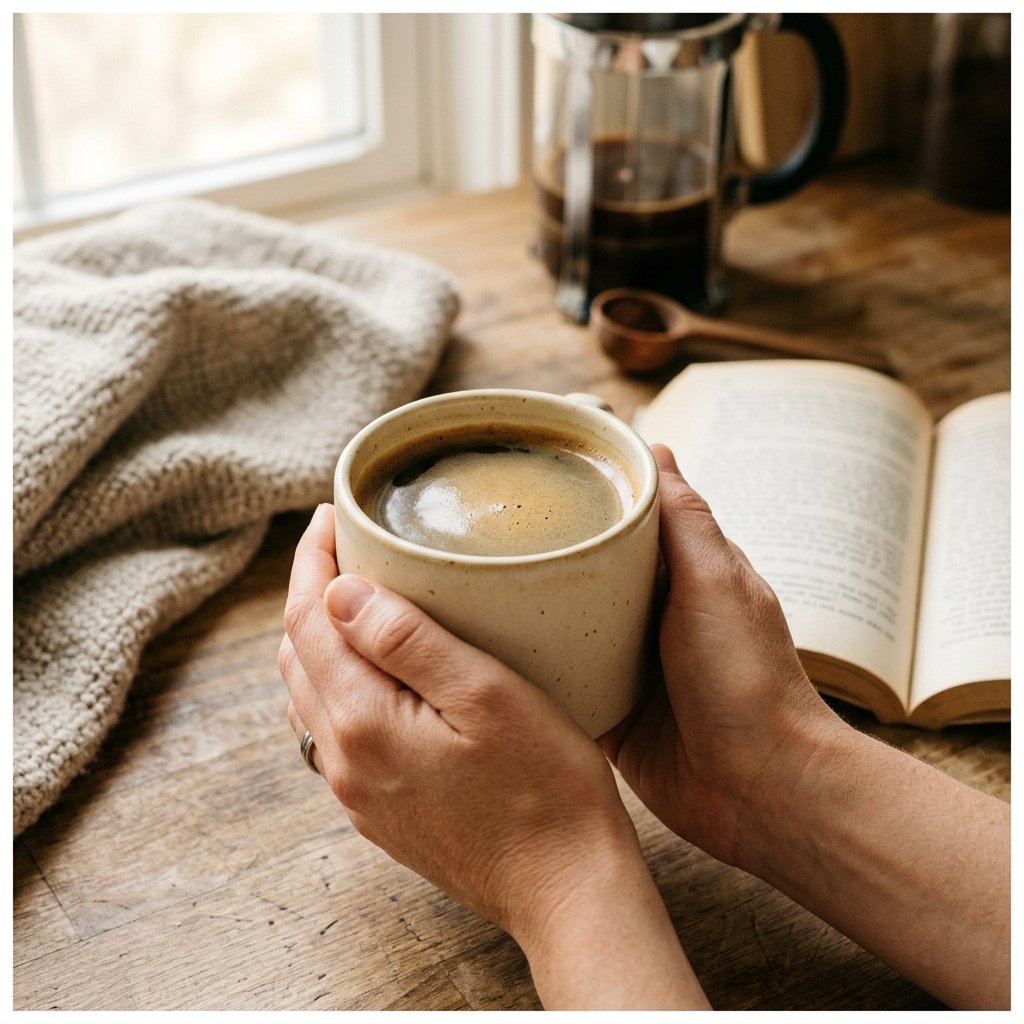
The biggest beginner mistake with a French press isn't grind size or water temperature — it's leaving the brewed coffee sitting in the press after you've pressed the plunger. The grounds keep extracting at the bottom and the coffee turns bitter fast. Pour every drop out into your mug or a thermal carafe right after you press.
Where to Go From Here
Once you've decided a French press is your speed, the next step is just getting started. Our complete French press beginner's guide is the hub for everything — brewing, grind size, ratios, troubleshooting, and gear. From there:
- Ready to brew your first cup? Start with our step-by-step French press guide.
- Still shopping for the press itself? See our best French press for beginners roundup for picks at every budget.
- Building your full home setup? Our complete beginner's coffee setup guide walks you through everything else you'll need.
- A French press is right for most beginners — fuller-bodied coffee, simple gear, $30–$40 to start.
- Skip it if you need auto-brew, hate any sediment, only ever drink one cup at a time, or want zero cleanup.
- You only need a press, coarse grounds, hot water, and about five minutes to make a great cup.
- The biggest beginner mistake is leaving brewed coffee in the press — pour it out right after you press.
- If a French press isn't a fit, an AeroPress, drip machine, or pour-over might be a better starting point.
Disclosure: This article contains affiliate links. If you purchase through our links, we may earn a small commission at no extra cost to you. We only recommend products we genuinely believe are right for beginners. Full disclosure here.
☕ About the Author
Greg Rathbone is the founder of HomeCoffeeBeginner.com. He started this site after finding that most coffee advice online assumed you were already an expert. Every guide here is written for total beginners — tested in his own kitchen in Oklahoma, with zero snobbery.