
A moka pot is one of the easiest and most affordable ways to brew rich, espresso-style coffee at home. It costs around $30–$50, needs no electricity or fancy skills, and makes bold, full-bodied coffee in about five minutes on your stovetop. If you want something stronger than drip coffee without buying an espresso machine, a moka pot is the perfect starting point.
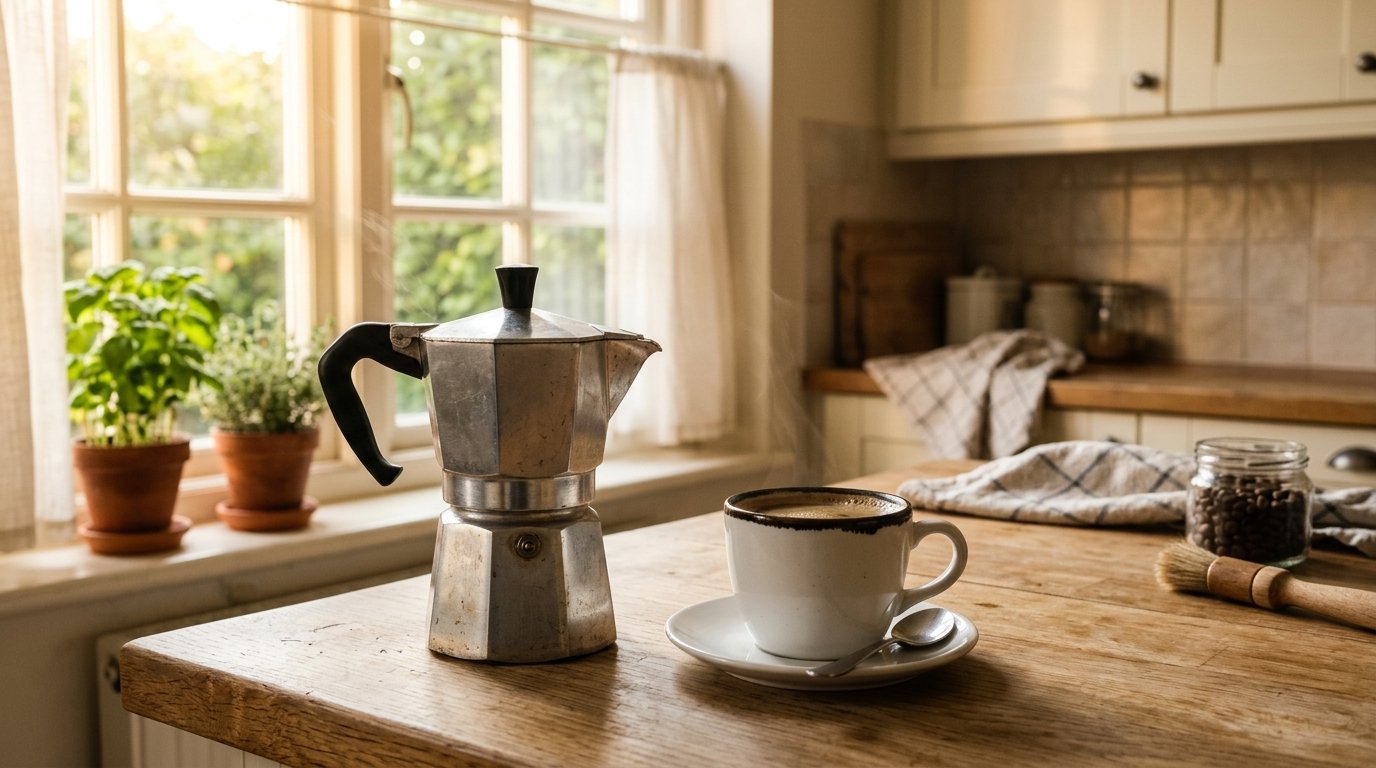
You've been making drip coffee for a while now, and it's fine — but you've been curious about something bolder. Maybe you've seen those little octagonal coffee makers in Italian movies or on a friend's counter and wondered what the fuss is about.
That little pot is called a moka pot, and it might be exactly what your coffee journey needs right now. It's simple, affordable, and makes a cup of coffee that's noticeably richer and more intense than anything your drip machine can produce — without the steep learning curve (or price tag) of an espresso machine.
Let's walk through everything you need to know to get started.
What Is a Moka Pot?
A moka pot is a stovetop coffee maker that uses steam pressure to push hot water up through finely-ground coffee. It was invented in 1933 by Alfonso Bialetti in Italy, and the design hasn't changed much since — because it didn't need to. It's beautifully simple.
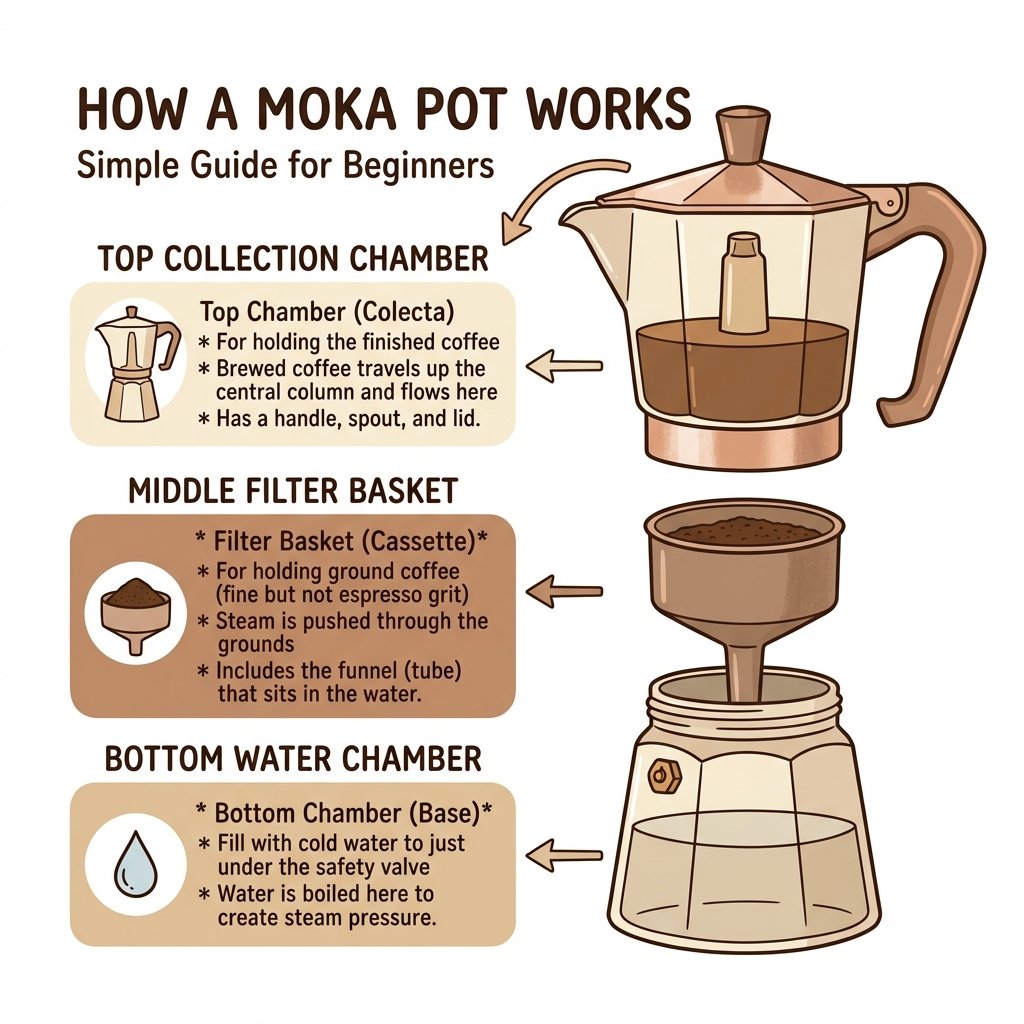
The pot has three parts:
- Bottom chamber — holds the water
- Filter basket — sits in the middle and holds the coffee grounds
- Top chamber — collects the brewed coffee as it rises
When you heat the bottom chamber, steam pressure forces the water up through the coffee grounds and into the top chamber. The result is a concentrated, full-bodied brew that's somewhere between drip coffee and true espresso. Italians have been making their morning coffee this way for nearly a century — and for good reason.
Why It's Perfect for Beginners
If you've been reading about different brewing methods and feeling a little overwhelmed, here's the good news: a moka pot is one of the most beginner-friendly options out there. Here's why we love it as a starting point.
It's affordable. A classic Bialetti Moka Express — the gold standard — runs about $35–$50 for a 6-cup model. That's a fraction of what you'd pay for even a basic espresso machine, and it'll last for years with minimal care.
It's simple to use. There are no buttons, no settings, no digital displays. You add water, add coffee, put it on the stove, and wait. That's it. If you can boil water, you can use a moka pot.
It makes strong, flavorful coffee. The steam pressure extracts more flavor from the grounds than gravity-based methods like drip or pour-over. You'll get a rich, bold cup with a slightly syrupy body — perfect for drinking straight or as a base for lattes and cappuccinos.
It's compact and portable. No electricity needed. A moka pot works on any gas or electric stovetop, and it's small enough to tuck in a cabinet, take camping, or bring to a vacation rental. It's one of the most travel-friendly brewers you can own.
It teaches you coffee fundamentals. Using a moka pot helps you understand coffee extraction — how grind size, water temperature, and brew time all work together. These are the same principles behind every brewing method, so what you learn here carries over everywhere.
The “6-cup” in moka pot sizing refers to Italian-style espresso cups (about 2 oz each), not full mugs. A 6-cup moka pot makes roughly 10 oz of concentrated coffee — enough for two regular mugs when diluted slightly with hot water or milk.
What You'll Need
Getting started with a moka pot is refreshingly simple. Here's your short shopping list:
- A moka pot — We recommend starting with a 6-cup Bialetti Moka Express. It's the original, it's reliable, and it's the perfect size for one to two people.
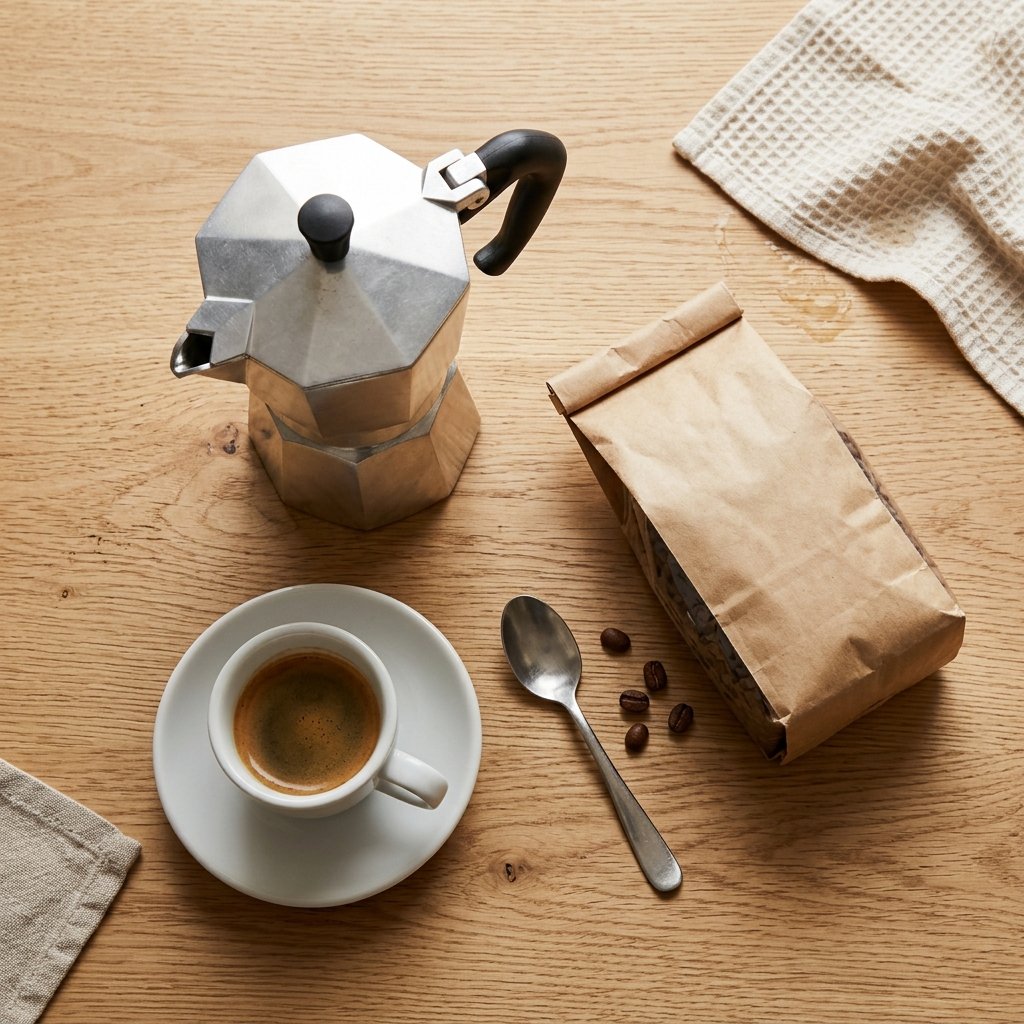
- Coffee — Medium-fine ground coffee works best. If you're buying pre-ground, look for bags labeled “espresso grind” or “moka pot grind.” If you're grinding your own, aim for a texture slightly finer than table salt — finer than drip but coarser than true espresso. Our grind size guide has a visual comparison if you want to dial it in.
- Fresh water — Filtered water is ideal but not required. Tap water works fine in most areas.
- A stovetop — Gas or electric both work. Note: the classic aluminum Bialetti doesn't work on induction cooktops. If you have induction, look for a stainless steel moka pot (like the Bialetti Venus) or grab an induction adapter plate.
That's it. No paper filters, no special scales (though a coffee scale always helps), no expensive accessories. Total startup cost is under $60 including the coffee.
How to Brew Coffee with a Moka Pot (Step by Step)
Here's the straightforward process. It takes about five minutes once you've done it a couple of times.
Step 1: Fill the Bottom Chamber with Water
Unscrew the moka pot and remove the filter basket. Fill the bottom chamber with water up to just below the safety valve — you'll see a small metal valve on the inside wall. Don't cover it.
Use hot water from your kettle instead of cold tap water. Starting with hot water means less time on the stove, which means less chance of the coffee overheating and tasting bitter. This one small change makes a noticeable difference.
Step 2: Add the Coffee Grounds
Place the filter basket back into the bottom chamber. Fill it with medium-fine ground coffee — about 20 grams for a 6-cup pot. Level the grounds gently with your finger or a knife, but don't tamp them down. Unlike an espresso machine, a moka pot doesn't use enough pressure to push water through tightly packed grounds. If you tamp, you'll get a weak, under-extracted brew — or worse, nothing at all.
Never tamp the grounds in a moka pot. The steam pressure isn't strong enough to push water through packed coffee. Just fill the basket, level it off, and you're good.
Step 3: Assemble and Heat
Wipe any loose grounds from the rim of the bottom chamber (this ensures a good seal), then screw the top chamber on firmly. Be careful if you used hot water — the bottom chamber will be warm. Use a towel or oven mitt to hold it steady.
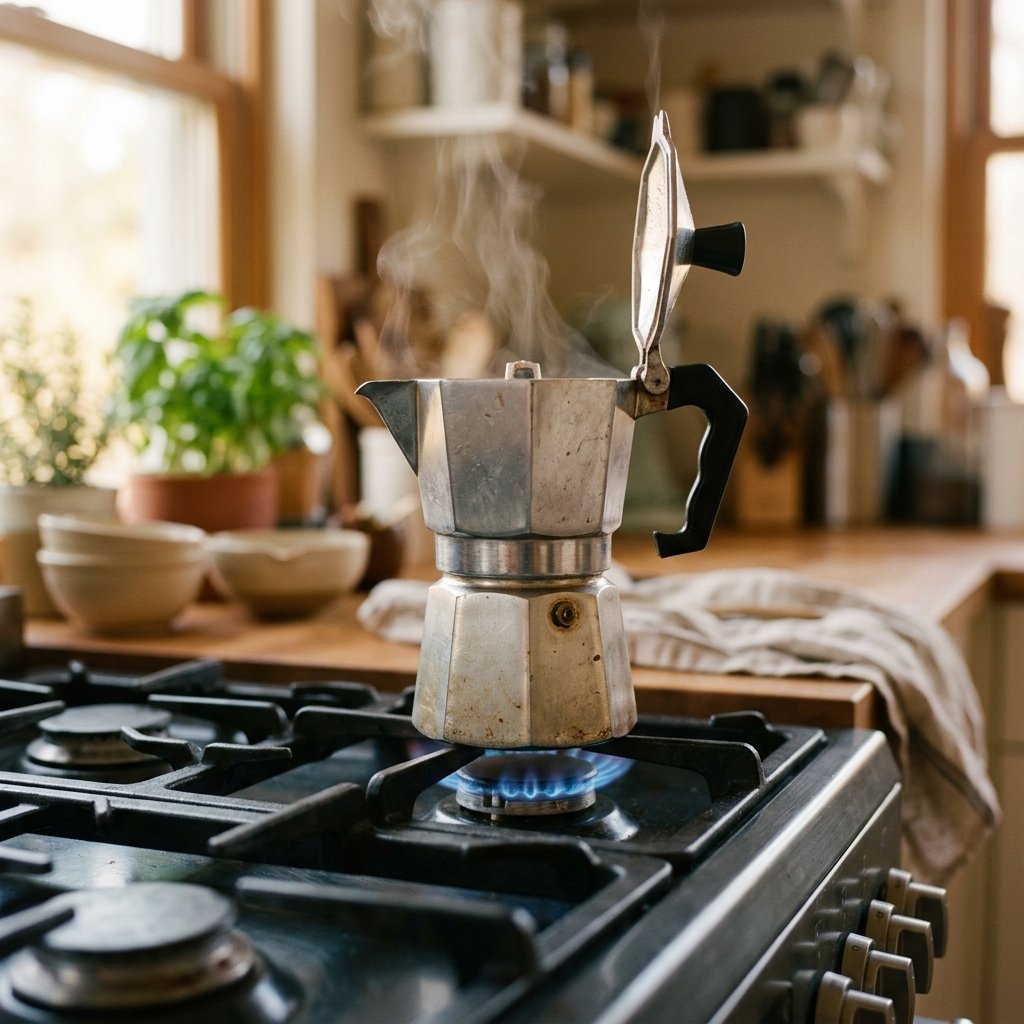
Place the moka pot on your stovetop over medium heat. If you're on a gas stove, keep the flame smaller than the base of the pot so it doesn't lick up the sides or heat the handle.
Step 4: Wait and Listen
After a couple of minutes, you'll start to hear a gentle gurgling and hissing sound. That's the coffee rising into the top chamber — and it's the best sound in your kitchen. When the gurgling turns into a steady hiss or sputter, your coffee is done.
Step 5: Remove from Heat Immediately
As soon as you hear that sputtering sound, take the moka pot off the heat right away. Leaving it on the burner even 30 seconds too long can scorch the coffee and give it a burnt, bitter taste. Some people run the bottom of the pot under cold water to stop the brewing process completely — this is a great habit to build.
Step 6: Pour and Enjoy
Give the coffee in the top chamber a quick stir (the first coffee out is stronger than the last), then pour it into your cup. You can drink it straight for an intense espresso-style experience, or add hot water for an Americano-style cup that's closer to drip strength but with more body and flavor.
Add milk, cream, or sugar to taste. There's no wrong way to enjoy it — especially when you're just getting started.
Our Recommended Moka Pot for Beginners
If you're buying your first moka pot, we recommend starting with the Bialetti Moka Express in the 6-cup size. It's the original Italian design that started it all, it's built to last, and it hits the sweet spot between enough coffee for a satisfying cup and small enough to be simple to use.
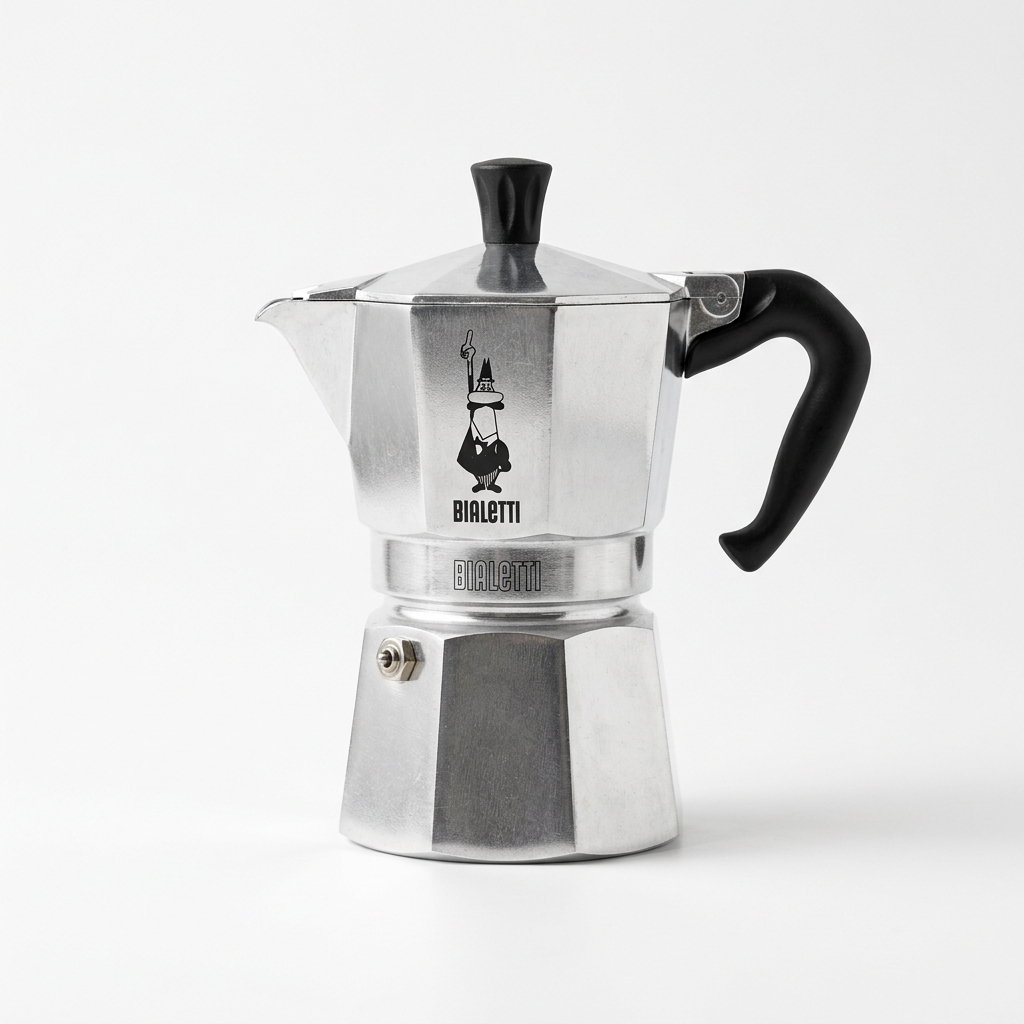
Our Pick for Beginners
Bialetti Moka Express (6-Cup)
The original Italian moka pot — affordable, reliable, and built to last for years. Makes about 10 oz of rich, espresso-style coffee in under five minutes on any gas or electric stovetop.
Check Price on Amazon →Common Beginner Mistakes (and How to Avoid Them)
The moka pot is forgiving, but there are a few things that trip up first-timers. Here's what to watch for.
Using too-fine a grind. If your grounds are espresso-fine, the water can't push through properly and you'll get a weak, slow brew (or the safety valve might pop). Aim for medium-fine — slightly coarser than espresso, like fine sand or granulated sugar.
Leaving it on the heat too long. The number one cause of bitter moka pot coffee is overheating. Pull the pot off the burner the moment you hear that sputtering sound. Don't wait for every last drop.
Using high heat. Medium heat is all you need. High heat brews too fast, scalds the coffee, and can damage the rubber gasket over time. Patience pays off here.
Tamping the grounds. This isn't an espresso machine. Just level the grounds gently and move on. Tamping creates too much resistance for the moka pot's relatively low pressure.
Not cleaning it properly. After each use, let the pot cool, disassemble it, and rinse all three parts with warm water. Skip the soap — it can leave a residue that affects flavor. Once a month, check the rubber gasket and the small filter plate for buildup and replace them if they look worn.
Never put a moka pot in the dishwasher. The aluminum will oxidize and the rubber gasket will degrade. Hand-wash only with warm water — it takes 30 seconds.
Moka Pot vs. Other Beginner Methods
Wondering how a moka pot stacks up against other methods you've been hearing about? Here's the quick comparison:
| Method | Strength | Ease | Cost | Best For |
|---|---|---|---|---|
| Moka Pot | Bold, espresso-style | Easy | $30–$50 | Strong coffee lovers, latte base |
| French Press | Full-bodied, rich | Very easy | $20–$35 | Hands-off brewing, bold flavor |
| AeroPress | Smooth, versatile | Easy | $35–$40 | Experimenting, travel |
| Pour-Over | Clean, bright | Moderate | $10–$30 | Light roasts, tasting nuance |
There's no single “best” method — it depends on what kind of coffee you enjoy. But if you want something bold and strong without the complexity of espresso, a moka pot is hard to beat.
What to Do with Your Moka Pot Coffee
One of the best things about moka pot coffee is its versatility. Because it's concentrated (stronger than drip but not quite espresso), you can use it as a base for all kinds of drinks:
- Americano-style: Add hot water to your moka pot coffee for a smooth, full-bodied cup similar to drip but with more depth.
- Latte or cappuccino: Pour your moka pot coffee over frothed milk for a cafe-style drink at home. A handheld milk frother ($10–$15) makes this dead simple.
- Iced coffee: Brew your moka pot coffee, let it cool briefly, then pour it over ice. The concentrated strength means it won't get watery as the ice melts.
- Mocha: Stir in a tablespoon of chocolate syrup or cocoa powder before adding milk. Easy dessert coffee.
Ready to Give It a Try?
A moka pot is one of those upgrades that makes you wonder why you didn't try it sooner. It's cheap, it's simple, and it makes coffee that tastes noticeably better than what most machines produce. You don't need to be a coffee expert to use one — you just need a stovetop and five minutes.
Pick up a Bialetti Moka Express, grab a bag of medium-fine ground coffee, and give it a shot this weekend. Once you taste that first rich, bold cup, you'll understand why millions of people around the world start their morning exactly this way.
- A moka pot brews bold, espresso-style coffee on your stovetop for $30–$50 — no espresso machine needed.
- Use medium-fine ground coffee, fill the water to the safety valve, and brew over medium heat for the best results.
- Pull the pot off the heat as soon as you hear sputtering — this prevents bitter, overcooked coffee.
- Never tamp the grounds or use the dishwasher — gentle is the name of the game.
- Moka pot coffee is versatile: drink it straight, add water for an Americano, or use it as a base for lattes and iced coffee.
Disclosure: This article contains affiliate links. If you purchase through our links, we may earn a small commission at no extra cost to you. We only recommend products we genuinely believe are right for beginners. Full disclosure here.
☕ About the Author
Greg Rathbone is the founder of HomeCoffeeBeginner.com. He started this site after realizing most coffee advice online assumes you're already an expert. Every guide here is written for total beginners and tested in his own kitchen — no jargon, no snobbery.