
To pull a good espresso shot: grind 18g of coffee fine, distribute it level in the basket, tamp firmly and evenly, and start the shot. You're aiming for about 36g of liquid espresso in 25–30 seconds. If it runs faster, grind finer. If it runs slower, grind coarser. That's the whole loop.
The first espresso shot you pull at home will probably be bad. We say that with affection, because everyone's first shot is bad, including the people who now write confident articles about espresso.
The good news is that pulling a good shot is not a talent. It's a checklist. Six steps, one timer, and one adjustment you make based on what the timer told you. Do it four or five times and your hands will start knowing what to do before your brain catches up.
Here's the checklist.
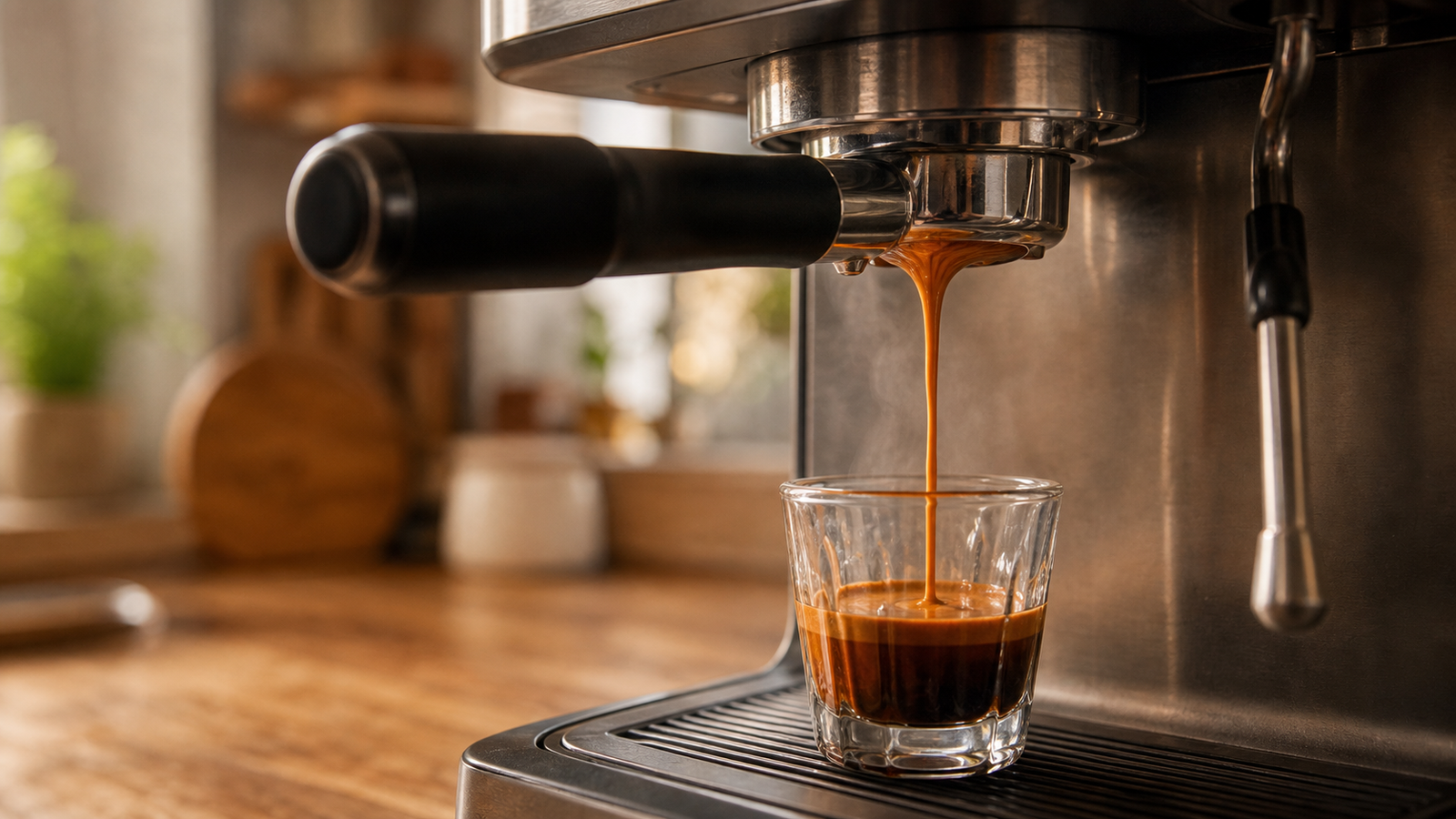
Before You Start: The Three Numbers
Espresso has a reputation for being complicated. Most of that complication comes from people optimizing at a level you don't need yet. As a beginner, you only need to hold three numbers in your head:
| Number | Target | What It Means |
|---|---|---|
| Dose | 18 grams in | How much ground coffee goes in the basket |
| Yield | 36 grams out | How much liquid espresso ends up in the cup |
| Time | 25–30 seconds | How long it takes to get there |
That's the classic 1:2 ratio — twice as much liquid out as dry coffee in. If you hit those three numbers, you will have made espresso. Not necessarily great espresso yet, but real espresso, and everything after this is refinement.
You'll need a small kitchen scale for this. Not optional, sadly — espresso is measured by weight, because crema makes volume completely unreliable. (If you're wondering why coffee people are so insistent about scales, we made the case in Why You Need a Scale to Make Good Coffee.)
Step 1 — Warm the Machine (and Everything Else)
Turn your machine on and give it 15–20 minutes. Espresso machines say they're “ready” long before they actually are — the group head, the portafilter, and the metal in between all need to come up to temperature, and a cold portafilter will steal heat from your shot and make it taste sour and flat.
While it warms, lock the empty portafilter into the group head so it heats too, and run a blank shot of water through it into your cup. Now the cup is warm as well. This costs you nothing and improves every shot you make.
Step 2 — Grind Fresh, and Grind Fine
Grind your 18 grams immediately before you pull the shot. Not this morning. Not five minutes ago. Now.
The grind should be fine — roughly the texture of table salt. It should clump slightly when you pinch it between your fingers. If it feels like sand, it's too coarse. If it feels like flour, it's too fine. Our espresso grind size guide goes into the detail.
You cannot do this step with pre-ground coffee or a blade grinder. Espresso is the one brewing method where that's genuinely true. If you're not sure whether the grinder you own can handle it, we cover exactly that in Do You Need a Grinder for Espresso?
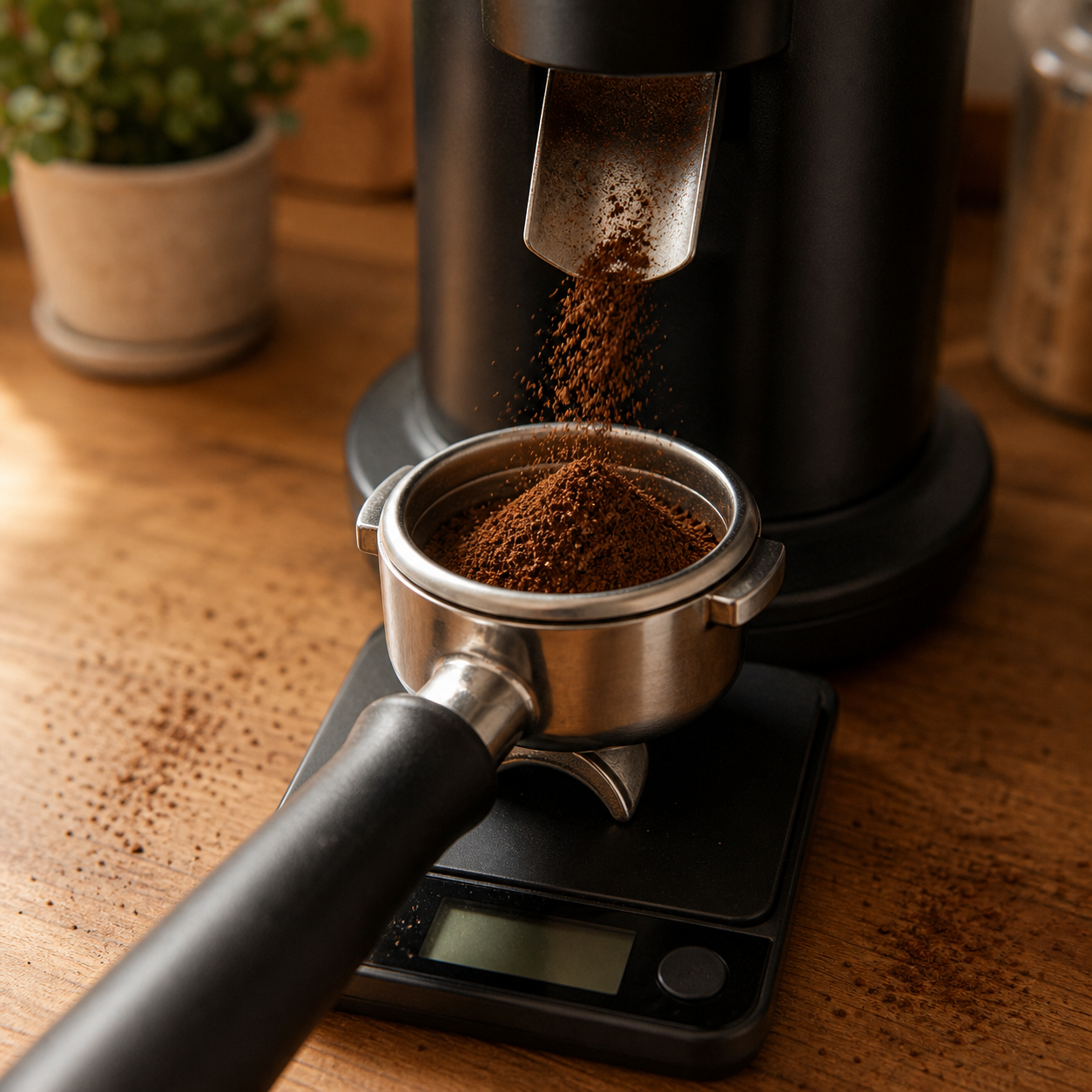
Step 3 — Distribute the Grounds Evenly
This is the step beginners skip, and it's the one causing most of their bad shots.
When coffee falls out of a grinder, it lands in a lumpy little mountain. If you tamp that mountain flat without evening it out first, you've packed some areas dense and left others loose — and water under 9 bars of pressure will find those loose spots and blast straight through them. That's channeling, and it makes a shot that's bitter and sour at the same time.
You don't need a special tool. Just:
- Give the portafilter a couple of gentle taps on the counter to settle the bed.
- Run a fingertip (or a toothpick, if you want to feel professional) across the surface in a few passes to break up clumps and level it out.
- Look at it from the side. The coffee bed should be flat and even, not a hill.
Step 4 — Tamp Firm and, Above All, Level
Now compress the coffee into a solid puck.
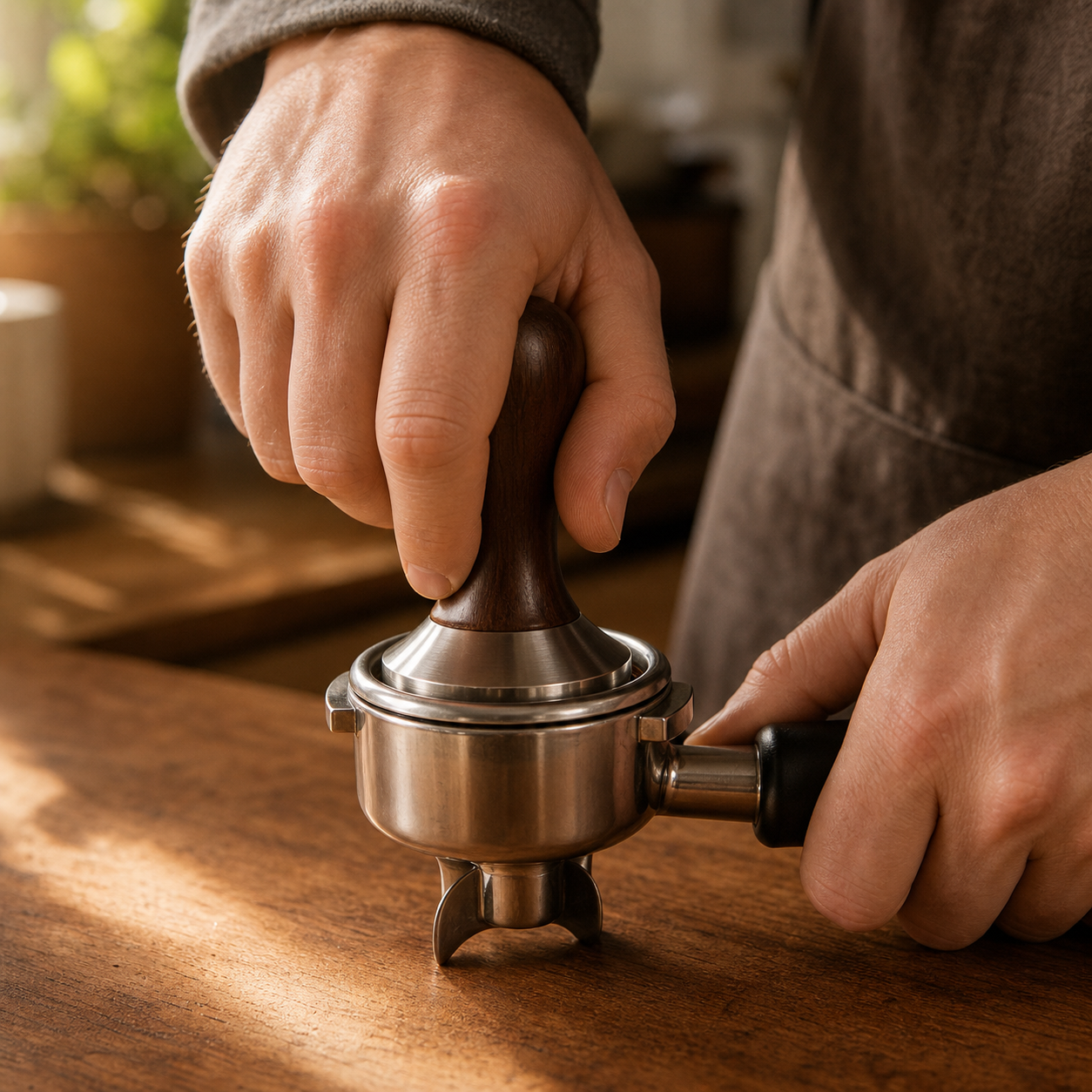
Set the portafilter on a flat surface — the counter edge, or a tamping mat. Grip the tamper like a doorknob, rest it flat on the coffee, and press straight down until the coffee stops compressing. That's it. That's a tamp.
Forget the “30 pounds of pressure” advice you'll read everywhere. The exact force barely matters. What matters enormously is that your tamp is level and that it's the same every time. A tilted tamp creates a thin side and a thick side, and the water will punch through the thin side. Aim for flat and repeatable, not strong.
Give the tamped puck a quick look. The surface should be smooth, flat, and polished-looking — like a tiny dark hockey puck. If one side is visibly lower than the other, knock it out and start again. It takes ten seconds and saves you a bad shot.
Step 5 — Pull the Shot and Watch the Clock
Lock the portafilter into the group head — don't leave it sitting there heating up, go straight into the shot — put your warm cup on the scale, zero it, and start.
Start your timer the moment you press the button. Here's what a good shot looks like as it happens:
- Seconds 0–7: Nothing. Or almost nothing. This is pre-infusion — water is soaking into the puck. A few dark drips may appear near the end.
- Seconds 7–12: The first espresso appears. It should be dark, thick, and slow, like warm honey dripping.
- Seconds 12–25: The flow steadies into a thin, ropey, tiger-striped stream. The color lightens gradually to a caramel brown.
- Seconds 25–30: You hit 36 grams on the scale. Stop the shot.
Stop when you hit your weight, not when the timer hits 30. The weight is the target; the time is the diagnostic.
Step 6 — Read the Shot and Adjust
Now look at where the time landed, and make exactly one change.
| What Happened | What It Means | What to Do |
|---|---|---|
| Hit 36g in under 20 seconds. Tastes sour, thin, watery. | Under-extracted — water moved through too easily | Grind finer, one click. Pull again. |
| Took over 35 seconds. Tastes bitter, dry, harsh. | Over-extracted — water fought through too slowly | Grind coarser, one click. Pull again. |
| Barely dripped. Machine seemed to struggle. | Way too fine, or over-tamped, or too much coffee | Go several clicks coarser. |
| Gushed out pale and fast in 10 seconds. | Way too coarse | Go several clicks finer. |
| 25–30 seconds, tastes balanced and sweet. | You did it. | Nothing. Drink it. |
The golden rule: change one variable at a time. If you adjust the grind and the dose and the tamp all in the same shot, you learn nothing, because you can't tell which change did what. Move the grinder one click, pull again, taste. Three shots is usually all it takes to land in the window.
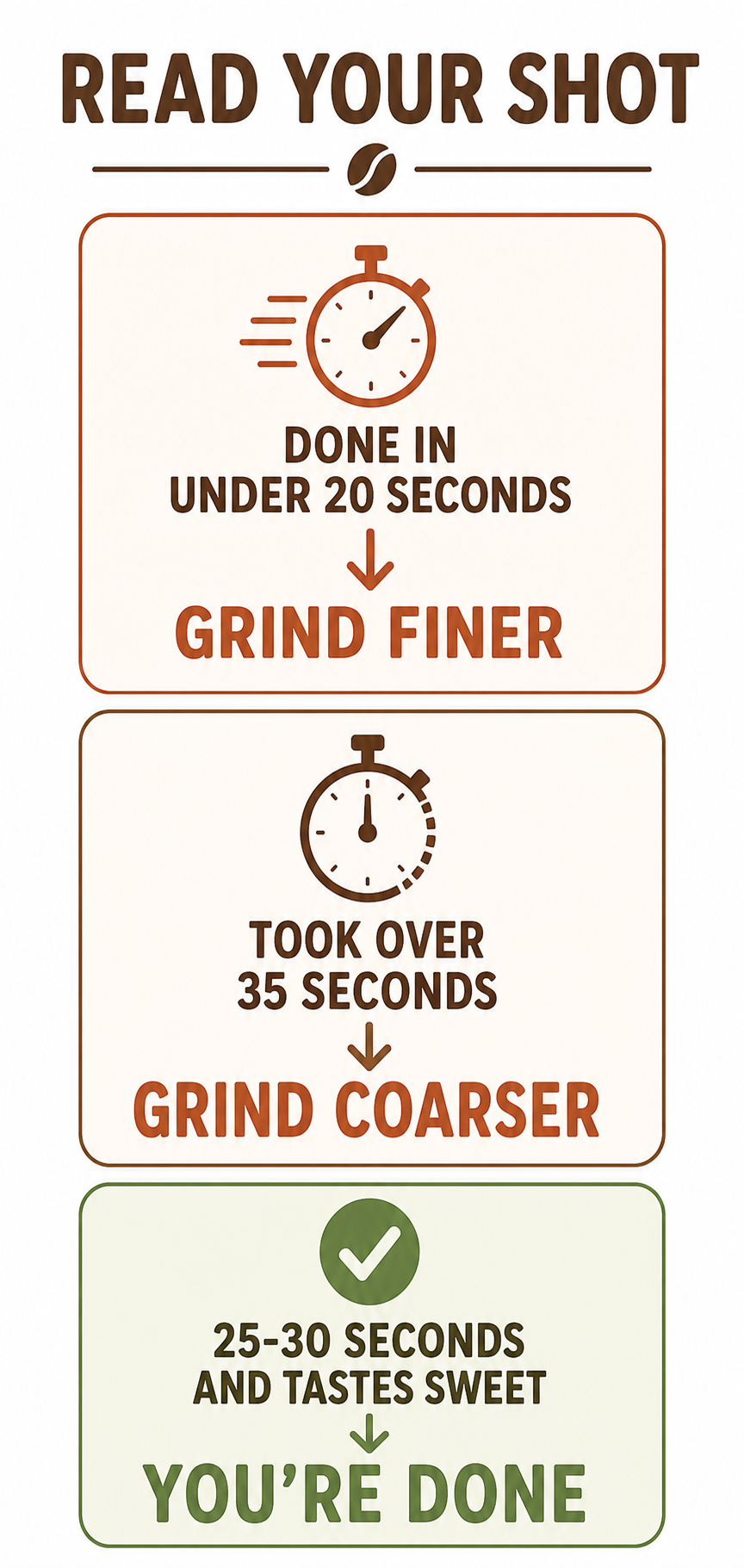
The Beginner Espresso Checklist (Print This)
- Warm up. 15–20 minutes. Warm the portafilter and the cup too.
- Grind fresh, grind fine. 18g, table-salt texture, ground right before you pull.
- Distribute. Tap and level the bed before you tamp. Skipping this causes channeling.
- Tamp level. Flat and repeatable beats hard.
- Pull to weight, read the time. 36g out in 25–30 seconds is the target.
- Adjust one thing. Fast and sour → grind finer. Slow and bitter → grind coarser.
What “Good” Actually Tastes Like
Here's the part nobody tells beginners: a well-pulled shot of espresso is sweet.
Not sugary — but rounded, syrupy, with a heaviness on the tongue and a finish that lingers pleasantly instead of scraping. It should not make you wince. If your espresso is aggressively bitter or sharply sour, that's not “how espresso tastes.” That's a shot that needs a grind adjustment.
Chasing that sweetness is the whole game, and it's genuinely satisfying to find. The first time you pull a shot that tastes like something you'd happily pay for at a café — that's the moment it clicks.
Keep Going
Pulling shots is a skill you build by repetition, not by reading. Make one every morning for a week and you'll be startled at how much better they get, even without changing anything about your gear.
When you're ready to go wider, our complete beginner's guide to espresso at home covers the full picture — gear, beans, milk, and what to upgrade when.