
Yes — you need a grinder for espresso. It's the one brewing method where pre-ground coffee genuinely doesn't work. Espresso needs a fine, precise, adjustable grind that store-bought “espresso grind” can't give you, and that's why the shot won't come out right without one. Budget $150–$250 for a burr grinder that can actually do it.
We usually push back on gear pressure around here. You don't need a scale to make good coffee. You don't need a gooseneck kettle. You don't need a grinder to make a decent cup of drip.
Espresso is the exception. It's the one place where we'll tell you plainly: you need a grinder for espresso, and buying the machine without one is the most common expensive mistake beginners make.
Here's why — and what to actually buy.
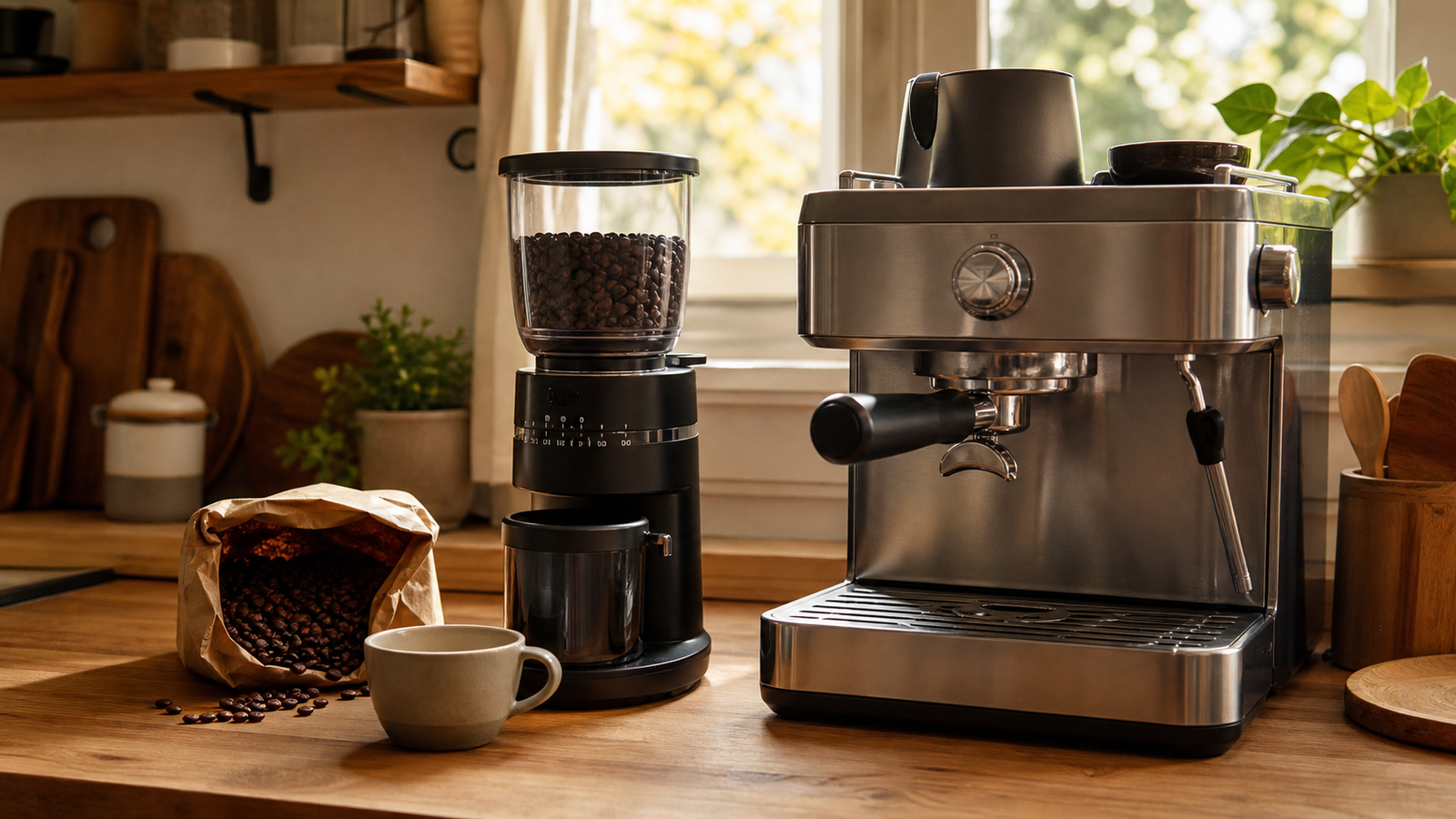
Why Pre-Ground Coffee Doesn't Work for Espresso
You've seen bags labeled “espresso grind” at the grocery store. Reasonable question: why can't you just use those?
Three reasons, and they stack.
1. Espresso needs a grind you can adjust
Every other brewing method is forgiving. Drip coffee will still be drinkable if your grind is a little off. Espresso will not. The shot either runs too fast (sour, thin) or too slow (bitter, harsh), and the only way to correct it is to change the grind.
A bag of pre-ground espresso is one fixed size. You can't nudge it finer. You can't back it off coarser. If it doesn't happen to match your machine, your beans, and your basket — and it usually doesn't — you're stuck with a bad shot and no way out. Our guide to espresso grind size walks through exactly how that adjustment works.
2. Espresso is unusually punished by staleness
Coffee starts losing its aromatics within minutes of being ground. That matters a bit in a French press. It matters a lot in espresso, because espresso is a concentrated drink — you're tasting the coffee at roughly five times normal strength, so every flat, stale note gets amplified.
Stale grounds also produce almost no crema, the golden foam on top of a good shot. If you've been getting thin, pale, bubbly shots with no crema at all, stale pre-ground coffee is a very likely culprit.
3. Consistency is non-negotiable at 9 bars
Your espresso machine forces water through the coffee at around nine times atmospheric pressure. Under that kind of pressure, water is extremely good at finding the path of least resistance.
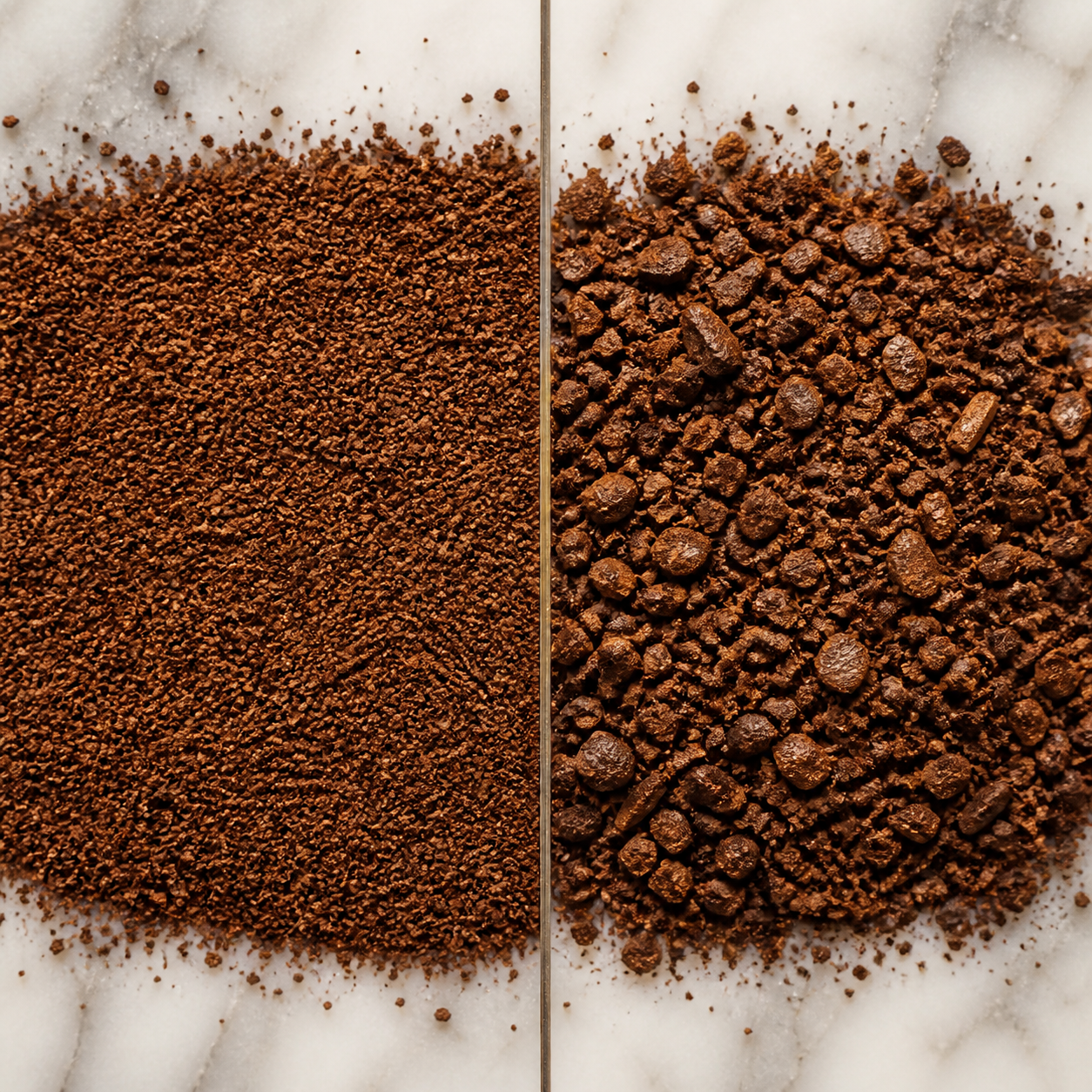
If your grounds are a mix of powder and chunks, the water carves a channel straight through the loose spots, over-extracting the fine dust and completely ignoring the rest. That's called channeling, and it produces a shot that tastes bitter and sour simultaneously. It's a genuinely confusing thing to drink, and it's the classic fingerprint of an inconsistent grind.
“Can I Just Use the Grinder I Already Have?”
Probably not — and this is where a lot of people get caught out.
Most burr grinders sold for home coffee cannot grind fine enough for espresso. This includes excellent, well-reviewed grinders in the $80–$110 range — the Capresso Infinity, the OXO Brew, most of the popular drip-and-pour-over picks. They're built to grind coarse to medium. They physically cannot reach espresso-fine settings with the precision espresso needs. This is not a knock on those grinders. It's just a different job.
Here's the quick triage on what you might already own:
- Blade grinder (spinning blade, looks like a mini blender): No. Not for espresso, not for anything, honestly. It chops rather than grinds and produces wildly uneven particles.
- Budget manual grinder (JavaPresse, Hario Mini-Slim, etc.): Great for French press and pour-over. Not built for espresso — the burrs and the adjustment steps aren't fine enough.
- $80–$110 electric burr grinder (Capresso, OXO, Baratza Encore non-ESP): Excellent for drip and pour-over. Can't reliably hit espresso.
- Espresso-capable burr grinder ($150+, with fine low-end steps or stepless adjustment): Yes. This is the category you need.
If you're still figuring out whether a grinder belongs in your setup at all for your other brewing, our honest take is here: Do You Need a Coffee Grinder?
What to Look For in an Espresso Grinder
Three things actually matter. Everything else is noise.
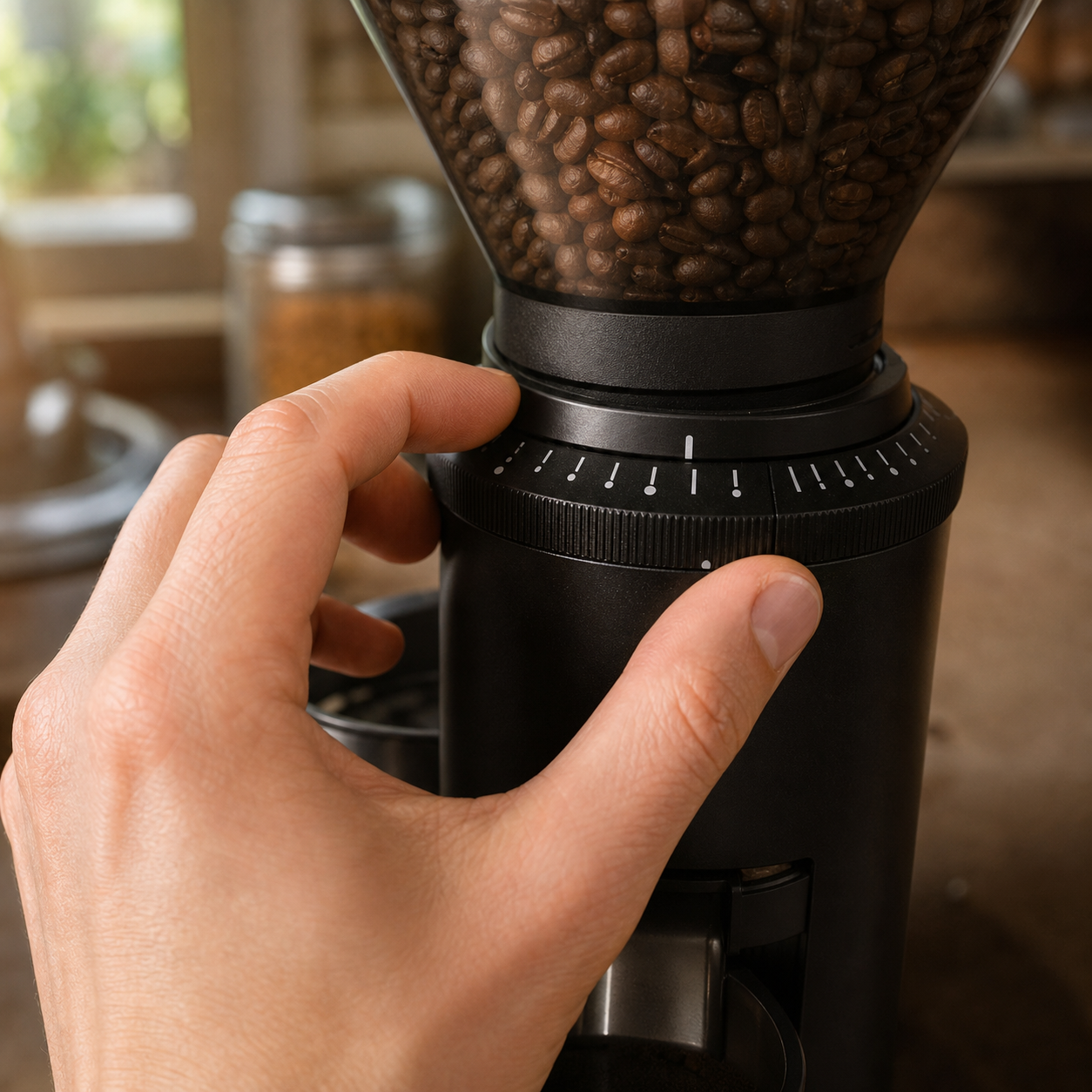
Fine adjustment at the low end. This is the whole ballgame. You need small, controllable steps in the espresso range — not one giant leap from “fine” to “finer.” Grinders marketed as espresso-capable have been geared specifically for this.
Burr quality and consistency. Uniform particle size is what prevents channeling. Both flat and conical burrs work well at the beginner level; don't agonize over it.
Low retention. Grounds that get stuck inside the grinder and come out with tomorrow's batch are stale grounds. Cheaper grinders often hold onto a gram or two. It matters more in espresso than anywhere else.
If your budget is tight, spend it on the grinder before you spend it on the machine. A $200 grinder paired with a $200 machine will make better espresso than a $100 grinder paired with a $400 machine. Almost everyone learns this in the wrong order.
Our Pick for a First Espresso Grinder
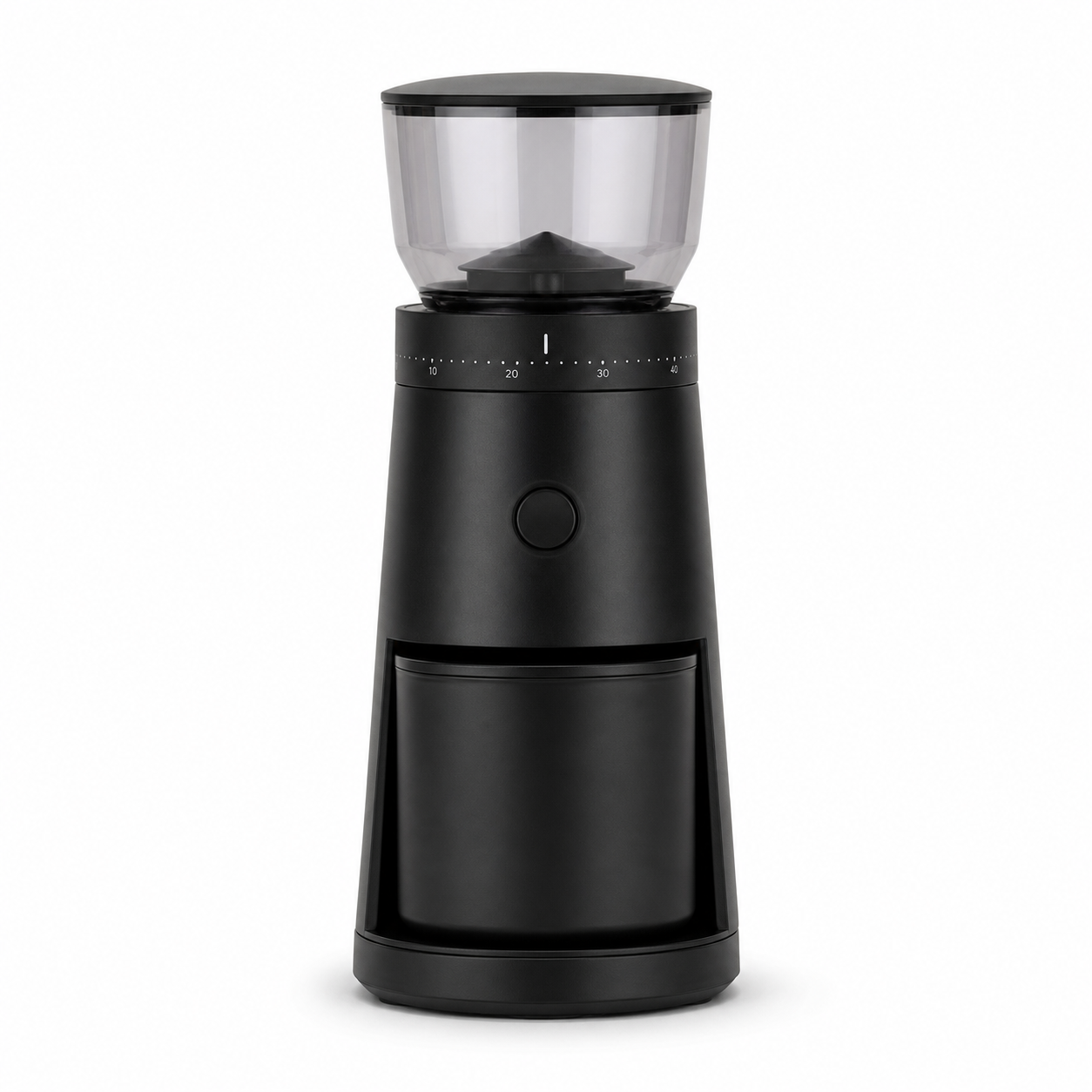
For a beginner buying their first espresso setup, the Baratza Encore ESP is the one we'd hand you. It's the espresso-geared version of Baratza's long-running Encore — same reliable body, re-cut for finer, more precise low-end adjustment. It still grinds coarse enough for French press and pour-over, so it doesn't become a single-purpose appliance if espresso turns out not to be your thing.
Our Pick for Beginners
Baratza Encore ESP
Around $199. Fine, precise adjustment where espresso needs it — and it still handles pour-over and French press. Baratza's parts availability and repair support are the best in the category, so this is a buy-once grinder.
The main alternative people will point you to is the Turin DF54 (around $229), which uses 54mm flat burrs and true single-dosing with very low retention. It grinds beautifully. We stop short of calling it the beginner pick only because it's a little more hands-on and Baratza's support network is easier to lean on when something goes wrong. If you like tinkering, the DF54 is a genuinely excellent shout.
What If You're Not Ready to Spend That Much?
Completely fair. Espresso is the most expensive corner of home coffee, and there's no shame in not starting here.
You have two honest options:
- Wait. Save for the grinder, then buy the machine. The espresso will be better and you'll be less frustrated. Genuinely — this is the advice we'd give a friend.
- Get espresso-style coffee another way. A moka pot or an AeroPress makes strong, concentrated, espresso-ish coffee for a fraction of the cost, and both are far more forgiving about grind. We cover the whole approach in Can You Make Espresso Without an Espresso Machine?
Neither of those is a consolation prize. Plenty of people drink moka pot coffee every morning and never look back.
- Yes, you need a grinder for espresso — it's the one method where pre-ground genuinely doesn't work.
- Pre-ground can't be adjusted, goes stale fast, and won't give you crema.
- Most $80–$110 burr grinders — even good ones — can't grind fine enough for espresso. Check before you assume yours will do it.
- Budget $150–$250 for an espresso-capable burr grinder. Our beginner pick is the Baratza Encore ESP (~$199).
- If that's out of reach right now, spend on the grinder before the machine — or make espresso-style coffee with a moka pot or AeroPress instead.
The Bottom Line
Espresso is the one brewing method that asks you to buy the grinder first. It's not gatekeeping and it's not gear snobbery — it's just physics. Thirty seconds, nine bars of pressure, and a drink five times as concentrated as drip coffee leaves no room for a grind you can't control.
Get the grinder. The machine will make sense after that.
Next: our full walkthrough of the gear, the variables, and your first shot — How to Make Espresso at Home: A Beginner's Complete Guide. And when you're ready to pick the machine, start with Best Beginner Espresso Machines Under $500.
Disclosure: This article contains affiliate links. If you purchase through our links, we may earn a small commission at no extra cost to you. We only recommend products we genuinely believe are right for beginners. Full disclosure here.