Walking into the world of home espresso can feel like the coffee gods are testing you. The machines range from $80 to $8,000, the reviews are full of words like “temperature surfing” and “channeling,” and everyone online seems to have a strong opinion about the one you were about to buy. If you're a beginner just trying to make a decent latte at home without a second mortgage, it's a lot.
Here's the good news: you do not need to spend $2,000 to pull a genuinely good shot of espresso. Some of the best espresso machines for beginners cost less than $500 — a few well under $300 — and they'll get you drinking café-quality drinks at your own kitchen counter faster than you'd think. The trick is knowing which ones are actually beginner-friendly and which ones will leave you frustrated by week two.
We've done the digging for you. Below are our picks for the best beginner espresso machines under $500 in 2026, ranked by how easy they are to learn on and live with — never by anything else. We'll walk through who each one is for, what it does well, and where it falls short, so you can match a machine to your kitchen and your patience level.
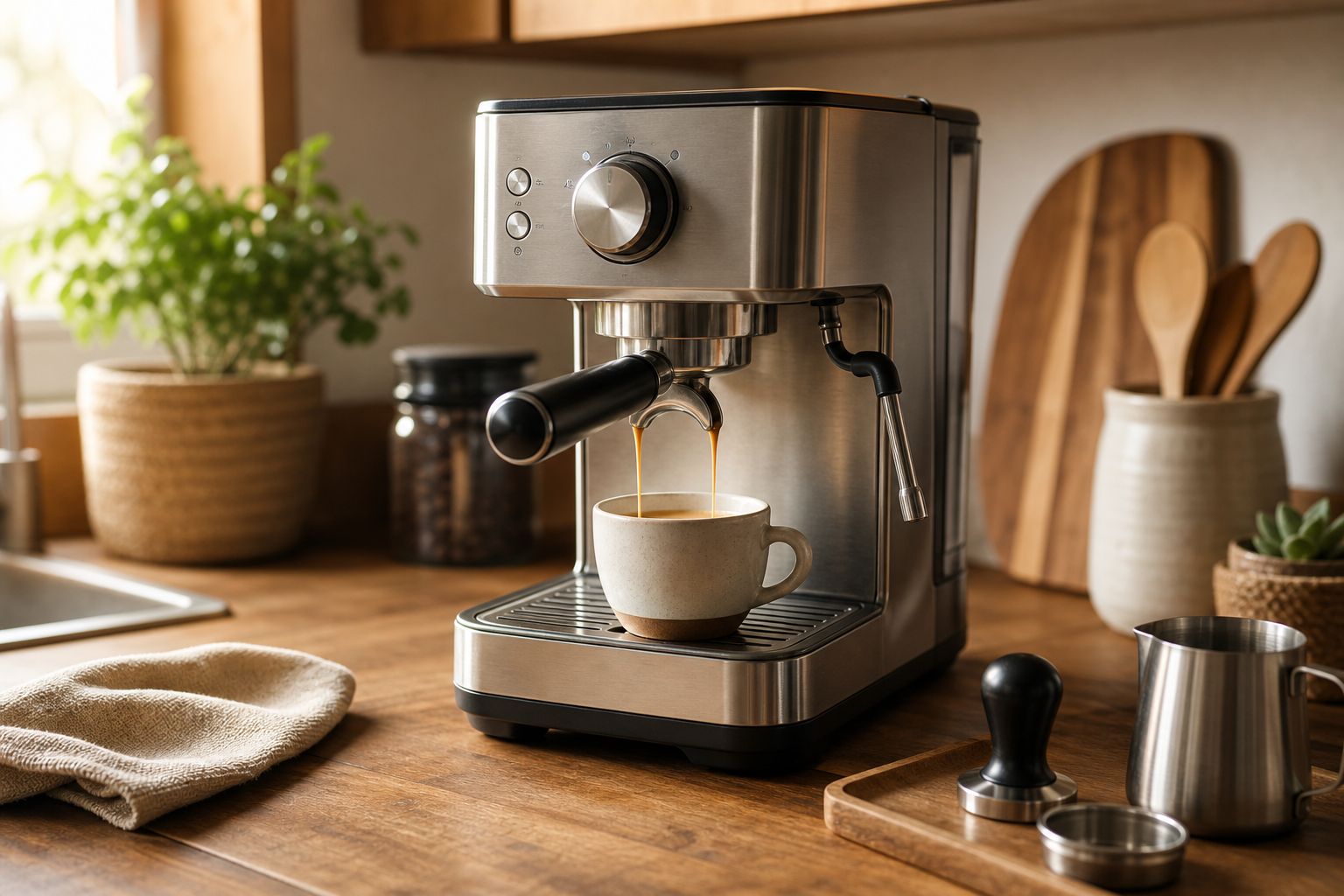
For most beginners, the Breville Bambino (~$299) is the best espresso machine to start with — it heats in 3 seconds, forgives sloppy technique, and makes shots better than machines twice its price. If you want hands-free milk, step up to the Bambino Plus. On a tight budget, the Casabrews 3700 gets you started for around $130.
What to Look for in a Beginner Espresso Machine
Before we get to the picks, here's the short version of what actually matters when you're starting out. You don't need to memorize this — but knowing these three things will make the whole list make more sense.
Fast, stable heat. The single biggest difference between a frustrating machine and a joyful one is temperature. Machines with a modern heating system (Breville calls theirs “ThermoJet”) are ready in seconds and hold a steady brew temperature, which means more consistent shots without you having to fiddle. Older machines without stable temperature control make you “temperature surf” — a fussy timing game beginners shouldn't have to play.
A forgiving basket. Many beginner machines come with what's called a pressurized (or “dual wall”) basket. It artificially builds pressure so you still get a decent shot even if your grind or tamp isn't perfect. That's exactly what you want at the start. You can graduate to a non-pressurized basket later once your technique improves.
A steam wand you can learn on. If you love lattes and cappuccinos, milk steaming is half the fun — and half the learning curve. Some machines automate it entirely (great for convenience), while others give you a manual wand (great for learning real barista skills). Neither is “better.” It's about what you want.
The machine is only half the equation. A cheap blade grinder will sabotage even a great espresso machine, because espresso needs a fine, even grind. If your budget is tight, spend a little less on the machine and put that money toward a decent burr grinder. See our guide to the best beginner coffee grinders under $100.
The Best Beginner Espresso Machines Under $500 at a Glance
Here's the whole lineup side by side. Prices are approximate and current as of July 2026 — several of these go on sale regularly, so it's worth checking before you buy.
| Machine | Approx. Price | Milk Frothing | Best For |
|---|---|---|---|
| Breville Bambino (Best Overall) | ~$299 | Manual steam wand | Most beginners who want great shots without fuss |
| Breville Bambino Plus | ~$499 | Automatic steam wand | Beginners who want hands-free lattes |
| De'Longhi Dedica Arte | ~$249 | Manual steam wand | Small kitchens and slim budgets |
| Gaggia Classic Evo Pro | ~$449 | Manual (commercial-style) wand | Beginners who want to learn and tinker |
| Casabrews 3700 Essential | ~$130 | Manual steam wand | Tightest budgets / testing the waters |
| Flair Neo Flex | ~$99 | None (no milk steaming) | Hands-on learners, no electricity needed |
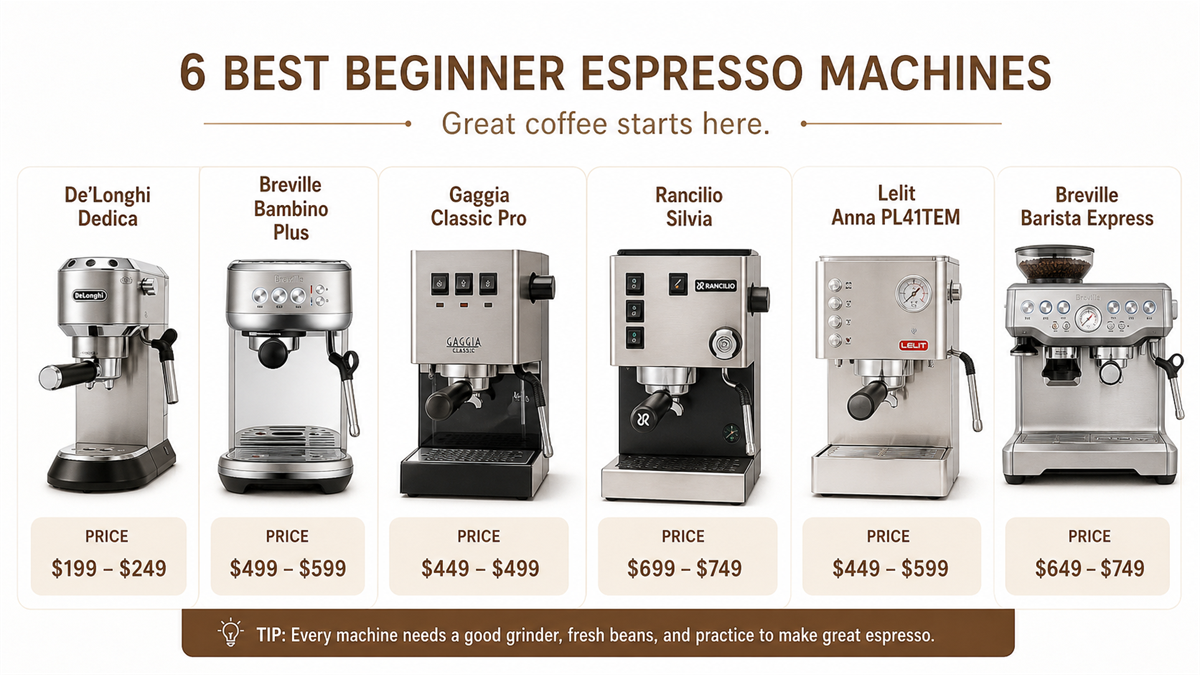
1. Breville Bambino — Best Overall for Beginners
If we could only recommend one espresso machine to a beginner, it would be the Breville Bambino. It's roughly the size of a cereal box, heats up in about three seconds, and pulls a proper 9-bar shot that reviewers consistently say rivals machines costing twice as much. For a first espresso machine, it hits the sweet spot of “genuinely good” and “genuinely easy.”
What makes it so beginner-friendly is what's happening under the hood. Its ThermoJet heating system holds a steady temperature, so you skip the temperature-surfing dance older machines force on you. Automatic pre-infusion gently wets the coffee before full pressure kicks in, which means you can still get a good extraction even when your tamping is a little uneven — exactly the kind of forgiveness a beginner needs. The steam wand is manual, so you'll learn to texture milk yourself, but reviewers widely praise it as one of the best learning wands at this price.
The main thing to know: at around $299, the Bambino gets you the machine only. You'll still need a grinder. But paired with a solid burr grinder, it's the fastest, least frustrating path to café-quality espresso at home we've found for beginners.
Breville Bambino
Price Range: ~$299 [VERIFY]
Best For: The widest range of beginners who want excellent shots with minimal fuss.
Pros:
- Heats up in about 3 seconds — no waiting
- Stable temperature and auto pre-infusion make shots forgiving and consistent
- Tiny footprint fits almost any kitchen
Cons:
- Manual steam wand has a small learning curve for latte art
- No grinder included — budget for one separately
- Small water tank means more frequent refills
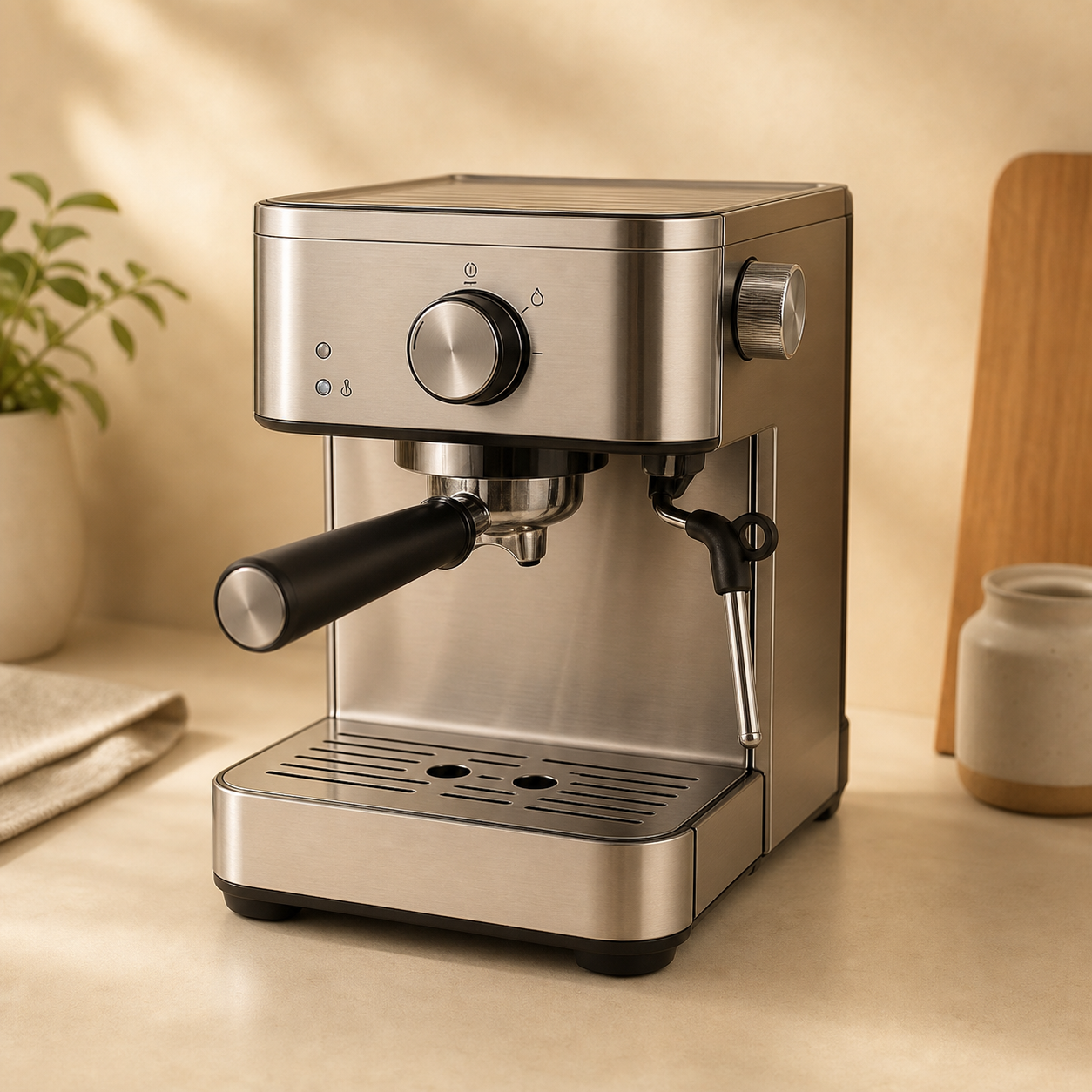
Our Pick for Beginners
Breville Bambino
Heats in 3 seconds, forgives imperfect technique, and pulls shots that punch well above its price. The easiest great espresso machine to start on — our top pick for beginners.
2. Breville Bambino Plus — Best for Hands-Free Milk
The Bambino Plus is the Bambino's slightly bigger sibling, and the headline difference is one feature beginners tend to love: an automatic steam wand. Instead of learning to texture milk by hand, you drop the wand in the pitcher, press a button, and the machine steams your milk to your chosen temperature and texture on its own. If lattes and cappuccinos are your main goal and you don't care to learn manual frothing, this is the shortcut.
Everything that makes the standard Bambino great is here too — the fast ThermoJet heat-up, the stable temperature, the auto pre-infusion. The espresso quality in the cup is essentially identical to the regular Bambino; reviewers who've used both say any difference is too subtle to notice. You're paying the extra money purely for the hands-free milk, a slightly larger water tank, and a few extra accessories (a better tamp, a razor trimming tool, and backflushing bits for cleaning).
At around $499, it sits right at the top of our under-$500 budget. It's worth it if hands-free milk genuinely matters to you. If you're happy to learn the manual wand, save the money and get the standard Bambino.
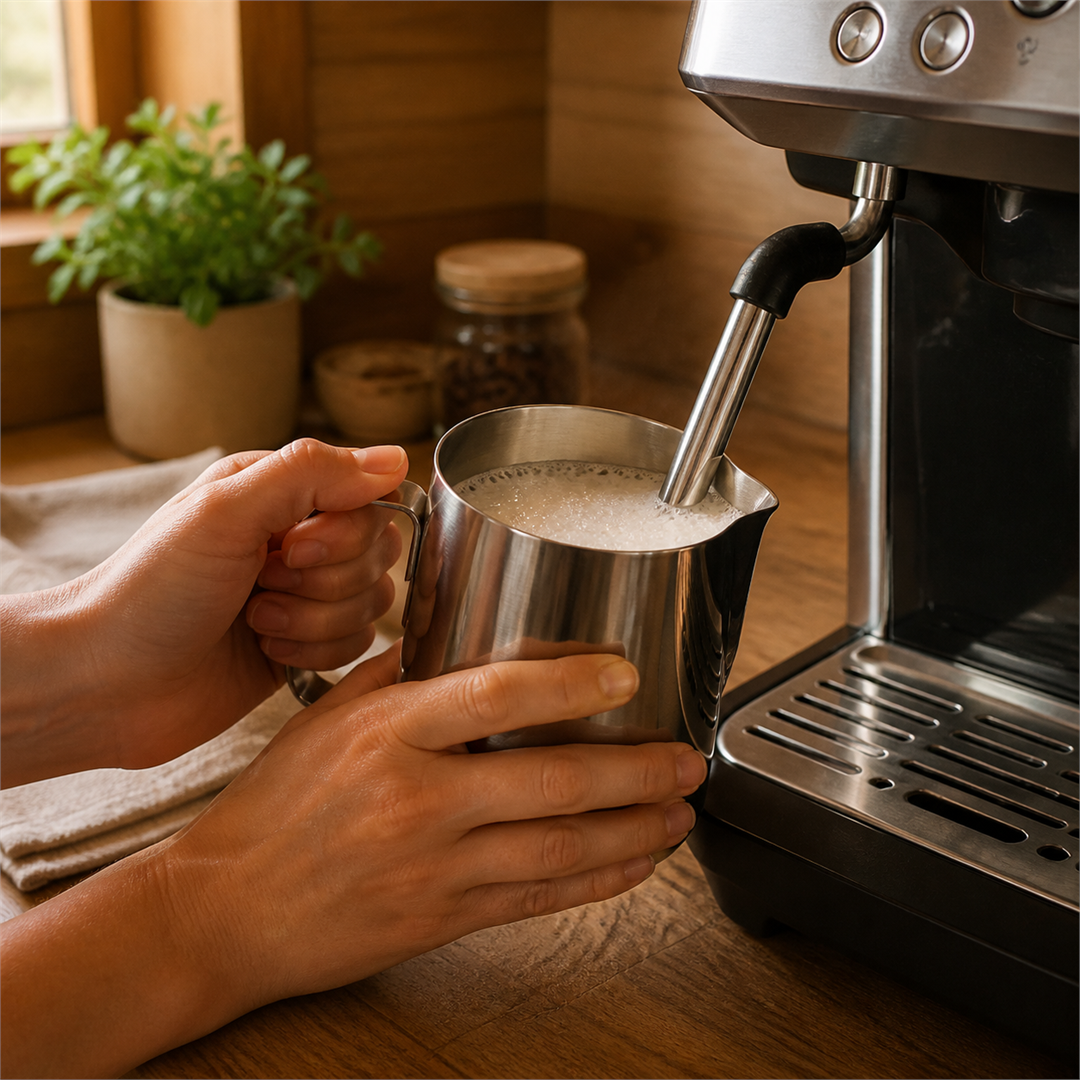
Breville Bambino Plus
Price Range: ~$499 (often on sale lower) [VERIFY]
Best For: Latte and cappuccino lovers who want café milk without learning to steam it.
Pros:
- Automatic steam wand froths milk hands-free with adjustable temp and texture
- Same fast heat-up and great shot quality as the standard Bambino
- Comes with useful extra accessories for cleaning and tamping
Cons:
- About $200 more than the standard Bambino for what's mostly a milk feature
- Automatic frothing means you won't learn manual latte-art skills
- Still no grinder included
3. De'Longhi Dedica Arte — Best Compact Budget Pick
If counter space and budget are both tight, the De'Longhi Dedica Arte is worth a hard look. It's remarkably slim — one of the narrowest espresso machines you'll find — and typically runs around $249, making it one of the more affordable “real” espresso machines with a proper steam wand. Reviewers consistently call it an excellent entry-level machine with a strong price-to-performance ratio.
For beginners, the appeal is a genuine espresso experience without the intimidating footprint or price. It has a manual milk-frothing wand so you can make lattes and cappuccinos, three temperature settings, and De'Longhi's usual easy button controls. Like the Bambino, it doesn't include a grinder, so factor that in.
The trade-off versus the Bambino is heat-up speed and overall consistency — the Bambino is a bit quicker and more forgiving. But if you want to spend under $250 and still get a compact, classy machine that makes real espresso, the Dedica Arte is a smart choice.
De'Longhi Dedica Arte
Price Range: ~$249 [VERIFY]
Best For: Small kitchens and shoppers who want a real espresso machine on a slim budget.
Pros:
- Extremely narrow — fits tight counters
- Real manual steam wand for lattes and cappuccinos
- Beginner-friendly controls and price
Cons:
- Slower to heat and slightly less consistent than the Bambino
- No grinder included
- Smaller water reservoir
4. Gaggia Classic Evo Pro — Best for Learning and Tinkering
The Gaggia Classic is a bit of a legend in home espresso, and the current Evo Pro version (around $449) carries that reputation forward. This is the machine for the beginner who wants to learn — someone excited to develop real barista skills, tinker, and eventually mod their setup rather than push a button and walk away.
Its standout feature is a 58mm commercial-style portafilter — the same size professional machines use. That larger basket gives you more room to dial in your grind and reduces the “channeling” problems that plague smaller machines, especially once you pair it with a good grinder. The two-hole steam wand puts out seriously impressive steam for its class and can make genuinely silky microfoam.
Now the honest part: this is not a push-button, hands-free machine. It lacks the automatic temperature control (PID) that makes the Bambino so foolproof, so you'll do some temperature managing yourself, and the included plastic tamp isn't great. It rewards patience and practice. If you want to truly learn espresso and enjoy the craft, it's fantastic. If you want your latte in 90 seconds with zero fuss, the Bambino is the friendlier pick. This is also more of an espresso-machine-first choice — for a broader look at how manual and semi-automatic machines differ, see our guide on manual vs. semi-automatic vs. automatic espresso machines.
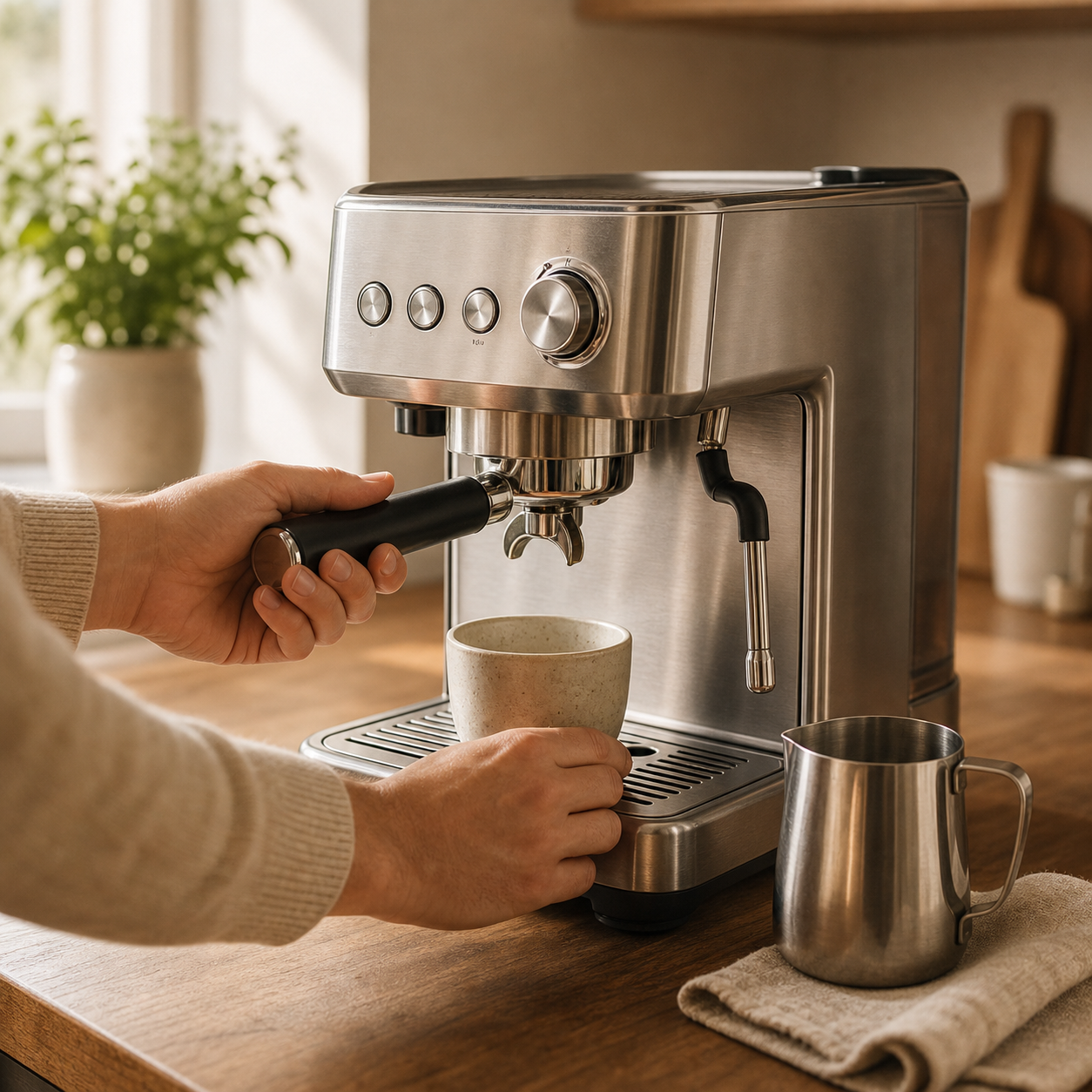
Gaggia Classic Evo Pro
Price Range: ~$449 (colored versions run higher) [VERIFY]
Best For: Hands-on beginners who want to genuinely learn espresso and tinker over time.
Pros:
- 58mm commercial-style portafilter — grows with your skills
- Powerful steam wand makes excellent microfoam
- Durable, repairable, and highly upgradeable
Cons:
- No automatic temperature control (PID) — more hands-on
- Steeper learning curve than the Bambino
- Cheap included tamp; you'll want to upgrade it
5. Casabrews 3700 Essential — Best Rock-Bottom Budget Option
Not ready to spend $300 on a hobby you're not sure will stick? The Casabrews 3700 Essential is the machine that lets you dip a toe in for around $130 (and it's often on sale near $99). It's compact, surprisingly well-built for the price, and — this is the important part for beginners — it uses pressurized baskets that are very forgiving. You don't need a perfect grind or barista skills to get a drinkable shot out of it.
Reviewers were genuinely surprised by its milk frothing. Several testing outlets found its steam wand produced better microfoam than machines several times the price, which is remarkable at this budget. That makes it a fun, low-risk way to find out whether home espresso is something you'll stick with.
The honest caveats: the espresso itself can be hit-or-miss and inconsistent shot to shot, and some owners report drips and small messes after pulling a shot. It's not a machine you'll keep forever — it's a machine that gets you started cheaply and tells you whether to invest more later. For a lot of beginners, that's exactly the right first step.
Casabrews 3700 Essential
Price Range: ~$130 (frequently ~$99 on sale) [VERIFY]
Best For: The tightest budgets and anyone testing whether home espresso is for them.
Pros:
- Astonishingly cheap entry point into real espresso
- Forgiving pressurized baskets — easy first shots
- Better milk frothing than the price suggests
Cons:
- Espresso quality is inconsistent shot to shot
- Can drip and make a mess after pulling
- Not a long-term machine — more of a starter
6. Flair Neo Flex — Best No-Electricity, Hands-On Option
The Flair Neo Flex is the odd one out on this list, and we love it for that. It's not an electric machine at all — it's a manual lever press. You heat your water separately (a kettle works fine), pour it in, and pull down a lever to generate the pressure that makes espresso. At around $99, it's the most affordable way to pull a real, pressurized shot, and it needs no electricity, so it works anywhere from your kitchen to a campsite.
For the right beginner, it's magic. You feel every part of the extraction happening in your own hand, which teaches you what espresso actually is faster than any button ever could. It's compact, nearly indestructible, and there's nothing to break down electronically.
The catch: there's no milk steaming (you'd froth milk separately), and it's fully manual, so making one shot takes more effort and a little practice. It's not for someone who wants speed and convenience. But if you're curious, patient, and want the most hands-on, lowest-cost path into espresso, it's a delightful place to start. If you're not sure a machine is even right for you yet, it's worth reading whether you can make espresso without an espresso machine first.
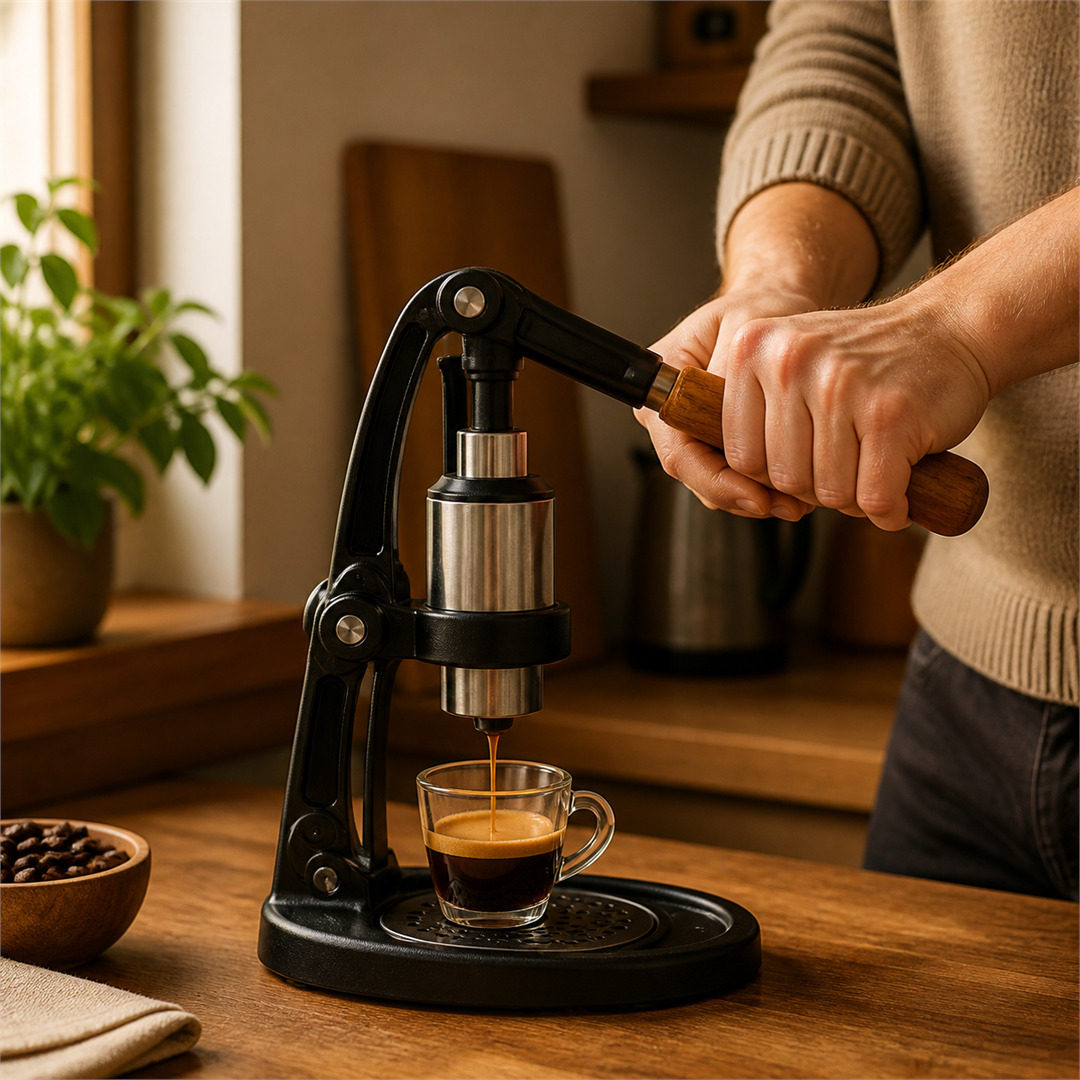
Flair Neo Flex
Price Range: ~$99 (~$120 with travel case) [VERIFY]
Best For: Curious, hands-on beginners who want a cheap, electricity-free way to learn.
Pros:
- Cheapest way to pull a genuine pressurized shot
- No electricity needed — works anywhere
- Teaches you the mechanics of espresso hands-on
Cons:
- No milk steaming — froth separately
- Fully manual; each shot takes more effort
- Not for anyone wanting speed or convenience
The Flair Neo Flex is sold directly at flairespresso.com — it isn’t carried on Amazon.
How to Choose the Right One for You
Six machines is a lot, so here's the simple way to narrow it down. Ask yourself one question: what matters most to you — convenience, budget, or learning?
- If you want the easiest great experience: Get the Breville Bambino. It's our overall pick for a reason. Fast, forgiving, excellent shots.
- If you want hands-free lattes: Step up to the Bambino Plus for the automatic milk wand.
- If budget or counter space is tight: The De'Longhi Dedica Arte gives you a real machine around $249.
- If you want to truly learn the craft: The Gaggia Classic Evo Pro grows with you.
- If you just want to test the waters cheaply: The Casabrews 3700 or the manual Flair Neo Flex get you going for around $100.
Whatever you choose, remember the one rule that trips up almost every beginner: your grinder matters as much as your machine. Espresso lives and dies on a fine, even, fresh grind, and a pre-ground bag or a blade grinder will hold back even the best machine on this list. Get the grinder right and any of these machines will reward you.
Don't buy an espresso machine and skip the grinder to save money. It's the most common beginner mistake. A great machine with bad grounds makes bad espresso every time. If you have to split the budget, a modest machine plus a decent burr grinder beats an expensive machine plus pre-ground coffee.
Frequently Asked Questions
What is the best espresso machine for beginners?
For most beginners, the Breville Bambino is the best espresso machine to start on. It heats up in seconds, holds a stable temperature, and uses automatic pre-infusion to forgive imperfect technique — so you get consistent, café-quality shots without a steep learning curve. At around $299, it balances quality and ease better than anything else we tested in the under-$500 range.
Can you get a good espresso machine for under $500?
Absolutely. Every machine on this list costs under $500, and several — including our top pick — come in well under $300. You do not need to spend thousands to pull a genuinely good shot at home. The key is pairing your machine with a decent burr grinder and fresh beans.
Do I need a separate grinder?
For most of these machines, yes. Only all-in-one machines with a built-in grinder skip this. Espresso needs a fine, even, fresh grind, and a dedicated burr grinder makes a bigger difference to your cup than almost anything else. Budget for one alongside your machine.
Is a manual lever machine like the Flair too hard for beginners?
Not at all — it's just different. A manual lever machine like the Flair Neo Flex takes a little more effort and practice per shot, but many beginners find it's the fastest way to actually understand how espresso works. If you're curious and patient, it's a rewarding place to start. If you want speed and convenience, an electric machine like the Bambino will suit you better.
- The Breville Bambino (~$299) is the best espresso machine for most beginners — fast, forgiving, and excellent in the cup.
- Want hands-free milk? The Bambino Plus. Tight budget? The De'Longhi Dedica Arte or Casabrews 3700. Want to learn the craft? The Gaggia Classic Evo Pro or manual Flair Neo Flex.
- Your grinder matters as much as your machine — never skip it to save money.
- You can absolutely pull great espresso at home for under $500. Start where your budget and patience meet.
Ready to go deeper? Once you've picked your machine, our complete beginner's guide to making espresso at home walks you through pulling your first shot step by step. And if you're still on the fence about buying a machine at all, you might be surprised how close you can get with an AeroPress espresso-style shot or a classic moka pot — both cost a fraction of a machine and are great ways to find out if espresso is your thing.
Disclosure: This article contains affiliate links. If you purchase through our links, we may earn a small commission at no extra cost to you. We only recommend products we genuinely believe are right for beginners. Full disclosure here.