
A moka pot makes strong, espresso-style coffee on your stovetop using steam pressure to push hot water up through fine grounds. It’s cheap (~$30 for the classic Bialetti), produces a small, intense cup that’s closer to espresso than drip, and is one of the easiest paths to bold home coffee without buying an espresso machine. A typical 3-cup moka brew takes about 5–7 minutes start to finish.
The moka pot — that octagonal aluminum pot you’ve probably seen on someone’s Italian grandmother’s stove — is one of the best-kept secrets in home coffee. It makes a bold, espresso-style cup with very little gear, almost no learning curve, and costs less than a single bag of premium beans. This is your complete starting point.
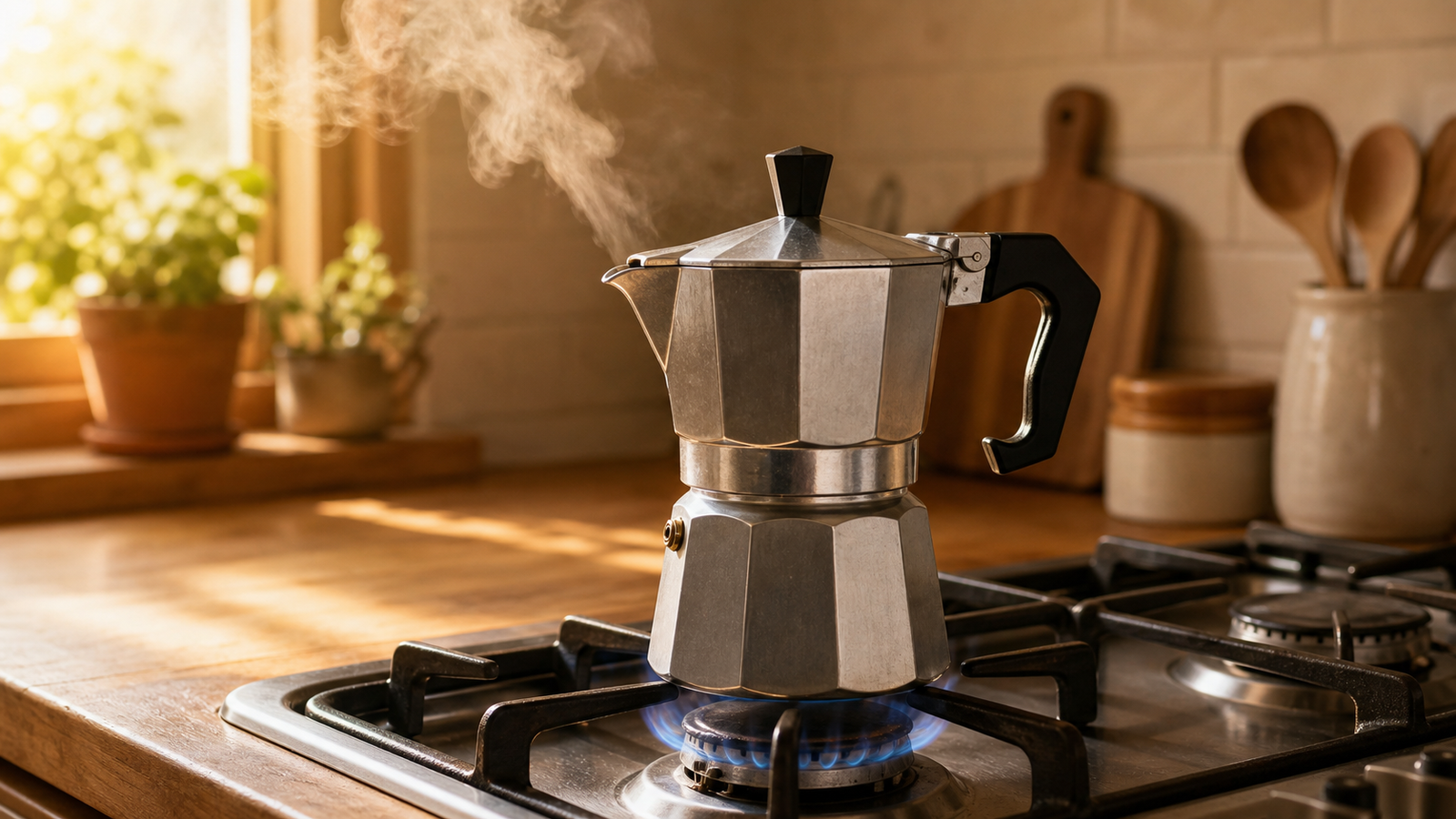
What Is a Moka Pot, Exactly?
A moka pot (sometimes called a stovetop espresso maker or caffettiera) is a three-chamber metal pot. Water goes in the bottom, fine coffee grounds go in the middle filter basket, and brewed coffee collects in the top chamber. You put it on the stove, the water heats, steam pressure pushes the water up through the grounds, and concentrated coffee rises into the top. It was invented by Alfonso Bialetti in 1933 and the original design has barely changed since.
What comes out of the spout isn’t technically espresso — espresso machines use about 9 bars of pressure; a moka pot uses about 1.5. But the cup is much stronger and more concentrated than drip or pour-over. Think of moka as the most affordable, low-tech way to get espresso-style intensity at home.
Why We Recommend the Moka Pot for Beginners
- It’s cheap. A classic Bialetti 3-cup costs about $30. No electricity required.
- It’s simple. Three parts, no programming, no buttons.
- It’s forgiving. You don’t need a fancy grinder or a scale to make a good first cup.
- It’s bold. If you like strong coffee, lattes, or cappuccinos, moka gets you closer faster than any other entry-level brewer.
- It lasts forever. An aluminum moka pot is essentially a lifetime tool with minimal care.
If you’ve been thinking about upgrading from drip but aren’t ready to spend hundreds on an espresso machine, this is the natural next step.
Moka Pot vs Espresso vs Drip: How It Compares
| Moka Pot | Espresso Machine | Drip Coffee | |
|---|---|---|---|
| Pressure | ~1.5 bar | ~9 bar | None |
| Cup size | 1.5–3 oz per “cup” | 1 oz shot | 8–12 oz |
| Strength | Very strong | Very strong | Medium |
| Crema? | Light foam, no real crema | True crema | None |
| Starter cost | ~$30 | $200–$2,000+ | $20–$200 |
| Brew time | 5–7 min | 30 sec (after warm-up) | 5–10 min |
What You Need to Get Started
The pot itself
The Bialetti Moka Express is the original and still the standard. The 3-cup (about 4.5 oz total) is the right size for one person who wants two espresso-style shots; the 6-cup is right for two people or one heavy user. Italian-style “cups” are small — about 1.5 oz each — so a “3-cup” pot is small by American standards.
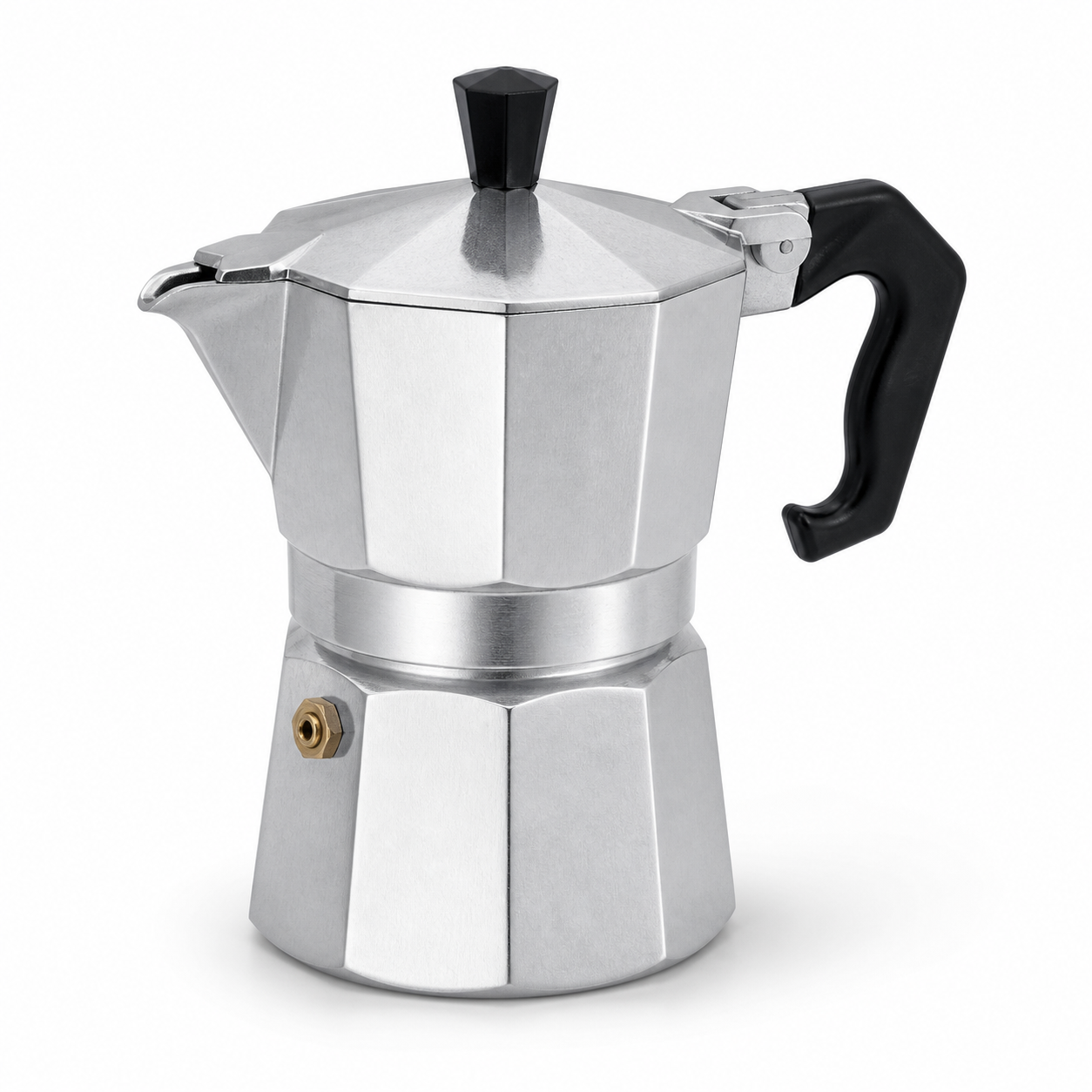
Our Pick for Beginners
Bialetti Moka Express (3-Cup)
The original. Nearly a century of design unchanged. Around $30, lasts decades with basic care, and makes the kind of cup that turns drip drinkers into espresso drinkers.
Check Price on Amazon →A burr grinder (or pre-ground moka grind)
Moka pot wants a grind that’s finer than drip but coarser than espresso — about table salt texture. Most pre-ground “espresso” coffee will work in a pinch, but a basic burr grinder gives you a better cup. If you’re grocery-shopping pre-ground, look for a “moka” or “espresso” grind.
Fresh beans
Moka pot shines with medium and dark roasts. Italian roasts and espresso blends are the traditional pick. Light, single-origin coffees can taste sour and thin in a moka pot — save those for pour-over.
A heat source
Gas stoves are easiest. Electric coil and ceramic glass work fine too. Note for induction users: standard aluminum Bialetti pots won’t work on induction cooktops. You’ll need a Bialetti Induction or another stainless-steel moka pot.
How to Brew a Moka Pot: Step-by-Step
This is the basic recipe that works for any size moka pot.
Step 1: Boil your water first
Pour boiling water (or near-boiling) into the bottom chamber, filling to just below the safety valve. This matters. Starting with hot water means the coffee grounds don’t sit and over-extract while the pot warms up — one of the biggest reasons beginner moka tastes bitter.
Use a kettle to boil water and pour it into the moka base. Skipping this step is the most common reason new moka users complain about “burnt” coffee.
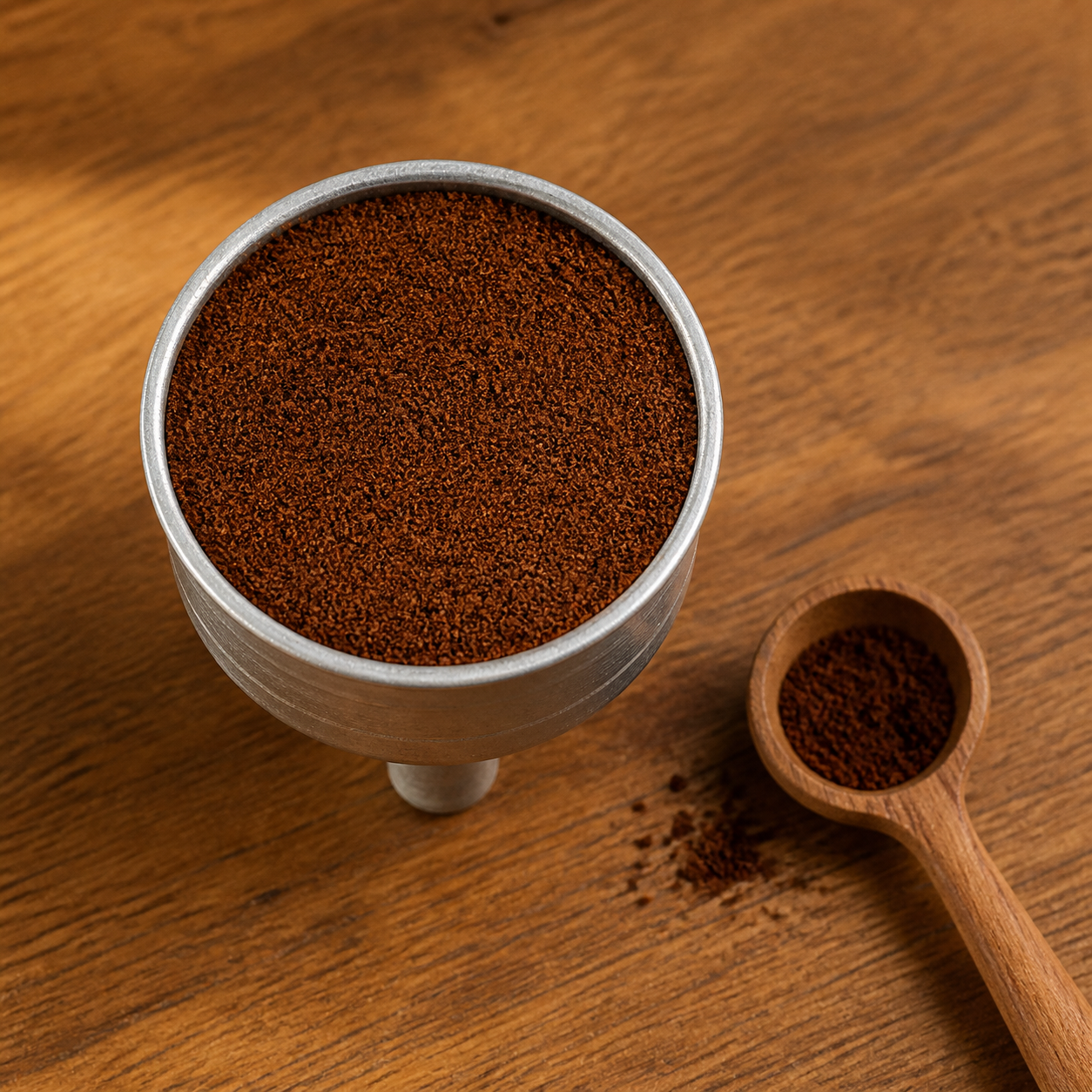
Step 2: Fill the filter basket with coffee
Fill the basket level with the rim — don’t pack or tamp it. Moka coffee should sit loose so steam can pass through. Tamping like espresso causes pressure buildup and bitter, over-extracted coffee.
Step 3: Assemble carefully (the pot is hot)
Use a dish towel to screw the top onto the bottom chamber — the bottom is hot from the boiled water. Tighten firmly but don’t over-crank.
Step 4: Brew on medium-low heat
Place the pot on a burner set to medium-low. Lower heat is better. High heat rushes the brew and tastes scorched. Leave the lid open so you can see when coffee starts coming up.
Step 5: Listen for the gurgle
After 3–5 minutes, coffee will start streaming up into the top chamber. When it changes from a steady stream to a sputtering, gurgling sound, the brew is done. Pull it off the heat immediately. Leaving it on too long burns the coffee already in the top.
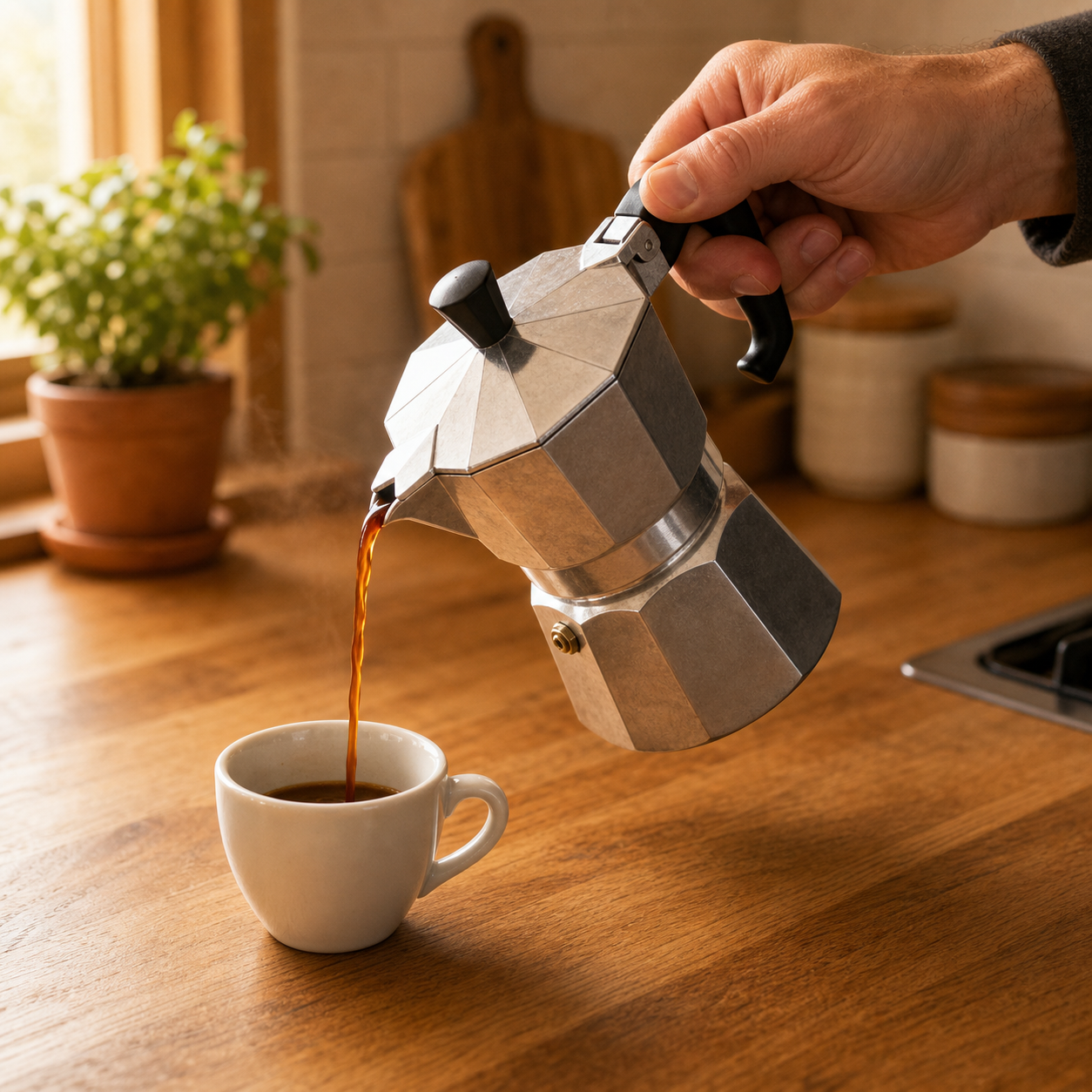
Step 6: Cool the base and pour
Some people run cold water on the base to stop extraction quickly. Optional but worth trying. Pour and serve immediately.
Common Beginner Mistakes
These four mistakes are the difference between great moka and the bitter, burnt cup beginners often get on their first try:
- Starting with cold water. The base takes too long to heat, the grounds over-extract, and you taste it. Always preheat with boiling water.
- High heat. Moka pots want medium-low. Cranking the burner produces scorched, bitter coffee.
- Tamping the grounds. Resist the espresso instinct. Loose, level grounds are the way.
- Leaving it on the burner after it gurgles. The moment it sputters, take it off. Every extra second tastes worse.
How to Clean a Moka Pot
The classic Italian way: rinse with hot water only, no soap. The thinking is that soap leaves residue and an “aluminum patina” builds up over time that improves the flavor. Modern home brewers are split on this — some use a tiny amount of mild dish soap and a soft sponge with no issues.
Either way:
- Rinse all three pieces in warm water
- Empty the spent grounds and rinse the filter basket
- Let everything air-dry completely before reassembling
- Never put a moka pot in the dishwasher — the harsh detergent strips the protective layer and dulls the aluminum
- Replace the rubber gasket every 1–2 years (cheap, comes in 3-packs)
How Moka Pot Coffee Tastes
Expect a small, intense cup. The flavor is bold, slightly bittersweet, with chocolatey and nutty notes if you’re using a medium-dark blend. It’s not as syrupy as true espresso — the lower pressure means less crema and less body — but it’s far closer to espresso than drip coffee will ever get.
Moka coffee makes excellent base shots for milk drinks. A 1.5–2 oz moka pour + 6 oz of steamed (or microwave-warmed) milk = a near-perfect homemade latte for pocket change. See our milk frothing guide for beginners for the easy way.
Moka Pot Sizes: Which One Should You Buy?
| Size | Total Output | Best For |
|---|---|---|
| 1-cup | ~1.5 oz | A single espresso-style shot |
| 3-cup | ~4.5 oz | One person, two shots or a small latte |
| 6-cup | ~9 oz | Two people or one big morning |
| 9- or 12-cup | 13–18 oz | Multiple people, dinner parties |
Always brew a moka pot at its full intended capacity. Half-filling a 6-cup pot gives you mediocre coffee — the pressure dynamics rely on the chambers being full. Pick the size that matches how much you actually drink in one go.
What to Read Next
If moka pot sounds like the right starting point for you, here are the natural next reads as we build out our moka pot cluster:
- Why a Moka Pot Is a Great Start for Beginners — read the full entry-point guide
- How to Use a Moka Pot (Step-by-Step Recipe)
- Best Grind Size for Moka Pot (Fine, Not Espresso Fine)
- Moka Pot Coffee-to-Water Ratio (coming soon)
- Why Is My Moka Pot Coffee Bitter or Burnt? (Fix Guide)
- How to Clean a Moka Pot (Without Ruining It)
- Is Moka Pot Coffee Really Espresso? (An Honest Answer)
- Best Moka Pots for Beginners (2026 Picks) (coming soon)
Want to compare with another simple home brewer first? Read our complete French press guide or complete AeroPress guide.
- A moka pot makes strong, espresso-style coffee on the stovetop — not true espresso, but the closest cheap home equivalent.
- The Bialetti Moka Express 3-cup (~$30) is the classic beginner pick.
- Use a fine-but-not-espresso grind, medium or dark roast, boiling water in the base, and medium-low heat.
- Take it off the burner the moment it gurgles — leaving it on burns the coffee.
- Skip the dishwasher. Hand rinse only, replace the gasket every 1–2 years.
The moka pot is one of those pieces of kitchen equipment that quietly outperforms its price for decades. For about $30, you get an entry point into espresso-style coffee that’s nearly impossible to beat. Pair it with fresh beans, a basic burr grinder, and the four-step beginner recipe above, and you’ll be making the kind of coffee that makes guests ask what your secret is.
Disclosure: This article contains affiliate links. If you purchase through our links, we may earn a small commission at no extra cost to you. We only recommend products we genuinely believe are right for beginners. Full disclosure here.
☕ About the Author
Greg Rathbone is the founder of HomeCoffeeBeginner.com. He started this site after realizing most coffee advice online assumes you're already an expert. Every guide here is written for total beginners and tested in his own kitchen — no jargon, no snobbery.