
Moka pot coffee usually tastes bitter or burnt for one of five reasons: the heat is too high, the grind is too fine, you left the pot on the stove after it gurgled, you started with cold water, or you tamped the grounds. The fix is almost always the same — lower the heat, use a table-salt grind, start with hot water, and pull it off the burner the second it sputters.
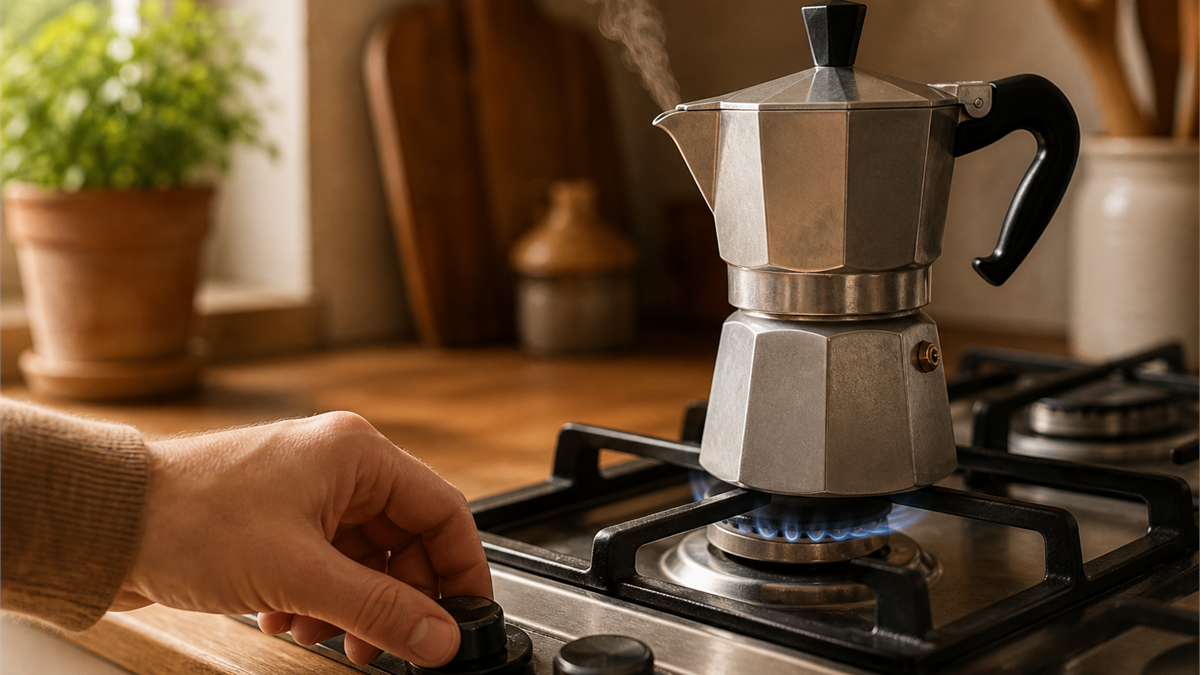
You bought a moka pot expecting rich, bold, espresso-style coffee — and instead you got a harsh, bitter, almost-burnt cup that made you wince. Don't give up on it. Bitter moka coffee is one of the most common beginner complaints, and it's almost always caused by a small, fixable mistake. Here's how to diagnose why your moka pot coffee is bitter and fix it for good.
Quick Diagnosis
| What you taste | Most likely cause |
|---|---|
| Harsh, scorched, “burnt” | Heat too high or left on the burner too long |
| Bitter and over-strong | Grind too fine, or tamped grounds |
| Bitter with a stewed, flat edge | Started with cold water |
| Bitter and metallic | New pot not seasoned, or old oil buildup |
Now let's walk through each fix.
Fix 1: Turn the Heat Down
This is the number-one cause of burnt, bitter moka coffee. High heat rushes the water through the grounds too fast and too hot, scorching the coffee. Use medium-low heat — and on a gas stove, keep the flame inside the base so it doesn't lick up the sides. Your brew should take a relaxed 4 to 5 minutes, not a frantic 90 seconds.
If your moka pot finishes in under two minutes, your heat is almost certainly too high. Slowing the brew down is the fastest way to a smoother, sweeter cup.
Fix 2: Take It Off the Stove the Moment It Gurgles
When the steady stream of coffee turns into a hissing, gurgling sputter, the brew is done — and every extra second on the heat cooks the coffee already sitting in the top chamber. That's pure bitterness. Pull the pot off the burner immediately when you hear that sound. For extra insurance, run a little cold water over the base (or wrap it in a cold, damp towel) to stop extraction instantly.
Walking away during the brew is a classic mistake. Moka pots go from “perfect” to “burnt” in about 15 seconds. Stay close and listen for the gurgle.
Fix 3: Coarsen Your Grind
If your grind is too fine — especially true espresso grind — the water struggles to pass through, sits too long against the coffee, and over-extracts into bitterness. Moka pot wants a table-salt texture: finer than drip, coarser than espresso. If you're tasting harshness even at the right heat, go one notch coarser. We cover this in detail in our moka pot grind size guide.
Fix 4: Start With Hot Water
Filling the base with cold water means the whole pot has to slowly heat up — and while it does, the grounds sit and stew, producing a bitter, over-cooked flavor before the brew even gets going. Always preheat the base with hot or near-boiling water (just below the safety valve). It cuts brew time and protects the coffee. Use a towel when you assemble, since the base will be hot.
Fix 5: Don't Tamp the Grounds
A moka pot is not an espresso machine. Pressing the grounds down like an espresso puck blocks the gentle steam pressure, forces the water to over-extract, and makes the cup bitter — it can also cause sputtering. Fill the filter basket level with the rim and loose. Just level it off with a finger; never pack it.
Bonus Fix: Banish the Metallic Taste
If your coffee tastes bitter and metallic, the cause is usually one of two things:
- A brand-new pot that hasn't been seasoned. New aluminum moka pots taste a bit metallic out of the box. Season it by running two or three throwaway brew cycles — make coffee and pour it out — before your first real cup.
- An old pot with rancid oil buildup. Coffee oils go stale inside the chambers over time and turn every brew bitter. Rinse all parts with hot water after every use, and never use a dishwasher (the harsh detergent strips the protective layer and dulls the aluminum).
Replace the rubber gasket every 1–2 years. An old, hardened gasket leaks pressure and lets flavor go off. Replacements are cheap and usually come in three-packs.
Put It All Together
Most bitter-moka problems disappear once you do these in combination: hot water in the base, a table-salt grind filled loose, medium-low heat, and pulling the pot the instant it gurgles. Change one thing at a time so you can tell what fixed it, and within a brew or two you'll have the rich, bittersweet, chocolatey cup the moka pot is famous for.
- Burnt taste? Lower the heat and pull the pot off the stove the second it gurgles.
- Bitter taste? Coarsen the grind to table-salt texture and never tamp.
- Stewed, flat bitterness? Start with hot water in the base.
- Metallic taste? Season a new pot; clean an old one with hot water only — no dishwasher.
- Replace the gasket every 1–2 years.
Once your cup is dialed in, build on it. Start with our step-by-step guide to using a moka pot, get the big picture in our complete moka pot beginner's guide, or read our honest take on why a moka pot is a great start for beginners.
☕ About the Author
Greg Rathbone is the founder of HomeCoffeeBeginner.com. He started this site after realizing most coffee advice online assumes you're already an expert. Every guide here is written for total beginners and tested in his own kitchen — no jargon, no snobbery.