
No — moka pot coffee isn't technically espresso, but it's the closest thing you can make for $30. Real espresso needs about 9 bars of pressure; a moka pot makes around 1.5. That means moka coffee is strong and concentrated but has less body, no true crema, and a slightly more bitter edge. For most beginners — especially in milk drinks — the difference barely matters.
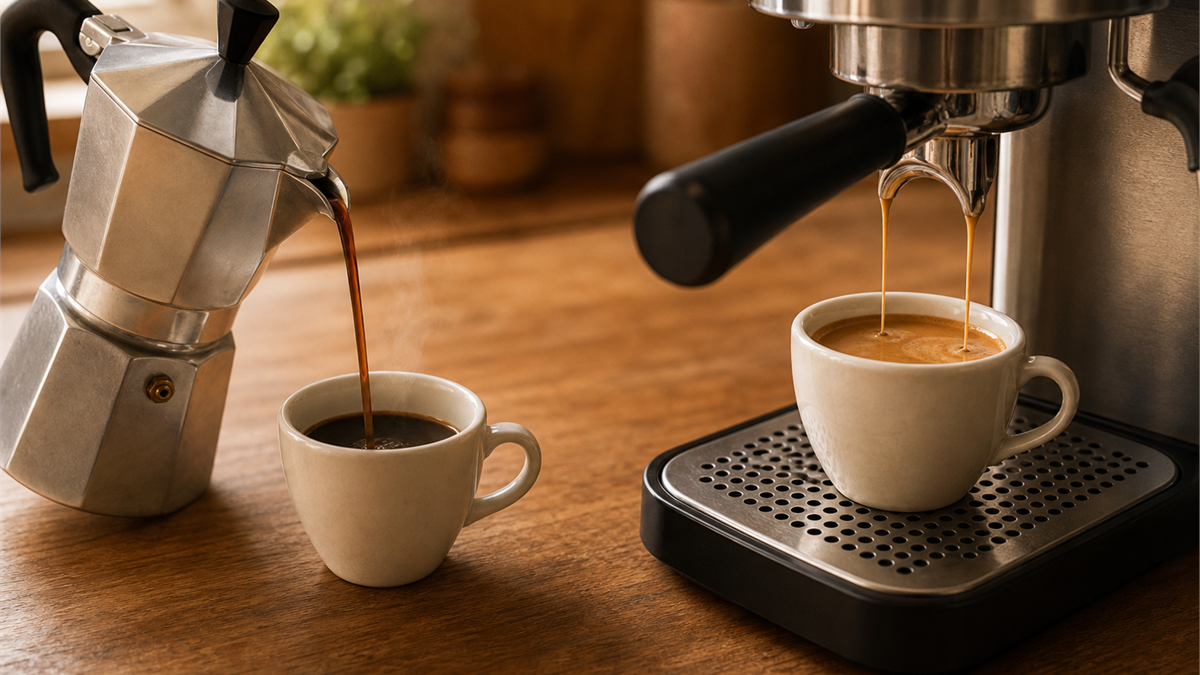
You'll see moka pots sold as “stovetop espresso makers,” and that label causes a lot of confusion. So let's settle it plainly: is moka pot coffee espresso? The honest answer is no — but understanding why will make you a better home brewer and help you decide whether you even need a real espresso machine.
The Short Answer
Espresso has an actual definition, and it's about pressure. True espresso is made by forcing hot water through finely-ground coffee at roughly 9 bars of pressure in about 25 to 30 seconds. A moka pot uses gentle steam pressure — only about 1 to 1.5 bars — to push water up through the grounds over 3 to 4 minutes. Same idea (pressure + fine grounds), very different numbers. So moka coffee is espresso-style: strong and concentrated, but not espresso by the technical definition.
What's Actually Different
Pressure: 1.5 bar vs 9 bar
This is the headline. That six-fold difference in pressure changes everything downstream — how the coffee oils emulsify, how much body the cup has, and whether you get crema. You simply can't reach espresso pressure on a stovetop with a standard moka pot.
Crema: the foam myth
Real espresso is topped with crema — a stable, golden-brown layer of emulsified coffee oils and CO2 that only forms under high pressure. Moka pots don't make true crema. Sometimes you'll see a thin, pale foam on top of a moka pour; that's just aeration from the coffee bubbling into the top chamber, and it fizzles away in seconds. Some moka marketing calls it crema. It isn't.
If you want a little foam on top of a moka pour, brew with fresh, recently-roasted beans — fresher coffee gives off more CO2 and produces more surface bubbles. It still isn't real crema, but it looks nice.
Extraction time and taste
Espresso's fast, high-pressure shot pulls out bright, nuanced, aromatic flavors and a syrupy body. The moka pot's slower, gentler extraction gives you a bolder, heavier, slightly more bitter cup with less of that high-end brightness. Neither is “worse” — they're different experiences. Moka leans rich, chocolatey, and intense; espresso leans bright, complex, and silky.
What's the Same (and Why Moka Is So Loved)
For all those differences, moka coffee and espresso share the thing most people actually want: concentrated strength. A moka pour is far closer to an espresso shot than to a mug of drip. It's small, intense, and packs the punch that makes a good latte or cappuccino. That's why generations of Italian households have run on moka pots — they deliver 90% of the espresso experience for about 5% of the cost.
| Moka Pot | True Espresso | |
|---|---|---|
| Pressure | ~1–1.5 bar | ~9 bar |
| Brew time | 3–4 minutes | 25–30 seconds |
| Crema | None (just brief bubbles) | Thick, golden, lasting |
| Body | Bold, slightly bitter | Syrupy, bright, complex |
| Starter cost | ~$30 | $200–$2,000+ |
When the Difference Actually Matters
Here's the practical part. The gap between moka and espresso shrinks dramatically the moment you add milk. In a latte or cappuccino, most people genuinely cannot tell whether the base was a moka pour or a machine shot in a blind taste test. The milk smooths over the differences in body and crema.
The one place the difference is obvious is when you drink it neat — a straight shot, no milk, no water. Side by side, an espresso's crema, silky body, and bright complexity are things only 9 bars of pressure can produce. If drinking straight espresso is your goal, a moka pot will get you close but not all the way.
Don't buy a moka pot expecting café-quality crema and bright espresso flavor. Buy it for what it is: an outstanding, affordable way to make strong, bold coffee and the base for excellent milk drinks at home.
So Should Beginners Care?
Mostly, no — and that's good news. If you're choosing your first real coffee setup, a moka pot gets you espresso-style coffee for around $30 with almost no learning curve. You can make lattes, cappuccinos, and bold black coffee that beats anything from a drip machine. If, down the road, you fall in love with straight espresso and crave that crema and brightness, that's the moment to consider a real machine. Until then, the moka pot punches so far above its price that the “is it really espresso?” question stops mattering.
- Moka pot coffee is espresso-style, not true espresso — about 1.5 bar of pressure vs espresso's 9.
- Moka pots don't make real crema; surface foam is just brief aeration.
- Moka is bold and slightly bitter; espresso is brighter, silkier, and more complex.
- In milk drinks, the difference is nearly impossible to taste.
- For beginners, a moka pot is the best-value path to strong, espresso-style coffee at home.
Curious how to actually brew one? See our step-by-step moka pot guide, or get the full overview in our complete moka pot beginner's guide. Want strong coffee from gear you might already own? Read how to make espresso-style coffee with an AeroPress.
☕ About the Author
Greg Rathbone is the founder of HomeCoffeeBeginner.com. He started this site after realizing most coffee advice online assumes you're already an expert. Every guide here is written for total beginners and tested in his own kitchen — no jargon, no snobbery.