
To use a moka pot: fill the base with hot water up to the safety valve, fill the basket with fine grounds (level, not tamped), screw the top on, and brew on medium-low heat. When you hear a gurgling sputter, pull it off the stove right away. The whole thing takes about 5 minutes and makes a strong, espresso-style cup.
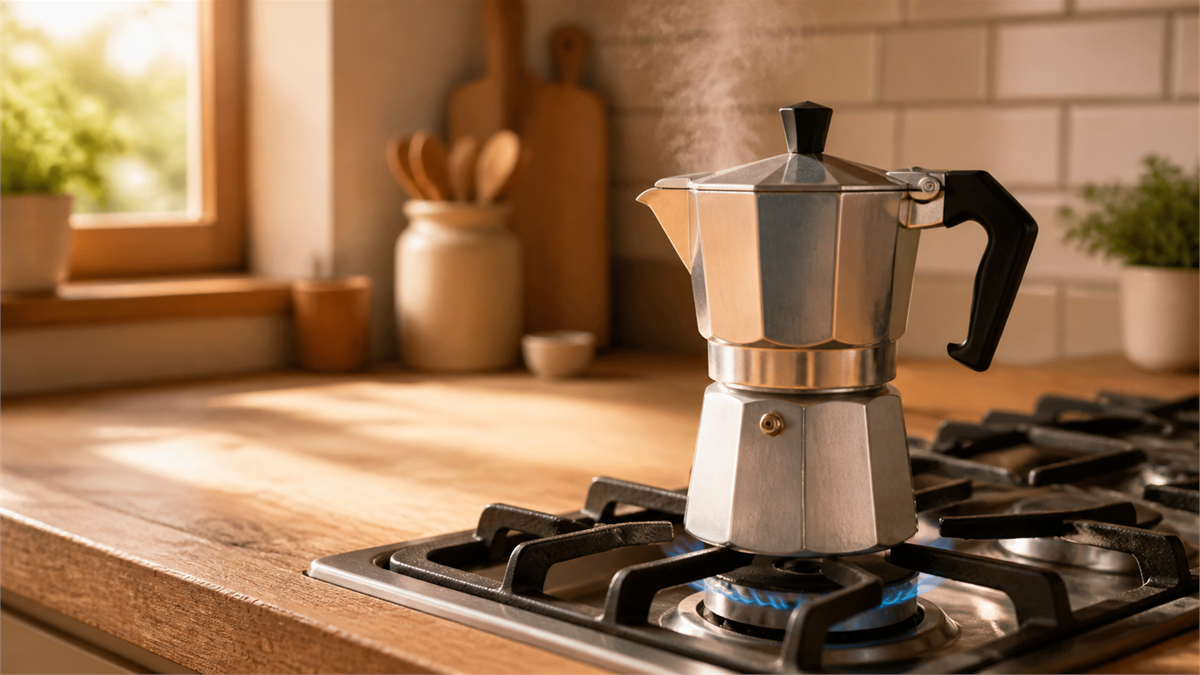
A moka pot looks intimidating the first time you hold one — three screw-apart metal pieces, a little funnel, a rubber ring — but it's genuinely one of the easiest ways to make bold, espresso-style coffee at home. There's no machine, no programming, and no real skill curve. Once you've done it twice, you'll do it half-asleep. This guide walks you through exactly how to use a moka pot, step by step, plus the small handful of things that separate a great cup from a bitter one.
What You'll Need
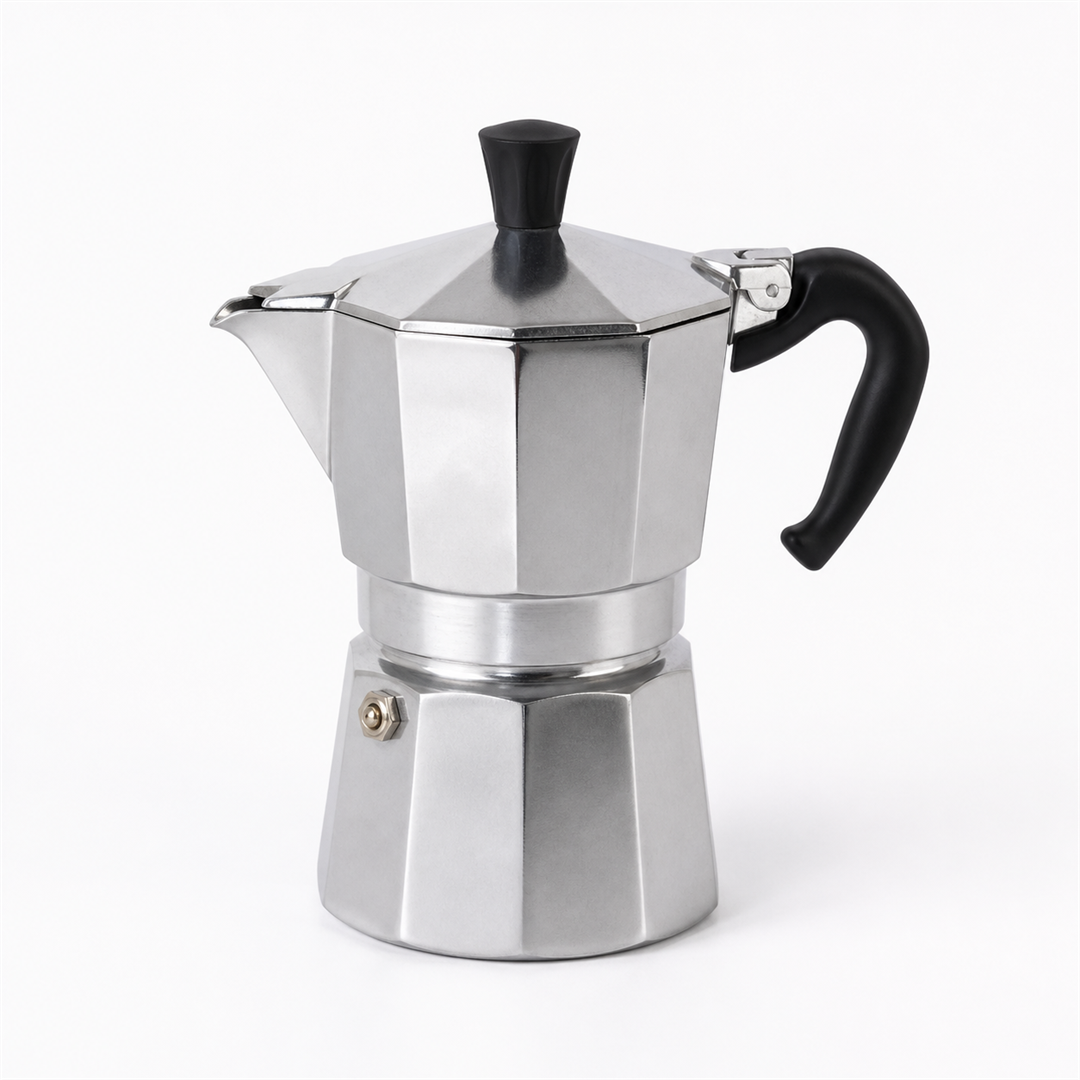
- A moka pot. The classic Bialetti Moka Express is the standard. A 3-cup makes enough for one person; a 6-cup covers two.
- Fresh coffee, medium or dark roast. Espresso blends and Italian roasts are traditional and taste great here.
- A grind that's fine — but not espresso-fine. Think table salt. More on this below.
- Hot water. A kettle helps, but a microwave or even the hot tap works in a pinch.
- A stovetop. Gas, electric coil, or ceramic glass all work. (Induction needs a special stainless moka pot — standard aluminum ones won't heat on induction.)
If you don't own a moka pot yet, here's the one we point every beginner to:
Our Pick for Beginners
Bialetti Moka Express (3-Cup)
The original, basically unchanged since 1933. Around $30, lasts for decades, and makes the kind of strong, chocolatey cup that turns drip drinkers into espresso drinkers.
Check Price on Amazon →How to Use a Moka Pot: Step-by-Step
Here's the full beginner recipe. It works for any size pot — just fill each chamber to its marks.
Step 1: Start with hot water
Pour hot (near-boiling) water into the bottom chamber, filling to just below the little safety valve you'll see on the inside wall. Don't cover the valve. Starting with hot water is the single most important beginner trick. If you start cold, the grounds sit and stew while the whole pot slowly heats — and that's where the harsh, bitter “burnt” taste comes from.
Boil water in a kettle first and pour it into the base. It cuts your brew time roughly in half and protects the coffee from over-cooking. The base will be hot, so use a towel when you assemble.
Step 2: Fill the filter basket
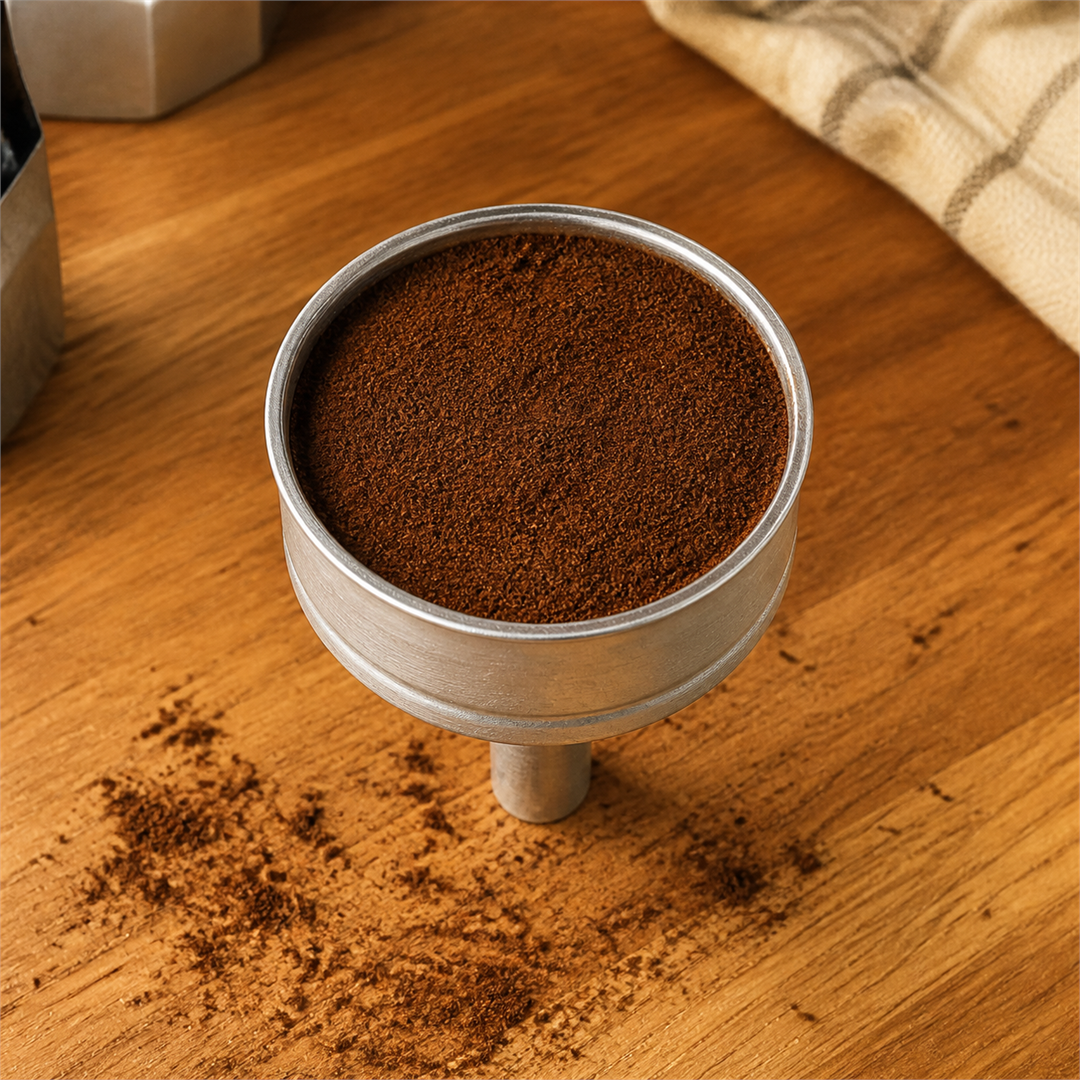
Drop the funnel-shaped filter basket into the base and fill it with ground coffee, level with the rim. Don't pack it down. A moka pot is not an espresso machine — tamping the grounds blocks the steam, builds up too much pressure, and gives you bitter, over-extracted coffee. Just fill, level it off with a finger, and brush any stray grounds off the rim so the seal is clean.
Step 3: Screw the top on tight
Set the basket in place and screw the top chamber onto the base firmly. Remember the base is hot from the boiling water — hold it with a dish towel. A tight seal is what lets pressure build, so snug it down, but you don't need to crank it like a lug nut.
Step 4: Brew on medium-low heat
Put the pot on the stove over medium-low heat. If you're on gas, keep the flame inside the base so it doesn't lick up the sides and scorch the handle. Leave the lid open so you can watch. Low and slow is the rule here — high heat rushes the brew and tastes burnt.
Resist the urge to blast the heat to “speed it up.” High heat is the number-one cause of bitter, scorched moka coffee. Medium-low gives the water time to extract evenly.
Step 5: Listen for the gurgle
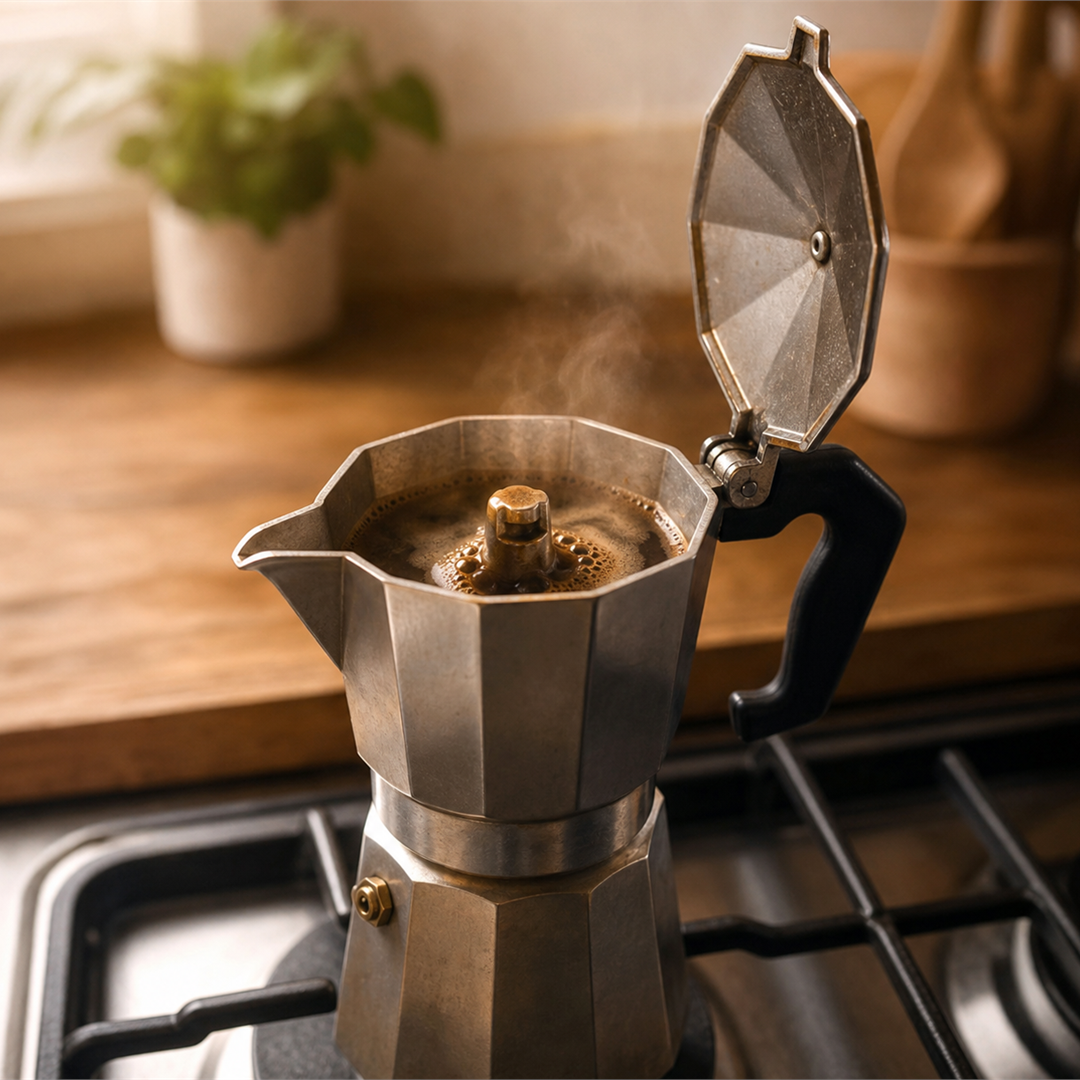
After about 3 to 5 minutes, coffee will start streaming up into the top chamber — a beautiful sight the first time you see it. Let it fill. When the steady stream turns into a hissing, gurgling sputter, the brew is done. That sound means the water's mostly gone and steam is coming through. Take it off the heat immediately.
Step 6: Stop the brew and pour
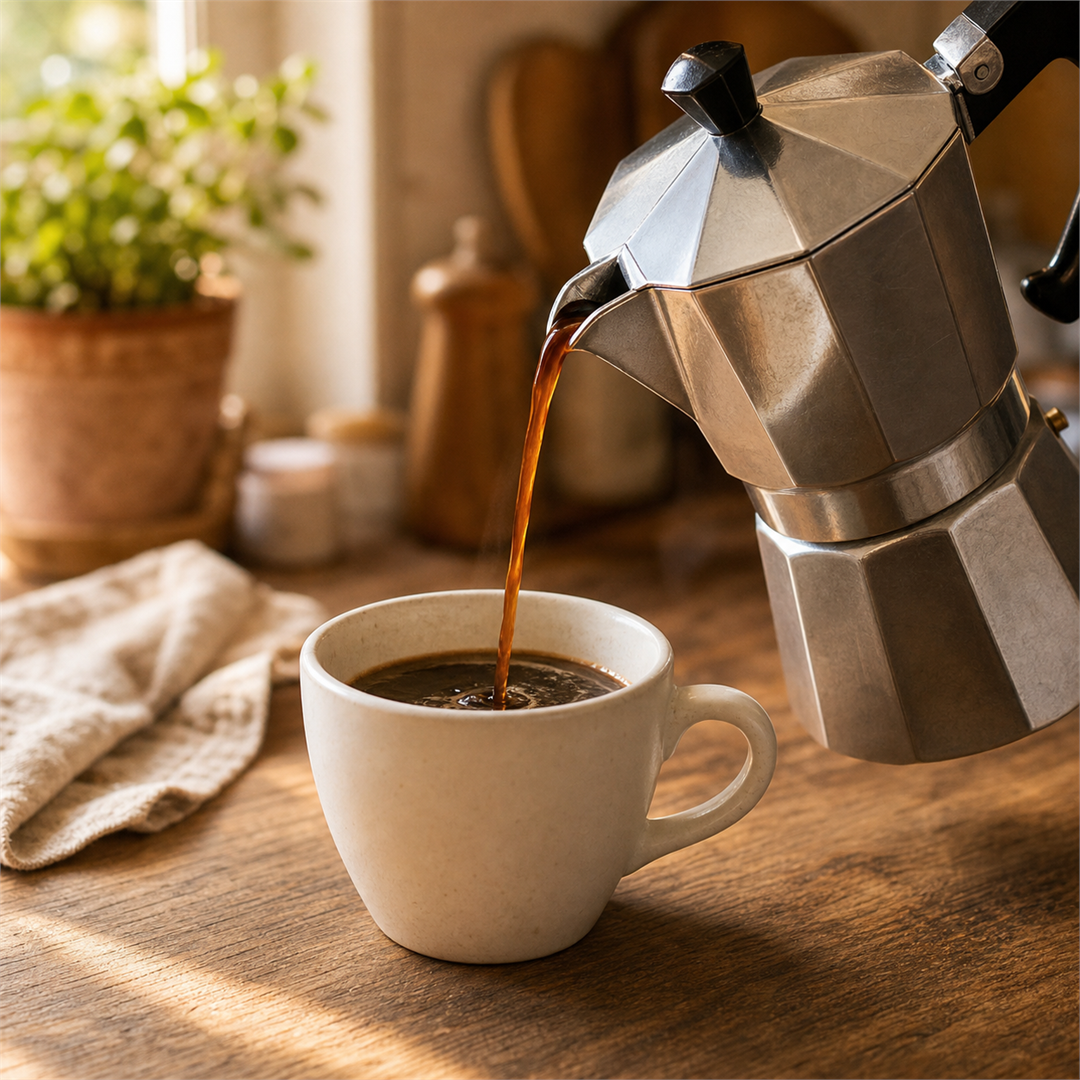
Pull the pot off the burner the moment it gurgles. Some people run a little cold water over the base or wrap it in a cold damp towel to stop extraction instantly — optional, but it can keep that last bit of coffee from tasting scorched. Give it a quick stir in the top chamber (the first and last coffee out aren't the same strength), then pour and drink right away.
The 4 Mistakes Beginners Make
If your first moka cup tastes harsh, it's almost always one of these four — and all four are easy to fix:
- Cold-water start. Always preheat with hot water so the grounds don't stew.
- Heat too high. Medium-low. Always.
- Tamping the grounds. Fill level and loose — never press.
- Leaving it on the stove after it gurgles. The second it sputters, it comes off the heat.
Dialing in your grind helps too — moka pot wants a specific texture that's finer than drip but coarser than espresso. We break that down in our guide to the best grind size for moka pot. And if your coffee still tastes off, our moka pot bitter-and-burnt fix guide walks through every cause.
How Much Coffee Does It Make?
Less than you might think. Moka pot “cups” are small Italian-style servings of about 1.5 ounces — closer to an espresso shot than a mug. A “3-cup” pot makes roughly 4.5 ounces total; a “6-cup” makes about 9. Brew your pot at its full intended size for the best results — half-filling a moka pot throws off the pressure and gives you weak, flat coffee.
What to Do With Your Moka Coffee
Straight up, moka coffee is bold, bittersweet, and chocolatey — great in a tiny cup like an espresso. But it really shines as the base for milk drinks. Pour 1.5 to 2 ounces of moka coffee over 6 ounces of warm, frothed milk and you've got a homemade latte for pennies. Our milk frothing guide for beginners shows three easy ways to do it without any special equipment.
- Fill the base with hot water to just below the safety valve.
- Fill the basket with fine grounds, level and loose — never tamp.
- Brew on medium-low heat with the lid open.
- Pull it off the stove the instant it gurgles.
- Brew at the pot's full size and drink it fresh.
That's all there is to it. A moka pot is one of the best $30 you can spend in a kitchen — a near-indestructible little machine that makes coffee good enough to make guests ask what your secret is. Want the bigger picture on this brewer? Start with our complete moka pot beginner's guide, or read our honest take on why a moka pot is a great start for beginners.
Disclosure: This article contains affiliate links. If you purchase through our links, we may earn a small commission at no extra cost to you. We only recommend products we genuinely believe are right for beginners. Full disclosure here.
☕ About the Author
Greg Rathbone is the founder of HomeCoffeeBeginner.com. He started this site after realizing most coffee advice online assumes you're already an expert. Every guide here is written for total beginners and tested in his own kitchen — no jargon, no snobbery.