
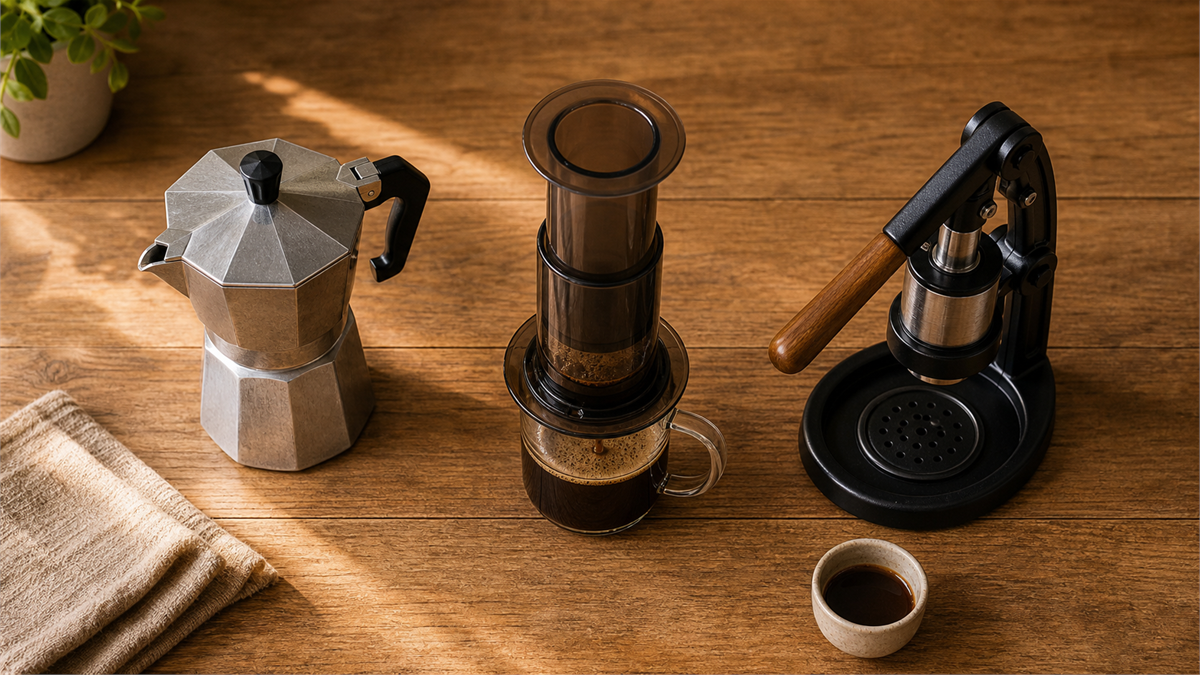
Technically, no. True espresso needs about 9 bars of pressure, and most no-machine methods can't reach that. But you absolutely can make strong, concentrated, espresso-style coffee at home without a traditional machine. A moka pot, an AeroPress, or an inexpensive manual lever brewer will get you most of the way there for a fraction of the cost.
It's one of the most common questions we hear from beginners: you love lattes and strong coffee, but a “real” espresso machine costs hundreds of dollars, and you're not ready for that. So can you make espresso without an espresso machine, or is it a lost cause?
The honest answer is a little of both — and we'd rather be straight with you than sell you a fantasy. There's a real difference between true espresso and espresso-style coffee, and once you understand it, you can pick the right no-machine method with clear eyes and zero disappointment.
This article covers what espresso actually is, why pressure is the whole ballgame, and the three realistic ways to make espresso-style coffee at home without a big machine — plus exactly what you get (and give up) with each one.
What “Espresso” Actually Means
Here's the part that trips everyone up: espresso isn't a type of bean or a roast. It's a brewing method defined by pressure. Real espresso is made by forcing hot water (around 200°F) through finely ground coffee at roughly 9 bars of pressure in about 25 to 30 seconds. That's roughly nine times the pressure of the air around you.
That intense pressure is what creates the two things people associate with a “real” shot:
- Crema — the thin, caramel-colored foam that sits on top of a fresh shot. It's emulsified coffee oils and dissolved gas, and it only forms reliably under high pressure.
- Body — the syrupy, almost oily texture that makes espresso feel richer than any drip coffee.
So when a method can't reach 9 bars, it can't make true espresso by definition. That's not a knock on it — it's just physics. The good news is that “espresso-style” coffee (strong, small, concentrated) is still worlds better than drip for lattes and cappuccinos, and several no-machine methods make it beautifully.
Why Pressure Is the Whole Ballgame
If you take one idea away from this article, make it this: the number of bars a method produces tells you how close to true espresso you'll get. Here's how the common no-machine options stack up.
| Method | Pressure | What you get |
|---|---|---|
| True espresso machine | ~9 bar | Real espresso, full crema, syrupy body |
| Manual lever brewer (e.g., Flair, Picopresso) | ~9 bar (you supply the force) | True espresso, real crema |
| Moka pot | ~1–1.5 bar | Strong, bold, espresso-style — no true crema |
| AeroPress | Under 1 bar | Concentrated, espresso-leaning — no true crema |
Notice the split: the moka pot and AeroPress are low-pressure and make espresso-style coffee, while a manual lever brewer is the one no-machine method that can actually hit espresso pressure — because you become the pump. Let's look at all three.
Method 1: The Moka Pot (Closest Everyday Option)
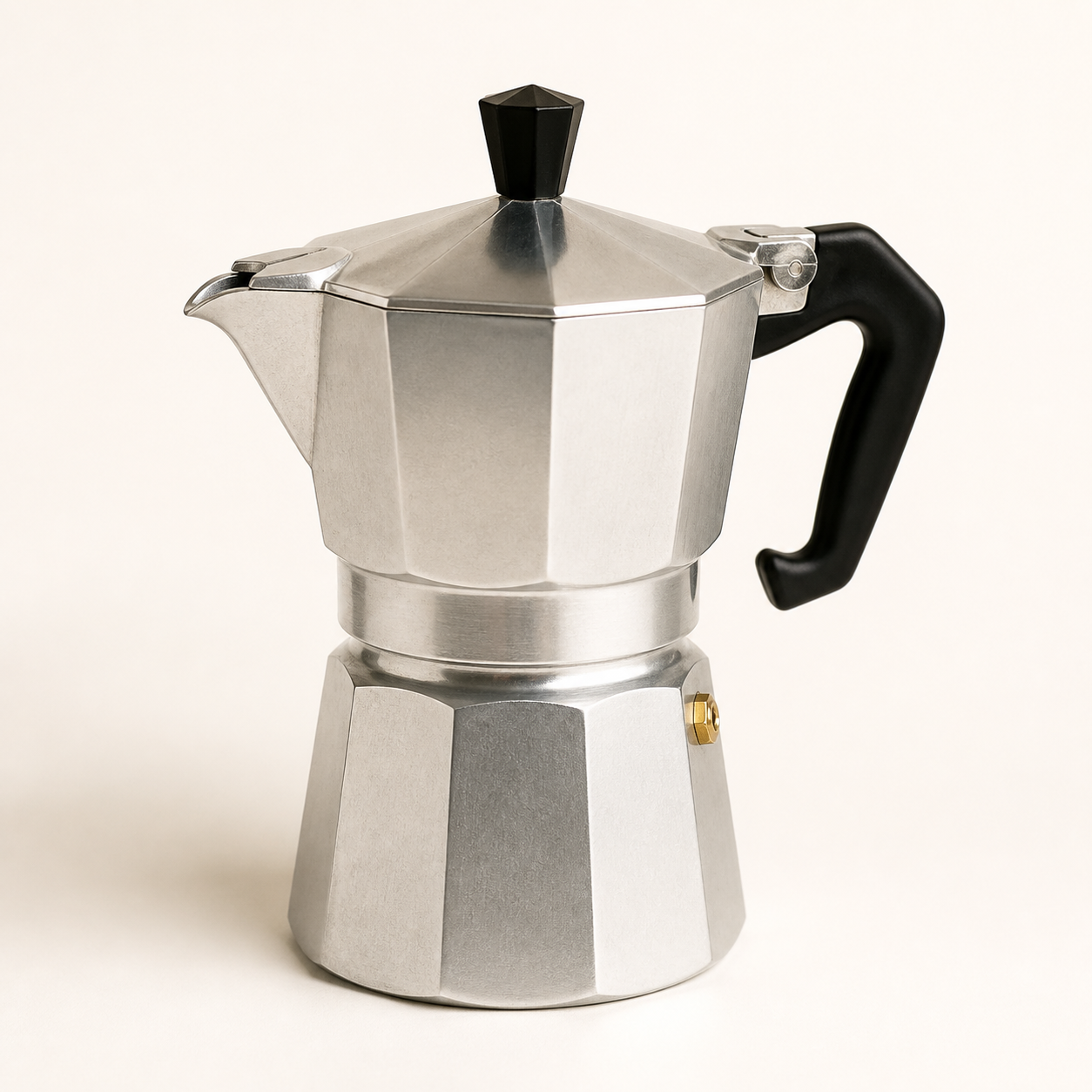
The moka pot — that classic octagonal stovetop pot — is the closest most beginners will get to espresso for around $30. Water in the bottom chamber heats up, steam pressure pushes it up through a basket of fine grounds, and concentrated coffee collects on top. It produces about 1 to 1.5 bars of pressure: nowhere near 9, but enough to make a small, intense, bold cup.
What you get is strong and rich, leaning chocolatey and a touch bitter, with a light surface foam that looks like crema but fizzles away in seconds. It won't fool an espresso snob drinking it straight — but in a latte or cappuccino, most people genuinely can't tell the difference. The original Bialetti Moka Express is the one we point beginners to: nearly a century of unchanged design, no electricity, and it lasts for decades.
Our Pick for Beginners
Bialetti Moka Express (3-Cup)
The most affordable path to strong, espresso-style coffee at home. Around $30, no electricity, and a design that's barely changed since 1933 because it just works.
Check Price on Amazon →Want the full breakdown? We answer the exact question in Is Moka Pot Coffee Really Espresso?, and our complete moka pot beginner's guide walks through brewing one start to finish.
Method 2: The AeroPress (With Pressure and Technique)
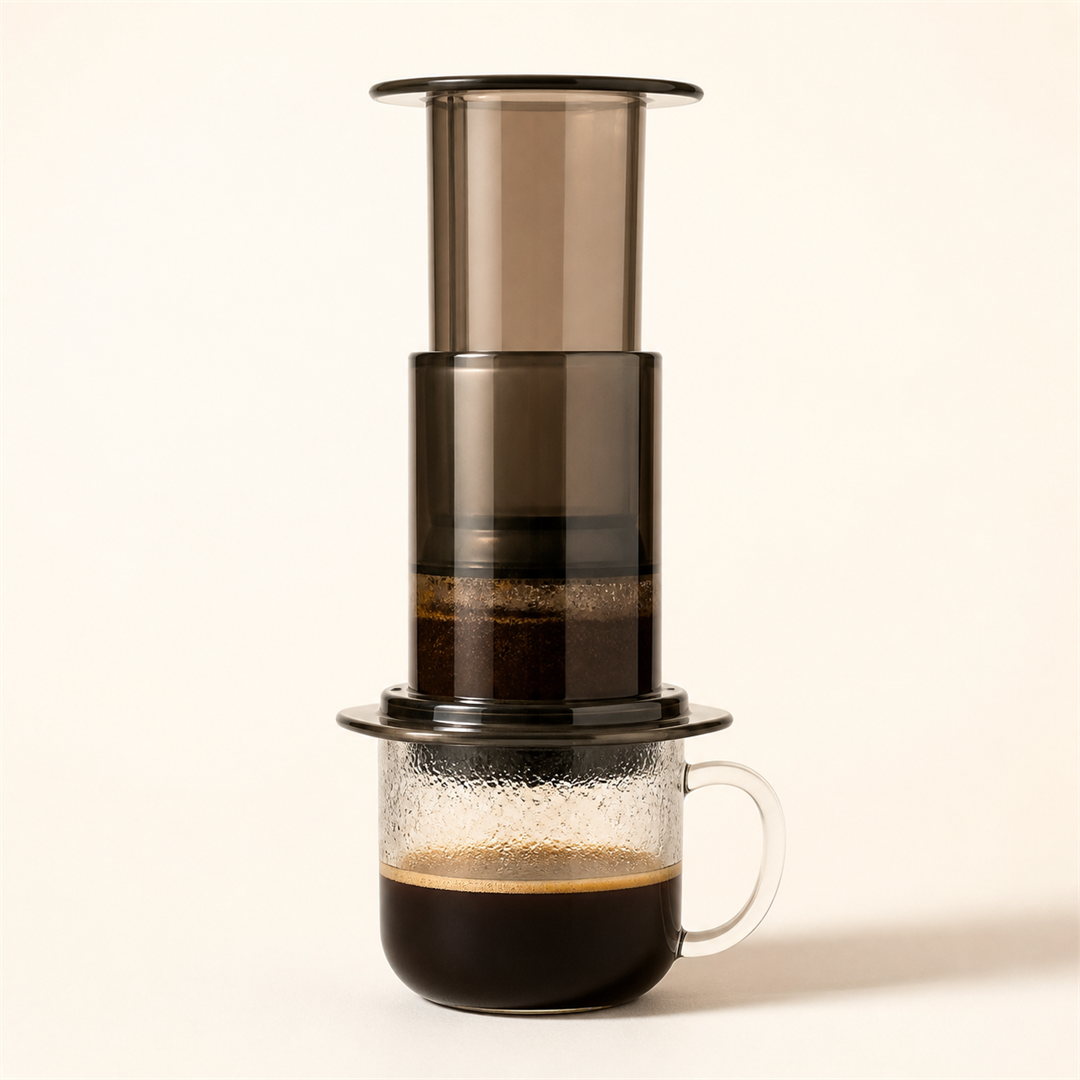
The AeroPress is a simple plunger-style brewer that costs around $40. On its own it produces less than 1 bar of pressure — even less than a moka pot — so it also can't make true espresso. But with the right technique (a fine grind, a concentrated coffee-to-water ratio, and a firm press) it makes a small, syrupy, espresso-leaning shot that's excellent as the base for milk drinks.
The AeroPress trades a little intensity for a lot of flexibility: it's nearly indestructible, dead simple to clean, and forgiving for beginners still dialing in their grind. It's our top pick if you want an espresso-style shot and a great everyday brewer in one cheap, tiny package.
Our Pick for Beginners
AeroPress Original
Around $40, nearly indestructible, and endlessly forgiving. The easiest way to make a concentrated, espresso-style shot for cortados, lattes, and Americanos.
Check Price on Amazon →The technique matters a lot here, so we wrote a dedicated walkthrough: How to Make Espresso-Style Coffee with an AeroPress.
For both the moka pot and the AeroPress, a fine, even grind does more for your cup than any gadget. If your espresso-style shot tastes weak and watery, grind finer before you change anything else.
Method 3: Manual Lever Brewers (The Real-Espresso Loophole)
Here's the twist. If you want actual espresso — real crema, syrupy body, the whole thing — without a big electric machine, there's a category that pulls it off: manual lever brewers. Devices like the Flair and the Wacaco Picopresso use a hand-pressed lever or piston, so you supply the 9-plus bars of pressure with your own arm. No electricity, no giant countertop box.
These technically are espresso machines — just manual, portable, and often much cheaper than a countertop unit. A Flair or Picopresso typically runs around $100 to $150, produces genuine espresso with real crema, and packs down small. The trade-offs: there's a real learning curve, they make one shot at a time, and they take more effort and cleanup than pressing a button.
Not every “portable espresso maker” makes true espresso. Some cheaper handheld units (like pressurized-basket designs) fake the crema and produce espresso-style coffee at best. If real crema matters to you, look specifically for a lever or piston brewer that reaches ~9 bars — and check recent reviews before buying.
Which No-Machine Method Is Right for You?
There's no single winner — it depends on what you care about most. Here's the quick version:
| You want… | Best pick | Why |
|---|---|---|
| Cheapest strong coffee, milk drinks | Moka pot | ~$30, bold and reliable, no learning curve |
| One cheap tool that does everything | AeroPress | ~$40, versatile, forgiving, easy cleanup |
| Actual espresso with crema, no big machine | Manual lever brewer | Real 9-bar espresso; more effort and cost |
For most beginners we'd start with a moka pot or an AeroPress — they're cheap, they're simple, and they cover 90% of what people actually want (strong coffee and great lattes). Save the manual lever brewer for when you've decided you specifically crave true espresso and crema, and you're ready for a little more effort.
- True espresso needs ~9 bars of pressure, so technically you can't make it without an espresso machine.
- You can make excellent espresso-style coffee without one — strong, concentrated, and great in milk drinks.
- Moka pot (~1.5 bar) and AeroPress (under 1 bar) are the cheap, beginner-friendly espresso-style methods.
- Manual lever brewers (Flair, Picopresso) can hit 9 bars and make real espresso with crema — for more money and effort.
- In lattes and cappuccinos, the difference between espresso-style and true espresso nearly disappears.
So — can you make espresso without an espresso machine? For strong, delicious, espresso-style coffee at home, the answer is a confident yes. For technically true espresso with crema, you'll want a manual lever brewer or, eventually, a real machine. Either way, you don't have to spend hundreds of dollars to start drinking great coffee tomorrow morning.
Ready to go deeper? Start with our beginner's complete guide to making espresso at home. When you're weighing a real machine down the road, our roundup of the best beginner espresso machines under $500 and our breakdown of manual vs. semi-automatic vs. automatic machines will help you choose.
Disclosure: This article contains affiliate links. If you purchase through our links, we may earn a small commission at no extra cost to you. We only recommend products we genuinely believe are right for beginners. Full disclosure here.
☕ About the Author
Greg Rathbone is the founder of HomeCoffeeBeginner.com. He started this site after realizing most coffee advice online assumes you're already an expert. Every guide here is written for total beginners and tested in his own kitchen — no jargon, no snobbery.