
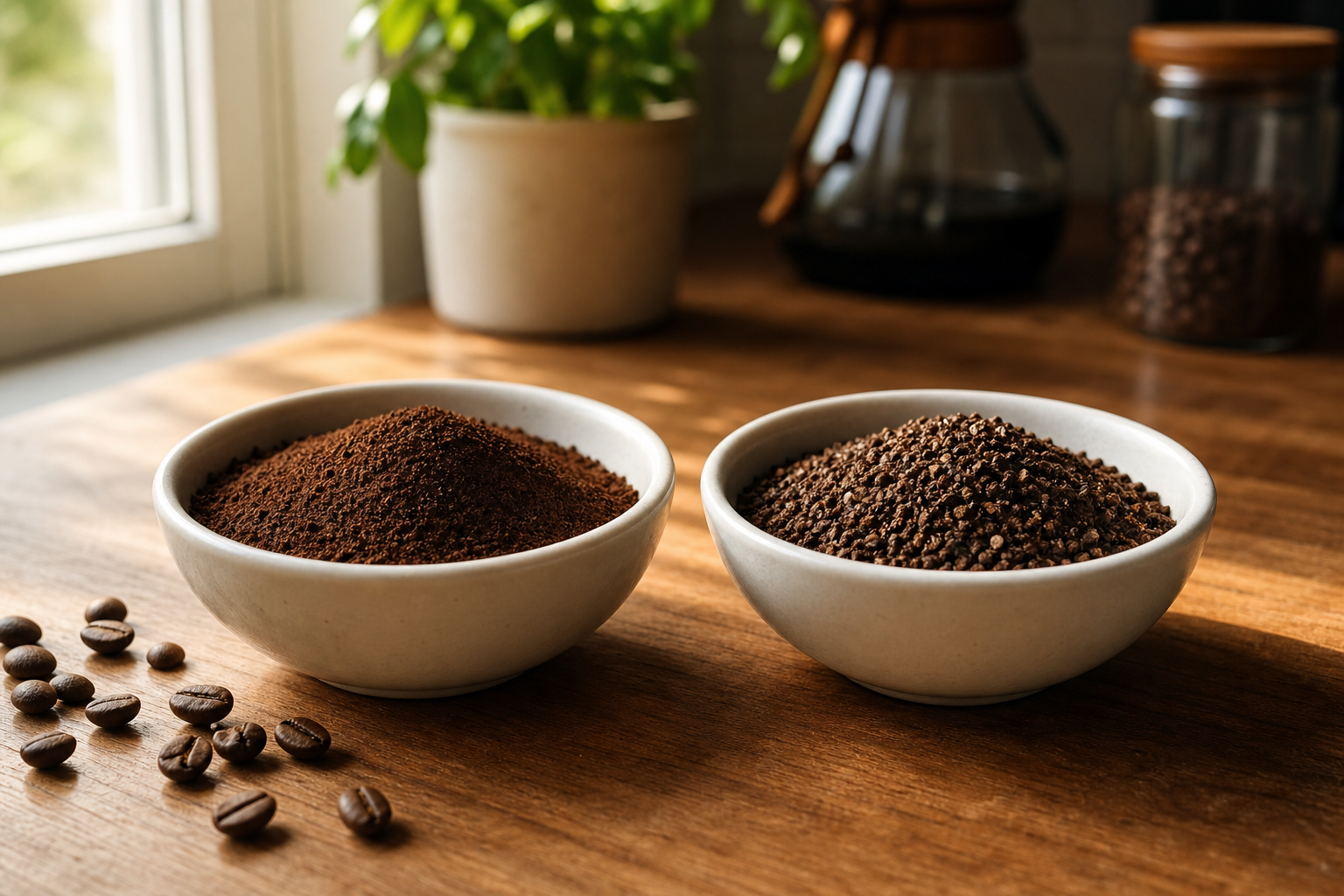
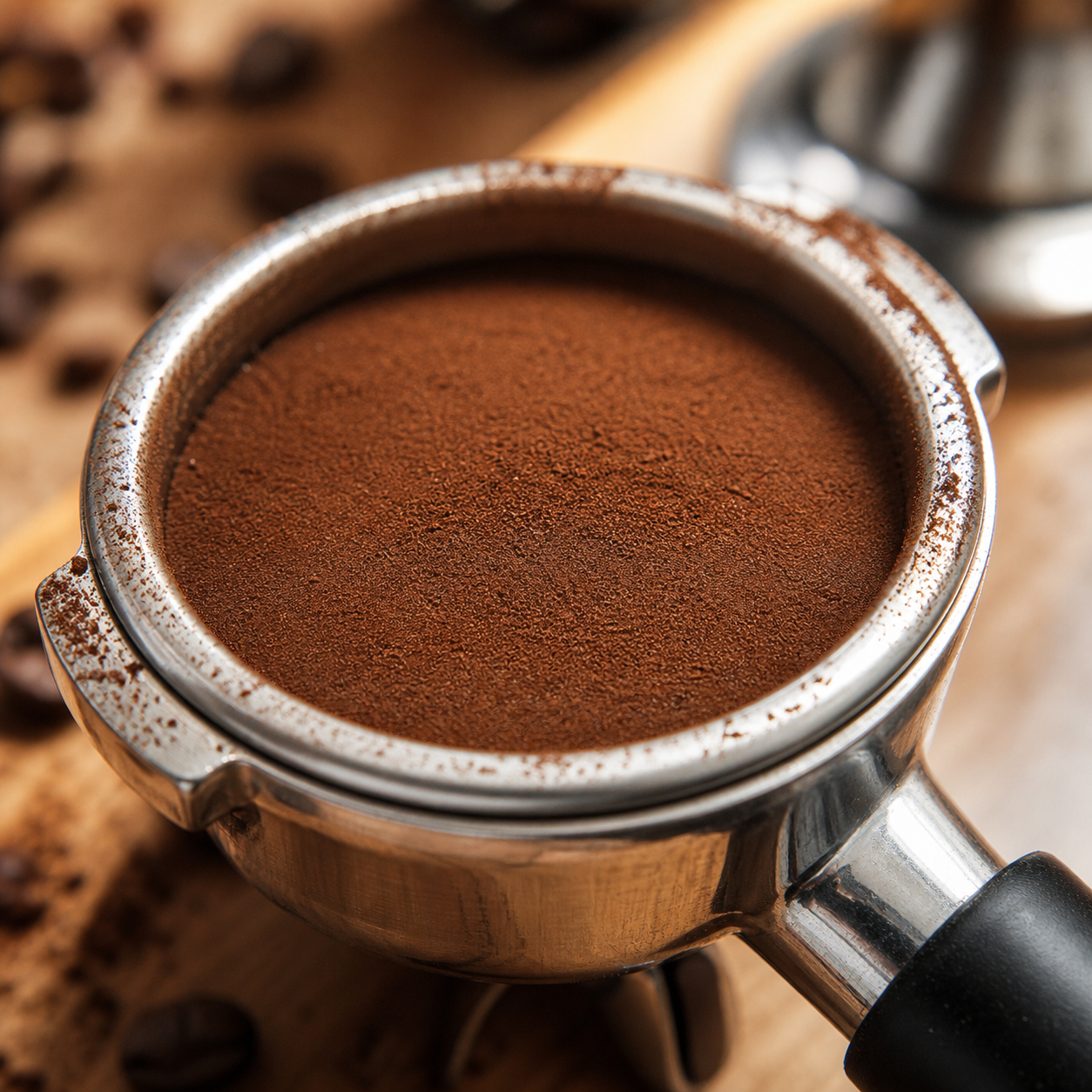
The best espresso grind size is fine — about the texture of table salt, maybe a touch finer. It's far finer than drip coffee but not powdery like flour. Espresso pushes hot water through the coffee in only 25–30 seconds, so the grounds need lots of surface area to give up their flavor that fast.
If you've just bought your first espresso machine, here's the thing nobody warns you about: the machine is not the hard part. The grind is.
You can have a perfectly good machine, perfectly good beans, and still pull a shot that tastes like sour water or burnt tar — purely because your espresso grind size is off by a hair. Espresso is the fussiest brewing method there is, and grind size is the single fussiest variable in it.
The good news: once you understand what “fine” actually means and how to adjust it, this stops being mysterious. It becomes a two-minute routine you do once with a new bag of beans and then forget about. Let's walk through it.
What Espresso Grind Size Actually Looks Like
Forget numbers on a dial for a second. Here's the physical description you can check with your own fingers:
- Texture: Like table salt or fine granulated sugar. Slightly gritty, but only just.
- The squeeze test: Pinch a small amount between two fingers. Espresso grind will clump together a little and hold a shape. Drip grind falls apart immediately.
- Not powder: If it feels like flour or leaves a dusty film on your fingers, you've gone too far. That's Turkish coffee territory, and it will choke your machine.
If you want the technical version, espresso grounds land somewhere around 200–400 microns, with most people settling near the middle of that window. But please don't buy a micron gauge. Nobody dials in espresso with a ruler. You dial it in with a timer, which we'll get to below.
For context, here's where espresso sits compared to everything else you might brew. Our full coffee grind sizes guide covers the whole spectrum, but this is the short version:
| Brewing Method | Grind Size | Looks Like |
|---|---|---|
| Cold brew | Extra coarse | Rough breadcrumbs |
| French press | Coarse | Kosher salt |
| Drip coffee maker | Medium | Beach sand |
| Moka pot | Medium-fine | Fine sand |
| Espresso | Fine | Table salt |
| Turkish | Extra fine | Flour |
Why Espresso Grind Has to Be This Fine
It comes down to time. A French press soaks for four minutes. Cold brew soaks for twelve hours. Espresso? Water is in contact with the coffee for about 25 to 30 seconds. That's it.
In half a minute, water has to pull out enough flavor, oil, and body to make a drink that's five times more concentrated than drip coffee. The only way to do that is to give the water enormous surface area to work with — and surface area is exactly what a fine grind creates. Grinding a bean into thousands of tiny particles exposes far more coffee to the water than chopping it into a few dozen chunks.
There's a second job the fine grind does, and it's the one beginners never expect: it creates resistance.
Your espresso machine pushes water at roughly 9 bars of pressure — about nine times atmospheric pressure. If the grounds were coarse, that water would blast straight through in four seconds and you'd get a cup of warm brown nothing. The tightly-packed fine grounds fight back against the pressure, slowing the water down enough for a real extraction to happen. That resistance is also what builds the golden crema on top of a good shot.
If you want the deeper explanation of what's actually happening in there, our guide to coffee extraction breaks it down without the chemistry lecture.
How to Dial In Your Espresso Grind (The 3-Shot Method)
“Dialing in” sounds like something a professional does. It isn't. It's just adjusting your grinder until the shot takes the right amount of time. Here's the beginner version.
Set your baseline. Use 18 grams of coffee in the basket, aiming for about 36 grams of liquid espresso out. That's the classic 1:2 ratio. Start your timer the moment you hit the brew button.
Then read the clock:
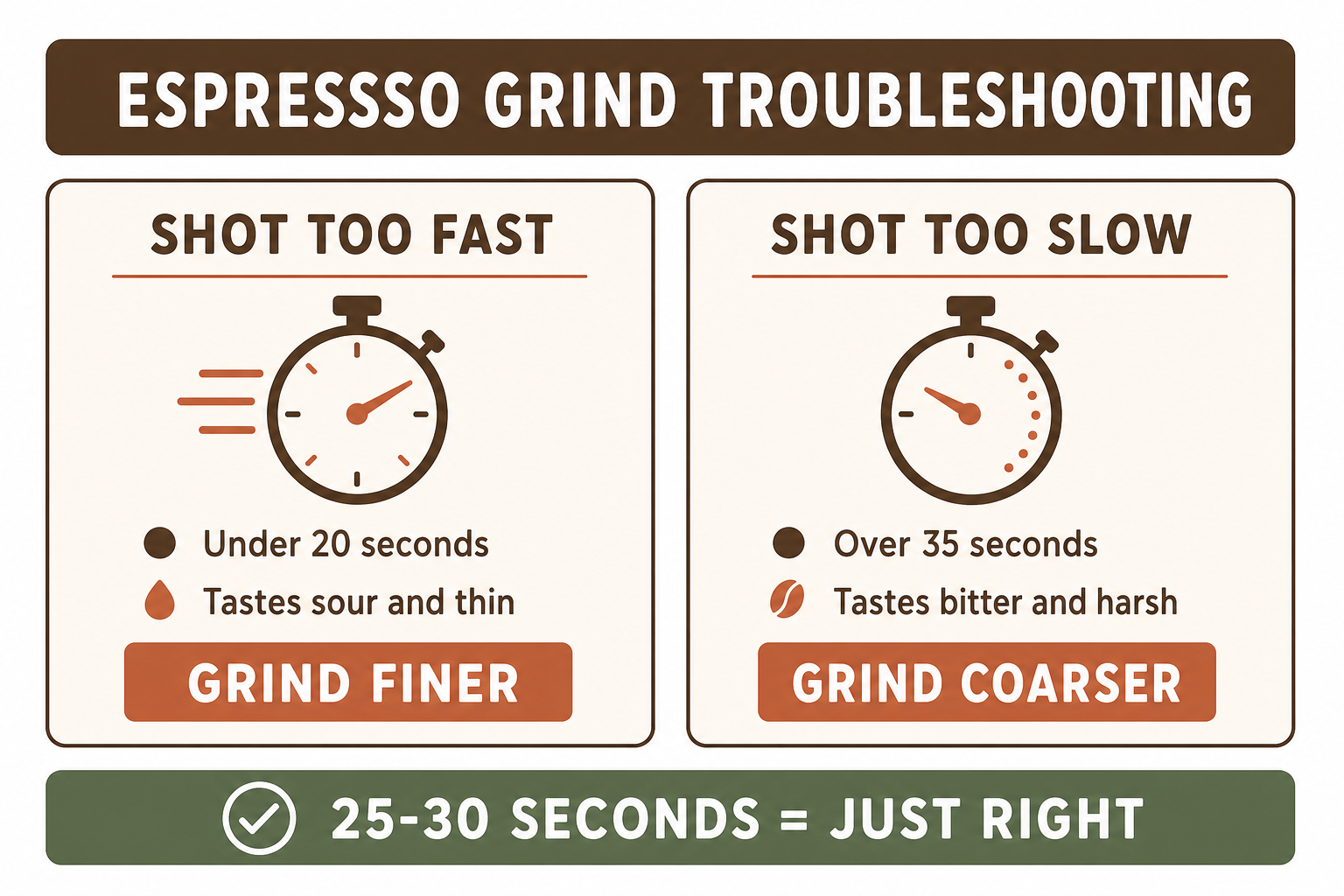
- Shot finishes in under 20 seconds? Your grind is too coarse. Water is rushing through. The coffee will taste sour, thin, and weak. Go finer.
- Shot takes longer than 35 seconds (or barely drips at all)? Your grind is too fine. Water is fighting through a wall. The coffee will taste bitter, harsh, and dry. Go coarser.
- Shot lands in the 25–30 second window? You're there. Taste it and make small adjustments from here.
Change one thing at a time. If you adjust your grind and your dose and your water temperature in the same shot, you'll have no idea which change helped. Move the grinder one click, pull a shot, taste. Repeat. Three shots is usually all it takes.
Expect to re-dial with every new bag. Fresh beans, older beans, light roast, dark roast — they all behave differently. This isn't you doing something wrong. Every person who owns an espresso machine does this. It takes two minutes and then you're set for the week.
Why Your Grinder Matters More Than Your Machine
Here's the uncomfortable truth for anyone who just spent real money on an espresso machine: a great machine with a bad grinder makes bad espresso. A modest machine with a good grinder makes genuinely good espresso.
The reason is consistency. Espresso needs every particle to be roughly the same size. When particle sizes are all over the place, the water carves a channel through the fine dust, over-extracting some of the coffee while completely bypassing the chunks. The result tastes bitter and sour at the same time — which is a genuinely confusing thing to taste, and it's the number one sign of a grinder that isn't up to the job.
Two things will not grind fine or consistently enough for espresso: a blade grinder (the spinning-blade kind that looks like a mini blender), and most entry-level burr grinders built for drip coffee. Even good $80–$100 drip grinders usually can't reach espresso-fine settings. This is the one place where the “buy cheap first” advice genuinely doesn't work.
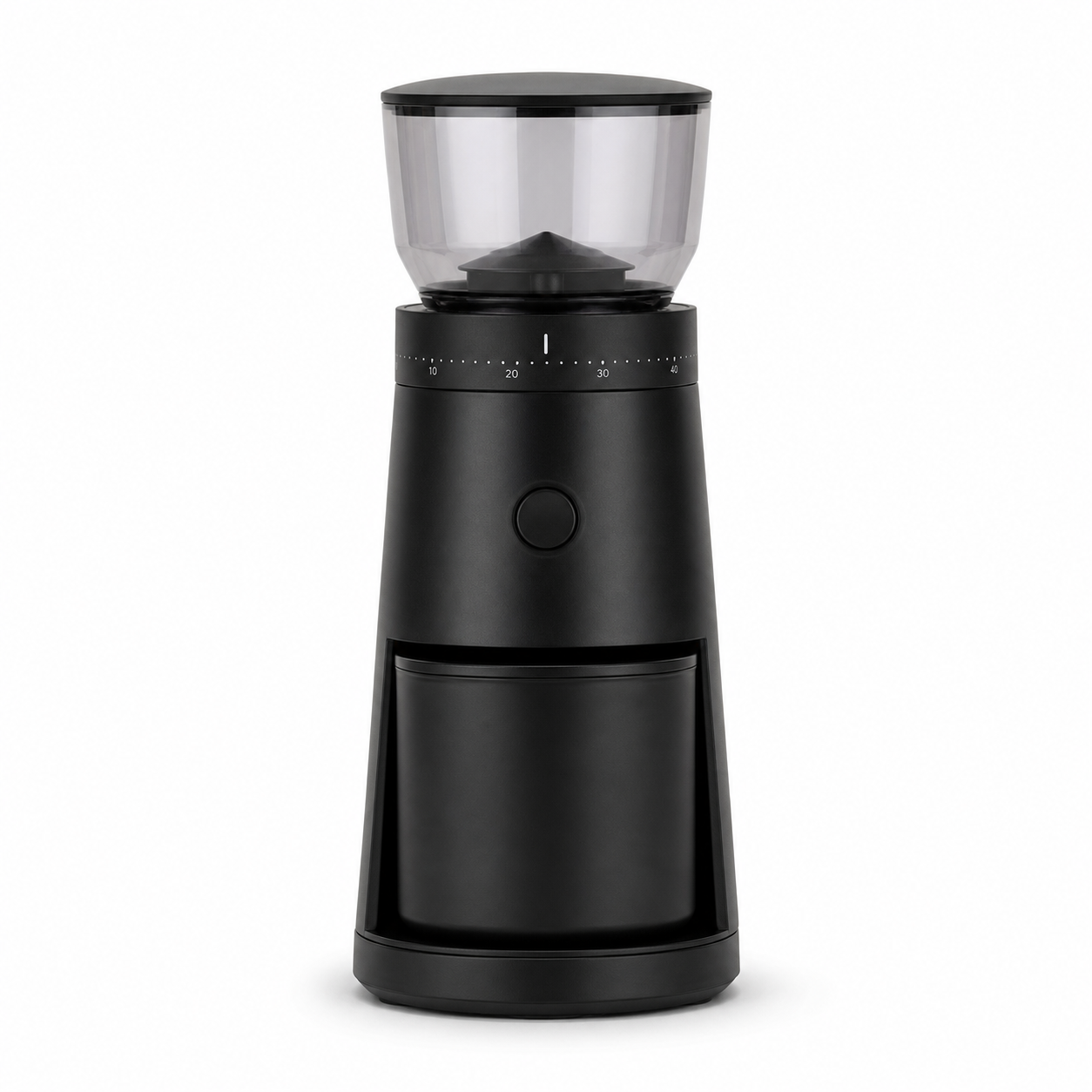
For espresso specifically, you want a burr grinder with fine, precise adjustment at the low end. The Baratza Encore ESP is the one we point beginners toward — it's the version of Baratza's popular Encore that was re-geared specifically for espresso, and it still handles pour-over and French press if you want to switch things up.
Our Pick for Beginners
Baratza Encore ESP
Around $199. Built with the fine low-end adjustment espresso actually needs, and it still grinds coarse enough for French press. Baratza's parts and repair support are the best in the business, so this is a grinder you keep.
Still deciding whether a dedicated grinder is worth it at all? We answer that honestly in Do You Need a Coffee Grinder? — and if espresso isn't your only brewing method, our best coffee grinders under $100 guide covers the all-rounders.
Common Espresso Grind Problems (And the Fix)
| What You're Tasting / Seeing | Likely Cause | The Fix |
|---|---|---|
| Sour, thin, watery shot | Grind too coarse — under-extracted | Grind finer, one click |
| Bitter, dry, harsh shot | Grind too fine — over-extracted | Grind coarser, one click |
| Shot gushes out in 10 seconds | Way too coarse | Go several clicks finer |
| Machine chokes, almost no flow | Way too fine (or over-tamped) | Go several clicks coarser |
| Bitter AND sour at once | Inconsistent grind (channeling) | Grinder problem — see above |
- The best espresso grind size is fine — table salt texture, roughly 200–400 microns.
- It has to be fine because espresso only gets 25–30 seconds of contact time, and because the fine grind creates the resistance that 9 bars of pressure needs to push against.
- Dial in by shot time: under 20 seconds means grind finer; over 35 seconds means grind coarser; 25–30 seconds is the target.
- Change one variable at a time, and expect to re-dial with each new bag of beans.
- Your grinder matters more than your machine. Blade grinders and most drip-focused burr grinders can't do espresso.
The Bottom Line on Espresso Grind Size
Espresso grind size is fine — and it's fine for a reason. Thirty seconds is not much time for water to do a big job, so you hand it maximum surface area and enough resistance to work against.
Start at table-salt texture, pull a shot, watch the clock, and adjust one click at a time. That's the entire skill. It feels finicky for about a week and then it becomes second nature, and one morning you'll pull a shot without thinking about it and it'll just be good.
Ready for the next piece? Our complete beginner's guide to making espresso at home pulls all the variables together — gear, grind, dose, and shot technique — in one place.
Disclosure: This article contains affiliate links. If you purchase through our links, we may earn a small commission at no extra cost to you. We only recommend products we genuinely believe are right for beginners. Full disclosure here.