
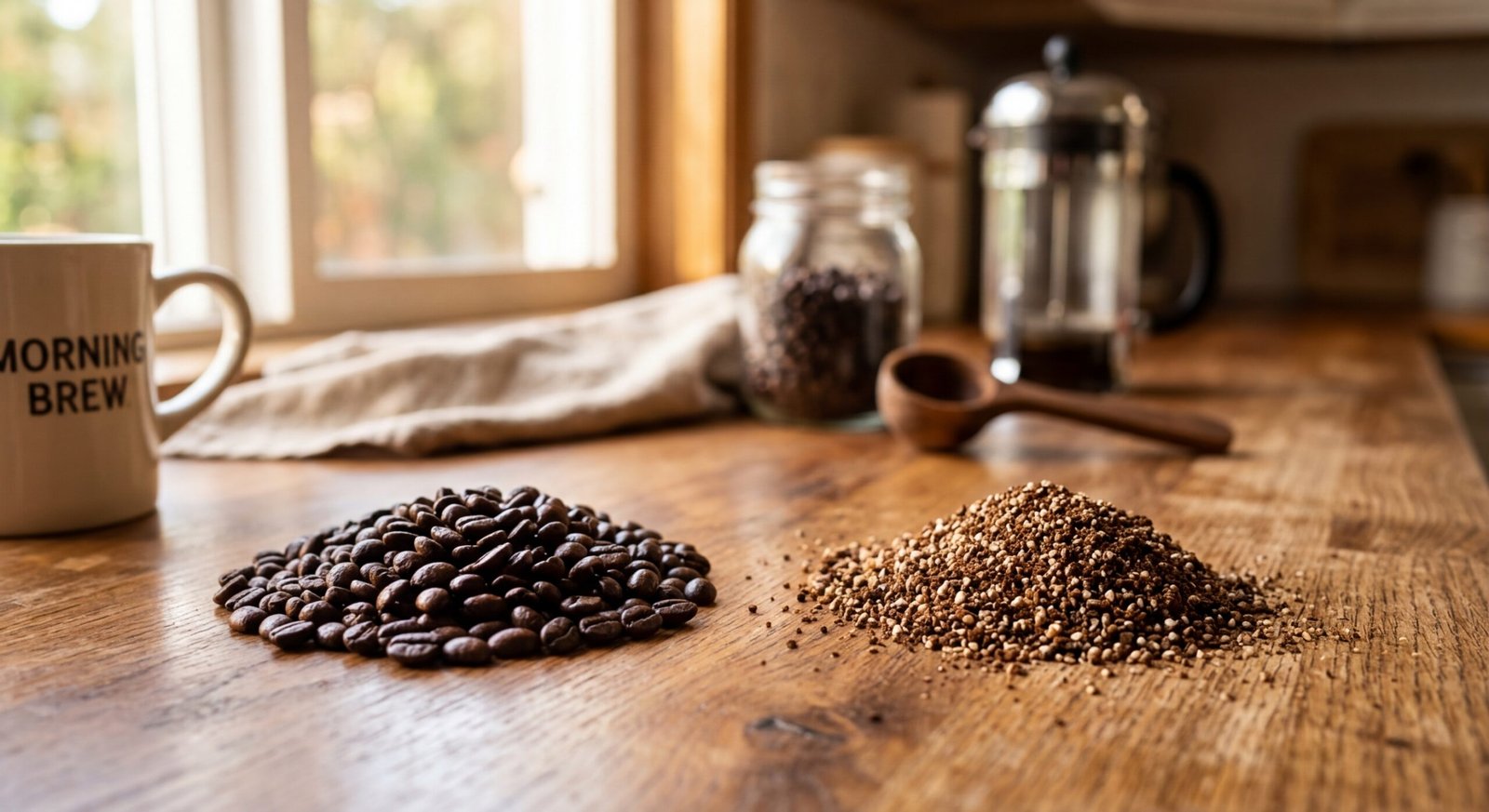
You're standing in the coffee aisle staring at two versions of the same bag — one says “whole bean,” the other says “ground.” They're the same brand, same roast, same price. So what's the difference, and which one should you actually grab?
Here's the short version: if you want the simplest possible start, buy ground coffee. If you want noticeably better flavor and you're willing to add one extra step, whole bean is worth it. Neither choice is wrong — it depends on where you are in your coffee journey.
Below, we'll break down exactly how they compare on the things that actually matter to a beginner — taste, convenience, cost, and shelf life — so you can pick the right one with confidence.
Best for absolute beginners: Pre-ground coffee — it's simple, affordable, and requires zero extra equipment. Best for better flavor: Whole bean coffee with an inexpensive grinder — freshly ground beans taste noticeably better and stay fresh much longer.
Whole Bean vs Ground Coffee — Quick Comparison
| Category | Whole Bean | Pre-Ground |
|---|---|---|
| Flavor & freshness | Richer, more complex flavor | Good but fades faster |
| Shelf life after opening | 2–4 weeks | 1–2 weeks |
| Convenience | Requires grinding before brewing | Scoop and brew immediately |
| Equipment needed | Coffee maker + grinder | Coffee maker only |
| Cost per bag | About the same | About the same |
| Upfront investment | $20–$50 for a grinder | $0 extra |
| Brewing flexibility | Adjust grind for any method | Locked to one grind size |
| Beginner-friendliness | Small learning curve | As easy as it gets |
Ground Coffee — What You Need to Know
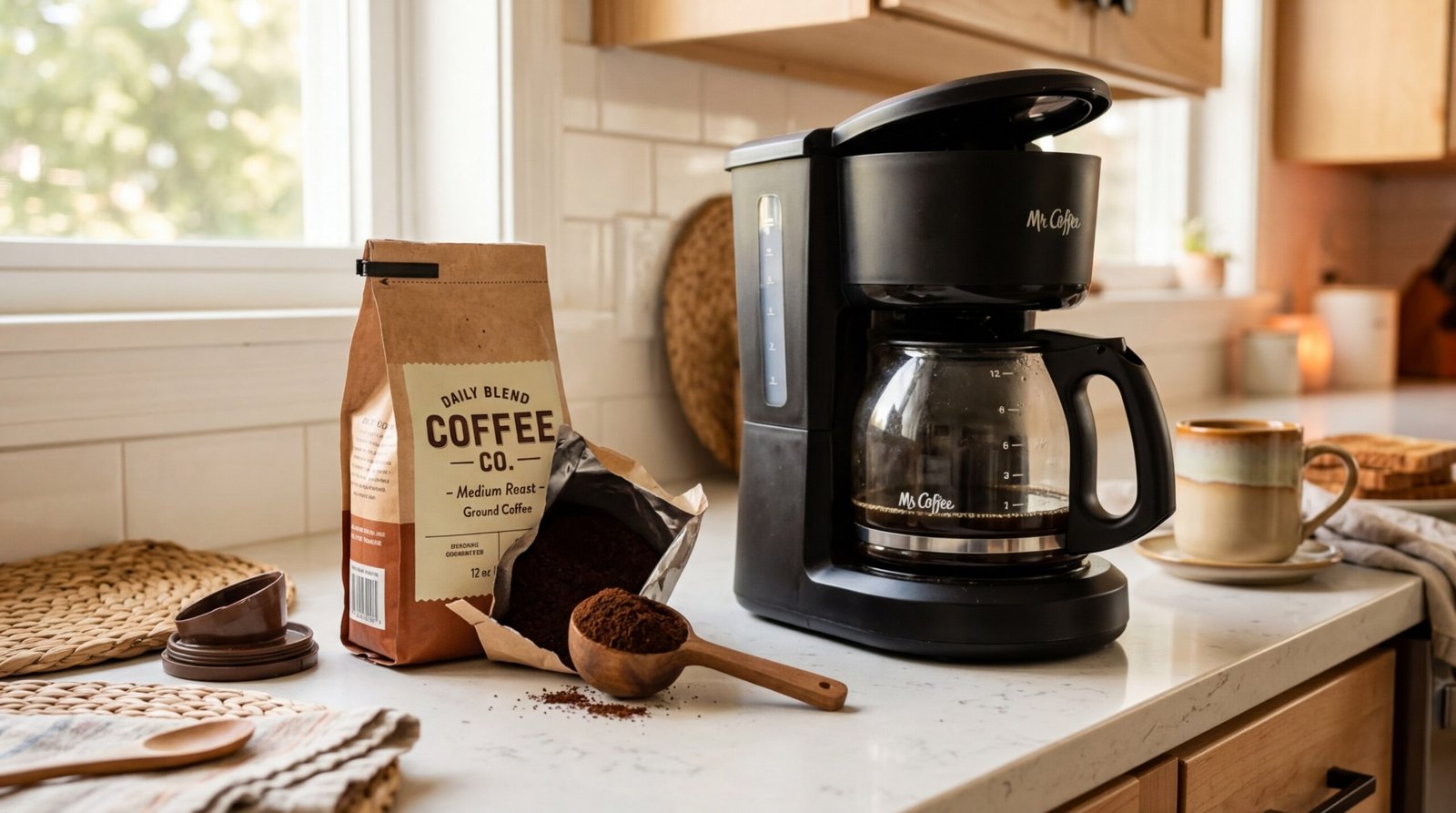
Pre-ground coffee is exactly what it sounds like — beans that have already been ground at a factory and packaged for you. You open the bag, scoop it into your coffee maker, add water, and brew. That's it.
For a true beginner, this simplicity is the biggest selling point. There's no extra equipment to buy, no settings to figure out, and no learning curve. If you're using a basic drip coffee maker, pre-ground coffee works perfectly.
The downside is freshness. Coffee starts losing its flavor the moment it's ground because grinding exposes all those tiny particles to air. Research shows that ground coffee can lose 20–30% of its aroma compounds within just 15 minutes of grinding. By the time a bag of pre-ground coffee reaches your kitchen, it's already weeks (sometimes months) past its peak.
That doesn't mean it tastes bad — it just means you're not getting the full flavor the beans have to offer. If you drink your coffee with cream and sugar, you may not even notice the difference. But if you've ever wondered why café coffee seems to taste “more” than what you make at home, freshness is a big part of the answer.
Whole Bean Coffee — What You Need to Know
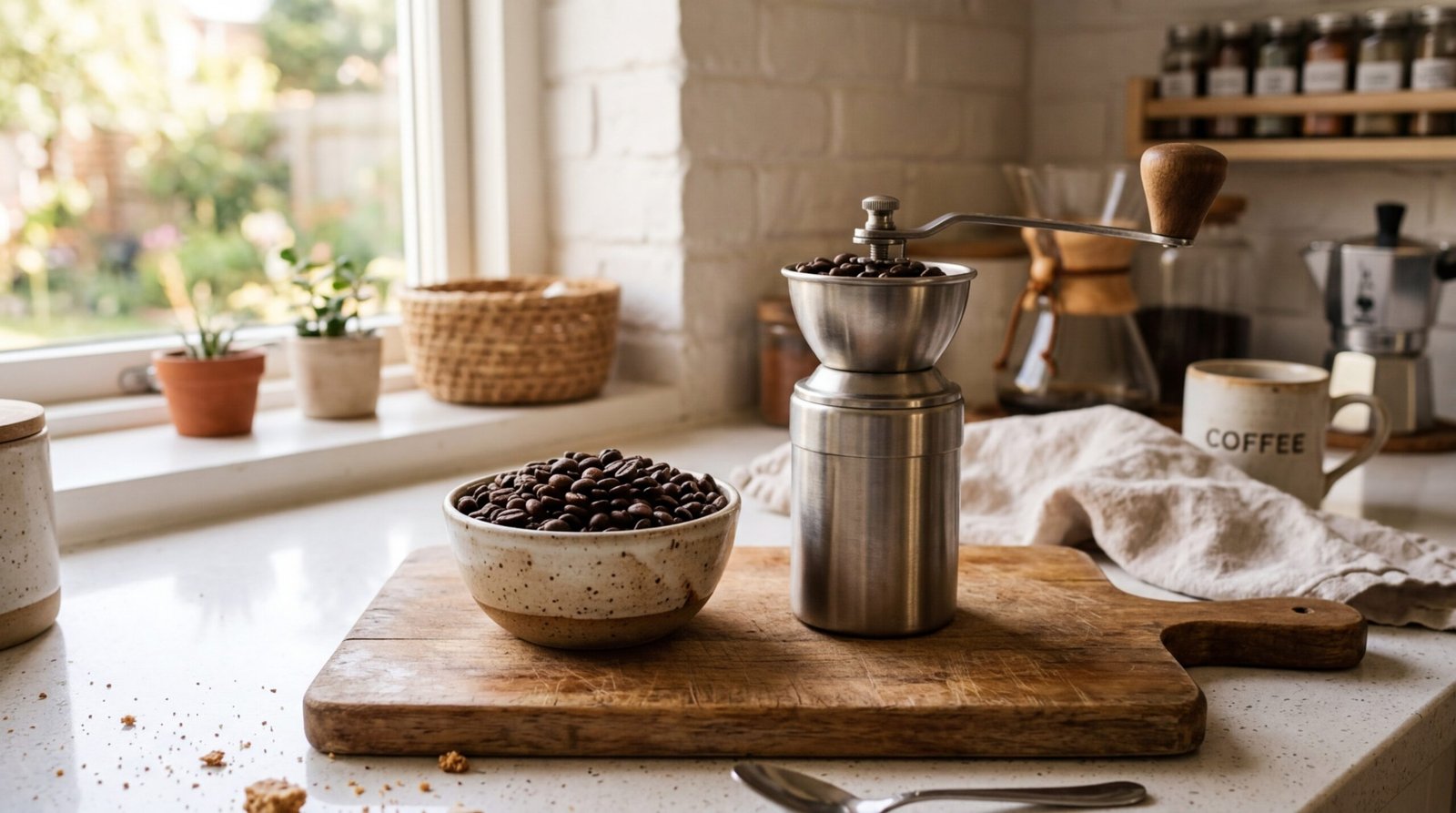
Whole bean coffee is just that — the beans haven't been ground yet. You buy them intact and grind them yourself right before brewing.
The payoff is flavor. When beans stay whole, they're protected from the air, light, and moisture that break down their natural oils and aroma compounds. Whole beans stay fresh for two to four weeks after opening, compared to just one to two weeks for ground coffee. And because you grind right before you brew, you get the freshest possible cup every single time.
The trade-off is that you need a grinder — and you need to use it every time you make coffee. That adds about 30–60 seconds to your morning routine. You also need to learn the basics of grind sizes so you're using the right setting for your coffee maker.
It's not complicated — but it's one more thing to think about when you're just getting started.
Head-to-Head — How They Compare on What Matters
| Criteria | Whole Bean | Pre-Ground |
|---|---|---|
| Flavor | ✅ Wins | ⚠️ Decent |
| Freshness | ✅ Wins | ⚠️ Fades faster |
| Convenience | ⚠️ Extra step | ✅ Wins |
| Cost | ⚠️ Grinder needed | ✅ Wins |
| Shelf life | ✅ Wins | ❌ Short |
| Brewing flexibility | ✅ Wins | ❌ Locked in |
Flavor
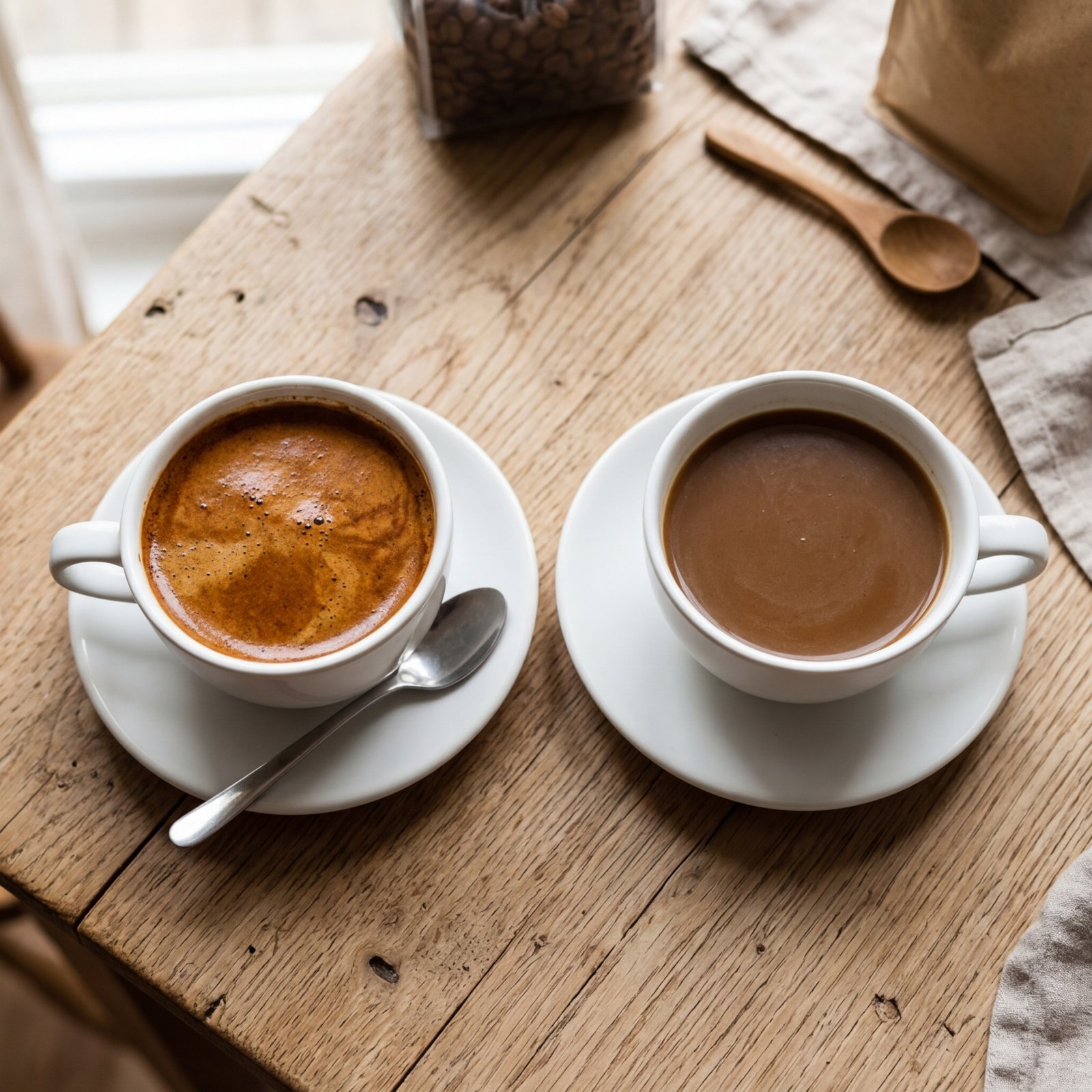
This is the biggest difference and it's not close. Freshly ground whole beans produce a richer, more aromatic, more flavorful cup. The natural oils and volatile compounds that create coffee's complex taste are preserved inside the whole bean until the moment you grind. Pre-ground coffee still tastes fine — especially a quality brand brewed fresh — but you'll notice the difference once you try freshly ground beans side by side.
Freshness
Whole beans stay fresh roughly twice as long as ground coffee after opening. Stored properly in an airtight container away from heat and light, whole beans hold up for two to four weeks. Ground coffee starts losing noticeable flavor within a week. If you're someone who takes a while to get through a bag, whole bean makes more sense purely from a waste perspective.
Convenience
Ground coffee wins here, hands down. Open, scoop, brew — no equipment needed beyond your coffee maker. With whole bean, you're adding a grinding step every time, plus cleanup. For weekday mornings when you're half awake and in a rush, that extra minute matters. It's worth being honest about your routine before committing to whole bean.
Cost
Bag for bag, whole bean and ground coffee cost about the same. The difference is the upfront investment: you'll need a grinder. A solid budget burr grinder runs $20–$50 and will last for years. It's a one-time purchase — not a recurring cost. But if you're testing the waters and not sure you'll stick with home coffee, it's a fair reason to start with ground.
Shelf Life
Whole bean lasts longer. Period. If you only drink a cup or two a day and a bag lasts you more than a week, whole bean will taste noticeably better toward the end of the bag compared to ground coffee, which will have gone stale by then.
Brewing Flexibility
This won't matter much on day one — but it matters later. When you buy ground coffee, you're locked into whatever grind size is in the bag (almost always a medium grind meant for drip machines). With whole beans, you can adjust your grind for any method — coarse for French press, medium for drip, fine for espresso. If you ever want to try a different brewing method, whole bean gives you that freedom.
You don't have to choose one forever. Many beginners start with ground coffee to keep things simple, then switch to whole bean once they're comfortable with their routine. It's a natural upgrade, not an all-or-nothing decision.
Which One Should You Choose?
Choose pre-ground coffee if:
- You're brand new to home coffee and want the simplest possible start
- You don't want to buy a grinder right now
- You use a basic drip coffee maker and just want a solid daily cup
- You finish a bag within a week or so (freshness is less of an issue)
Choose whole bean coffee if:
- You want the best possible flavor from your coffee
- You're willing to spend 30–60 seconds grinding before each brew
- You take more than a week to go through a bag (whole beans stay fresh longer)
- You're curious about trying different brewing methods down the road
Our recommendation for most beginners: Start with pre-ground coffee. Get comfortable with your coffee maker, figure out what roast you like, and build the habit. When you're ready for a noticeable upgrade in flavor, grab a budget burr grinder and a bag of whole beans. You'll taste the difference immediately — and you'll never look back.
Don't buy a blade grinder thinking it's the same as a burr grinder. Blade grinders chop beans unevenly, which leads to inconsistent flavor — some grounds over-extract (bitter) while others under-extract (sour). Even an inexpensive burr grinder produces a much more consistent grind. Check out our honest guide to whether you need a grinder for more details.
Frequently Asked Questions
Is whole bean coffee more expensive than ground?
Not really. The same brand and roast typically costs the same whether you buy it whole bean or pre-ground. The only extra cost is a grinder, which is a one-time purchase. A decent manual burr grinder starts around $20, and electric burr grinders start around $35–$50.
Can I grind whole beans without a grinder?
Technically, yes — you can use a blender, food processor, or even a rolling pin in a pinch. But none of these give you a consistent grind, which means inconsistent flavor. If you're buying whole beans, a proper grinder is worth the small investment.
How long does ground coffee stay fresh?
Once opened, ground coffee stays at its best for about one to two weeks if stored in an airtight container. After that, it's still safe to drink but the flavor drops off noticeably. Whole beans last roughly two to four weeks under the same conditions. For detailed storage tips, check out our guide on how to store coffee beans so they stay fresh.
Does grind size really matter?
Yes — it's one of the biggest factors in how your coffee tastes. Too fine and your coffee will be bitter. Too coarse and it'll be weak and sour. The good news is that for a standard drip coffee maker, a medium grind (which is what most pre-ground coffee uses) works great. If you want to explore further, our grind size guide breaks it all down.
- Pre-ground coffee is the easiest way to start — no extra gear, no learning curve, perfectly fine flavor
- Whole bean coffee tastes noticeably better and stays fresh longer, but requires a grinder ($20–$50)
- This isn't an either/or decision — most coffee lovers start with ground and graduate to whole bean when they're ready
The best coffee is the coffee you actually enjoy making every morning. If that means pre-ground in a drip machine right now, that's a great start. And when you're ready for a step up, whole beans and a simple grinder are waiting. Either way, you're already ahead of the game just by paying attention to what goes in your cup.
Ready to pick your setup? Check out our beginner's guide to everything you need to make coffee at home for a complete checklist.
Disclosure: This article contains affiliate links. If you purchase through our links, we may earn a small commission at no extra cost to you. We only recommend products we genuinely believe are right for beginners. Full disclosure here.
☕ About the Author
Greg Rathbone is the founder of HomeCoffeeBeginner.com. He started this site after realizing most coffee advice online assumes you're already an expert. Every guide here is written for total beginners and tested in his own kitchen — no jargon, no snobbery.