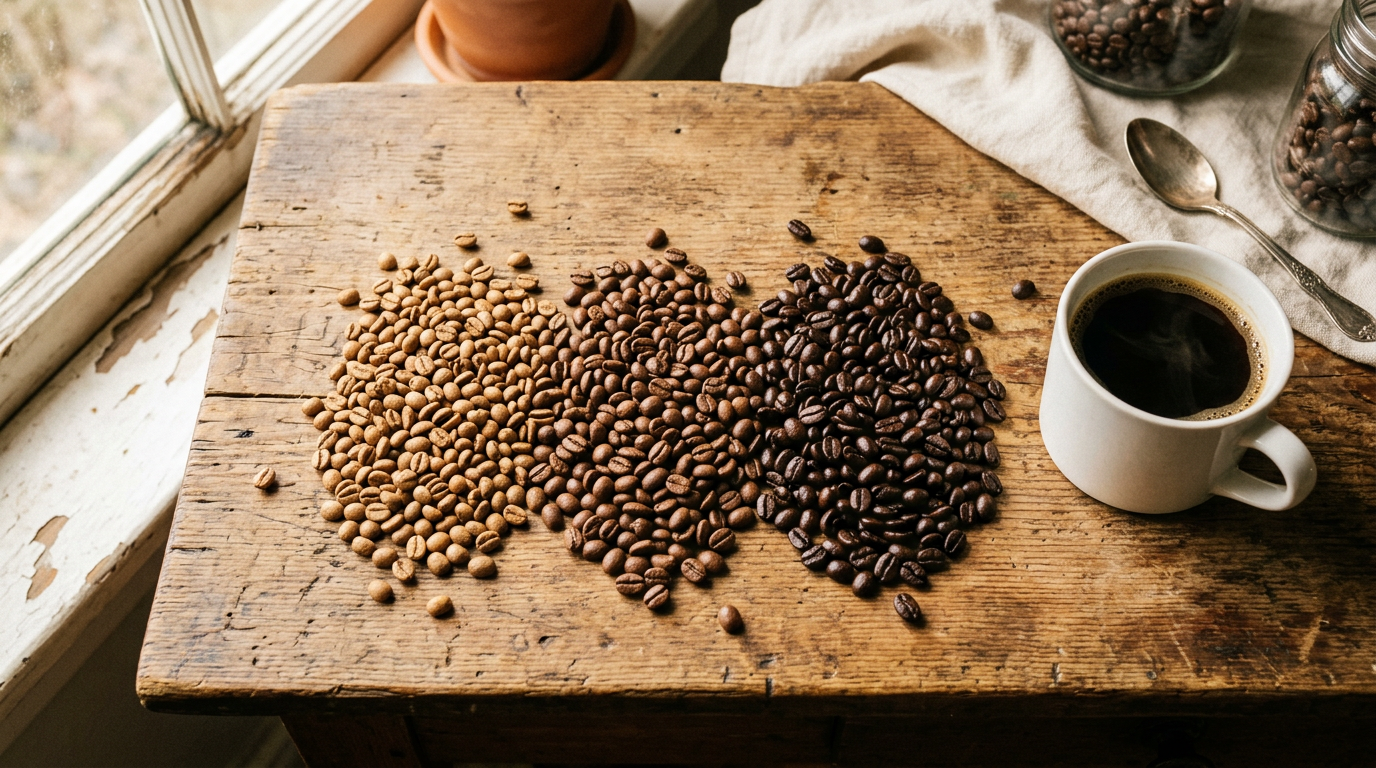
Standing in front of a wall of coffee bags — whether it's the grocery store aisle or an endless Amazon scroll — can feel surprisingly overwhelming. Single origin or blend? Light roast or dark? Whole bean or ground? And what do all those tasting notes actually mean?
If you've been grabbing whatever's on sale (or whatever has the nicest-looking bag), you're not alone. Most beginners do. But spending just a few minutes learning what to look for can make a real difference in what ends up in your cup every morning.
We'll walk you through the key things to look for when buying coffee beans so you can shop with confidence — no coffee degree required. For our specific product recommendations, check out our roundup when it goes live. Not sure whether to buy whole bean or ground? We've got you covered.
- Start with a medium roast — it's the most balanced and forgiving for beginners
- Check the roast date — fresher beans (within 2–4 weeks of roasting) taste dramatically better
- Buy whole bean if you can — pre-ground loses flavor fast, but it's fine if you don't have a grinder yet
- Look for 100% Arabica — smoother and more flavorful than Robusta for most brewing methods
What to Look for When Buying Coffee Beans
You don't need to become a coffee expert overnight. These are the criteria that actually matter when you're starting out — everything else is noise you can worry about later (or never).
1. Roast Level — Start in the Middle
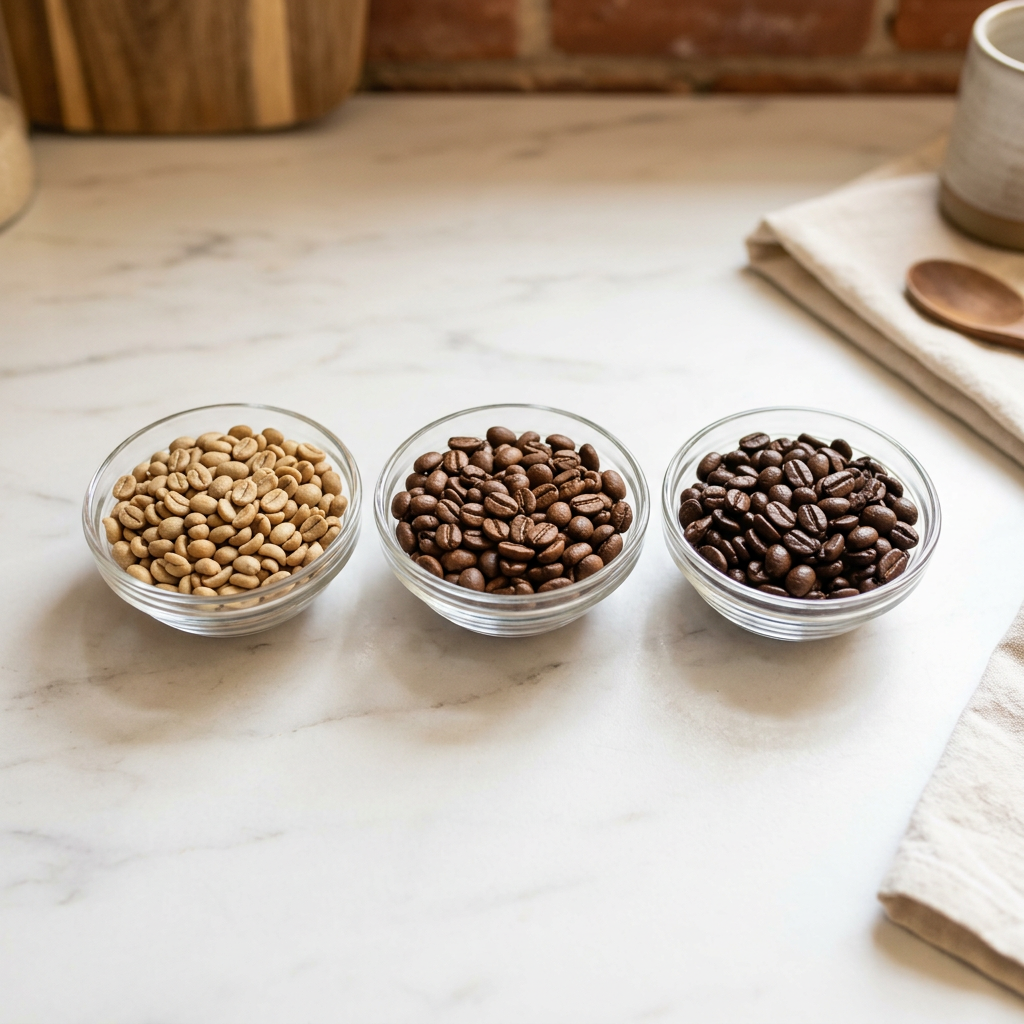
Roast level is the single biggest factor in how your coffee will taste, and it's the easiest thing to get right as a beginner.
Light roast beans are bright and acidic with fruity or floral notes. They can taste sour or “tea-like” if you're not used to them. Dark roast beans are bold and smoky with a bitter edge — think classic diner coffee. Medium roast sits right in the sweet spot: balanced flavor, moderate acidity, a touch of sweetness, and it works well in virtually every home brewing method.
Our recommendation? Start with medium roast. It's the most forgiving roast level for beginners and pairs well with drip machines, pour-overs, and French presses alike. Once you know what you like, you can explore lighter or darker from there. Here's our full breakdown of roast levels if you want to dig deeper.
2. Freshness — Check the Roast Date
This is the one thing that separates good coffee from great coffee, and most beginners don't even know to look for it.
Coffee beans are at their best between about 4 days and 4 weeks after roasting. After that, they start going stale — the flavors flatten out, the aroma fades, and you're left with something that tastes… fine, but not nearly as good as it could be.
What to look for: A “roasted on” date printed on the bag. This tells you exactly when the beans were roasted. If you can only find a “best by” date (usually 6–12 months out), that's a sign the company is prioritizing shelf life over freshness — not ideal, but not the end of the world for a beginner.
What to avoid: Bags with no date at all. If a roaster won't tell you when the beans were roasted, that's a red flag.
3. Bean Type — Arabica vs. Robusta
You'll see “100% Arabica” on a lot of coffee bags, and there's a good reason for that. Arabica beans are smoother, sweeter, and more complex in flavor. Robusta beans are bolder and more bitter, with roughly twice the caffeine — they're commonly used in instant coffee and some espresso blends.
For beginners, 100% Arabica is the safer bet. You'll get a cleaner, more enjoyable cup with most home brewing methods. Some espresso blends mix in a small percentage of Robusta for extra crema and body, and that's perfectly fine — just know what you're getting.
4. Whole Bean vs. Pre-Ground
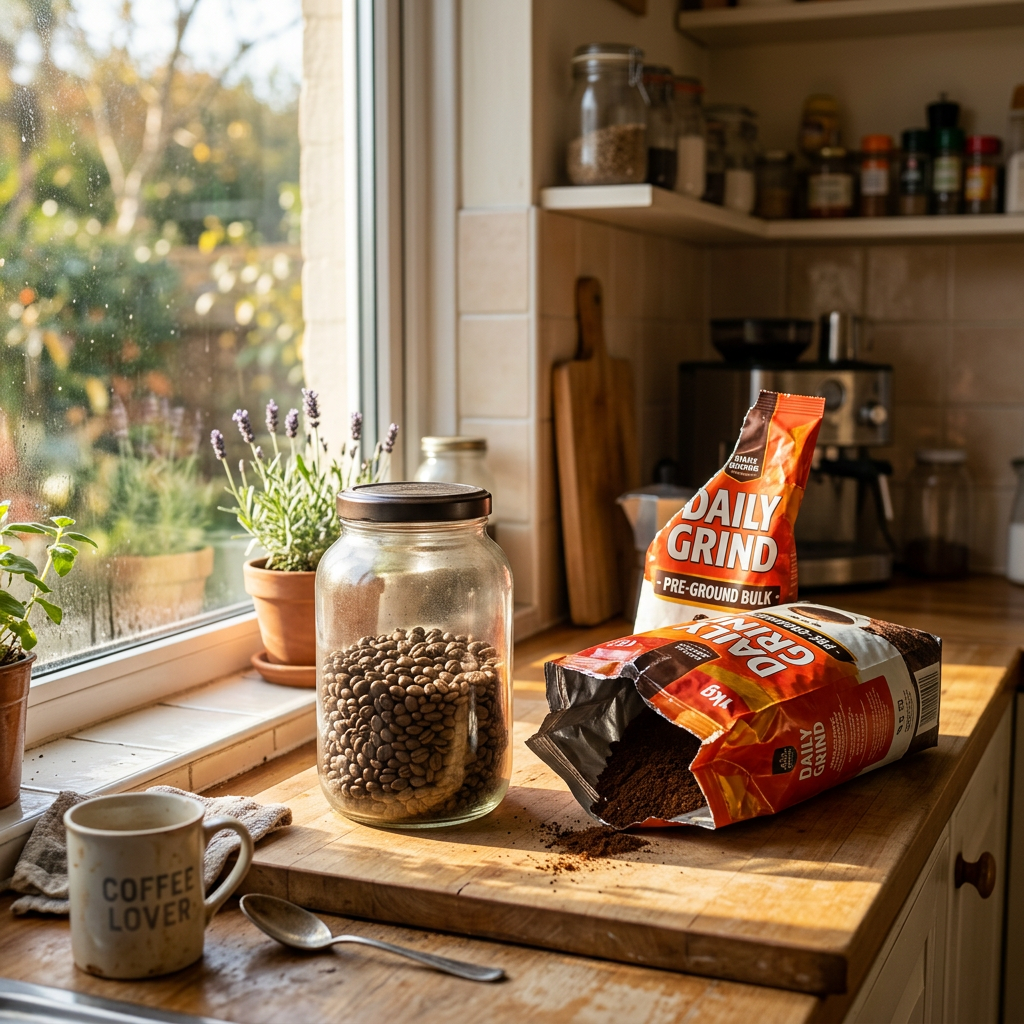
Whole bean coffee stays fresh much longer than pre-ground. Once beans are ground, all that surface area gets exposed to air, and the flavor starts fading within 15–30 minutes. Whole beans can stay fresh for 2–4 weeks; ground coffee starts losing quality within days of opening.
That said, if you don't own a grinder yet, pre-ground is totally fine. Don't let the perfect be the enemy of the good. Buy a small bag of pre-ground, enjoy it, and consider adding a grinder down the road when you're ready to level up. It's one of the best upgrades you can make.
5. Origin — Single Origin vs. Blend
A single origin coffee comes from one specific region or farm. The flavor reflects that place — Ethiopian beans might taste fruity and floral, while Colombian beans tend to be nutty and chocolatey. A blend mixes beans from multiple origins to create a balanced, consistent flavor profile.
For beginners, blends are usually the easier starting point. They're designed to be approachable and well-rounded. Once you've developed your palate a bit, single origins are a fun way to explore different flavor profiles. But there's no wrong answer here — if a single origin catches your eye, go for it.
6. Packaging — It Matters More Than You Think
Good packaging keeps beans fresh. Bad packaging lets air, light, and moisture do their damage before you even open the bag.
Look for: Opaque (not see-through) bags with a one-way valve — that little circle on the front. The valve lets CO2 escape from freshly roasted beans without letting air in. Resealable bags with a zip-lock closure are a bonus for keeping beans fresh after opening.
Avoid: Clear bags or glass jars (light destroys coffee fast), paper bags without valves, and anything sitting in direct sunlight on a store shelf. Once you get your beans home, proper storage matters too.
Buy smaller bags more frequently rather than one giant bag. A 12 oz bag that you finish in two weeks will taste better from start to finish than a 2 lb bag that sits around for two months. Your coffee is always at its freshest this way.
What Budget Should You Set?
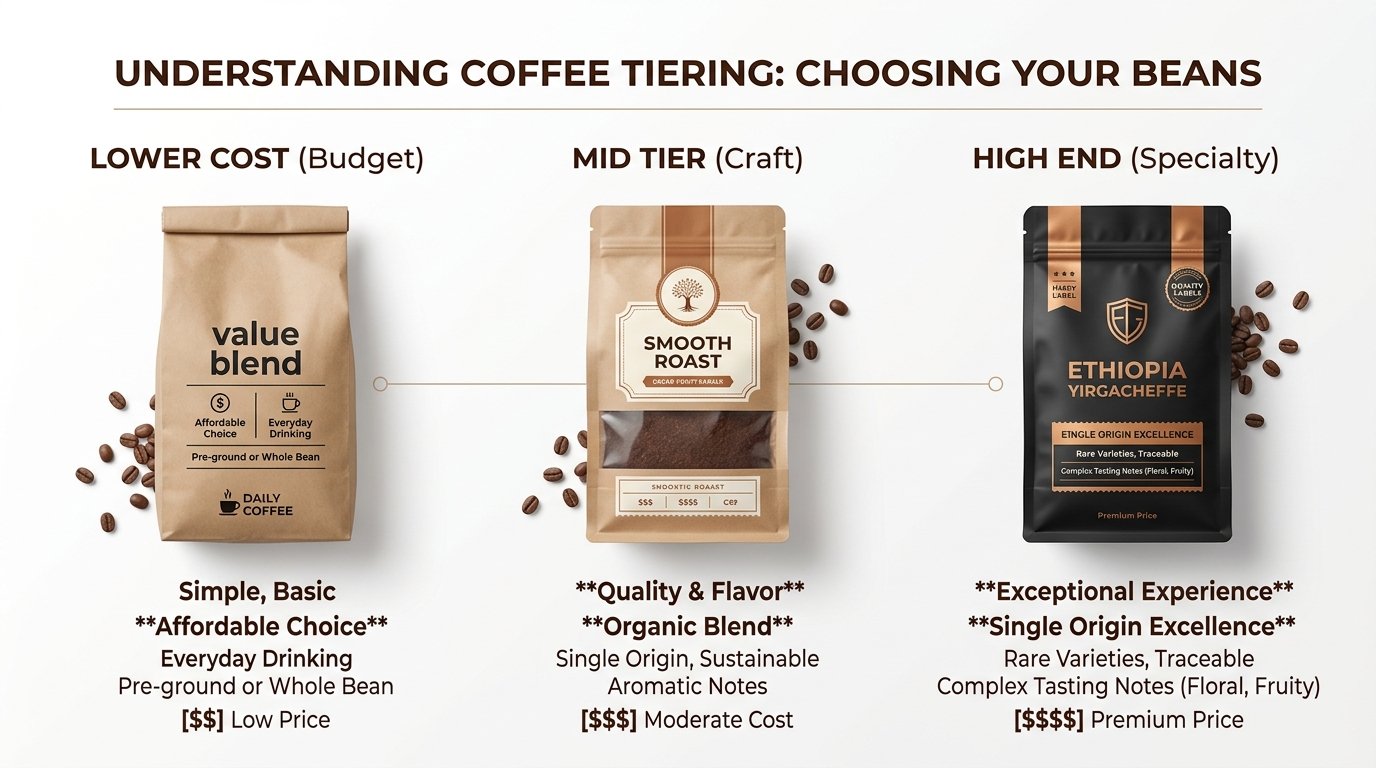
Coffee beans come in a wide price range, but here's the good news: you don't need to spend a fortune to get a great cup at home.
| Budget Range | What You Get | Best For |
|---|---|---|
| $8–$12 / 12 oz bag | Solid grocery-store or Amazon options. Reliable, approachable blends. Usually no roast date — “best by” date instead. Consistent but not complex. | Beginners who want a good daily cup without overthinking it |
| $12–$18 / 12 oz bag | Quality roasters with roast dates. Better sourcing, more flavor variety. Often available on Amazon or direct from roaster websites. | Beginners ready to notice the difference freshness makes |
| $18–$25+ / 12 oz bag | Specialty-grade, single origin, micro-lot beans. Detailed tasting notes, transparent sourcing. Peak freshness shipped direct. | When you're ready to explore and treat yourself |
Our take: The $12–$18 range is the sweet spot for most beginners. You'll get noticeably better beans than the bottom shelf without breaking the bank. A bag in this range from a good roaster — like Peet's Big Bang, a smooth and balanced medium roast — is a great place to start. If you want something even more budget-friendly, Lavazza Super Crema is a reliable everyday option with a smooth, slightly nutty flavor that works in just about any brewer.
Features Worth Paying For vs. Marketing Fluff
| Worth Paying For ✅ | Marketing Fluff ❌ |
|---|---|
| Roast date on the bag — a sign of quality and transparency | “Premium” or “gourmet” labels — these terms are unregulated and meaningless |
| Whole bean (with a grinder) — dramatically better freshness and flavor | Fancy flavor names — “Caramel Vanilla Sunrise” is usually flavoring added to low-quality beans |
| Transparent sourcing info — country, region, or farm name shows the roaster cares | “Extra bold” or “extra smooth” — subjective marketing terms with no standard definition |
The most common beginner mistake is buying a huge bag of pre-ground coffee because it's the cheapest per ounce — and then wondering why it tastes stale and flat by the second week. Buy a size you'll finish in two to three weeks. Your future self will thank you.
What to Avoid
A few things are worth steering clear of, especially when you're just getting started:
Flavored coffee beans. Those “Hazelnut Crème” and “French Vanilla” bags? They're almost always low-quality beans coated in artificial flavoring to mask the taste. If you want flavor in your coffee, start with good beans and add your own milk, sugar, or syrup. You'll get a much better result.
Beans in clear containers. Light is one of coffee's biggest enemies. If you can see the beans through the packaging, they've been losing freshness since the day they were packaged. Always look for opaque bags.
Anything without a date. No roast date and no “best by” date? That bag could have been sitting there for months. Move on to something with at least a “best by” date — or better yet, a “roasted on” date.
- Start with a medium roast Arabica blend — balanced, forgiving, and works with any brewer
- Check for a “roasted on” date and buy beans within 2–4 weeks of that date
- Whole bean stays fresher longer, but pre-ground is fine if you don't have a grinder yet
- Look for opaque bags with a one-way valve — skip anything in clear packaging
- The $12–$18 per 12 oz range hits the sweet spot for quality vs. price
- Buy smaller bags more often to keep everything fresh
Start Brewing Better Coffee Today
Buying coffee beans doesn't have to be complicated. Start with a medium roast, check the roast date, and buy a size you'll finish in a few weeks. That alone will put you ahead of most coffee drinkers.
Once you've got your beans sorted, the next step is brewing them right. Here's our guide to making your first cup at home — and if you need a brewer to go with those beans, check out our best coffee makers for beginners.
Disclosure: This article contains affiliate links. If you purchase through our links, we may earn a small commission at no extra cost to you. We only recommend products we genuinely believe are right for beginners. Full disclosure here.
☕ About the Author
Greg Rathbone is the founder of HomeCoffeeBeginner.com. He started this site after realizing most coffee advice online assumes you're already an expert. Every guide here is written for total beginners and tested in his own kitchen — no jargon, no snobbery.