
If you've decided a French press is your next move — good call. It's one of the most beginner-friendly ways to make great coffee at home, and you don't need to spend a lot to get started. The hard part isn't choosing whether to buy one. The hard part is wading through hundreds of nearly identical-looking French presses and figuring out which ones are actually worth your money.
We've used and tested a lot of French presses, and we've narrowed the field down to six picks that genuinely belong on a beginner's short list. Some are inexpensive classics. Some are tougher, almost indestructible upgrades. And one is built for travel. There's a right one for almost every kitchen here.
This roundup focuses on what actually matters for beginners: how easy is it to clean, how much sediment ends up in the cup, how durable it is, and whether it's a fair price for what you get. We don't rank by what pays us the most. We rank by what we'd hand to a friend who's brewing their first French press cup tomorrow morning.
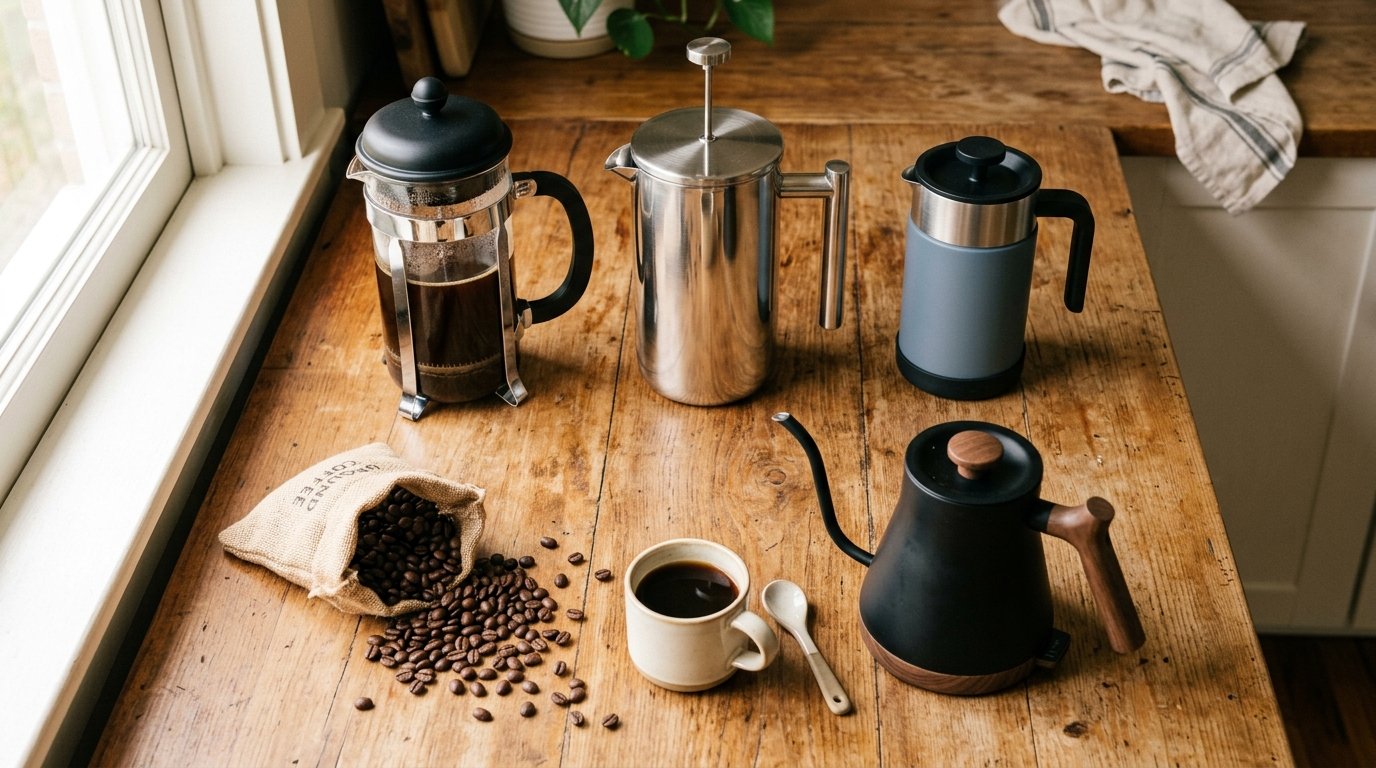
The best French press for beginners is the Bodum Chambord (34 oz). It's affordable (about $40), simple to use, easy to clean, and replaceable if you ever crack the glass. If you want a tougher pick that won't shatter, the Mueller stainless steel double-wall French press is the strongest beginner upgrade for around $30. For the cleanest cup with the least sediment, step up to the Espro P3.
How We Chose These Picks
There are a lot of French presses on the market and most of them, honestly, look the same. We zeroed in on the things that actually change a beginner's experience day to day:
- Cup quality. Does the filter mesh do its job? Is the cup full-bodied and rich, or sludgy and full of grit? Sediment is the single most common beginner complaint, and a good filter design is the fix.
- Ease of cleaning. A French press you dread cleaning will sit in the sink instead of getting used. We favored designs that come apart easily and don't trap grounds in awkward places.
- Durability. Glass French presses look beautiful but can crack. We made sure to include both classic glass picks (with replaceable carafes) and stainless steel options that will survive being knocked off the counter.
- Price-to-value. Beginner gear should be affordable. Most of our picks are under $50, and the most expensive one on this list is still well under $100.
- Capacity. We focused mostly on 32–34 oz French presses — that's the sweet spot for one or two coffee drinkers. We also included a smaller travel option and noted larger-capacity choices where they make sense.
We did not rank these by which one pays us the highest commission. The order is what we'd actually recommend to a friend, in order, based on the brewing experience for someone who's new to French press coffee.
Quick Comparison Table
| Pick | Best For | Capacity | Material | Approx. Price |
|---|---|---|---|---|
| Bodum Chambord | Best overall for beginners | 34 oz | Glass + chrome frame | $40 |
| Mueller Double-Wall Stainless | Most durable budget pick | 34 oz | Stainless steel | $30 |
| Espro P3 | Cleanest cup, least sediment | 32 oz | Glass + dual filter | $50 |
| Frieling Double-Wall | Premium upgrade | 36 oz | Stainless steel | $90 |
| Secura Stainless Steel | Big-batch budget pick | 50 oz | Stainless steel | $30 |
| Bodum Travel Press | Coffee on the go | 15 oz | Plastic + stainless | $25 |
Pricing accurate as of April 2026. Prices fluctuate on Amazon, especially during sales.
1. Bodum Chambord — Best Overall for Beginners
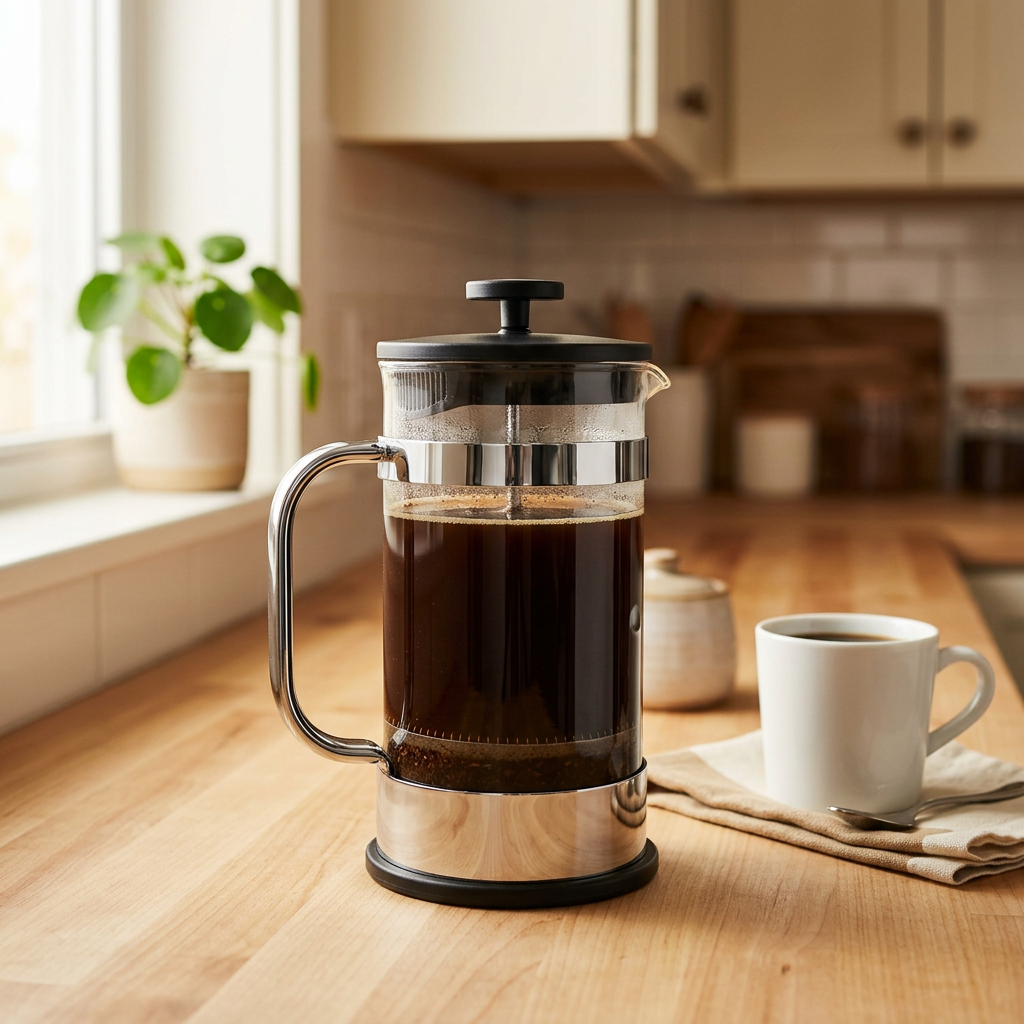
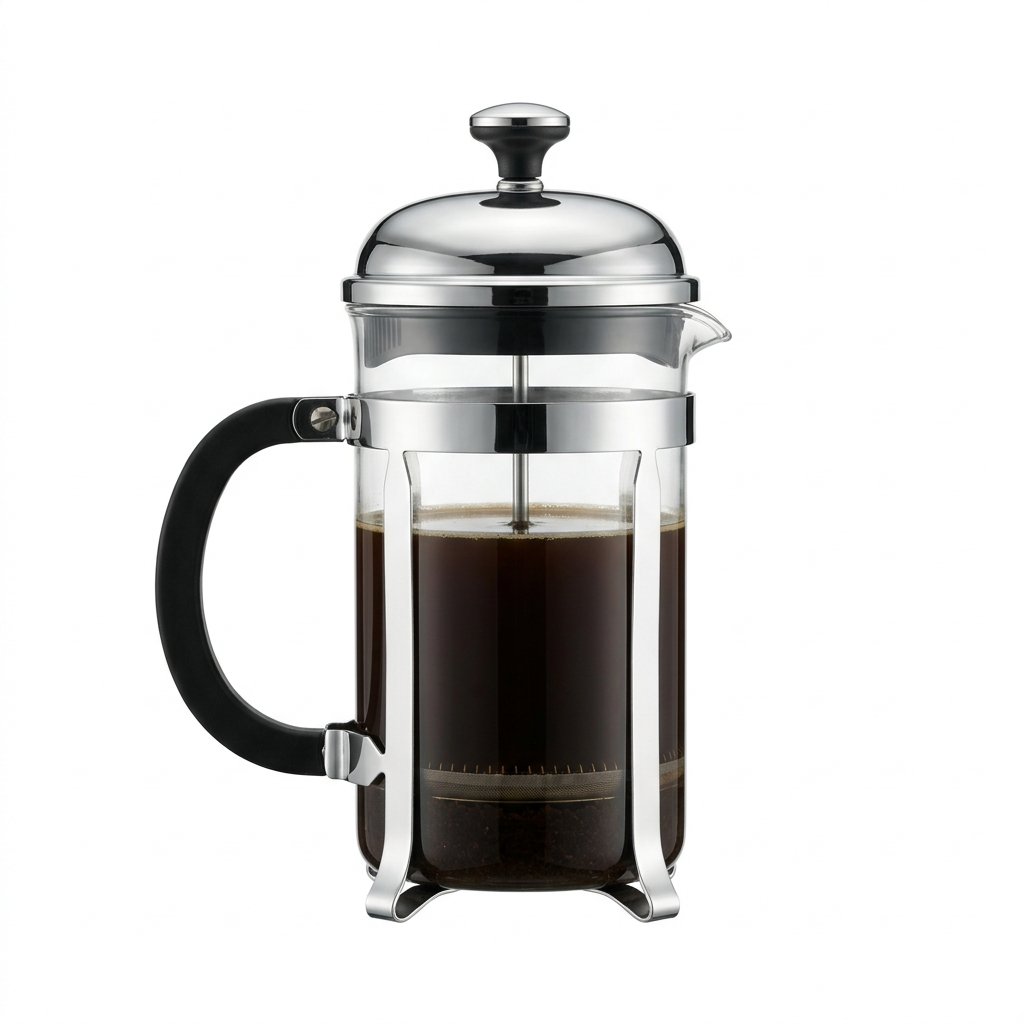
The Bodum Chambord is the French press most people picture when they hear the words “French press.” It's been made the same way for decades — chrome-plated steel frame, heat-resistant borosilicate glass carafe, three-part stainless mesh filter. That consistency is part of why we recommend it. You're not buying into a gimmick or a brand new design that hasn't been tested. You're buying into a brewer that's worked the same way for a long time and will keep working.
For a beginner, the Chambord checks every box. It's affordable (around $40 for the 34 oz size), it makes a clear, full-bodied cup with the right amount of sediment for that classic French press feel, and the parts come apart easily for cleaning. The glass carafe is replaceable if it ever breaks, which is a nice safety net. And it looks good enough to leave on the counter — a small thing that matters more than people expect, because gear you don't have to put away gets used more often.
Our Pick for Beginners
Bodum Chambord French Press (34 oz)
A beginner-friendly classic. The 34 oz size makes enough coffee for two people, the glass carafe is replaceable if you ever crack it, and the price is hard to beat.
Check Price on Amazon →Bodum Chambord — At a Glance
Price Range: ~$40
Best For: Most beginners. The default recommendation if you have no other strong preference.
Pros:
- Classic, proven design that's been around for decades
- Replaceable glass carafe if it ever breaks
- Easy to clean — comes apart in seconds
- Good sediment control for a single-mesh filter
Cons:
- Glass loses heat fast (coffee cools in about 25 minutes)
- Not great for traveling or rough handling
2. Mueller Double-Wall Stainless Steel — Most Durable Budget Pick
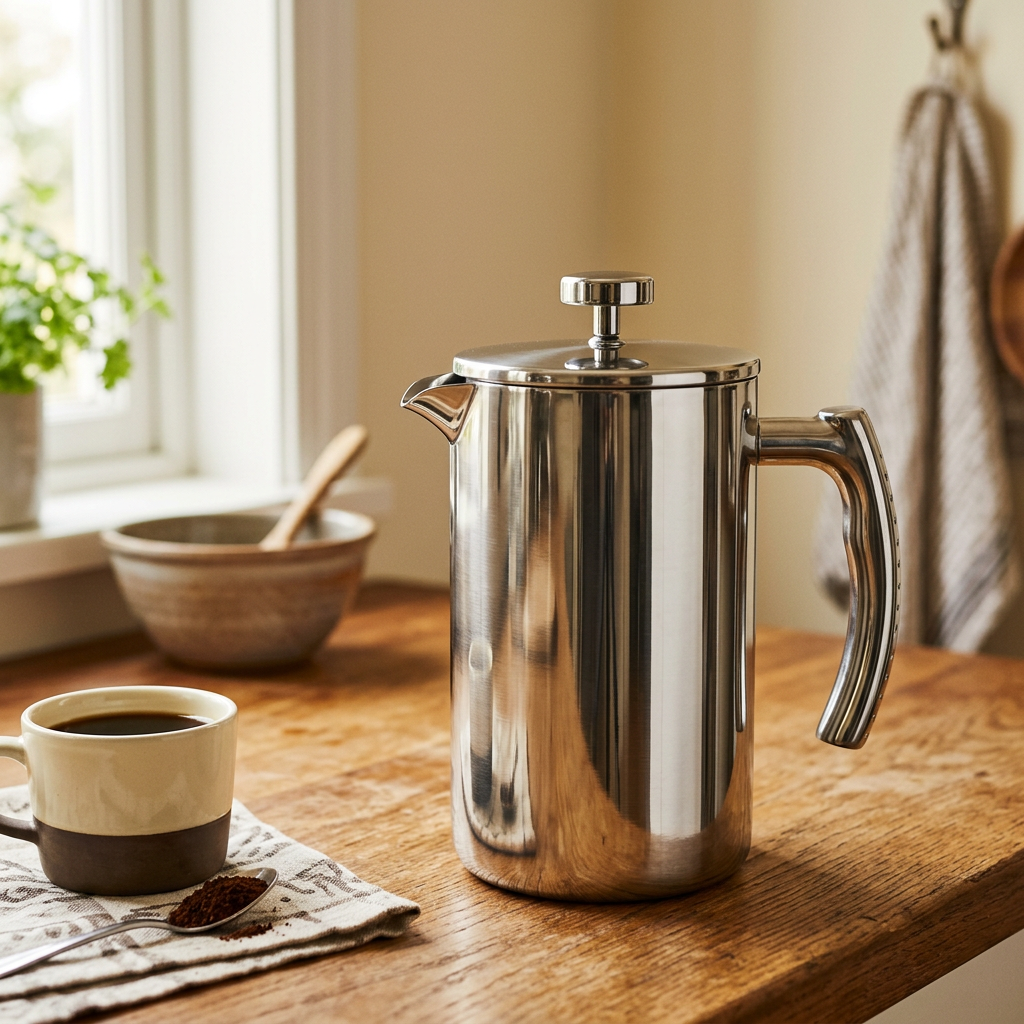
If you've ever cracked a glass coffee pot — or you live with kids, pets, or a cluttered counter — a stainless steel French press is the smarter call. The Mueller is our favorite stainless option for beginners because it gives you almost everything you'd want from a premium press at a budget price.
The double-wall construction is the headline feature. Coffee stays hot inside the carafe for up to an hour, which is a huge upgrade over the 25-minute window you get with single-wall glass. The build is solid 304 stainless steel with a four-level filtration system that does a noticeably better job than a basic single-mesh filter. Some buyers report that the seal isn't as tight as the marketing claims (so you'll lose heat faster than advertised), but it still beats glass by a wide margin.
For around $30, this is the toughest French press a beginner can buy. It's dishwasher-safe, won't break if you drop it, and comes in 20 oz, 34 oz, and 50 oz sizes. The 34 oz is the right pick for most one-or-two-person households.
Mueller Stainless Steel French Press — At a Glance
Price Range: ~$30
Best For: Beginners who want something hard to break, or anyone planning to take a French press camping or traveling.
Pros:
- Practically indestructible — drop it, it's fine
- Double-wall keeps coffee hot longer than glass
- Four-level filter catches more grounds than basic mesh
- Dishwasher-safe — easy cleanup
Cons:
- You can't see the brew through the carafe (some people miss this)
- Heat retention isn't quite as good as the marketing implies
3. Espro P3 — Cleanest Cup, Least Sediment
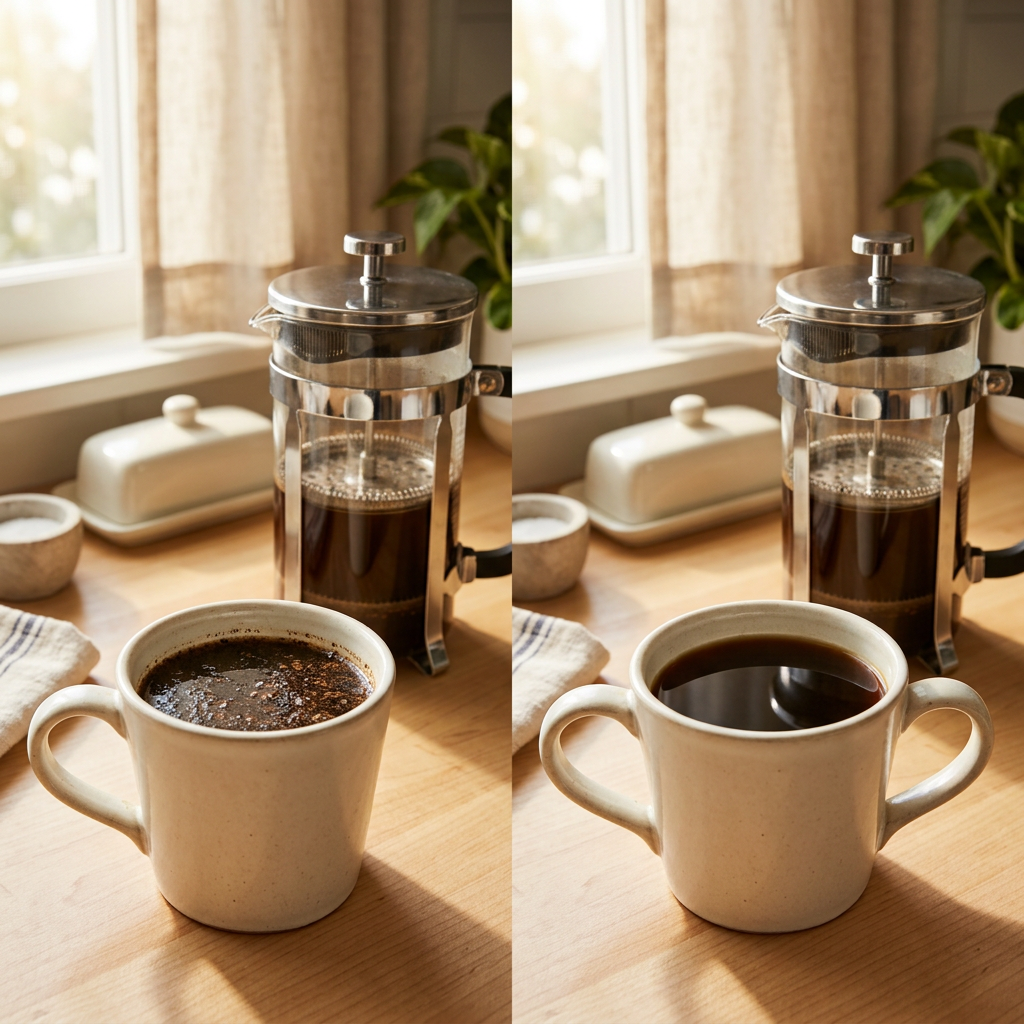
If your biggest worry about French press coffee is the gritty sediment that ends up at the bottom of the mug, the Espro P3 is the pick that solves that problem. Espro built the P3 around a patented dual micro-filter system — basically two filters stacked together that catch finer particles than a standard single mesh. The result is a French press that brews almost as cleanly as a paper-filtered pour-over, while still keeping the rich body and oils that make French press coffee what it is.
This is a real upgrade for beginners who've tried French press once and didn't love the texture. The P3 fixes that without forcing you to switch brewing methods. It's also genuinely tough — independent reviewers have dropped these off counters without scratching the borosilicate glass. At around $50, it's a step up from the Chambord in price but a meaningful step up in cup quality.
The trade-off is that the dual filter is slightly more annoying to clean than a single-mesh filter. You'll need to take it apart fully every couple of weeks. But for the cleanest French press cup you can get, it's worth it.
Espro P3 — At a Glance
Price Range: ~$50
Best For: Beginners who want as little sediment as possible without giving up the French press style.
Pros:
- Dual micro-filter catches almost all sediment
- Surprisingly tough borosilicate glass
- Brews a cup that's closer to pour-over clarity
Cons:
- Filter takes longer to clean than a single mesh
- Pricier than the Bodum Chambord
4. Frieling Double-Wall Stainless — Premium Upgrade
If you've decided you're committing to French press for the long haul and you want to buy once and stop thinking about it, the Frieling is the press to look at. It's about $90 for the 36 oz size — easily the most expensive French press on this list — but it earns it.
The Frieling is heavy-gauge 18/10 polished stainless steel inside and out, with a double-wall vacuum that keeps coffee genuinely hot for over an hour. The dual screen filter does a better job catching grounds than a standard mesh. The fit and finish are noticeably nicer than the Mueller — this is a press you'd be happy to leave on a counter forever. It's made in Germany and built like it should outlast most of your other kitchen gear.
For a beginner, this is overkill in the best possible way. If your budget allows, you'll probably never buy another French press. If your budget doesn't, the Mueller does 80% of what the Frieling does for a third of the price.
Frieling Double-Wall Stainless — At a Glance
Price Range: ~$90
Best For: Beginners ready to splurge on a press that will likely last a lifetime.
Pros:
- Genuinely excellent heat retention (1+ hour)
- Premium fit, finish, and build quality
- Dual screen catches more sediment than basic mesh
- Made in Germany — feels heirloom-grade
Cons:
- Significantly pricier than the alternatives
- Heavier than glass options
5. Secura Stainless Steel — Best Big-Batch Budget Pick
If you have a household that drinks a lot of coffee — or you regularly brew for guests — a 50 oz French press is a better fit than a 32 oz. The Secura is our pick at this size for beginners on a budget. It's $30, it's stainless steel double-wall, it has a three-layer filter, and it makes about six cups in a single brew.
It's not as polished as the Mueller or as premium as the Frieling, but for the price-per-ounce of capacity, nothing else really competes. We'd skip this one if you're brewing for one person — that much coffee will go cold or stale before you finish it. But for a multi-person household or for entertaining, it's a workhorse.
Secura Stainless Steel — At a Glance
Price Range: ~$30
Best For: Households brewing for 3+ people, or coffee for guests.
Pros:
- Big 50 oz capacity at a budget price
- Stainless steel, dishwasher safe, hard to break
- Solid three-layer filter
Cons:
- Way too big for solo coffee drinkers
- Build quality is fine, not premium
6. Bodum Travel Press — Coffee on the Go
This one is a niche pick, but it's worth knowing about. The Bodum Travel Press is a 15 oz French press built into a travel mug. You add coffee, hot water, and steep — then press the plunger right at the lid level so the grounds stay separated at the bottom while you sip from the top. It's the same brewing principle as a regular French press, packaged for the road.
For beginners who want to make French press coffee at the office, on a campsite, or on a road trip without bringing a separate brewer and travel mug, this is the cleanest solution we've found. At around $25, it's also cheap enough to be a fun second brewer alongside a counter-based one.
The trade-off: it's plastic and stainless rather than glass, and the cup quality is a step below a full-size French press. But it's still real French press coffee, and that's a long way ahead of gas-station drip.
Bodum Travel Press — At a Glance
Price Range: ~$25
Best For: Beginners who want to brew French press at work or on the road.
Pros:
- Brewer and travel mug in one
- Lightweight, packable, leak-resistant
- Cheap enough to be a fun second brewer
Cons:
- Cup quality is below a full-size French press
- Smaller capacity (15 oz)
What to Look for in a Beginner French Press
If you ever shop for one outside this list, here's what we'd tell a friend to focus on. None of this is brand-specific — these features matter on any French press.
Capacity
Most beginners are happiest with a 32 oz or 34 oz French press. That's enough for two large mugs (or one big batch with a refill), and it's the size most recipes are written for. Smaller presses (12–17 oz) are great for solo drinkers; larger presses (50+ oz) are better for entertaining. Buying too big is a more common mistake than buying too small — extra coffee that sits in the carafe goes stale fast.
Filter Quality
The filter is the heart of a French press. A basic single-mesh filter (Bodum Chambord) does a fine job for most beginners. A multi-layer filter (Mueller, Secura) catches more grounds. A dual micro-filter (Espro P3) catches the most. Sediment is the most common complaint about French press coffee — if it's a deal-breaker for you, skip the basic single mesh and go straight to a multi-layer or dual-filter design.
The single biggest cause of a sludgy cup isn't actually the French press — it's the grind size. Even the best filter on the market can't save coffee that's ground too fine. If you've been getting muddy results, fix the grind before buying a new press.
Glass vs. Stainless Steel
Glass French presses (like the Bodum Chambord and Espro P3) look beautiful and let you watch the brew happen, but they can crack if you drop them or pour boiling water in cold. Stainless steel presses (Mueller, Frieling, Secura) are nearly indestructible and keep coffee much hotter, but you can't see the brew. Most beginners are happy with either. If you tend to be hard on kitchen gear, lean stainless. If you like the visual and ritual of seeing the coffee brew, lean glass.
Heat Retention
Single-wall glass presses lose heat fast. Coffee in a Bodum Chambord drops from about 200°F to 140°F in about 25 minutes. Double-wall stainless steel presses can hold heat for 60 minutes or more. If you sip slowly or like to refill from the press, double-wall is worth it.
Frequently Asked Questions
What size French press should a beginner buy?
For one or two coffee drinkers, a 32 oz or 34 oz French press is the sweet spot. It makes about two large mugs, fits comfortably on a counter, and matches almost every standard French press recipe. Solo drinkers can go smaller (12–17 oz); households of 3+ should consider 50 oz.
Are cheap French presses any good?
Yes — within reason. The $30–$40 range is where the best beginner French presses live. Below $20, build quality drops sharply (loose seals, flimsy filters, plungers that bend). The Bodum Chambord and Mueller are both proof you don't need to spend more than $40 to make great coffee.
Glass or stainless steel — which is better?
Neither is “better” in absolute terms, but they're different. Glass is prettier, lets you see the brew, and is usually cheaper. Stainless steel is nearly unbreakable and keeps coffee hot a lot longer. For most beginners, glass is fine. For families with kids, frequent travelers, or anyone hard on kitchen gear, stainless is the safer pick.
What's the difference between French press and drip coffee?
French press uses a metal mesh filter, so the natural oils and some fine particles stay in the cup — the result is heavier, fuller-bodied, slightly textured coffee. Drip coffee uses a paper filter that catches the oils, so the cup is cleaner and lighter. We break this down in detail in our French press vs drip coffee comparison.
How long do French presses last?
A well-cared-for French press can last 5–10 years or more. The most common failure point is the glass carafe (cracks from thermal shock or being dropped) — and Bodum sells replacement carafes, so a broken Chambord is a $15 fix, not a new $40 purchase. Stainless presses can last decades.
How to Get the Most From Whichever You Pick
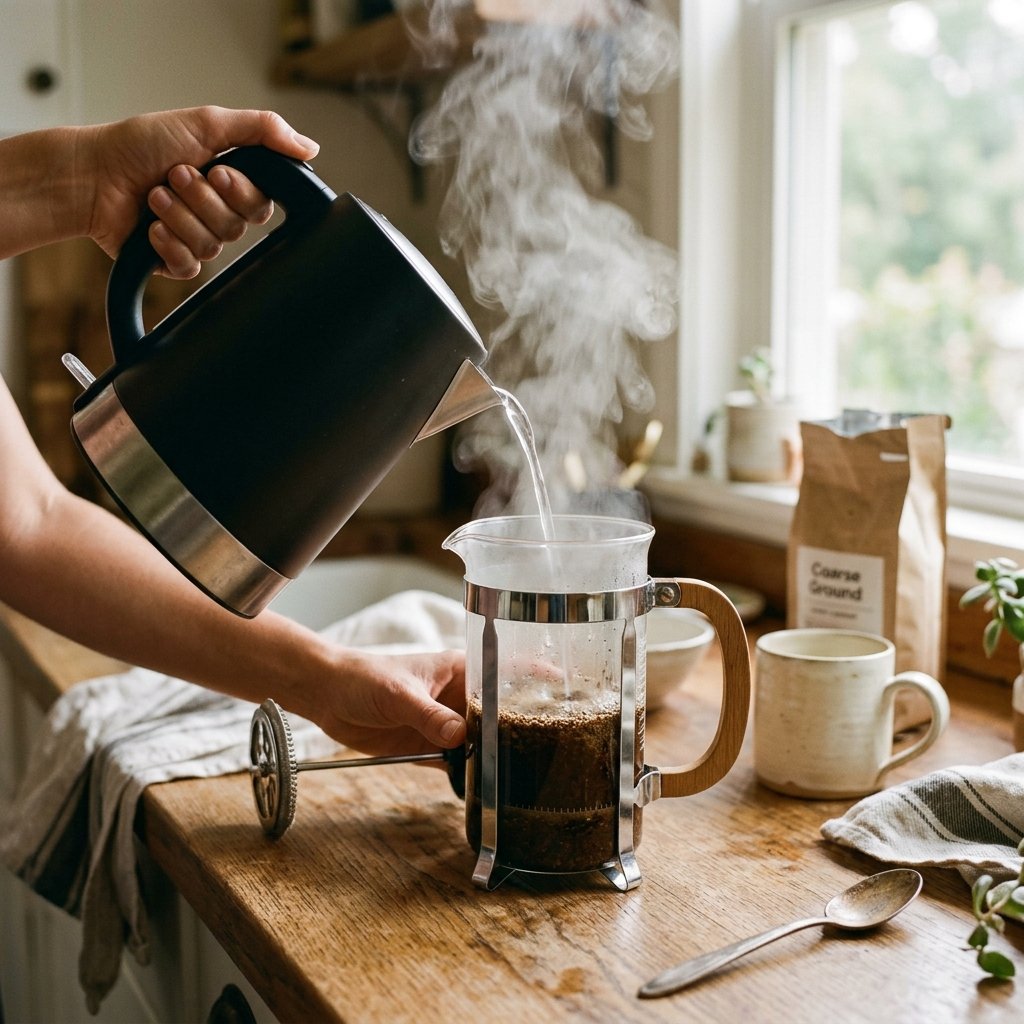
Once you've picked your French press, the brewer matters a lot less than your technique. The four things that change everything: grind size, ratio, water temperature, and steep time. Get those right and a $30 press will out-brew a $200 press used wrong.
Our step-by-step French press guide walks through the full method from start to finish. The short version:
- Grind: coarse, like kosher salt
- Ratio: 1:15 — 1 gram of coffee for every 15 grams of water
- Water: just off the boil (about 200°F) — boil, then rest 30 seconds
- Steep: exactly 4 minutes, then plunge slowly over 20 seconds
- Pour: immediately — don't leave the coffee on the grounds
And if you want the full picture — the why behind each step, how to troubleshoot common problems, and what to read next — our complete French press beginner's guide is your home base.
Our Bottom Line
- Most beginners should buy the Bodum Chambord — it's the right balance of price, build, and brew quality.
- Want something tougher? The Mueller stainless steel double-wall press is hard to beat for $30.
- Worried about sediment? The Espro P3's dual filter brews the cleanest French press cup you can get.
- Splurging? The Frieling is the best French press most beginners will ever buy.
- Brewing for a crowd or going mobile? The Secura (50 oz) and Bodum Travel Press cover the edges.
- Whatever you pick, your brewing technique — grind size, ratio, time, temperature — will matter more than the press itself.
The honest truth about French presses is that almost any well-made one will brew good coffee in the hands of someone who's dialed in their grind and ratio. Don't let picking the “right” one slow you down — pick one in your budget, get brewing, and start enjoying the cup. That's the whole point.
Disclosure: This article contains affiliate links. If you purchase through our links, we may earn a small commission at no extra cost to you. We only recommend products we genuinely believe are right for beginners. Full disclosure here.
☕ About the Author
Greg Rathbone is the founder of HomeCoffeeBeginner.com. He started this site after finding that most coffee advice online assumed you were already an expert. Every guide here is written for total beginners — tested in his own kitchen in Oklahoma, with zero snobbery.