
If you have ever sipped a smooth, sweet glass of cold brew on a hot afternoon and thought “I wish I could make this at home,” here is the good news: you absolutely can, and it is one of the easiest ways to make coffee there is. No machine. No barista skills. No hot water, even. Cold brew coffee is just coarsely ground coffee steeped slowly in cold water — and the result is a smooth, naturally sweet, low-acid cup that is honestly hard to mess up.
This is your complete beginner's guide to cold brew coffee. We will walk you through what it is, why it tastes so different from regular coffee, exactly what gear you need (spoiler: not much), and the simple steps to make your first batch this weekend. We will also point you to deeper guides for each piece — grind, ratio, steep time, and more — so you can go as deep as you want, whenever you want.
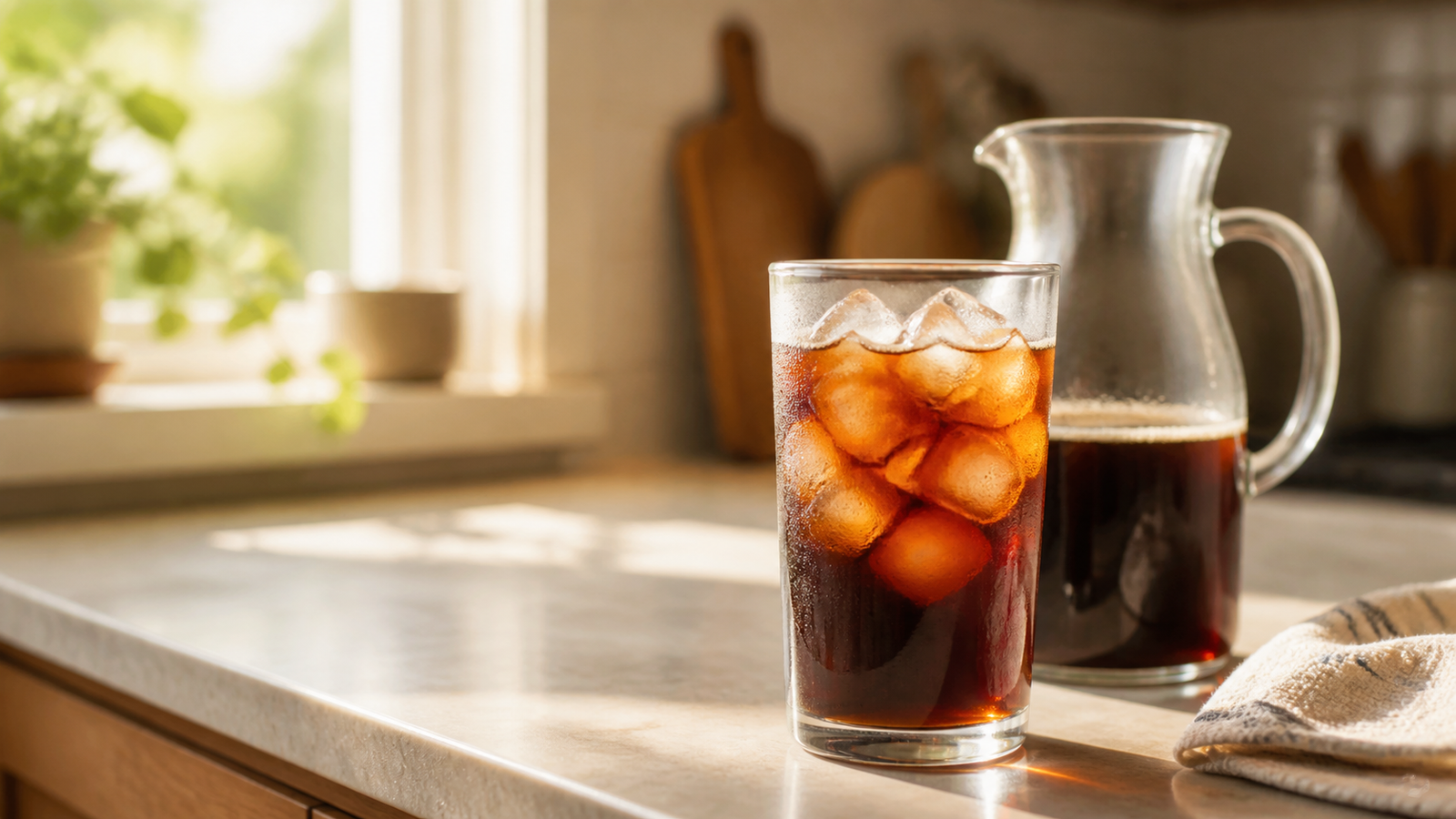
Cold brew coffee is made by steeping coarse coffee grounds in cold or room-temperature water for 12–24 hours, then straining out the grounds. The slow, cold steep makes it smoother, sweeter, and up to about 66% less acidic than hot coffee. To make it, you only need coffee, water, and a jar or pitcher with a filter — no machine required.
What Is Cold Brew Coffee?
Cold brew is coffee made with time instead of heat. Instead of pouring hot water over grounds for a few minutes (the way drip, French press, and pour-over all work), you soak coarse grounds in cold or room-temperature water for many hours. As the coffee slowly steeps, the water gently pulls out flavor — but because there is no heat, it leaves behind a lot of the sharp, bitter, and acidic compounds that hot brewing extracts.
The result is a cup that tastes noticeably smoother, mellower, and slightly sweet, with very little of the bite you get from hot coffee. Many people who think they do not like coffee discover they actually love cold brew, simply because it is so much gentler on the palate.
One quick point of confusion worth clearing up early: cold brew is not the same as iced coffee. Iced coffee is regular hot-brewed coffee poured over ice. Cold brew is never heated at all. They taste quite different, and we break the whole thing down in Iced Coffee vs Cold Brew: What's Actually Different?
Why Cold Brew Is Perfect for Beginners
If you are just getting started making coffee at home, cold brew is one of the friendliest places to begin. Here is why:
- It is incredibly forgiving. Hot brewing methods can turn bitter in seconds if your water is too hot or your grind is off. Cold brew steeps slowly over many hours, so small mistakes barely matter.
- It needs almost no equipment. A mason jar and a fine strainer will do. No machine, no gooseneck kettle, no scale required (though a scale helps).
- It is smooth and low-acid. If regular coffee bothers your stomach or tastes too sharp, cold brew is often a revelation.
- It makes a big batch. One steep gives you several days of coffee waiting in the fridge — grab and go.
- It is cheap to try. You can start with a jar you already own and a bag of coffee. No risk.
What You Need to Make Cold Brew
The beauty of cold brew is how little you need. Here is the short list:
- Coarse coffee grounds. About the texture of raw sugar or coarse sea salt. (More on this below.)
- Cold or room-temperature water. Filtered water tastes best, but tap is fine to start.
- A container. A large mason jar, a pitcher, or a dedicated cold brew maker.
- A way to strain. A built-in mesh filter, a fine sieve, or a coffee filter.
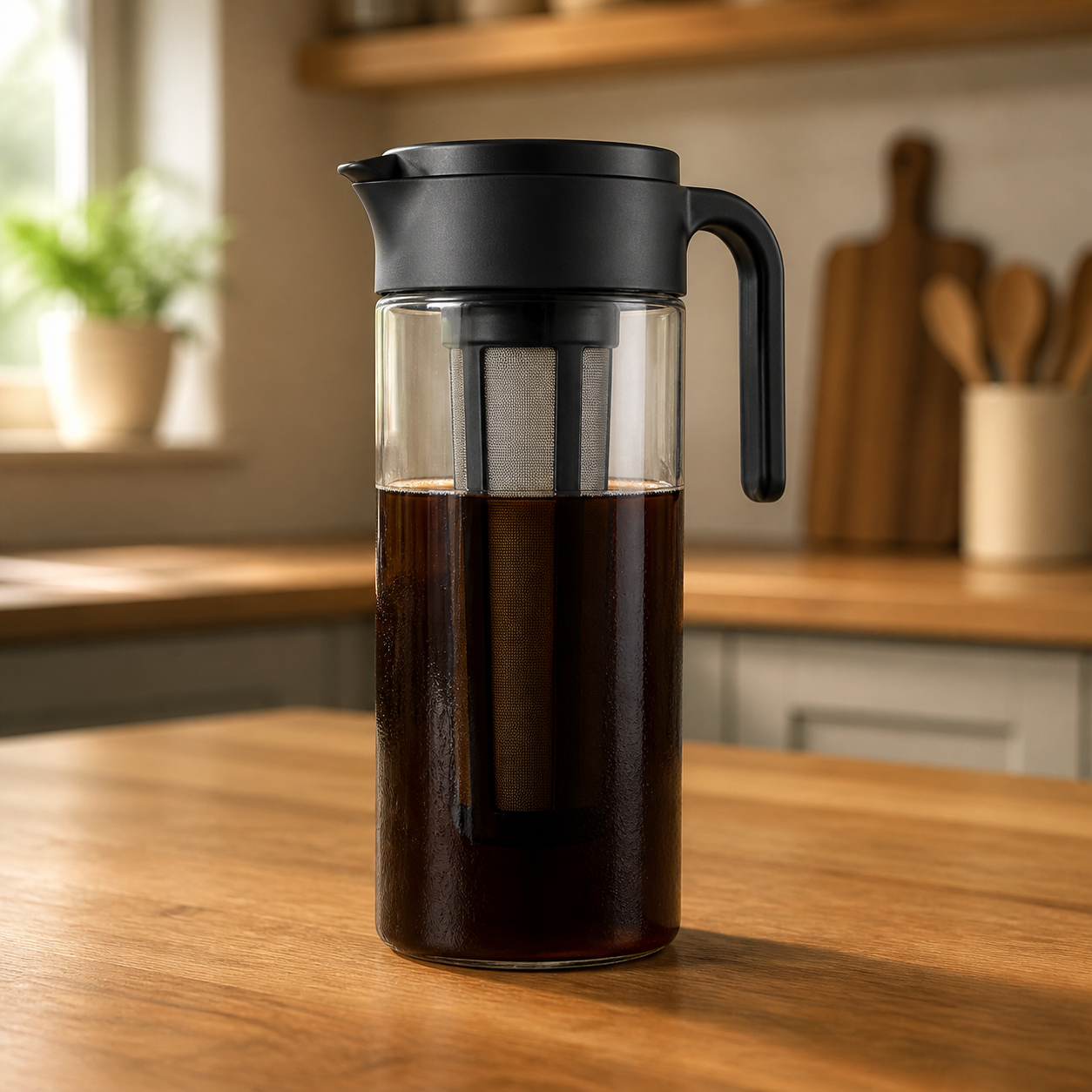
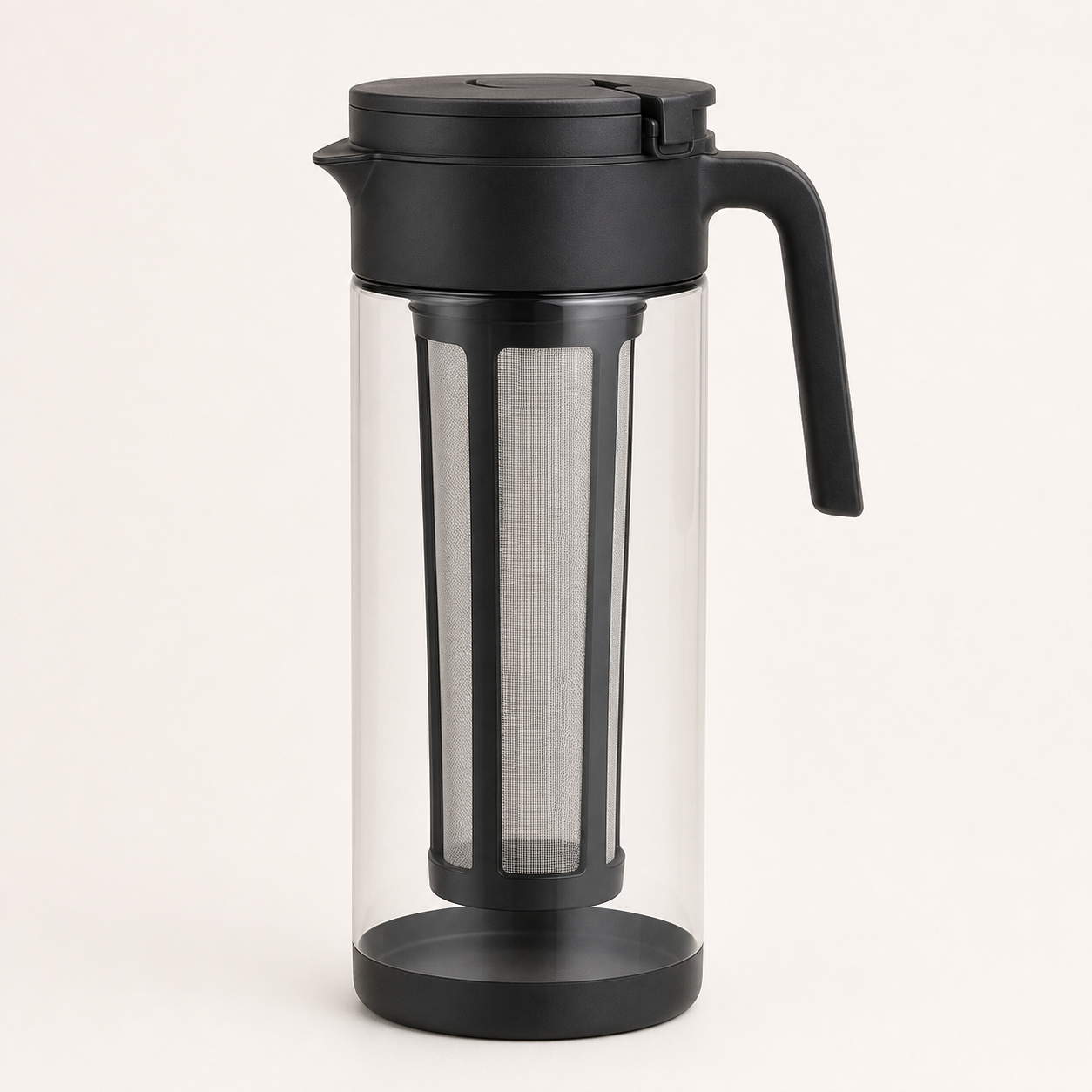
You can absolutely start with a jar from your cupboard. But if you find yourself making cold brew every week (you probably will), a simple dedicated maker with a built-in filter makes the process cleaner and faster. Our favorite for beginners is the Takeya Patented Deluxe — airtight, leakproof, and just three parts.
Our Pick for Beginners
Takeya Patented Deluxe Cold Brew Maker
Airtight, leakproof, and just three simple parts. For around $25 it makes smooth, ready-to-drink cold brew right in your fridge with almost zero chance of messing it up — the easiest first cold brew maker you can buy.
Check Price on Amazon →Want to compare a few options at different price points? See our roundup of the best cold brew coffee makers for beginners.
How to Make Cold Brew (The Simple Version)
Here is the entire process in four steps. It really is this simple:
- Grind coarse. Aim for a coarse grind, like raw sugar or coarse sea salt. Too fine and your brew turns muddy and over-extracted.
- Combine coffee and water. A 1:8 ratio (1 part coffee to 8 parts water) is a great starting point for ready-to-drink cold brew. For a stronger concentrate to dilute later, go closer to 1:4.
- Steep 12–24 hours. Cover it and leave it in the fridge (or on the counter for 12–14 hours, then refrigerate). Around 16 hours is a reliable sweet spot.
- Strain and serve. Lift out the filter or pour through a sieve, then pour over ice. Add water or milk if you made concentrate.
That is the overview. For the full walkthrough with photos and troubleshooting, see our step-by-step guide: How to Make Cold Brew Coffee at Home (Step-by-Step).
Cold brew is nearly impossible to ruin. If your first batch is too strong, just add more water, milk, or ice. If it is too weak, use a little more coffee or steep a few hours longer next time. Treat your first couple of batches as easy, low-stakes experiments.
The Right Grind Size
Grind is the one thing worth getting roughly right. Because cold brew steeps for so long, a fine grind will over-extract and leave you with a gritty, harsh, muddy cup. A coarse grind — think raw sugar or coarse sea salt — keeps your brew smooth and easy to strain. If you are new to grind sizes in general, our guide to coffee grind sizes shows exactly what each one looks like.
The Right Ratio
Ratio just means how much coffee to how much water. For cold brew you can drink straight over ice, start with 1:8 — for example, 1 cup of grounds to 8 cups of water. Want a concentrate you can keep longer and mix to taste? Go stronger, around 1:4. There is no single “correct” number; it is about your taste. We cover the simple math in Cold Brew Ratio: The Simple Formula for Beginners, and the broader idea in our coffee-to-water ratio guide.
How Long to Steep
Most beginners get great results steeping for 12 to 24 hours, with around 16 hours being a dependable middle ground. Shorter (12 hours) gives a lighter, brighter cup; longer (24 hours) gives a bolder, richer one. Pushing much past 24 hours can start to pull out woody, over-extracted flavors, so that is a good ceiling.
Cold Brew vs Iced Coffee, at a Glance
These two get mixed up constantly. Here is the quick comparison:
| Cold Brew | Iced Coffee | |
|---|---|---|
| How it's made | Coarse grounds steeped in cold water 12–24 hrs | Hot-brewed coffee poured over ice |
| Time | Hours (plan ahead) | Minutes (make it now) |
| Taste | Smooth, sweet, mellow | Brighter, sharper, more “classic coffee” |
| Acidity | Low (up to ~66% less than hot) | Higher |
| Caffeine (16 oz) | Often higher (~200 mg) before dilution | ~165 mg |
Want the full breakdown, including which one is better for your stomach and your routine? Read Iced Coffee vs Cold Brew: What's Actually Different?
How Long Does Cold Brew Last?
One of cold brew's best perks: it keeps. Homemade ready-to-drink cold brew stays good for about 7 to 10 days in the fridge in a sealed container. Concentrate lasts even longer — roughly 7 to 14 days — because it is, well, more concentrated. Keep it covered and cold (an airtight container is ideal) and it will be ready whenever you are.
Common Beginner Mistakes (and Easy Fixes)
- Grinding too fine. This is the number one cause of muddy, bitter cold brew. Go coarse.
- Steeping too long. Past 24 hours, flavors can turn woody. Set a reminder.
- Drinking concentrate straight. If you used a 1:4 ratio, dilute it with water or milk — otherwise it will taste intense.
- Not straining well. A quick second strain through a paper filter removes fine sediment if your cup tastes silty.
Your Complete Cold Brew Guide
This pillar is the hub. As we publish each part of the cold brew journey, we will link it here so you have everything in one place:
- How to Make Cold Brew Coffee at Home (Step-by-Step)
- Best Grind Size for Cold Brew (Why Coarse Matters)
- Cold Brew Ratio: The Simple Formula for Beginners
- How Long to Steep Cold Brew (12, 18, or 24 Hours?)
- Iced Coffee vs Cold Brew: What's Actually Different?
- How to Make Cold Brew Concentrate (Save Time & Money)
- Best Cold Brew Coffee Makers for Beginners (2026)
Frequently Asked Questions
Is cold brew stronger than regular coffee?
It can be. Undiluted cold brew often has more caffeine than the same size hot or iced coffee because it is made with more grounds. But once you dilute concentrate with water or milk, the final caffeine level is usually similar to a normal cup. It is the smoothness, not necessarily the strength, that people notice first.
Do I need a special machine to make cold brew?
No. You can make excellent cold brew in a mason jar with a kitchen strainer. A dedicated cold brew maker with a built-in filter just makes it tidier and faster, which is handy if you brew often.
Is cold brew less acidic than hot coffee?
Yes. Because it is steeped without heat, cold brew can be up to about 66% less acidic than hot-brewed coffee. That is why it is often gentler on sensitive stomachs and tastes smoother and sweeter.
Can I drink cold brew warm?
You can. Make your cold brew (or concentrate), then add hot water to taste, or gently warm it. You get the same smooth, low-acid flavor in a hot cup.
- Cold brew is coarse coffee steeped in cold water for 12–24 hours — smooth, sweet, and up to ~66% less acidic than hot coffee.
- You only need coffee, water, and a jar with a way to strain. No machine required.
- Grind coarse, start at a 1:8 ratio (or 1:4 for concentrate), steep about 16 hours, then strain and pour over ice.
- Homemade cold brew keeps 7–10 days in the fridge; concentrate up to about 2 weeks.
- It is one of the most forgiving, beginner-friendly ways to make coffee at home.
Cold brew is the rare coffee project where “set it and forget it” actually works. Grab a jar or a simple maker, start a batch tonight, and wake up to smooth, homemade iced coffee tomorrow. Once you have the basics down, dive into the guides above to dial in your grind, ratio, and steep time exactly to your taste.
Next, read: Best Cold Brew Coffee Makers for Beginners (2026) — and if you are buying beans for cold brew, see How to Store Coffee Beans So They Stay Fresh.
Disclosure: This article contains affiliate links. If you purchase through our links, we may earn a small commission at no extra cost to you. We only recommend products we genuinely believe are right for beginners. Full disclosure here.
☕ About the Author
Greg Rathbone is the founder of HomeCoffeeBeginner.com. He started this site after realizing most coffee advice online assumes you're already an expert. Every guide here is written for total beginners and tested in his own kitchen — no jargon, no snobbery.