
If you have ever watched a barista pour silky foam into a latte and thought, “I could never do that at home,” we have good news: you can, and you do not need a fancy espresso machine to pull it off. Finding the best milk frother for beginners is mostly about picking the right type for how you actually drink coffee. In this guide we break down the three kinds of frother — handheld, electric standalone, and the steam wand on an espresso machine — and give you a clear top pick for each. No coffee-snob jargon, we promise. Just warm, foamy coffee and a purchase you will not regret.
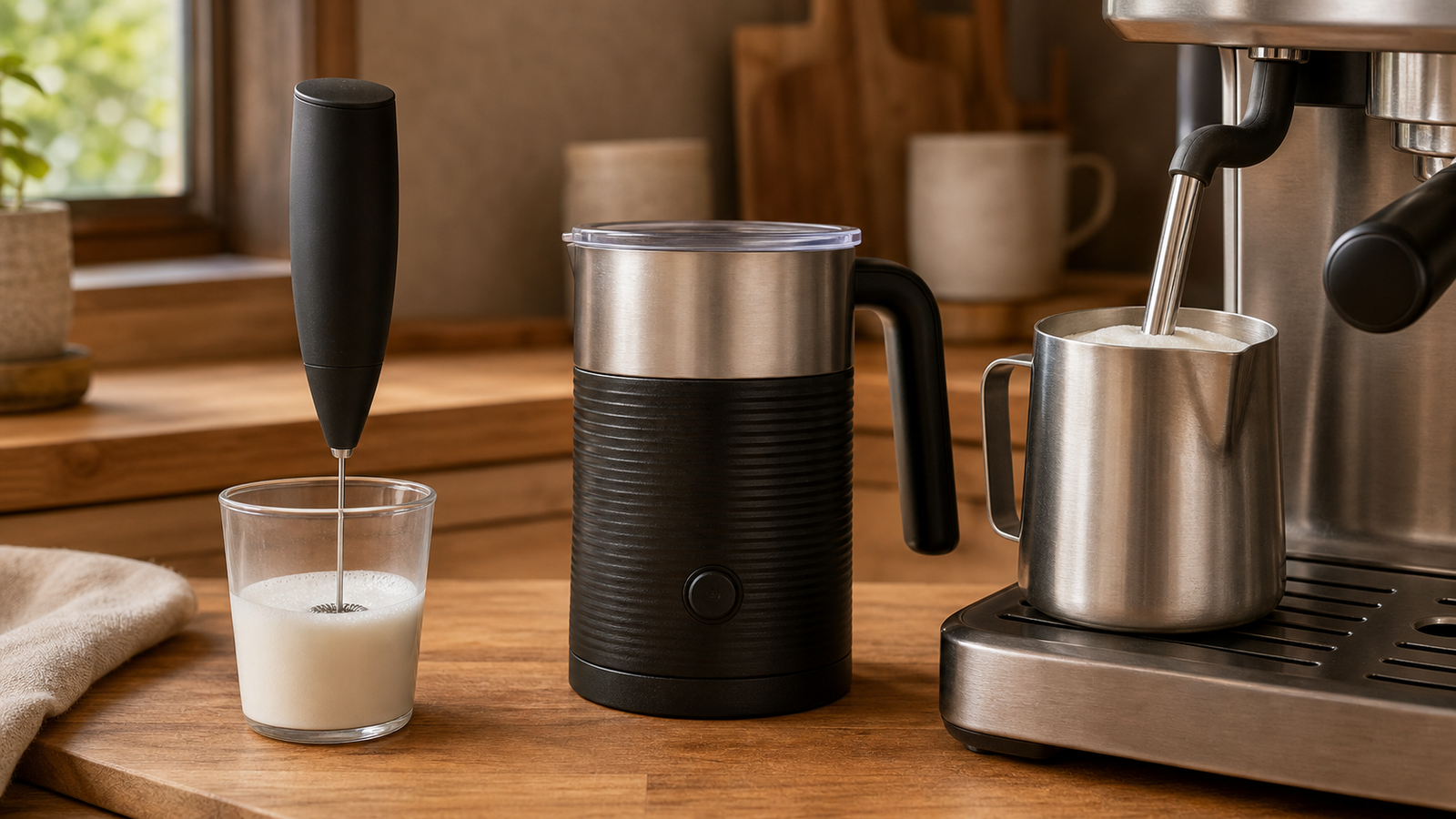
Milk frother comparison at a glance
Here is how our five picks stack up. We ranked these by how well they suit a beginner, not by price and not by anything else.
| Frother | Type | Price | Hot or Cold Foam | Best For |
|---|---|---|---|---|
| Zulay Original | Handheld wand | ~$15 [VERIFY] | Cold foam (heat milk separately) | Most beginners / best value |
| Instant Milk Frother | Electric standalone | ~$30–40 [VERIFY] | Both — hot and cold | Hands-off, one-button foam |
| Nespresso Aeroccino4 | Electric standalone | ~$99 [VERIFY] | Both — hot and cold | Premium pick / Nespresso owners |
| Maestri House | Electric standalone | ~$45–90 [VERIFY] | Both — hot and cold | Big-batch and family drinks |
| Espresso machine steam wand | Steam wand | Part of a $150+ machine | Hot foam (microfoam) | Café-quality latte art fans |
The three types of milk frother
Before you buy anything, it helps to understand that “milk frother” describes three pretty different tools. Pick the right type first and the exact product almost chooses itself.
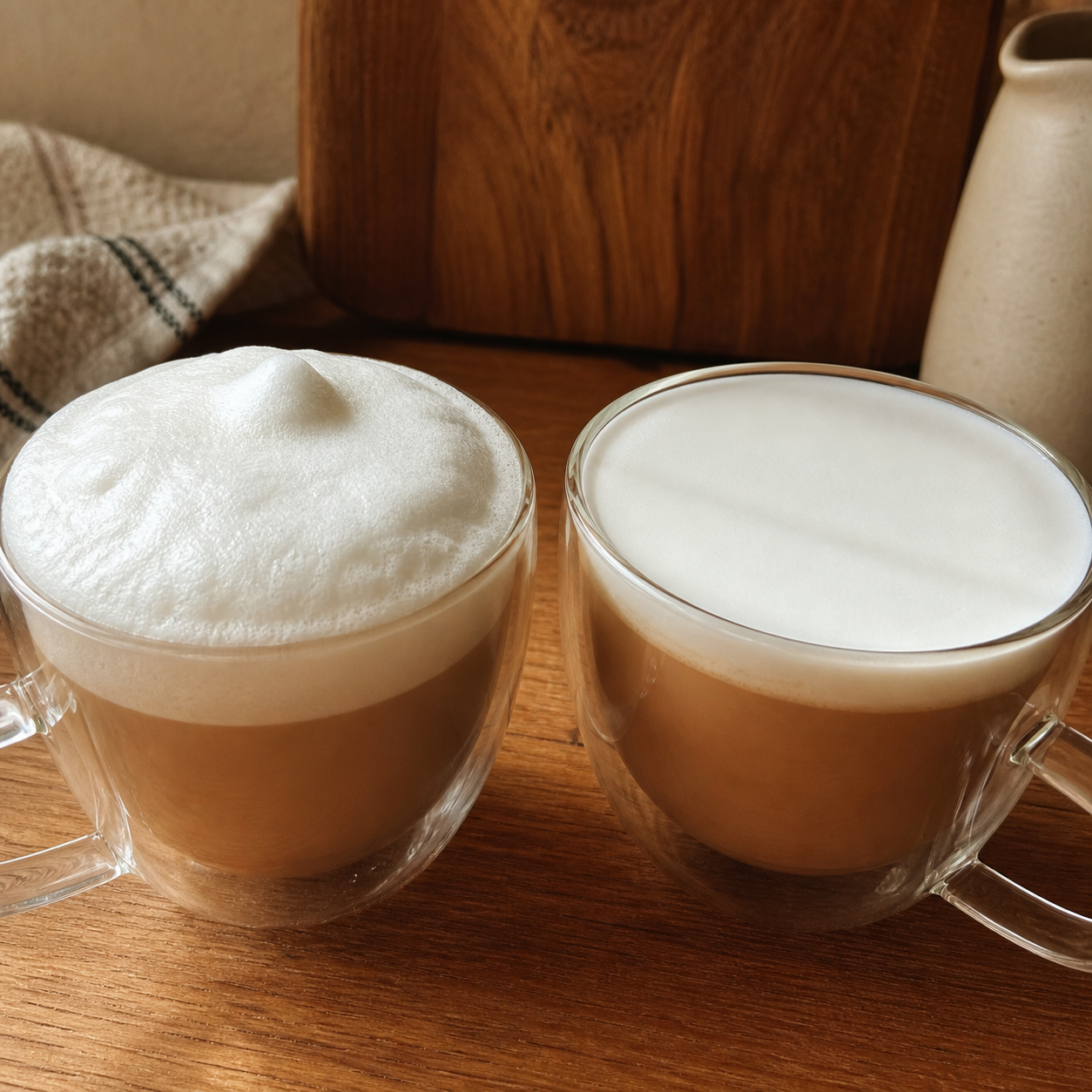
Quick vocabulary, because we hate when guides skip this: aeration just means whipping air into the milk to create bubbles and volume. Microfoam is the good stuff — super-fine, glossy foam with bubbles so tiny you can barely see them, the kind that lets you pour latte art. Bigger, drier bubbles (think the fluffy cap on a cappuccino) are what beginners usually make first, and honestly, they taste great.
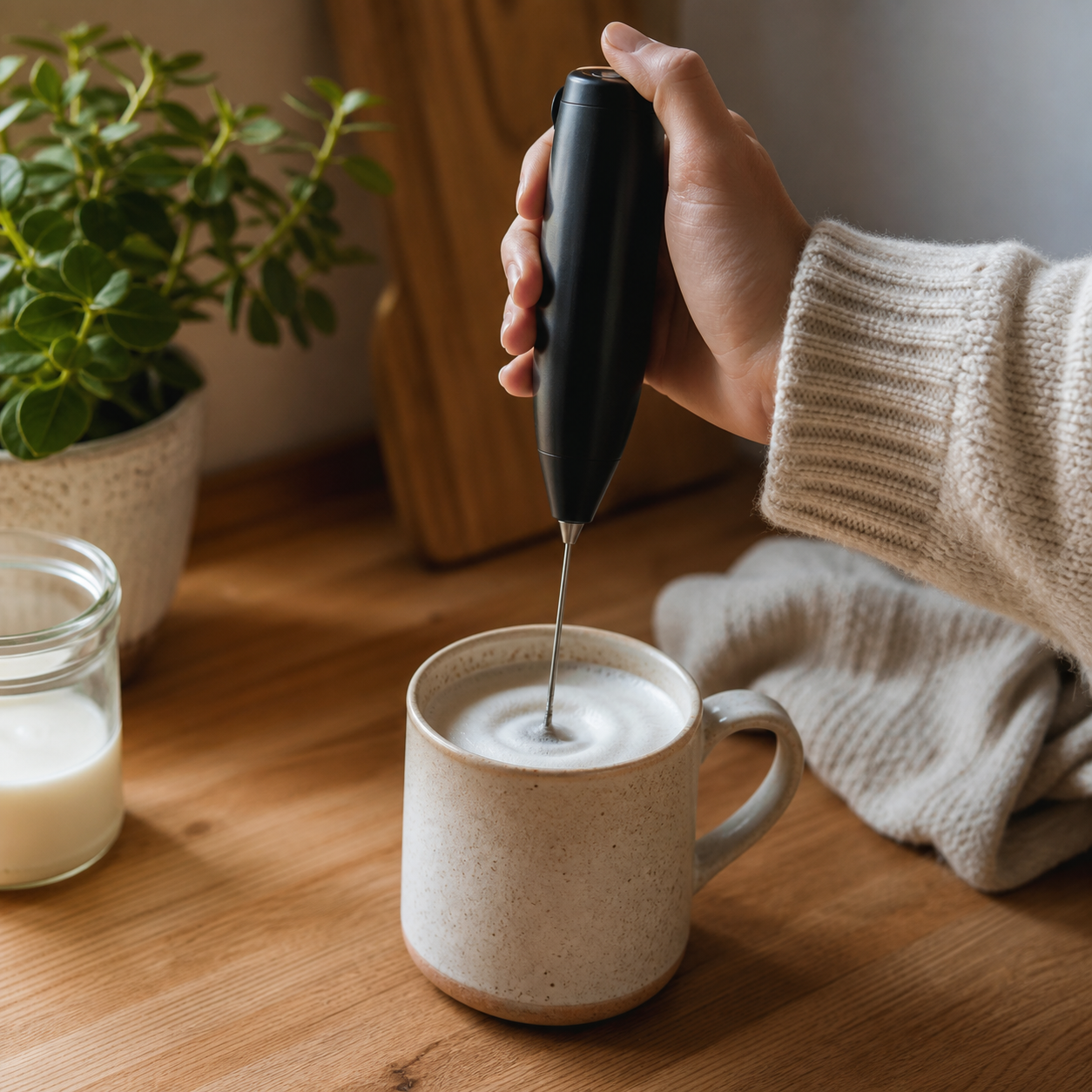
1. Handheld / wand frothers
A handheld frother is a little battery-powered whisk on a stick. You heat your milk (or use it cold), stick the spinning coil in, and move it up and down for 15–20 seconds. That is the whole job. They cost about $10–20, fit in a drawer, and are the fastest way for a beginner to start making foam today.
Best for: Anyone starting out, small kitchens, and people who want the cheapest path to good foam.
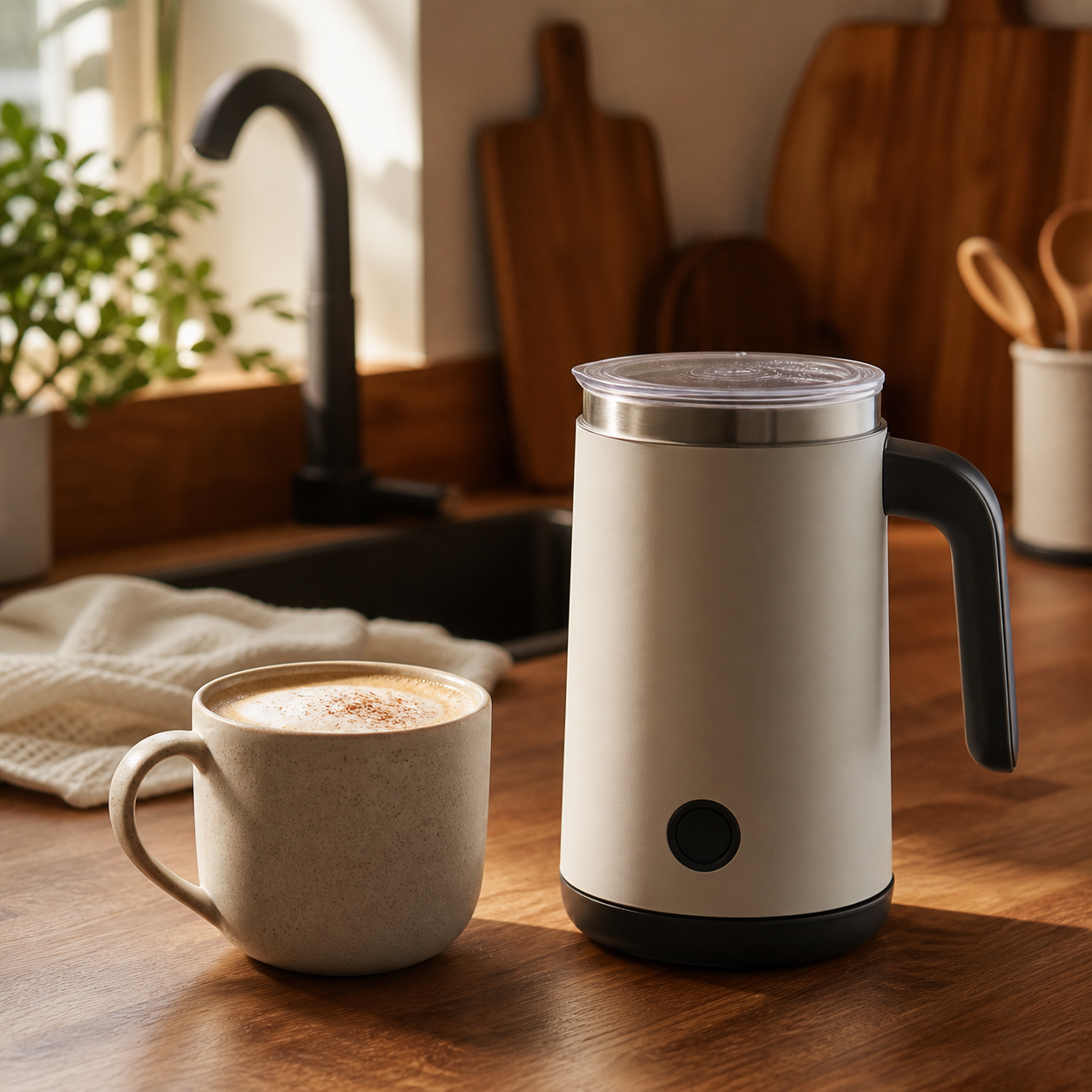
2. Electric standalone frothers
These are countertop jugs with a button on top. You pour milk in, press a button, and walk away — the machine both heats and froths for you, then beeps when it is done. Most also have a cold-foam setting. They cost roughly $30–100 and are the “set it and forget it” option. Cleanup is a quick wipe of the jug.
Best for: People who want zero effort and consistent results, or who make lattes every single morning.
3. Steam wands (on an espresso machine)
The steam wand is the metal arm on an espresso machine that shoots pressurized steam into a pitcher of milk. This is how cafés make that glossy microfoam for latte art — it is genuinely the best-quality foam you can make. The catch: you only get a steam wand by buying an espresso machine, which starts around $150 and climbs from there. It also has the steepest learning curve of the three.
Best for: Beginners who already know they want espresso drinks and latte art, and are ready to invest in a machine. If that is you, start with our guide to the best beginner espresso machines under $500. Otherwise, a handheld or electric frother gets you 90% of the way there for a fraction of the cost. You can also compare the two approaches directly in our guide to milk frother vs steam wand.
Our top picks, reviewed
Zulay Original Milk Frother — Best Overall for Beginners
Price Range: ~$12–18 [VERIFY]
Best For: Almost every beginner — the smart first frother to own.
Pros:
- Incredibly affordable — usually around $15
- Fast: thick foam in 15–20 seconds
- Comes with batteries and a little stand
- Rinses clean under the tap in seconds
- Works for matcha, protein shakes, and hot chocolate too
Cons:
- Does not heat milk — you warm it separately (microwave is fine)
- Battery-powered, so you will swap batteries eventually
Check current price on Amazon →
Prefer no batteries? A rechargeable USB handheld (like Zulay's or Maestri House's rechargeable wand) does the same job and tops up by cable — worth a look if you froth daily and hate buying AAs.
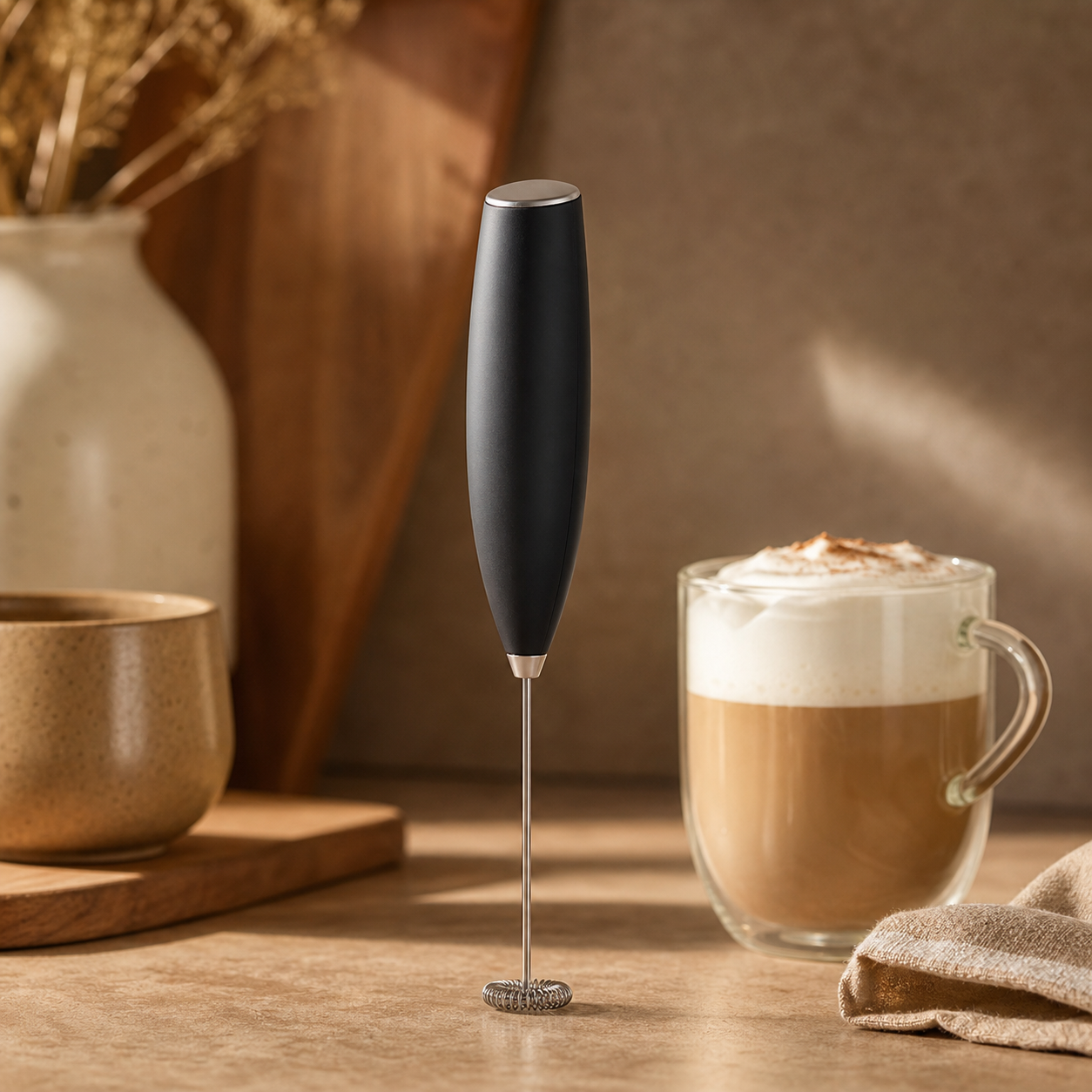
Our Pick for Beginners
Zulay Original Milk Frother
For about the price of two coffee-shop lattes, the Zulay gives you café-style foam at home with almost no learning curve. It is the frother we recommend to every beginner who is not sure where to start.
Instant Milk Frother — Best Electric Standalone
Price Range: ~$30–40 [VERIFY]
Best For: Beginners who want one-button, hands-off foam that is also warm.
Pros:
- Heats and froths in one step — press a button and walk away
- Four modes: cold foam, light warm foam, dense warm foam, or just warm milk
- Quiet operation and auto shut-off
- Dishwasher-safe lid and whisk for easy cleanup
- Great value for an all-in-one machine
Cons:
- Takes up a bit of counter space
- Holds a single-serving amount of foam per batch
Nespresso Aeroccino4 — Premium Electric Pick
Price Range: ~$99 [VERIFY]
Best For: Nespresso owners and anyone who wants a polished, near-foolproof frother.
Pros:
- Beautiful build quality and dead-simple controls
- Handles hot foam, cold foam, and warm milk
- Very consistent, silky results
Cons:
- Costs several times more than the Instant
- Overkill if you are just testing the waters
If you already own a Nespresso machine or simply want the nicest standalone frother on the counter, the Aeroccino4 is a lovely upgrade. For a first frother, though, we would still start cheaper.
Maestri House Milk Frother — Best for Bigger Batches
Price Range: ~$45–90 [VERIFY]
Best For: Households making two-plus drinks at once, or fans of adjustable foam.
Pros:
- Large capacity — froths enough for a couple of mugs
- Adjustable temperature and foam thickness on many models
- Detachable, dishwasher-safe pitcher for easy cleanup
Cons:
- More settings than a total beginner needs
- Price varies a lot by model
If you are frothing for a partner too, or you like dialing in exactly how warm and foamy your milk gets, the Maestri House is a comfortable step up. Just check which model you are buying, since features and price jump around.
How to pick the right frother for you
Still unsure? Here is the short version. If you want the cheapest, simplest start and do not mind warming milk yourself, get a handheld — the Zulay. If you would rather press one button and get warm foam with zero fuss, get an electric standalone — the Instant. And if you are all-in on espresso drinks and latte art, save up for an espresso machine with a steam wand instead of a separate frother.
Want to see a frother in action before you buy? Our walkthrough on how to froth milk without an espresso machine shows the exact technique, and our guide to making a latte at home without an espresso machine puts it all together in one cup.
Frequently asked questions
Do I need a milk frother for lattes?
Technically no — you can shake warm milk in a sealed jar or whisk it by hand — but a frother makes it far easier and more consistent. A $15 handheld turns “sort of foamy” milk into proper café-style foam in under 30 seconds. For the price, it is one of the best coffee upgrades a beginner can make.
Can you froth cold milk?
Yes. Handheld wands froth cold milk just fine (great for iced lattes and cold foam), and most electric standalone frothers, including the Instant and Aeroccino4, have a dedicated cold-foam setting. Cold milk actually holds a light, airy foam beautifully.
Which milk froths best?
Whole dairy milk froths the easiest and most forgiving for beginners, thanks to its protein and fat. Among plant milks, “barista edition” oat milk is the standout — it foams almost like dairy. Skim milk makes big, dry, stiff foam, while regular soy and almond can be a little trickier. When in doubt, start with whole milk or barista oat.
Only fill your pitcher or mug about a third full before frothing. Milk roughly doubles in volume as it foams, and giving it room to grow is the difference between silky foam and a milky mess on your counter.
Do not let a handheld frother sit still at the bottom of the cup — that just spins the milk without adding air. Keep the coil near the surface and move it gently up and down so it pulls air in. And never turn a battery wand on before it is submerged, unless you enjoy redecorating your kitchen in milk.
- You do not need an espresso machine to make great foam at home.
- Pick your type first: handheld (cheapest), electric standalone (hands-off), or steam wand (café-quality, needs a machine).
- Our top pick for most beginners is the Zulay Original handheld — around $15 and it just works.
- Want warm foam at the push of a button? The Instant Milk Frother is the best electric standalone for the money.
- Serious about latte art? Skip the frother and invest in an espresso machine with a steam wand.
Ready to go deeper on espresso itself? Our beginner's complete guide to making espresso at home walks you through the whole journey, foam and all.
Disclosure: This article contains affiliate links. If you purchase through our links, we may earn a small commission at no extra cost to you. We only recommend products we genuinely believe are right for beginners. Full disclosure here.