
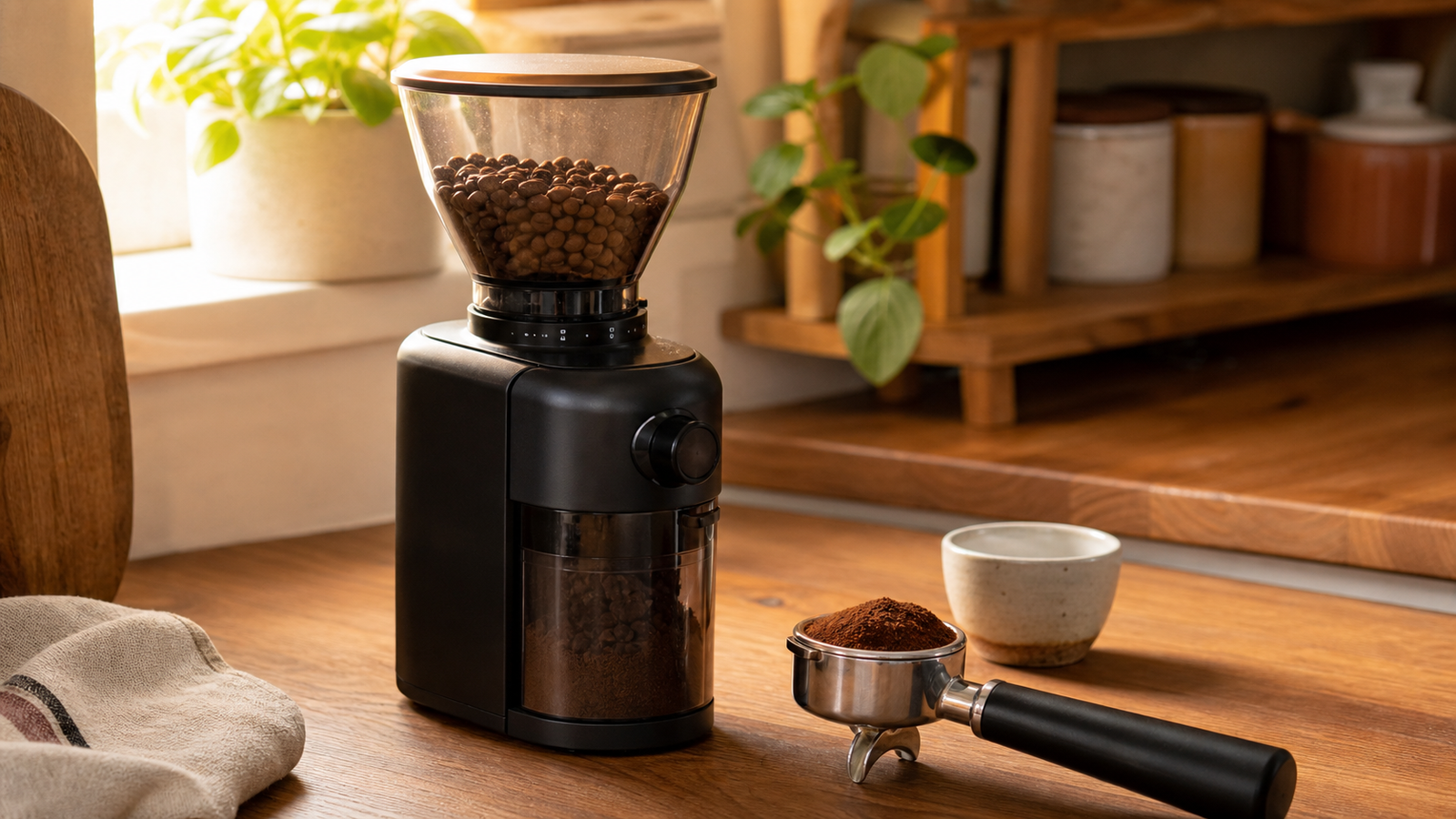
If you are shopping for the best espresso grinder for beginners, you have probably noticed something frustrating: most affordable grinders simply cannot grind fine enough for espresso. That is the whole game with espresso. It needs a grind so fine and so precise that a tiny turn of the dial changes everything. In this guide we focus only on grinders that can actually pull that off, and we keep the entry price friendly by starting with picks near or under $250.
Here is the important part before you read further, because we do not want you buying the wrong thing. This is an espresso-specific guide. Espresso grinders need very fine, very small adjustment steps (we will explain that in plain English below), and that is a different job than grinding for a French press or a drip machine. If you are not chasing espresso yet, one of these guides will serve you far better:
- Best Coffee Grinder for Beginners (Under $100) — great all-rounders if you mostly brew drip, pour-over, or French press.
- Best Budget Coffee Grinders (Our Top 3 Picks) — the cheapest solid options for everyday coffee.
- Stainless Steel Coffee Grinder (No Plastic) — if avoiding plastic parts is your priority.
Still with us because you want espresso? Perfect. The grinders below are the ones we would hand a beginner who is serious about pulling real shots at home. Let's dig in.
Quick answer: For most beginners, the Baratza Encore ESP (~$200) is the best espresso grinder to start with. It grinds fine enough for espresso, has small enough adjustment steps to dial in a shot, is easy to live with, and it is backed by Baratza's excellent US support and repairability. Start here and you will not outgrow it quickly.
The 5 Best Espresso Grinders for Beginners at a Glance
| Grinder | Price | Burr | Adjustment | Best For |
|---|---|---|---|---|
| Baratza Encore ESP (Top Pick) | ~$200 | 40mm steel conical | Stepped, fine espresso steps | Most beginners; best all-around start |
| 1Zpresso DF54 | ~$215–229 [VERIFY] | 54mm steel flat | Stepless | Value hunters who want single-dosing |
| 1Zpresso J-Ultra (Manual) | ~$159 [VERIFY] | 48mm titanium-coated conical | Stepped, 8-micron clicks | Budget espresso; small spaces; no electric |
| Fellow Opus | ~$195 [VERIFY] | 40mm steel conical | Stepped, 41 settings + micro | Electric all-rounder that also does espresso |
| KINGrinder K6 (Manual) | ~$99–129 [VERIFY] | 48mm steel conical | Stepped, 16-micron clicks | Cheapest way onto the list; budget manual |
A quick note on honesty: every grinder here lands at or under about $250, so the whole list fits a real beginner budget. Two are electric and three cover different budgets and styles (from a $200 plug-in all-rounder down to a sub-$130 hand grinder), so there is a genuine fit for most people.
What to Look for in an Espresso Grinder
Espresso is the most demanding thing you can ask a grinder to do. Before you spend money, here are the four things that actually matter for a beginner.
Burrs, not blades
A burr is a set of two grinding surfaces that crush coffee to an even, consistent size. A blade grinder just chops beans randomly, which gives you a mix of dust and chunks that will never make good espresso. For espresso, you need burrs. Every grinder on this list uses them. Whether the burrs are conical (cone-shaped) or flat (two rings) matters less for a beginner than simply having quality burrs at all.
Stepless (or very fine) micro-adjustment
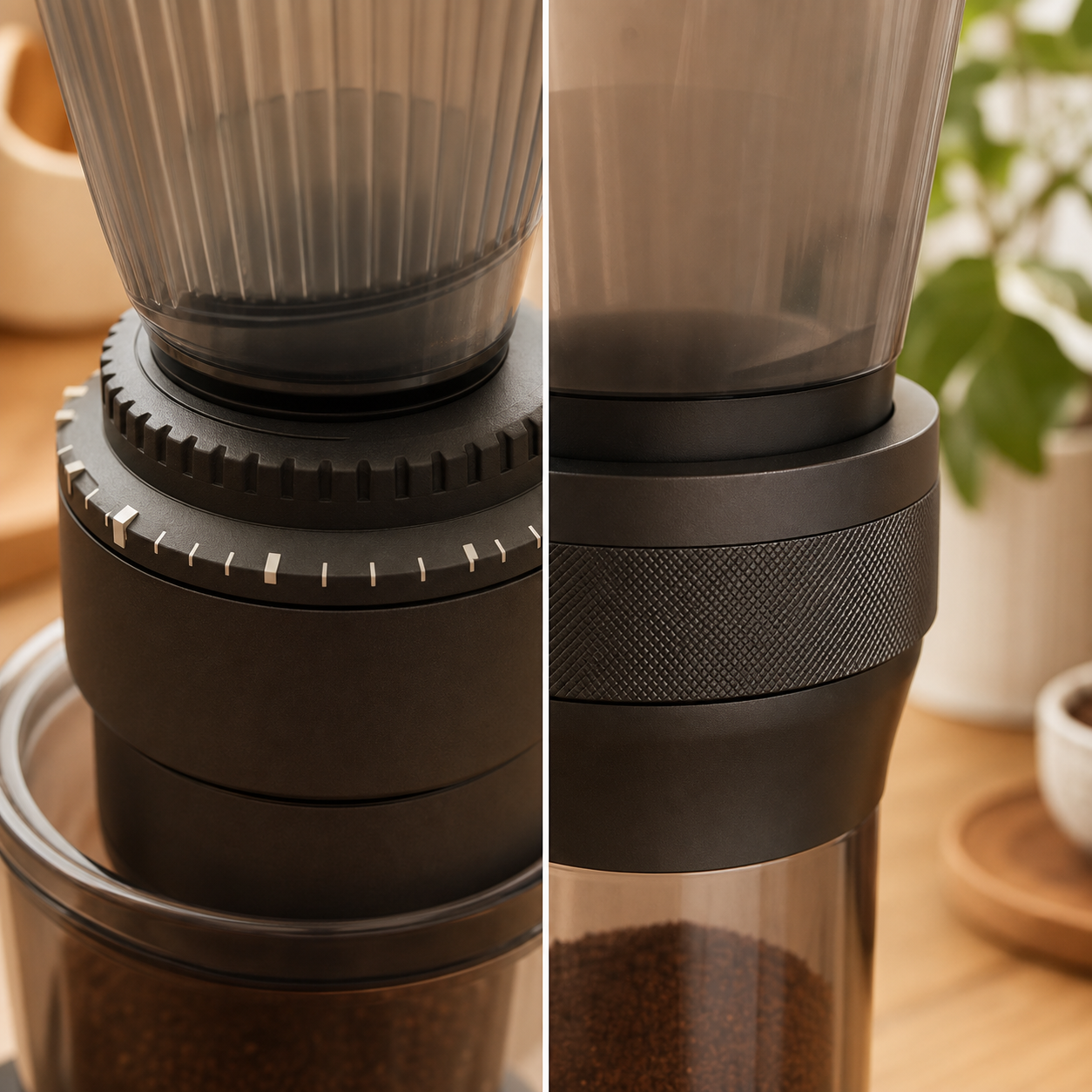
This is the big one for espresso. Stepless means the grind adjustment slides smoothly with no fixed clicks, so you can nudge it by a hair. Stepped means it clicks into set positions. Neither is “better,” but for espresso the steps have to be small. Espresso is so sensitive that the difference between a sour, gushing shot and a sweet, syrupy one can be a tiny fraction of a turn. This is what coffee people mean by dialing in — making small grind changes until the shot runs just right. A great espresso grinder gives you the fine control to actually get there. Read our full breakdown of the best grind size for espresso and why it is so fine if you want to understand this piece deeply.
Single-dose vs. hopper
A hopper is the big bin on top that holds a pile of beans. Single-dosing means you weigh out just the beans for one shot and pour them in fresh each time. Single-dose grinders keep your beans fresher and let you switch coffees easily, which is why several picks here are built that way. A hopper is more convenient for grab-and-go. Both work fine for a beginner.
Retention
Retention is how much ground coffee gets stuck inside the grinder instead of coming out. Low retention means what you put in is what you get out, so your dose is accurate and your grinds are fresh. High retention wastes coffee and leaves stale grounds behind. The best modern espresso grinders keep retention very low. Not sure you even need a dedicated grinder yet? We answer that here: do you need a grinder for espresso? (short answer: yes).
The 5 Best Espresso Grinders for Beginners
1. Baratza Encore ESP — Best Overall for Beginners
Price Range: ~$200
Best For: Almost every beginner starting espresso at home who wants one reliable grinder that just works.
Pros: 40mm hardened steel conical burrs; a smart dual-range dial that gives you fine, 20-micron espresso steps (settings 1–20) plus coarser steps for filter coffee; comes with a dosing cup and 54mm/58mm portafilter adapter; famously easy to clean and repair; excellent US-based Baratza support. It is the most affordable way we know to grind properly for espresso without cutting corners.
Cons: It is stepped rather than fully stepless, so at the very finest end you have slightly less “infinite” control than a stepless grinder. Retention is a touch higher than the single-dose grinders below.
This is our top pick — see the highlighted box just below for where to check current pricing.
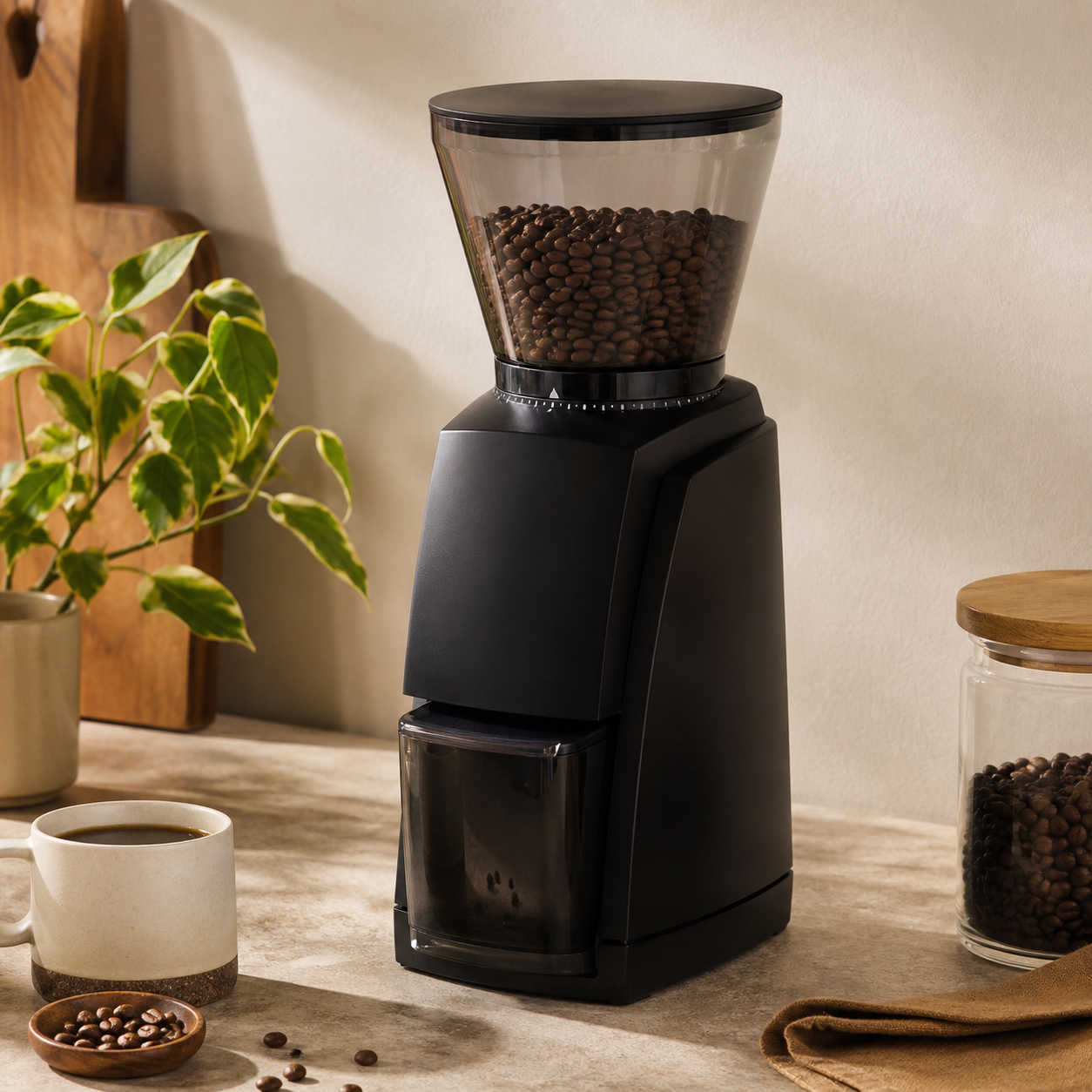
Our Pick for Beginners
Baratza Encore ESP
It grinds fine enough for real espresso, gives you small enough steps to actually dial in a shot, and is backed by the easiest support and repairs in the business — which is exactly what a beginner wants for around $200.
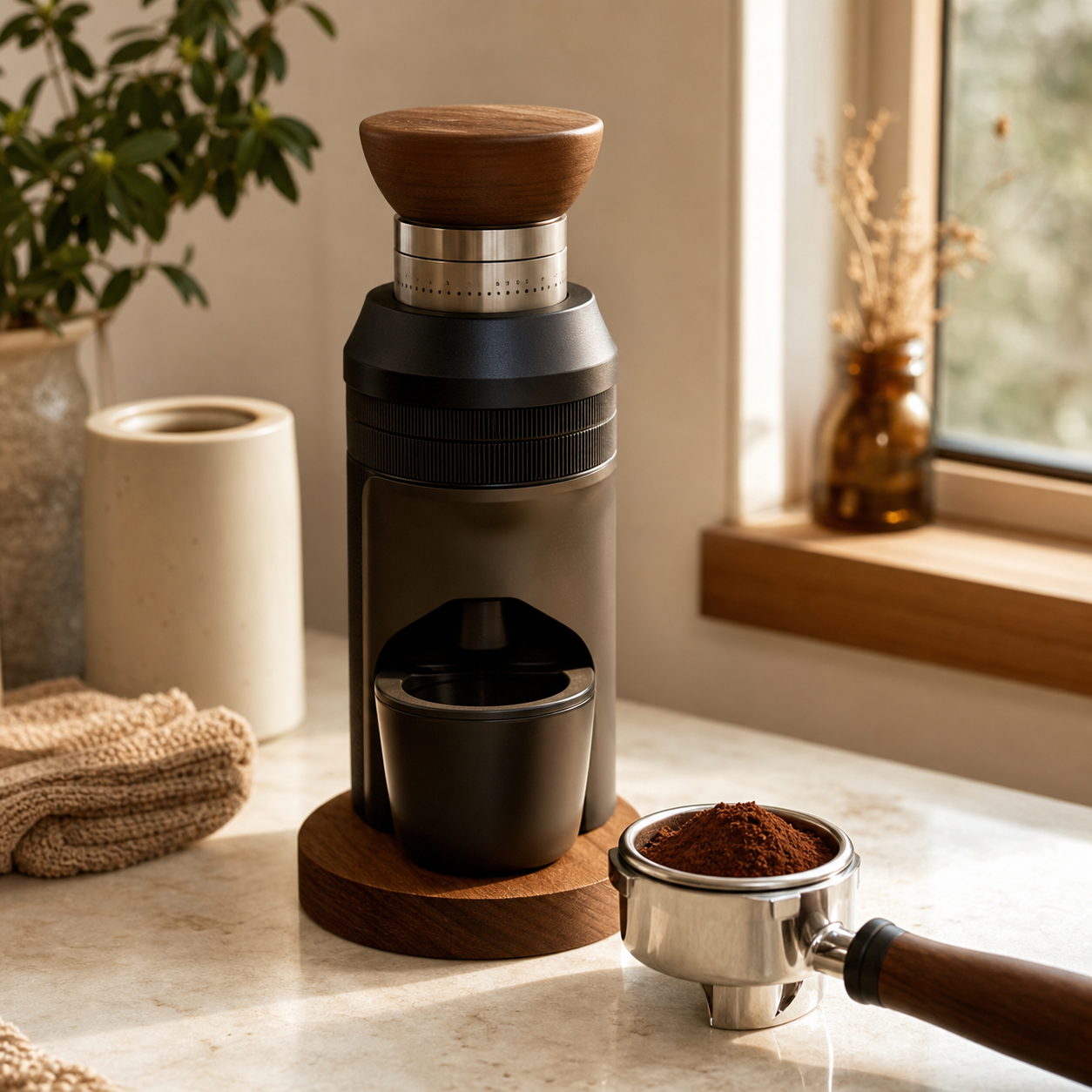
2. 1Zpresso DF54 — Best Value Single-Dose
Price Range: ~$215–229 [VERIFY]
Best For: Beginners who want stepless control and single-dosing without paying premium-grinder prices.
Pros: 54mm flat steel burrs that produce a fluffy, even grind; truly stepless adjustment so you can fine-tune espresso by the tiniest amount; single-dose design with extremely low retention (under 0.1g, so almost nothing gets left behind); a built-in static reducer so grinds do not stick and scatter everywhere. Punches well above its price for espresso.
Cons: Being stepless means there are no numbered clicks to return to, so you learn your setting by feel and note-taking. The portafilter-grinding forks fit 58mm baskets, so smaller 54mm machines (like some Breville models) grind into the cup instead. Slightly more of a “tinkerer” tool than the Encore ESP.
3. 1Zpresso J-Ultra — Best Manual Espresso Grinder
Price Range: ~$159 [VERIFY]
Best For: Beginners on a tighter budget, in small kitchens, or who like the hands-on ritual of grinding by hand.
Pros: A premium hand grinder built specifically for espresso, with 48mm titanium-coated conical burrs and remarkably fine 8-micron adjustment clicks (that is finer control than most electric grinders in this price range). Numbered settings mean you can dial in, write down your number, and return to it exactly. Compact, no electricity needed, and it is the cheapest way onto this whole list.
Cons: It is manual, so you grind espresso by hand — that is a real bit of effort each morning, and grinding fine for espresso is the hardest setting to crank. No hopper and no walk-away convenience. If you value speed over ritual, an electric pick will suit you better.
4. Fellow Opus — Best Electric All-Rounder That Also Does Espresso
Price Range: ~$195 [VERIFY]
Best For: Beginners who want one good-looking electric grinder that handles espresso and everything else — drip, pour-over, French press, cold brew — from a single machine.
Pros: 40mm stainless steel conical burrs with 41 grind settings plus a micro-adjustment ring, so you can reach the fine end for espresso; single-dose loading so beans stay fresh; a low-static anti-cling system that keeps grounds from scattering; a compact, attractive design that looks at home on the counter. For around $200 it is a versatile plug-in that grows with you as you try different brew methods.
Cons: It grinds espresso capably rather than exceptionally — if you plan to pull straight espresso all day every day, a dedicated espresso grinder like the DF54 will dial in more easily. At the very finest settings it is best suited to milk drinks and beginner shots rather than chasing perfect light-roast espresso.
We are not linking this one to keep our affiliate links focused on our top three picks — but it is an easy grinder to find and a genuinely good beginner all-rounder.
5. KINGrinder K6 — Best Budget Manual for Espresso
Price Range: ~$99–129 [VERIFY]
Best For: Beginners on the tightest budget who want to try espresso by hand for the least money possible.
Pros: 48mm stainless steel conical burrs that punch well above the price; a side-mounted numbered dial with fine 16-micron clicks, which makes dialing in espresso surprisingly easy for a grinder this cheap; you can write down your setting and return to it exactly; solidly built and genuinely portable. Often the cheapest legitimate way onto this list — routinely found under $130.
Cons: It is manual, so grinding fine for espresso takes real arm effort, and light roasts are especially hard work. Out of the box the handle is set up for a drill (swap to the white O-ring for hand grinding). It is a step below the pricier J-Ultra in fit and finish, but for the money it is remarkable.
We are not linking this one to keep our affiliate links focused on our top three picks — but it is widely available and the best value on the whole list if budget is your main concern.
Which Espresso Grinder Should a Beginner Buy?
If you want the simple answer: get the Baratza Encore ESP. It hits the sweet spot of price, fine espresso adjustment, easy living, and rock-solid support. If you specifically want stepless control and single-dosing at a fair price, the 1Zpresso DF54 is the value champ. If you want one electric grinder that also handles every other brew method, the Fellow Opus is the versatile all-rounder. And if your budget is as tight as it gets, the manual 1Zpresso J-Ultra or the even cheaper KINGrinder K6 give you legit espresso grinding by hand for the least money — the K6 is the rock-bottom entry, the J-Ultra the more refined step up.
Once you have your grinder sorted, your next stop is the machine. See our guide to the best beginner espresso machines under $500, and if you are still learning the whole process, start with our beginner's complete guide to making espresso at home.
Frequently Asked Questions
Can I use a regular coffee grinder for espresso?
Usually not. Most everyday grinders cannot grind fine enough for espresso, and even the ones that can often lack the small, precise adjustment steps you need to dial in a shot. That is exactly why we made this list espresso-specific rather than pointing you to our general grinder guides.
Do I really need a stepless grinder for espresso?
No — you need fine control, and stepless is one way to get it. A stepped grinder with small enough steps (like the Baratza Encore ESP's espresso range, or the J-Ultra's 8-micron clicks) works beautifully for beginners. Stepped grinders even have a nice perk: you can write down your setting number and return to it exactly.
Is a manual grinder good enough for espresso?
Yes, a quality manual grinder like the 1Zpresso J-Ultra makes excellent espresso — it is more about your arm than the coffee. Grinding fine for espresso takes real effort every morning, so choose manual only if you enjoy the ritual or want to save money and space.
Pro Tip: Whichever grinder you choose, buy a cheap digital scale that reads to 0.1 grams. Espresso is a game of small numbers, and weighing your dose (beans in) and your shot (espresso out) is the single fastest way to go from frustrating shots to consistently good ones.
Watch Out: Do not judge a grinder by burr size alone. A bigger burr does not automatically make better espresso for a beginner. Fine adjustment, low retention, and ease of use matter far more early on — a well-set 40mm grinder beats a poorly dialed-in 64mm one every time.
- Top pick: Baratza Encore ESP (~$200) — best all-around espresso grinder for beginners.
- Best value single-dose: 1Zpresso DF54 (~$215–229) — stepless control at a fair price.
- Best manual: 1Zpresso J-Ultra (~$159) — real espresso grinding by hand with a premium feel.
- Best electric all-rounder: Fellow Opus (~$195) — one plug-in grinder for espresso and every other brew method.
- Best budget pick: KINGrinder K6 (~$99–129) — the cheapest legit way to grind espresso by hand.
- For espresso, prioritize fine, precise adjustment and low retention over burr size or brand hype.
Disclosure: This article contains affiliate links. If you purchase through our links, we may earn a small commission at no extra cost to you. We only recommend products we genuinely believe are right for beginners. Full disclosure here.