
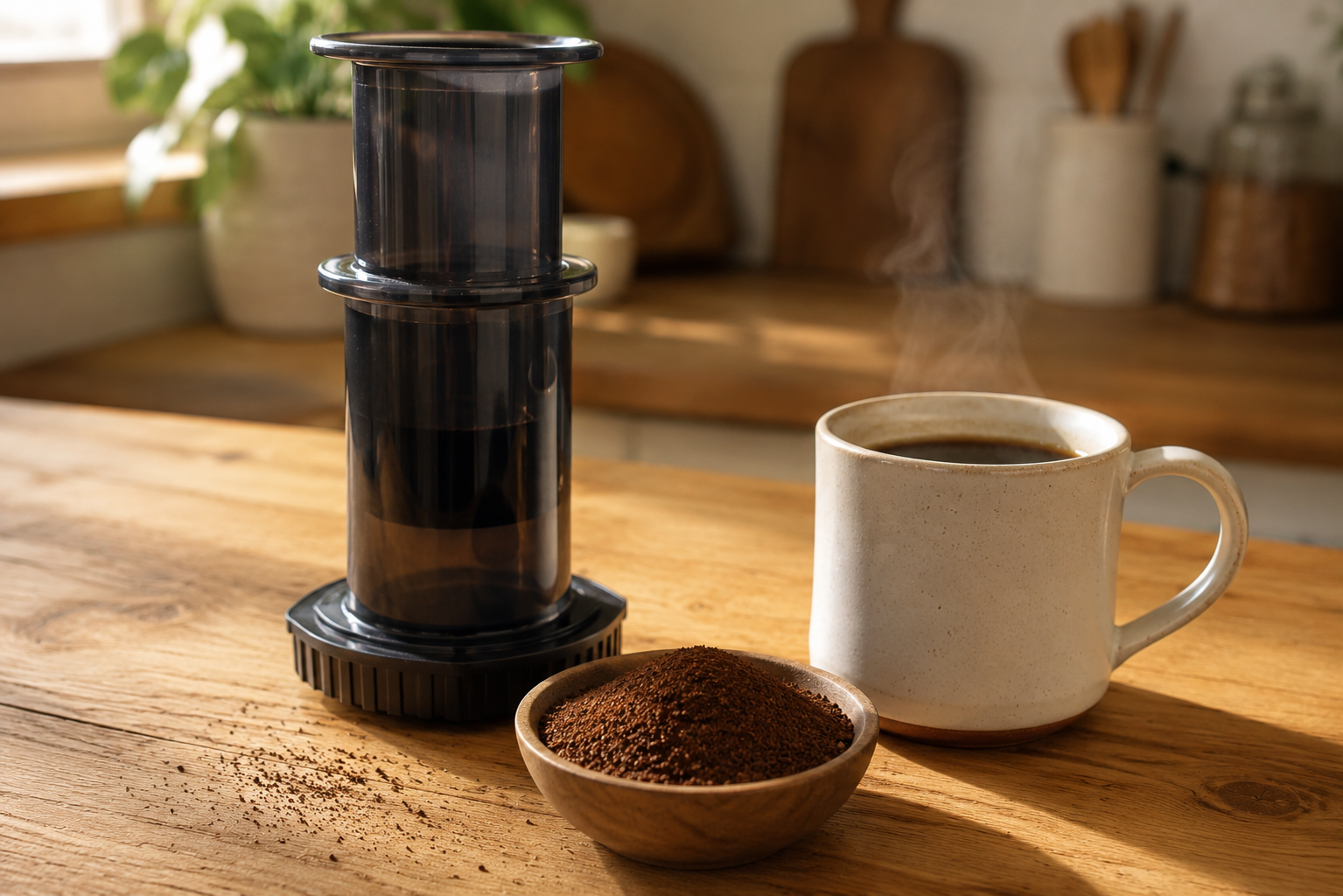
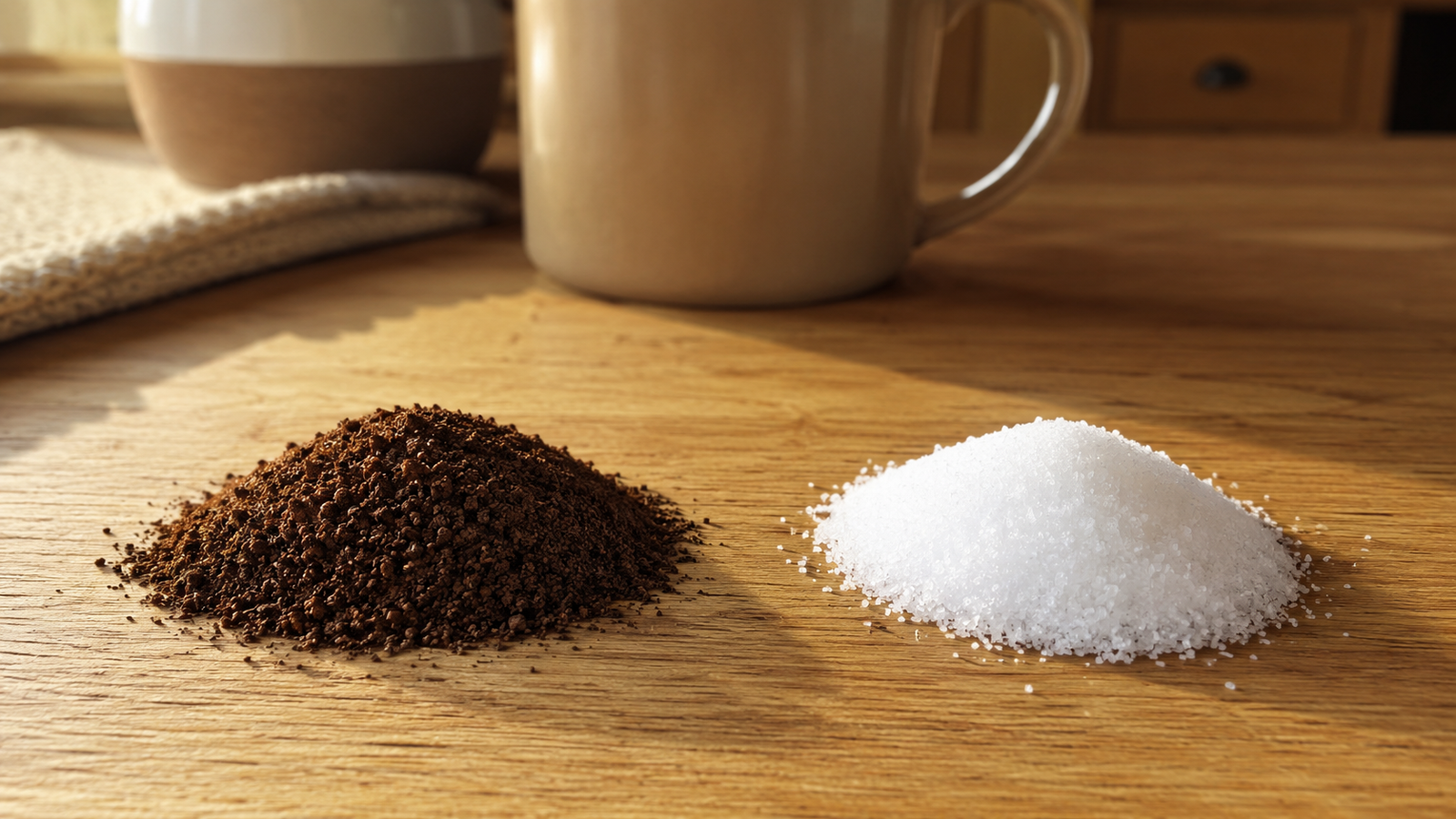
The best grind size for AeroPress is medium-fine — roughly the size of table salt, somewhere between 400 and 600 microns. It's finer than what you'd use for a French press and a touch coarser than espresso. Medium-fine is what AeroPress recommends as the starting point for almost every beginner recipe.
The AeroPress is one of the most forgiving brewers a beginner can buy. Pour temperature can wobble, brew time can drift by 10 or 15 seconds, and your cup will still come out drinkable. But there's one variable that does most of the heavy lifting on flavor — and that's grind size.
If your AeroPress coffee tastes bitter, weak, sour, or you're fighting the plunger every time, grind size is almost always the first thing to check. In this guide, we'll walk through exactly what grind size to start with, how to tell if you've gone too fine or too coarse, and how to dial it in without getting lost in coffee jargon.
The Best Grind Size for AeroPress: Medium-Fine
If you only remember one thing from this article, remember this: medium-fine is the best grind size for AeroPress for the standard, beginner-friendly recipe. AeroPress's own brewing guide names medium-fine as the starting point, and almost every coffee shop barista we've seen brewing on one starts there too.
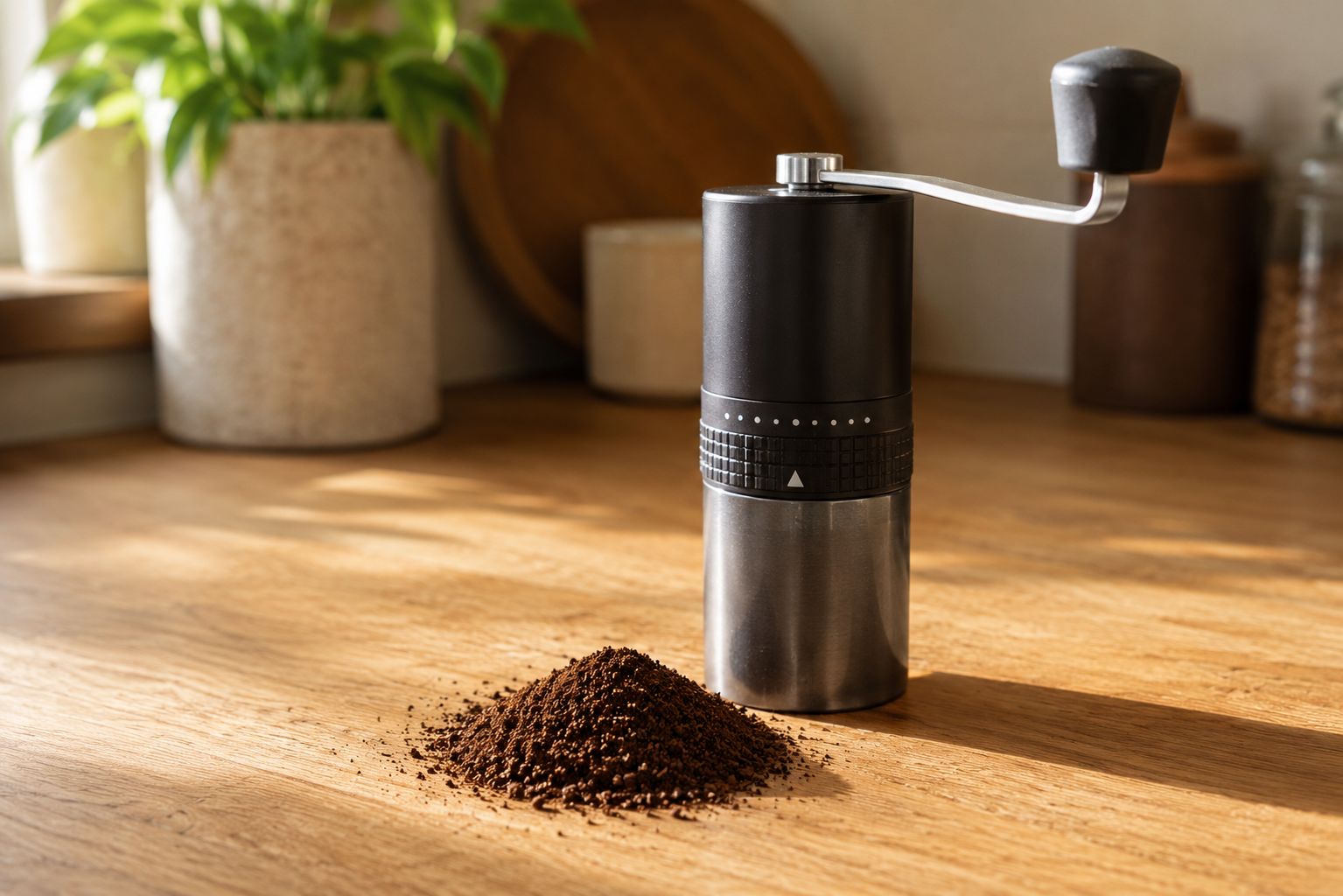
Visually, medium-fine looks like table salt. The grounds are gritty, not powdery — you should be able to feel individual particles between your fingers, but they shouldn't feel chunky. In micron terms, that's roughly 400 to 600 microns, but you don't need a microscope to get this right. The table salt comparison is enough.
What “Medium-Fine” Actually Looks Like
Coffee grind sizes go from extra coarse (think breadcrumbs) all the way down to extra fine (powdered sugar). Medium-fine sits closer to the fine end of that spectrum — finer than what most drip coffee makers use, but still coarse enough that water can pass through without getting stuck.
Here's a simple way to check yours at home. Pinch a small amount of ground coffee between your thumb and forefinger and rub. If it feels sandy and slightly gritty — like fine beach sand or table salt — you're in medium-fine territory. If it feels powdery (like flour), you've gone too fine. If you can clearly see and feel separate chunks, you've gone too coarse.
Want a deeper visual reference? Our Coffee Grind Sizes Explained guide shows every grind level side by side with the brewing method it pairs with.
Fine vs Medium-Fine vs Medium for AeroPress
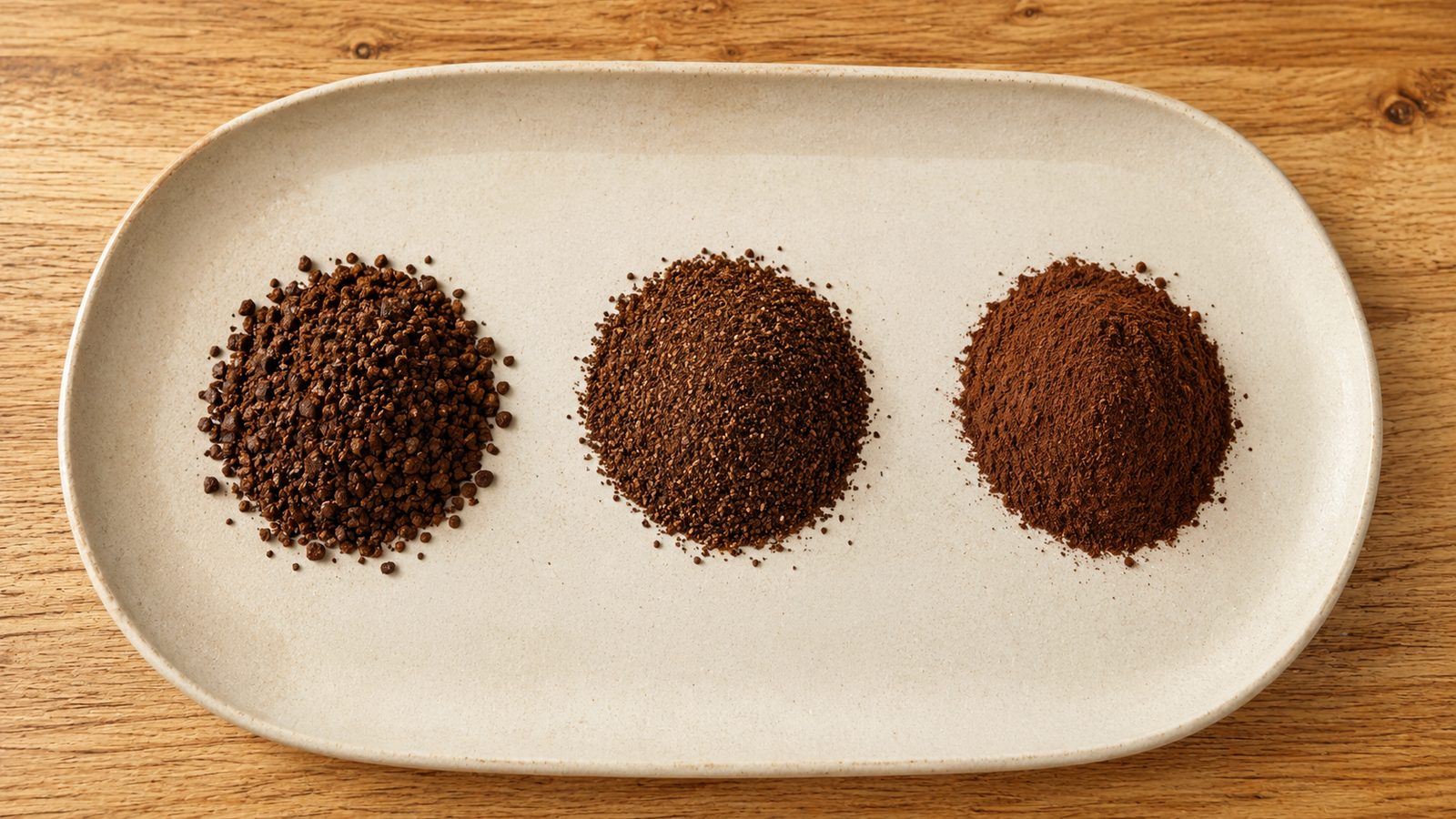
You'll see different recipes online suggesting different grinds for the AeroPress. That's because the AeroPress is genuinely flexible — but for a beginner, the differences matter. Here's how each one tends to behave.
Medium-Fine (Recommended)
This is the sweet spot for the standard AeroPress recipe. The plunger pushes down with steady, manageable pressure — not too easy, not too hard. The cup tastes balanced, with body and clarity. Start here.
Fine
A fine grind is closer to espresso — think powdered sugar with a little bit of texture. Some advanced AeroPress recipes use a fine grind to create a strong, espresso-style concentrate. The trade-off is that the plunger gets much harder to press, and if you go too far, the filter clogs and you can't press at all. We don't recommend fine grinds for your first few brews.
Medium
A medium grind is closer to what you'd use in a drip coffee maker. It works on an AeroPress, but the cup tends to taste a little weaker and faster to over-extract on a long steep. If your medium-fine grind keeps producing bitter coffee, going one step coarser to medium can help — but don't start there.
Why the AeroPress Is Forgiving With Grind Size
Most brewing methods are picky about grind size because gravity and time do all the work. With a French press, the grounds steep for four minutes whether you like it or not. With pour-over, the water passes through whatever grind is sitting in the filter at whatever speed gravity allows.
The AeroPress is different. You control the pressure with your own hand on the plunger. That means a slightly off grind can be rescued just by pressing more slowly or more firmly. It's part of why we recommend the AeroPress as a great starting brewer — it doesn't punish you for small mistakes the way other methods do. (More on that in our AeroPress Beginner's Guide.)
How to Tell If Your Grind Is Wrong
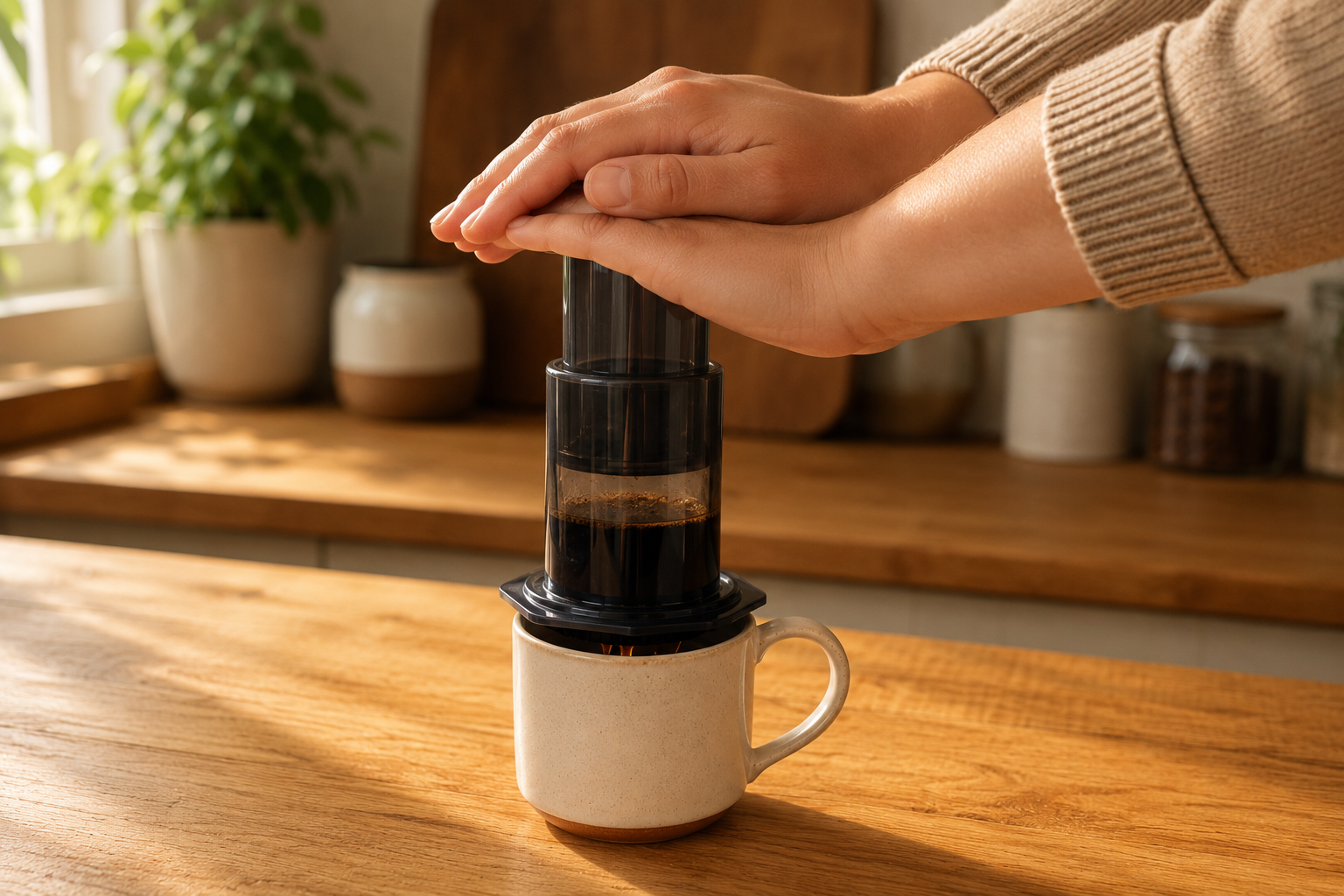
Your AeroPress will tell you when something's off. Here's how to read the signals.
If the plunger barely moves and you have to lean your whole body into it, your grind is too fine. Stop pressing — too much force can pop the seal or splash hot water on your hand. Dump it, grind a notch coarser, and try again.
Plunger feels loose and you press through in 5 seconds: Your grind is too coarse. The water rushed through the bed without extracting much flavor. The cup will taste weak, sour, or watery.
Plunger fights back hard — feels like you're pressing through cement: Your grind is too fine. The grounds are clogging the filter. The cup will likely taste bitter or over-extracted.
Plunger pushes down smoothly over 20 to 30 seconds: You've nailed it. That steady, controlled press is what you're aiming for.
Adjust grind one notch at a time. If you're using a burr grinder, that's usually one click on the dial. Make a brew, taste it, then adjust if needed. Changing grind and ratio at the same time makes it impossible to know which fix worked.
Quick Reference: AeroPress Grind Size Chart
| Grind | Looks Like | Press Feel | Best For |
|---|---|---|---|
| Medium | Coarse sand | Very easy | Longer steeps, weaker cups |
| Medium-fine | Table salt | Steady, 20–30 sec | Standard AeroPress recipe |
| Fine | Powdered sugar | Hard, slow | Espresso-style concentrate |
Common Questions About AeroPress Grind Size
Can you use pre-ground coffee with an AeroPress?
You can, but freshly ground coffee will always taste better. Pre-ground coffee is usually a medium drip grind, which is a step coarser than ideal for AeroPress. If pre-ground is what you have, it'll still work — just expect a slightly weaker, less aromatic cup. When you're ready to upgrade, a basic burr grinder makes a noticeable difference.
What grinder setting should I use for AeroPress?
Every grinder is different — there's no universal “AeroPress setting.” On most manual burr grinders, you'll be somewhere in the middle of the dial. On electric grinders, look for a setting between drip and espresso. Start in the middle, brew, taste, then adjust one click at a time toward finer or coarser based on how the cup tastes.
Is the AeroPress grind the same as the French press grind?
No — they're quite different. French press uses a coarse grind (chunky, like sea salt). AeroPress is several steps finer at medium-fine (table salt). For more on this, see our Best Grind Size for French Press guide.
- Start at medium-fine — about the size of table salt — for the standard AeroPress recipe.
- Listen to the plunger. Smooth, 20–30 second press = good. Stuck = too fine. Whooshing through = too coarse.
- Adjust one variable at a time. Change grind or ratio, taste, then change again.
- Don't stress about microns. Table salt is a good enough visual benchmark for almost every beginner.
Wrapping Up
Grind size is the most important variable in AeroPress brewing — but it's also one of the easiest to get right. Start at medium-fine, pay attention to how the plunger feels, and tweak one click at a time when something tastes off. After two or three brews, your hands will know what right feels like, and you won't need to think about it anymore.
Once you've got grind dialed in, the next variable to focus on is your ratio. Head over to our full How to Use an AeroPress guide for the beginner recipe we recommend.
☕ About the Author
Greg Rathbone is the founder of HomeCoffeeBeginner.com. He started this site after realizing most coffee advice online assumes you're already an expert. Every guide here is written for total beginners and tested in his own kitchen — no jargon, no snobbery.
☕ Related AeroPress Guides